Mar 29, 2019 | News
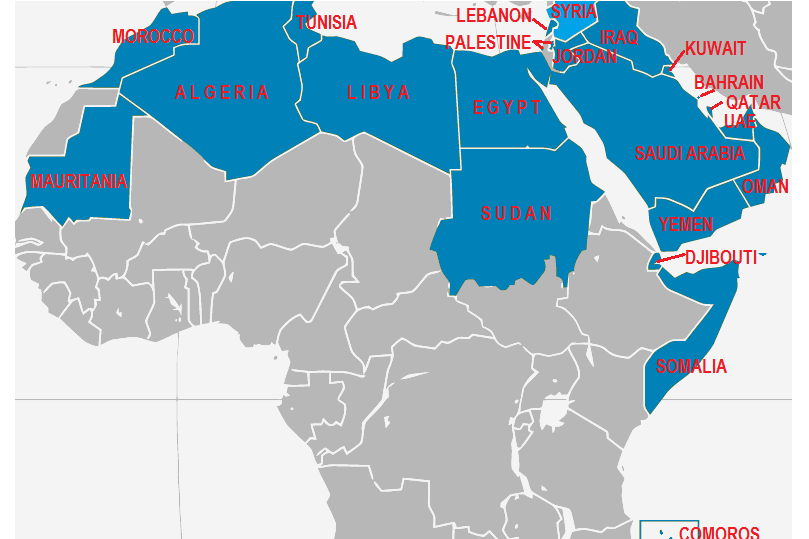
As leaders gather for the League of Arab States (LAS) Summit beginning on 31 March 2019 in Tunis, the ICJ called on them to place human rights and accountability for violations at the forefront of their agenda.
In particular, the ICJ urged the Summit to take immediate steps to revise the Statute of the Arab Court of Human Rights in line with international standards to allow access by victims of human rights violations in the region to such a Court.
“We’ve been witnessing a spike in gross human rights violations across the Arab region, including in extrajudicial executions, enforced disappearances, arbitrary detentions, and torture and other ill-treatment,” said Said Benarbia, the ICJ’s MENA Programme Director.
“The region is in dire need of a credible and independent judicial mechanism to provide justice for human rights violations, the overwhelming majority of which presently go unaddressed,” he added.
The ICJ called on external participants to prioritize human rights in their discussions with League member States at the Summit.
Expected attendees include United Nations Secretary-General Antonio Guterres, the European Union High Representative for Foreign Affairs and Security Federica Mogherini, the Head of the African Union Commission Moussa Faki Mahamat, and the Secretary General of the Organization of Islamic Cooperation Yousef bin Abdul Al-Othaimeen.
Many States in the region are plagued by widespread and systematic violations.
These range from torture, enforced disappearance and arbitrary detentions in Egypt, attacks against human rights defenders and journalists in Saudi Arabia, including the high profile enforced disappearance and killing of Saudi journalist Jamal Khasshogi, as well as the judicial harassment of human rights defenders and political activists throughout the region.
Civilian populations have borne the brunt of violations and crimes through military operations by governments and armed groups in Yemen, Syria and Libya, and in the context of the Israeli-Palestinian conflict.
“International leaders mustn’t sit back and follow the agendas of rights-violating States at this Summit, which will no doubt be directed towards further entrenchment of their authoritarian regimes at the expense of victims,” said Benarbia.
“Instead, they should urge LAS members States to ensure accountability for human rights violations in the region, including by revising and then making operational the Statute of the Arab Court,” he added.
The ICJ said that the process of revision should only be done with the participation of a wide range of stakeholders, civil society, judges, academics, bar associations, and victims of violations.
Contact:
Said Benarbia, Director of the ICJ Middle East and North Africa Programme, t: +41-22-979-3817; e: said.benarbia(a)icj.org
Background
The Statute of the Arab Court of Human Rights, which aims to establish a regional human rights court for Arab States, was approved by the LAS Ministerial Council on 7 September 2014, but is yet to come into force.
The ICJ and others have identified significant flaws in the Statute, highlighted in the 2014 ICJ report. The report notes that the Statute does not allow victims themselves to submit complaints directly to the Court, making access to justice an illusion. In addition, the Statute does not provide for sufficient guarantees to ensure judicial independence and impartiality; does not provide adequate protective measures for petitioners, their representatives or witnesses; and fails to require the Court to interpret the Arab Charter in line with international human rights obligations.
MENA-Arab Court HR-News-2019-ARA (full story in Arabic, PDF)
Mar 22, 2019 | News
The ICJ today strongly welcomed the renewal of the key UN expert on counter-terrorism and human rights, on terms that maintain the mandate’s independence, integrity and its essential focus on human rights.
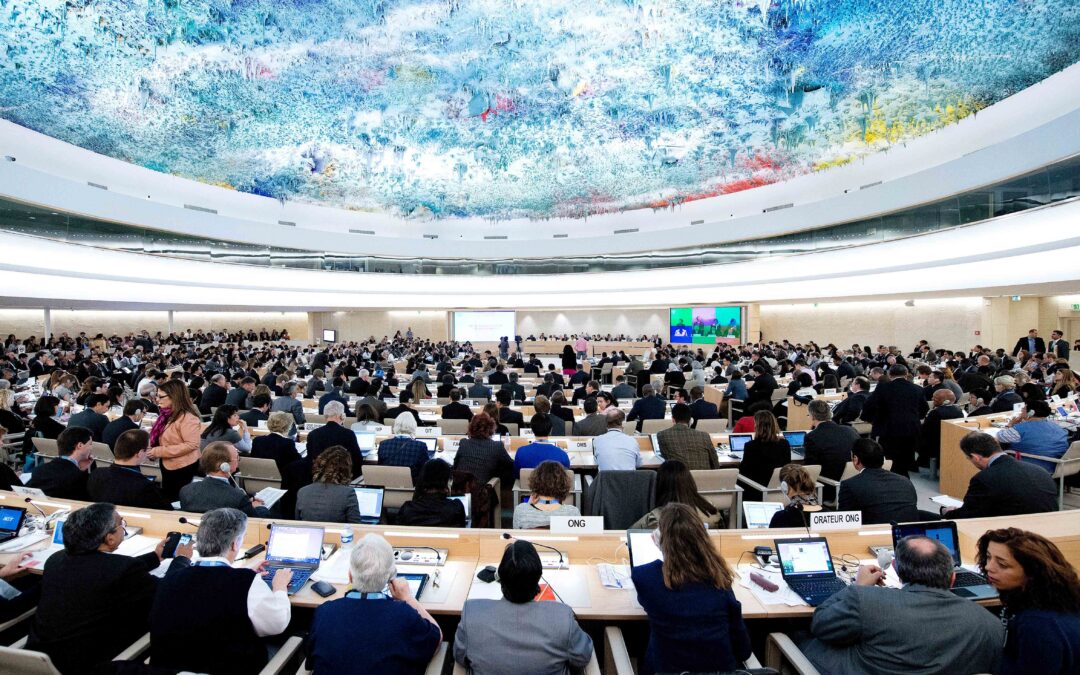
The renewal of the mandate of the Special Rapporteur on the promotion and protection of human rights and fundamental freedoms while countering terrorism, was enacted by a resolution adopted by consensus at the UN Human Rights Council in Geneva.
To acheive this successful outcome, Mexico (which leads the resolution) and other States had to defend the text of the resolution against attempts by Egypt and other States to insert language aimed at diluting, distorting or distracting the mandate from its current focus on preventing and responding to violations of human rights and on securing respect, protection and fulfilment of the human rights of victims of terrorism.
The Special Rapporteur delivers thematic reports to the Human Rights Council, carries out visits to countries, and acts on individual complaints. In the overall counter-terrorism architecture of the UN, the Special Rapporteur is also the only person with an exclusive independent mandate to remind States of their human rights obligations while countering terrorism, to advise them how to do so, and to draw public attention when they do not. So any dilution of the mandate would have also put the integrity and efficacy of the overall UN counter-terrorism strategy and architecture at risk.
Following the adoption of the mandate renewal resolution by the Council, the ICJ and other organisations expressed its deep appreciation for Mexico’s efforts, together with the strong support of numerous other States, to secure the future of the mandate.
The resolution text is available here: https://undocs.org/A/HRC/RES/40/16
Additional background is here.
Mar 19, 2019 | News
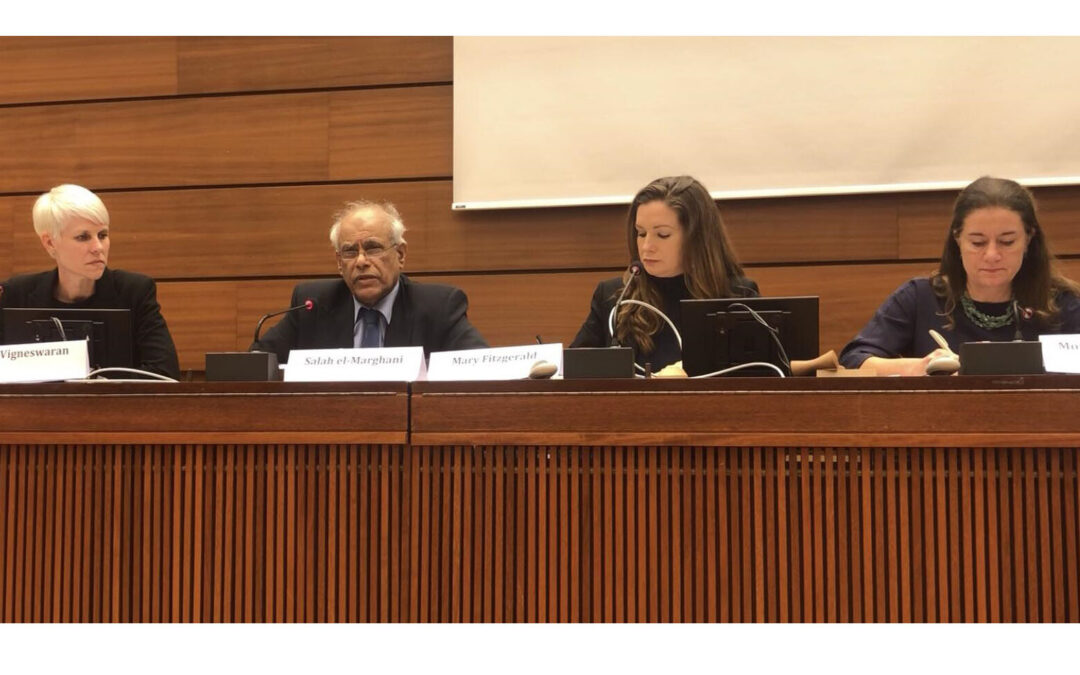
Today, the ICJ held a side event titled “Accountability for crimes under international law in Libya: Challenges and Prospects” during the 40th Session of the UN Human Rights Council in Geneva.
The event was co-hosted by the Permanent Mission of the Kingdom of Netherlands and the Permanent Mission of the Federal Republic of Germany.
A panel of renowned experts discussed a number of issues relating to accountability for crimes under international law in Libya, including shortcomings in Libyan law and practice, political and security challenges impacting prospects for reform, the role of the International Criminal Court, and the consequences for tackling human trafficking and abuse of migrants.
The panel included Monique van Daalen, Ambassador of the Permanent Mission of the Netherlands; Salah el-Marghani, former Justice Minister of Libya; Marwa Mohammed, Lawyers for Justice in Libya; Mark Kersten, Munk School of Global Affairs and Public Policy, University of Toronto, and Wayamo Foundation; Kate Vigneswaran, Senior Legal Adviser for the ICJ’s Middle East and North Africa Programme; and Mary Fitzgerald, Libya researcher and expert.
During the side event, the ICJ presented and distributed a briefing paper highlighting the key issues that hamper accountability for crimes under international law in Libya, including the definition of crimes under domestic law, amnesties and imunities, rights during arrest and detention, and rights at trial.
The paper included detailed recommendations to the Libyan authorities as well as the international community with a view to tackling the main obstacles to the achievement of accountability in Libya.
The briefing paper anticipates the publication of the forthcoming ICJ report on Libya’s criminal justice system.
Download:
Lybia-Accoutability challenges-Advocacy-Analysis brief-2019-ENG (Briefing paper, in PDF)
Libya HRC side event flyer – March 2019 (Event flyer, in PDF)
Mar 5, 2019 | News
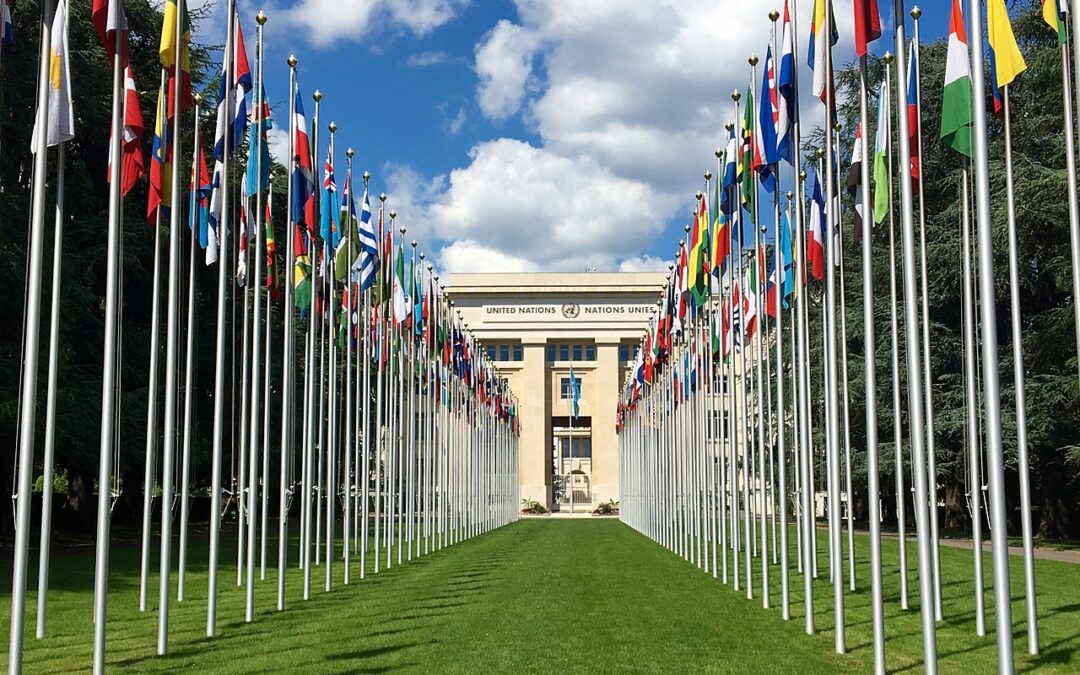
States at the United Nations Human Rights Council in Geneva should ensure that Egypt is not allowed to seize a leading role in relation to the mandate of the United Nations’ expert on human rights and counter-terrorism, nine international human rights organizations, including the ICJ, have said.
In light of Egypt’s record of severe and widespread abuse of counter-terrorism measures to violate human rights, the organizations warned against attempts by Egypt to undermine the expert’s mandate.
The mandate of the UN Special Rapporteur on the promotion and protection of human rights and fundamental freedoms while countering terrorism is due to be renewed in the coming weeks at the ongoing Human Rights Council session in Geneva.
Mexico has for many years led the resolution that established and maintained the expert, but is understood now to be in discussions with Egypt about a possible leadership role for Egypt.
Other changes to the resolution text may also be under consideration.
“Egypt has an appalling record of abusing counter-terrorism measures against human rights defenders and other dissenting voices, and was recently denounced by the UN Special Rapporteur on human rights defenders for severe reprisals against people who spoke with another visiting UN expert,” said Matt Pollard, Senior Legal Adviser and UN representative for the ICJ.
“To give such a country shared leadership on the renewal of the mandate of the UN’s expert on human rights and counter-terrorism would only do further harm to civil society and others in Egypt and elsewhere, undermine the work of the expert and the UN as a whole, and badly tarnish the long history of leadership Mexico has shown on these issues,” he added.
Nine organizations – ICJ, Amnesty International, ARTICLE 19, Cairo Institute for Human Rights Studies, CIVICUS/World Alliance for Citizen Participation, International Federation for Human Rights (FIDH), Human Rights Watch, International Service for Human Rights, and Privacy International – had earlier sent a joint letter to all countries representatives in Geneva highlighting their concerns.
This was followed by a joint oral statement at the Human Rights Council session on 1 March, during an interactive dialogue with the special rapporteur.
Egypt has gradually sought to dilute or distort the longstanding focus of the UN Human Rights Council’s work to protect and promote human rights and fundamental freedoms while countering terrorism, the groups said.
In 2018 it succeeded in watering down the council’s longstanding thematic resolution on the topic, in which states annually recognize concerns about abuses and urge respect for human rights at a global and abstract level.
However, any move to gain control over the resolution on which the mandate of the special rapporteur depends, or to dilute or reframe her mandate, would have far deeper and further-ranging damaging effects.
The special rapporteur acts on individual complaints, reports on the situation in particular countries, and addresses in detail topics relating to counterterrorism work around the world on an ongoing basis.
The special rapporteur also serves an essential function in providing independent oversight of counterterrorism measures from a human rights perspective within the overall UN system.
The mandate holds a uniquely important role in the UN counterterrorism architecture, as the only UN entity with the exclusive mandate to ensure the promotion and protection of human rights while countering terrorism.
The organizations have been urging other countries to strongly oppose any attempts to weaken the mandate of the special rapporteur.
The special rapporteur’s role should not be diluted by including the flawed Egyptian-led approach into the resolution for its renewal, or by sharing the leadership of the mandate renewal resolution with Egypt or other countries that have such an appalling record in relation to the very issues the mandate is to address, they said.
Allowing Egypt to jointly lead the mandate renewal would only serve to encourage a continuation of its pattern of gross human rights violations and abuses against civil society and others within Egypt in the name of countering terrorism, while shielding it from international scrutiny, the groups said.
It would also pose a long-term threat to the UN’s role in ensuring that counterterrorism measures are consistent with human rights, and that measures to uphold human rights for all and the rule of law are the fundamental basis for the fight against terrorism.
Contact
Matt Pollard, ICJ Senior Legal Adviser & UN Representative, t: +41 79 246 54 75 ; e: matt.pollard(a)icj.org
Feb 6, 2019 | News
The ICJ today expressed its grave concern over amendments to Egypt’s 2014 Constitution proposed by the House of Representatives yesterday, which could increase President el-Sisi’s control over the judiciary, extend his rule for 15 more years, expand the jurisdiction of military courts’ to prosecute civilians and broaden the military’s powers.
The amendments were proposed by one-fifth of the House of Representatives on 4 February, and reported to Parliament by its General Committee yesterday.
“The proposed amendments are a flagrant assault on the independence of the judiciary, and would expand the powers of presidency and further facilitate el-Sisi’s subordination of judicial and prosecutorial authorities,” said Said Benarbia, ICJ’s MENA Programme Director.
The amendments would grant the President authority to choose the Supreme Constitutional Court’s (SCC) President and its new members, chairs of all other judicial authorities, and the Public Prosecutor.
The President would also have authority to select the Chair and members of the Commissioners Authority, a judicial board that provides advisory opinions to judges on legal issues in cases pending before the SCC.
The General Committee’s report states the amendments are to “unify the mechanism of appointment” of these institutions.
The amendments would also establish a “High Council for Joint Judicial Affairs” chaired by the President to manage all common matters relating to the judiciary.
The amendment to Article 140 of the Constitution would extend presidential terms from four to six years.
Another “needed transitional article” would reportedly also permit President el-Sisi to run for re-election for another two terms, which, combined, could permit him to stay in office until 2034.
Article 140 of the Constitution currently imposes a two-term limit, and Article 226 prohibits amendments to “texts pertaining to the re-election of the president of the Republic…unless the amendment brings more guarantees.”
“This is an attempt to undermine constitutional safeguards aimed at protecting the right of the Egyptian people to freely choose their government and to take part in the conduct of public affairs,” said Benarbia.
“In accepting these amendments, the Parliament would abdicate its responsibility to uphold the Constitution and the rule of law,” he added.
Further amendments include the “redrafting and deepening the role of the Armed Forces” by expanding its mandate to include broad terms such as “safeguarding the constitution and democracy” and “preserving the basic elements of the state and its civilian character.”
The jurisdiction of military tribunals over civilians for “direct assault[s]” against military facilities, objects and personnel would also be expanded by the removing the requirement that the assaults be “direct.”
The amendment would make permanent a temporary constitutional provision requiring the Supreme Council of the Armed Forces—a military body—to approve the appointment of the Minister of Defense.
“The amendments effectively place the military above the law and the Constitution,” said Said Benarbia.
“They pave the way for the further entrenchment of the military in civilian affairs, which has already led to significant violations of civilian rights to participate in political life and express opinions critical of the regime,” he added.
Under international law, the jurisdiction of military courts must be limited to holding military personnel accountable for alleged violations of military discipline. No civilian should be prosecuted before military courts.
The amendments, which are still subject to parliamentary discussion and drafting by parliamentary committee, must eventually be approved in a two-thirds vote, and then by a majority in a referendum.
The ICJ expressed its concerns about the process for adoption of the 2014 Constitution, and its capacity to serve as a basis for the establishment of the rule of law in Egypt.
The ICJ made recommendations aimed at facilitating public participation in the legislative process in accordance with international standards and at ensuring constitutional provisions were consistent with international human rights law.
These concerns remain valid today.
Contact:
Said Benarbia, Director of the ICJ Middle East and North Africa Programme, t: +41-22-979-3817; e: said.benarbia(a)icj.org
Egypt-Constitution Statement-News-2019-ENG (full story with background infomation, in PDF)
Egypt-Constitution Statement-News-2019-ARA (full story in Arabic, in PDF)
Jan 14, 2019 | News
Today the ICJ condemned the conviction of prominent Egyptian political activist Ahmed Douma and called for his immediate removal from solitary confinement and release from prison.
Ahmed Douma, political activist and founding member of the now banned 6 April pro-democracy movement established in 2008, was convicted by the South Cairo Criminal Court on Wednesday 9 January 2019.
The conviction, resulting in a sentence of 15 years in a maximum security prison and a six million Egyptian pounds (US$335,000) fine, followed a re-trial on charges under the Penal Code and Law No. 10 of 1914 on Illegal Assembly including using force and violence against military and police officers, disrupting traffic, participating in an illegal assembly for such purposes, burning the Egyptian Scientific Institute, vandalizing public property, and possessing Molotov Cocktails and rocks to vandalize public property.
The charges relate to his involvement in a three-week sit-in protest outside the Cairo Cabinet Offices in November and December 2011 against the Supreme Council of the Armed Forces’ decision to appoint Kamal Al Ganzouri as Prime Minister, and calling for a civilian government during the post-revolution transition period. The protest erupted in clashes between military forces and protestors on 16 December 2011, which lead to the death of 18 protestors by live ammunition, injury of more than 1900 others and property damage. Douma and 268 others were charged with all offences without distinction.
Ahmed Douma has been held in solitary confinement since late 2013 in connection with his conviction in another case.
Before handing down the sentence, Judge Mohamed Shereen Fahmy stated the country was “plagued by the intellectually defeated and the socially […] lost in the maze of life, seeking a position through which they can establish themselves as national symbols, liars, deceivers, and accomplices, […] who one would expect to be the homeland’s protectors, but in reality, they are its worst foes.”
“The harsh sentence is a clear message to all political activists that any political activity or dissent will not be tolerated under Egypt’s military dictatorship,” said Said Benarbia, Director of ICJ’s MENA Programme. “Judge Fahmy’s statement demonstrates he was never independent and impartial, but was implementing the political will of the al-Sisi led government. The Egyptian regime’s politicization of the judiciary means those with opposing views are unlikely to have a fair trial.”
On 22 December 2013, a Cairo Misdemeanor Court convicted Ahmed Douma in another case, along with two other political activists and founding members of the 6 April movement, Ahmed Maher and Mohamed Adel, for “illegally organizing a protest” under Law No. 107 of 2013 on the Right to Public Meetings, Processions and Peaceful Demonstrations. They were sentenced to three years’ imprisonment and fined 50,000 Egyptian pounds (US$7,239) each.
Since that conviction, Douma has been detained in solitary confinement, with minimal time outside his cell each day. Prolonged solitary confinement is prohibited under international law.
“The Egyptian Authorities are subjecting a political activist to severe ill-treatment in reprisal for his participation and his role in the pro-democracy uprisings of January 2011 and as a warning to others to take heed of what will happen should you dare to express your views. Ahmed Douma’s solitary confinement for more than five years is a breach of Egypt’s obligations under international law,” said Said Benarbia.
Contact:
Said Benarbia, Director of the ICJ Middle East and North Africa Programme, t: +41-22-979-3817; e: said.benarbia(a)icj.org
Egypt-Release Ahmed Douma-News-Web Story-2019-ENG Full press release (English, PDF)
Egypt-Release Ahmed Douma-News-Web Story-2019-ARA Full press release (Arabic, PDF)