Mar 12, 2017 | Events, News
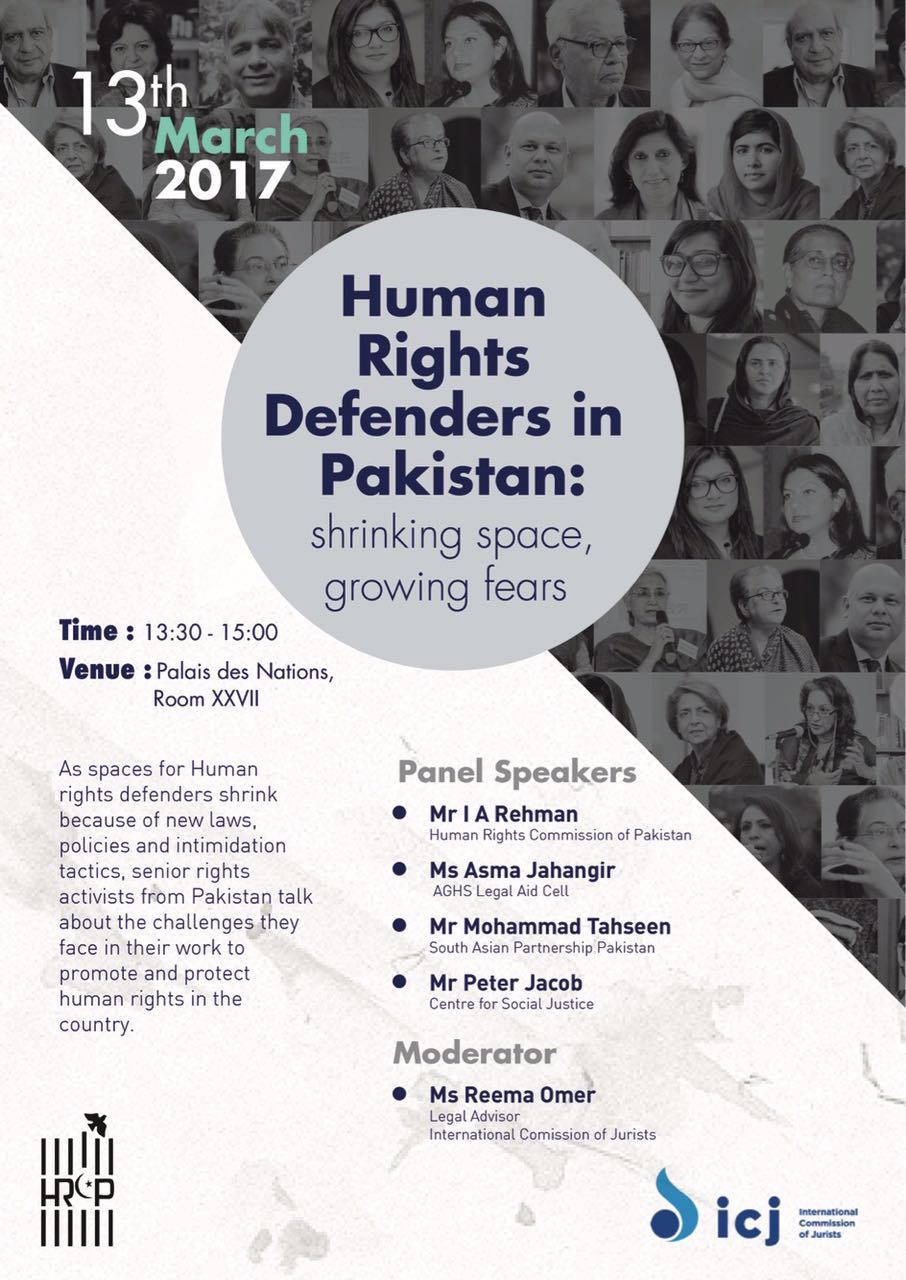
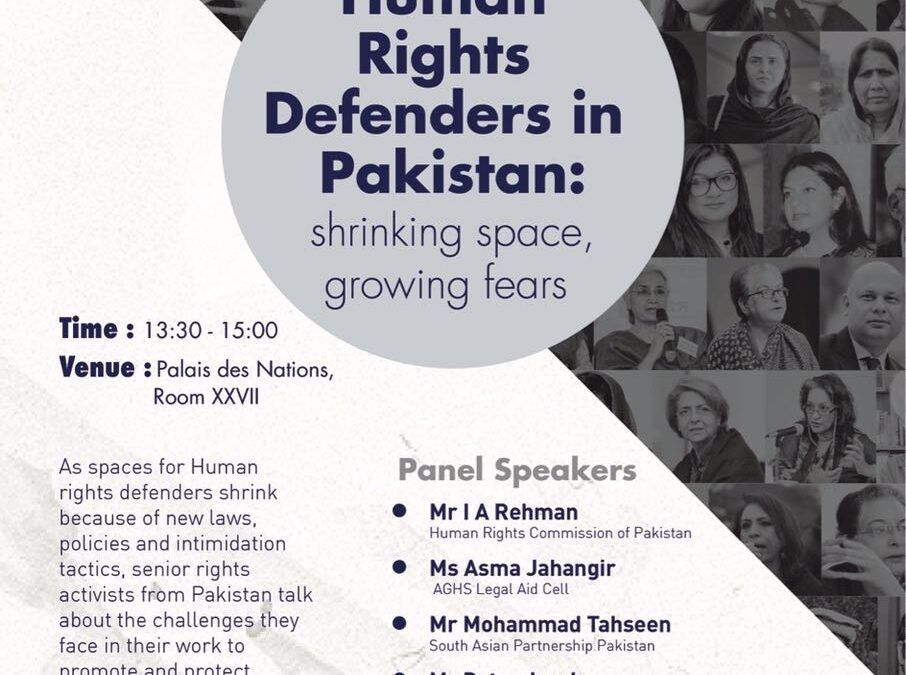
A side event at the UN Human Rights Council, 13 March 2017.
13 March, 13:30-15:00
Palais des Nations, Room XXVII
As spaces for human rights defenders shrink because of new laws, policies and intimidation tactics, senior rights activists from Pakistan talk about the challenges they face in their work to promote and protect human rights in the country.
Panelists:
Mr I. A. Rehman: Human Rights Commission of Pakistan
Ms Asma Jahangir: AGHS Legal Aid Cell
Mr Mohammad Tahseen: South Asia Partnership Pakistan
Mr Peter Jacob: Center for Social Justice
Moderator:
Ms Reema Omer: International Commission of Jurists
Flyer available here.

Feb 24, 2017 | News, Publications, Reports, Thematic reports
The Indian authorities must end discrimination against people based on sexual orientation and gender identity in the formal justice system, the ICJ said in a report released today.
The 60-paged report “Unnatural Offences”: Obstacles to Justice in India Based on Sexual Orientation and Gender Identity documents the challenges queer persons in India face while trying to access justice, starting from the impact of laws that criminalize people for their real or imputed sexual orientation and gender identity; to police harassment, violence and abuse; and to discrimination and other hurdles within the justice system.
Based on 150 interviews across nine cities in India, including with people who identified as lesbian, gay, bisexual, and transgender, the report uses the term “queer” to refer to any individual who identifies with a non-normative sexuality or gender identity.
It includes individuals who identify as lesbian, gay, bisexual, transgender, intersex and gender-queer, and also encompasses persons who may not fit into any of these identity categories.
“Criminalization, police violence, and the prejudiced attitudes of officials in the courts’ system have a profoundly detrimental impact on the ability and willingness of queer persons to resort to legal avenues to obtain justice,” said Sam Zarifi, ICJ’s Asia Director.
“The systemic discrimination and violence faced by queer persons in India, and the challenges they face accessing justice, are clearly contrary to India’s international human rights law obligations and the Indian Constitution,” he added.
The report also draws on responses from various government departments to ICJ’s requests under the Right to Information Act, both on the enforcement of the law against queer individuals and on gauging how legal entitlements have operated.
It describes how:
- Laws like Section 377 of the IPC and some other broad and vaguely formulated laws, such as those that criminalize sex work and begging, are used by the police to persecute people based on their real or imputed sexual orientation and gender identity, and inhibit queer persons from accessing justice.
- Even where the law purportedly provides legal entitlements and protections, queer persons continue to face a range of difficulties in accessing them.
- Police violence, abuse and harassment are one of the biggest barriers to queer persons’ access to the justice system in India.
- The challenges that lawyers who argue cases involving the human rights of queer persons combine with the biases of officials in the formal justice system compounding the difficulties queer persons face in obtaining justice.
“The inspiring work of activists and human rights lawyers in India has led to positive judicial decisions showing the potential of the law to affirm human rights and ensure justice for all persons, irrespective of their sexual orientation or gender identity,” Zarifi said.
“Indian authorities should build on this momentum and take immediate steps to end the discrimination and violence queer persons face,” he added.
The ICJ report makes a number of recommendations to Indian authorities, which include:
- Ensure that police officers promptly register and investigate any complaint regarding violence or any other criminal act filed by a queer person and/or on their behalf;
- Provide legal and sensitization training relating to sexual orientation and gender identity to lawyers and judges under the State and District Legal Services Authority along with outreach programmes to facilitate queer individuals’ access to the justice system;
- Repeal section 377 of the Indian Penal Code and vaguely worded criminal laws that invite discriminatory application, or substantially revise them to ensure there is no scope for abuse in their enforcement;
- Withdraw the Transgender Persons (Protection of Rights) Bill 2016 as currently drafted, engage in meaningful and substantial public consultation with members of the transgender community; and ensure that any process introduced for the legal recognition of gender identity is consistent with international human rights law and the NALSA.
Contact
Sam Zarifi (Bangkok), ICJ Asia Pacific Regional Director, t: +66 807819002; e: sam.zarifi(a)icj.org
Ajita Banerjie, ICJ Consultant in Delhi, t: +91 9920995526 ; e: ajita.banerjie@icj.org
Additional information
The Indian authorities have an obligation to respect, protect and fulfill the rights to equality before the law, equal protection of the law and freedom from discrimination; the rights to privacy, liberty and security of the person, including the right not to be subjected to arbitrary arrest and detention; the right to life, to freedom from torture and other ill-treatment; and the right to access justice and to an effective remedy, for all persons, including queer people, without discrimination as to their real or imputed sexual orientation and gender identity.
As the Supreme Court of India has reaffirmed, the Indian Constitution also guarantees several of these rights.
For example, in the seminal case of NALSA v UOI, the Court affirmed transgender persons’ right to their self-identified gender identity, based on the rights to equality, non-discrimination, freedom of expression and dignity.
India-SOGI report-Publications-Reports-Thematic report-2017-ENG (full report in PDF)
Feb 22, 2017 | News
The Pakistan Government must not bring back military courts to try civilians for terrorism-related offences, the ICJ said today.
An earlier law giving military courts authority to try civilians lapsed after two years on 6 January 2017.
The use of military courts to try civilians is inconsistent with international standards, the ICJ recalled.
“Evidence from practice clearly shows that not only have military trials of civilians been blatantly unjust and in violation of the right to a fair trial, they have also been ineffective in reducing the very real threat of terrorism in Pakistan,” said Sam Zarifi, ICJ’s Asia Director.
According to media reports, the draft amendment, if adopted, would extend the “exceptional” use of military courts for another three years. The ICJ fears that repeated extensions risk making the practice effectively permanent.
It would also give military courts jurisdiction over any offence considered to be an act of terrorism, a broader mandate than 2015 constitutional amendment, which was applicable only to “terrorism motivated by religion or sectarianism” and where the accused were “members of proscribed organizations”.
“Bringing back military courts deflects attention from the real issue: the Government’s complete failure to enact necessary reforms to strengthen the criminal justice system in the two years military courts were in operation,” Zarifi said.
“The Government must account for its failure to deliver on the promise of delivering justice for the victims of terrorism and other abuses in Pakistan instead of once again extending the “exceptional” use of military courts for civilian trials,” he added.
The Government has scheduled a meeting with opposition parties on 23 February in an attempt to achieve consensus over a constitutional amendment to restore military courts.
Constitutional amendments require a two-thirds majority vote in both houses of parliament to be enacted.
While the ruling party has the requisite majority in the National Assembly (lower house), it appears to lack the numbers in the Senate (upper house) to pass the amendment.
The Pakistan Parliament must stand up to the executive in defense of the rights of all people in Pakistan, instead of allowing the administration to bring back—and even expand—a discredited and abusive process, the ICJ says.
Pakistan passed the 21st amendment to the Constitution in January 2015, authorizing military courts to try civilians for terrorism-related offences for a period of two years. The 21st amendment lapsed on 6 January 2017.
Military courts have convicted 274 people in the two years since they have been used to try civilian terror suspects. . One hundred and sixty-one people were sentenced to death and 113 people were given prison sentences. At least 12 people given death sentences have been executed by hanging.
The ICJ has documented serious fair trials violations in the operation of military courts including: denial of the right to counsel of choice; failure to disclose the charges against the accused; denial of a public hearing; failure to give convicts copies of a judgment with evidence and reasons for the verdict; and a very high number of convictions based on “confessions” without adequate safeguards against torture and ill treatment.
The ICJ unequivocally opposes the use of the death penalty as a violation of the right to life and freedom from cruel, inhuman or degrading punishment.
Contact
Sam Zarifi, ICJ Asia Pacific Regional Director (Bangkok), t: +66 807819002; e: sam.zarifi(a)icj.org
Reema Omer, ICJ International Legal Adviser for Pakistan (Lahore), t: +923214968434; e: reema.omer(a)icj.org
Feb 10, 2017 | News
Extending the mandate of the Truth and Reconciliation Commission (TRC) and Commission on Investigation of Disappeared Persons (COID) without accompanying legal amendments to the TRC Act, 2014, in line with Nepal’s international legal obligations, will be meaningless, the ICJ said today.
It will fail to empower the commissions to address the root causes of the conflict and provide justice to victims, the ICJ added.
On 9 February 2017, the Government of Nepal formally extended the mandate of the TRC and COID for another year.
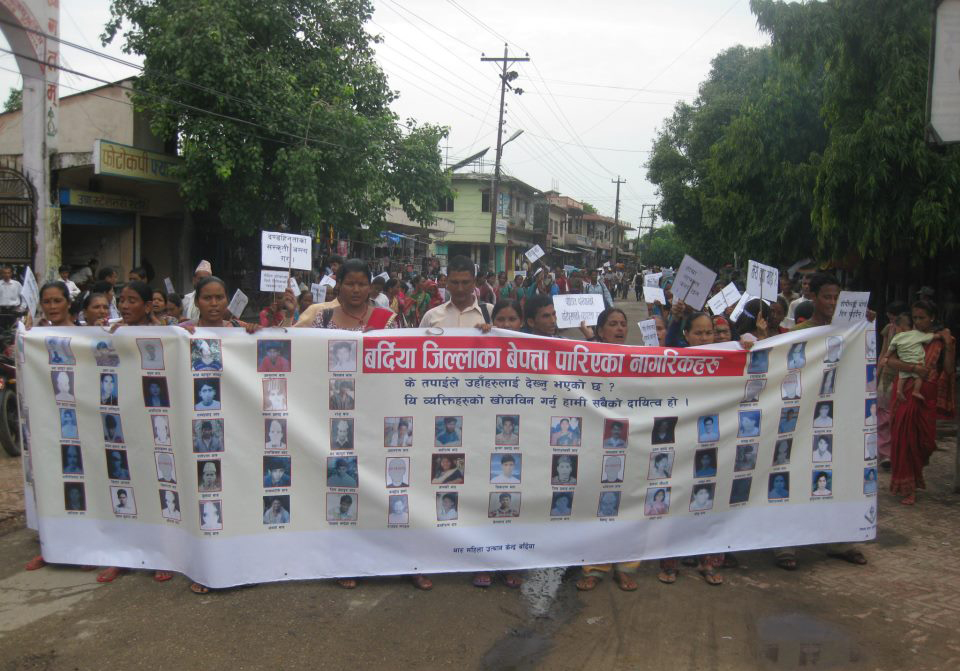
The TRC and COID were established on 10 February 2015 through the Commission on Investigation of Disappeared Persons, Truth and Reconciliation Act, 2014 (TRC Act), with the mandate to investigate alleged human rights abuses committed by both sides of Nepal’s decade-long armed conflict between the Government of Nepal and Communist Party of Nepal-Maoist (CPN-M) rebels.
However, due to a flawed legal mandate, resource and capacity limitations, and lack of political will, the commissions have been unable to carry out their work effectively.
“Unless the government of Nepal is prepared to amend the TRC Act in line with the Nepal Supreme Court’s rulings and international law, and to take other concrete steps to address the persistent challenges that have plagued the commissions’ ability to complete their work over the past two years, the extension of their mandate will be meaningless,” said Sam Zarifi, the ICJ’s Asia-Pacific Director.
In two separate rulings, the Nepal Supreme Court has previously ruled that the TRC Act and its predecessor TRC Ordinance were in violation of Nepal’s international legal obligations, as they allowed for amnesties for gross human rights abuses and serious violations of international humanitarian law amounting to crimes under international law.
Despite repeated calls by the ICJ, as well as other human rights and victims groups, to ensure a credible transitional justice process by amending the TRC Act in line with Nepal’s Supreme Court order and international standards, and by providing adequate resources to enable the commissions to carry out their work effectively and independently, the Government of Nepal has thus far failed to take any steps to implement the Supreme Court’s orders.
Nevertheless, the commissions finally commenced their work in February 2016, one year into their two-year mandate, and despite a severe lack of public faith in the commitment of the government and the ability of the commissions to deliver justice, victims came forward to submit more than 60,000 complaints to the two commissions combined.
“The government of Nepal must demonstrate its commitment to deliver justice to victims of Nepal’s armed conflict,” said Zarifi. “Victims have already waited more than a decade to receive justice and are losing hope in the transitional justice process.”
“The Nepal government and political parties must not once again betray the trust of victims by perpetuating a fundamentally flawed transitional justice process without concomitant reforms that will address victims’ rights to truth, justice and reparation,” he added.
While extending the mandate of the TRC and COID, the Government of Nepal must immediately establish a credible transitional justice process that ensures victims’ rights to truth, justice and reparation by: amending the TRC Act in line with the Supreme Court rulings and international law; empowering the TRC and COID with adequate resources to function independently, transparently and in a victim-centred manner; and, adopting necessary legislation to criminalize serious international crimes, including enforced disappearance, torture and other ill-treatment, and rape and other sexual violence, with retroactive effect and without any limitations period for conflict-era cases.
Jan 19, 2017 | News
The Sri Lankan government must deliver on the clear demand for justice from Sri Lankans nationwide by implementing the Consultation Task Force recommendations without further delay, the ICJ said today.
Among these recommendations, the calls for a special court with international judges and a bar against amnesties for crimes under international law are of particular importance, the ICJ added.
The Consultation Task Force on Reconciliation Mechanisms (CTF), a panel of 11 independent eminent persons appointed by Prime Minister Ranil Wickremesinghe in January 2016, publicly released its final report on 3 January 2017.
The report, reflecting the views of people across the country gathered through island-wide public consultations on transitional justice, highlights the lack of public confidence in the justice system’s capacity and will to deliver justice for victims of Sri Lanka’s nearly 30-year armed conflict that ended in 2009.
“The CTF report highlights a widespread lack of trust among Sri Lankans across the country, regardless of region, ethnicity, religion or language, in the ability of the criminal justice system in its current form to address serious human rights abuses stemming from the conflict,” said Nikhil Narayan, the ICJ’s South Asia senior legal adviser.
The report also calls upon the Government of Sri Lanka to take necessary steps to ensure a credible transitional justice process in line with the October 2015 UN Human Rights Council resolution 30/1 that it co-sponsored.
“If the Sri Lankan government wants to restore public confidence in the system, it must seriously consider victims’ voices and implement the CTF recommendations on truth, justice and reparation consistent with the commitments it voluntary undertook at the Human Rights Council,” Narayan added.
Importantly, the CTF report reiterates the commitments pledged in HRC resolution 30/1, calling for active international participation in a special judicial mechanism established to deal with accountability for human rights abuses committed during the conflict by both sides, and for a bar against amnesties for international crimes.
According to the ICJ, the Sri Lankan government took an important first step towards reconciliation when it adopted the UN resolution and later established the CTF to carry out public consultations to hear a cross section of voices on transitional justice.
“Unfortunately, since then, it has been disappointing in its lack of urgency in implementing much of those stated promises and in its apparent disregard for the CTF recommendations,” Narayan said.
Several members of the government have dismissed the CTF’s recommendations, especially with regard to the inclusion of at least one international judge on every bench of the special judicial mechanism.
The Minister of Foreign Affairs recently spoke of the need for “an independent and credible domestic mechanism” without alluding to any international participation, as has been reiterated by those seeking redress as a crucial element to ensure faith in the justice mechanism.
The ICJ has in the past highlighted Sri Lanka’s culture of impunity in the justice system looking at a number of emblematic cases, and called into question the State’s capacity and political will to use the criminal justice system and other ad-hoc measures to deliver justice and accountability to victims and survivors of serious human rights abuses.
“As the situation of Sri Lanka comes before the UN Human Rights Council again this March, the Sri Lankan government is in a position to demonstrate both to the UN Member States but more importantly to its own people at home its seriousness in pursuing truth, justice, reparation and non-recurrence for conflict victims who have been waiting for justice for decades. It must seize this opportunity before it is one more of many missed opportunities,” Narayan added.
Contact:
Nikhil Narayan, ICJ South Asia senior legal adviser, t: +91-8939325204 (Chennai); +94-758898067 (Sri Lanka); +1-562-261-3770 (Whatsapp) ; e: nikhil.narayan(a)icj.org
Download the full text with additional background info, in PDF:
Sri Lanka-CTF recommendations-News-Press release-2016-ENG
Jan 6, 2017 | News
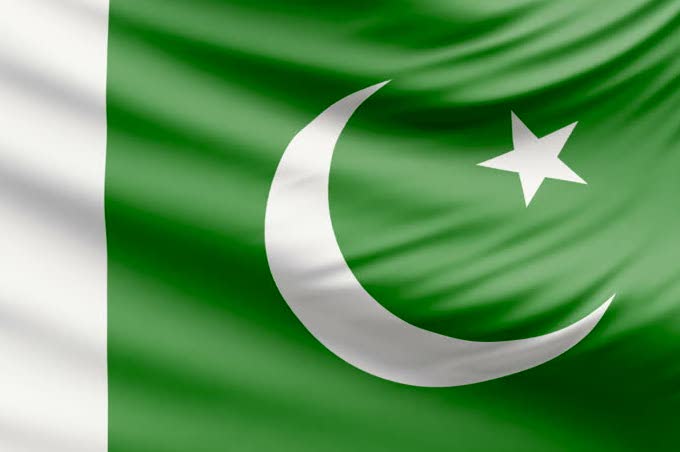
As Pakistani military courts once again cease to have jurisdiction over civilians for terrorism-related offences, the Government must urgently reform the country’s criminal justice system, the ICJ said today.
Perpetrators of terrorist attacks must be brought to justice pursuant to fair credible trials and in accordance with due process, the human rights organization added.
The 21st Amendment and corresponding amendments to the Army Act 1952 are scheduled to lapse today, as their respective two-year sunset clauses expire. So far, the Pakistani Government has not proposed any legislation to extend the jurisdiction of military courts to conduct trials of civilians, the ICJ says.
The Geneva-based organization has published an updated list of people convicted by military courts, the charges against them, and their alleged organizational affiliations.
“The lapse of the jurisdiction of military courts over civilians is a step in the right direction, but unsurprisingly, there is no sign of the promised reforms to strengthen the ordinary criminal justice system to effectively handle terrorism-related cases,” said Sam Zarifi, ICJ’s Asia Director.
The National Action Plan envisioned military courts as a short-term “exceptional” measure to try “terrorists”, to be operational only for a two-year period during which the Government would bring about necessary “reforms in criminal courts system to strengthen the anti-terrorism institutions.”
“The Pakistani Government must not re-enact legislation to continue secret military trials of civilians, nor resort to more short-term, short-sighted security measures that are contrary to human rights protections,” Zarifi added.
Instead, the Government should urgently invest in enhancing the capacity and security of judges, investigators and prosecutors to make the regular criminal justice system more effective in conducting fair, credible terrorism trials and bringing perpetrators to account, the ICJ says.
According to military sources and ICJ’s monitoring of military trials in Pakistan since January 2015, military courts have convicted 274 people for their “involvement” in terrorism-related offences, 161 of whom have been sentenced to death.
Twelve out of the 161 people sentenced to death have been hanged, 113 people have been given prison sentences. Details of only seven people given life imprisonment have been made public. The names, charges, and duration of prison terms for the remaining 106 people have not been disclosed.
Contact
Sam Zarifi, ICJ Asia Pacific Regional Director (Bangkok), t: +66 807819002; e: sam.zarifi(a)icj.org
Reema Omer, ICJ International Legal Adviser for Pakistan (Lahore), t: +923214968434; e: reema.omer(a)icj.org
Read also
Pakistan: stop military trials for civilians
Pakistan: ICJ urges Government not to extend oppressive counter-terrorism law
Additional information
At least 159 out of 168 people (95 per cent) whose convictions have been publicly acknowledged by the military had allegedly “admitted” to the charges, raising serious questions about the possibility of torture or other coercive measures being used to secure these confessions.
The ICJ’ 2009 global study on state responses to security threats examined in detail the dangers of the “exceptionalism doctrine”, which justifies a departure from the normal legal processes and human rights protections on the basis of the “exceptional” character of the threat.
In time, many of these measures became permanently incorporated into ordinary law, blinding governments to the actual reasons behind the lack of accountability for terrorism and serious crime.