Mar 25, 2014 | News
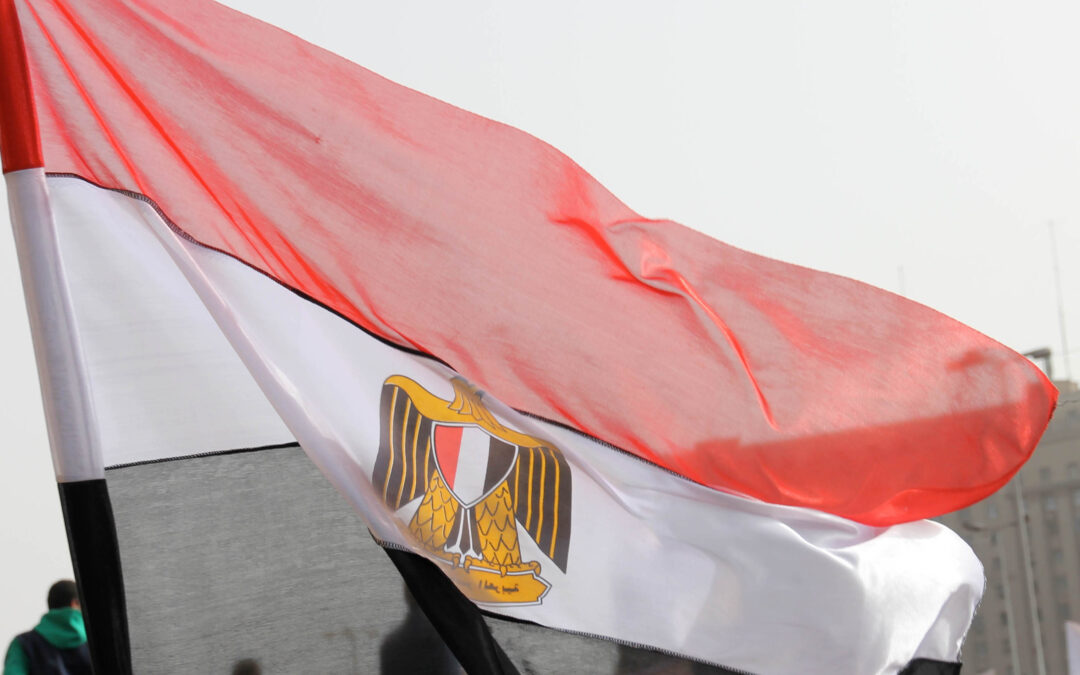
The ICJ today strongly condemned the decision of the Criminal Court of Minya to convict 529 individuals and to sentence them to death.
The individuals were sentenced for “participating in an attack on a police station in Minya,” “murder of a police officer,” “attempted murder of two other officers,” “seizing weapons” and “damaging public property”.
The verdict comes against a backdrop of a continuing crackdown on individuals suspected of supporting the ousted President, Mohamed Morsi, or being members of the Muslim Brotherhood, an organization officially designated by the military and other transitional authorities as a terrorist organization.
The verdict followed a two-day trial that disregarded fundamental fair trial standards.
The first hearing lasted 30 minutes, while the second lasted one hour.
International law is clear: the imposition of the death penalty following an unfair trial violates the right to life.
The ICJ calls on the Egyptian authorities to extinguish the convictions resulting from this trial and ensure that those arrested, prosecuted and convicted for the legitimate exercise of their rights to freedom of association and assembly are immediately released.
“The Minya trial made an absolute mockery of justice, violating basic human rights, including the rights to life, to liberty, to be presumed innocent and to defence,” stated Said Benarbia, Director of the ICJ Middle East & North Africa Program. “Even with Egypt’s long history of unfair trials and systematic politicization of the judiciary, the Minya trial sets a new low, and could be dangerous precedent for mass convictions following mass trials against government critics.”
The ICJ is deeply concerned that this trial is a part of a deliberate policy by the Egyptian authorities to use the courts and the Office of the Public Prosecutor to arrest, prosecute, convict, and imprison opponents of the current authorities.
The ICJ is also concerned that this policy effectively shields from accountability police, security, and military officers responsible for human rights violations committed in the context of the crackdown that followed the ouster of President Morsi, including the killings of more than 1200 people, in particular during the dispersal of the Rabaa Al-Adawyia and Annahda pro-Morsi sit-ins on 14 August.
No effective investigation has yet been conducted into these killings, and the perpetrators remain unpunished.
“In times of crisis, judges and prosecutors must safeguard and uphold human rights and fundamental freedoms, not act as tools of repression by prosecuting and convicting individuals for the legitimate exercise of their rights” said Benarbia.
“The Egyptian authorities must respect the independence of judges and prosecutors and refrain from any undue, inappropriate or unwarranted interference in judicial matters,” Benarbia concluded.
Contact:
Said Benarbia, ICJ Director of the Middle East and North Africa Programme, tel: 41 22 979 38 17, e-mail: said.benarbia(a)icj.org
Dec 6, 2013 | News
The ICJ and Amnesty International expressed concern over the trial of Mohamed Belbouri before the criminal court of Oran in Algeria. The next hearing of the trial is held on Monday 9 December.
Belbouri, aged 29, stands as the sole accused in the murder of Professor Ahmed Kerroumi, an Algerian political activist. Kerroumi was killed in April 2011, shortly after meeting with the UN Special Rapporteur on freedom of expression, Frank La Rue, in Algeria.
The ICJ and Amnesty International call on the Algerian authorities to ensure the right of Kerroumi’s family members to know the truth about his killing and to criminally hold the perpetrator(s) to account in line with international fair trial standards.
The two organizations are concerned that the Belbouri trial has failed to meet these standards, including the right of the accused to be presumed innocent and to defence.
The two organizations are further concerned by allegations that acts of torture and other ill-treatment were inflicted on Belbouri during his interrogation in police facilities between 12 and 17 May 2011, apparently aiming to make him “confess” to the killing of Kerroumi.
Belbouri says he was beaten on the head, face, stomach and feet, electrocuted, made to sit on his knees for hours with a chair on his head, and threatened that his relatives would be ill-treated if he did not “confess”.
“Algerian authorities must respect and ensure the right of Belbouri to a fair hearing before an independent and impartial tribunal and in full compliance with international fair trial standards,” said Wilder Tayler, ICJ Secretary General.
“The authorities must also ensure that all reports of torture and other ill-treatment of Belbouri are thoroughly and impartially investigated, and that any statement alleged to have been obtained as a result of torture or other ill-treatment is not admitted as evidence by the court,” Tayler added.
Lawyers representing the accused and the family of Professor Kerroumi have both said that the trial was marred by irregularities.
These include the court’s refusal to allow the defence to call and cross-examine witnesses, including the forensic expert who performed the autopsy on Ahmed Kerroumi’s body, and to challenge and test evidence put forward by the prosecution.
“Justice would not be served by sentencing – possibly to death – a man who has claimed his innocence all along when they are so many doubts about the seriousness of the investigation,” said Philip Luther, Middle East and North Africa Director at Amnesty International.
Contact:
Said Benarbia, ICJ Senior Legal Adviser of the Middle East and North Africa Programme, tel: 41 22 979 38 1, e-mail: said.benarbia(a)icj.org
Dec 5, 2013 | Events, News
The 4th ICJ Geneva Forum of Judges and Lawyers opened today. This year’s forum promotes the role of women in the judiciary, focusing particularly on women judges and lawyers from Africa and the Middle East.Scheduled on 5-6 December, it forms part of a broader ICJ initiative on women judges, lawyers and human rights defenders as agents of change.
The Forum is convened annually by the ICJ’s Centre for Independence of Judges and Lawyers, bringing together legal practitioners from around the world to help safeguard the independence and impartiality of the judiciary and the legal profession.
The 2013 edition of the Forum is supported by the République and Canton de Genève, Australian Aid, and PeaceNexus Foundation.
ICJGeneva Forum 2013-Final Agenda-event-2013 (download in pdf)
ICJGeneva Forum 2013-Participants list-event-2013 (download in pdf)
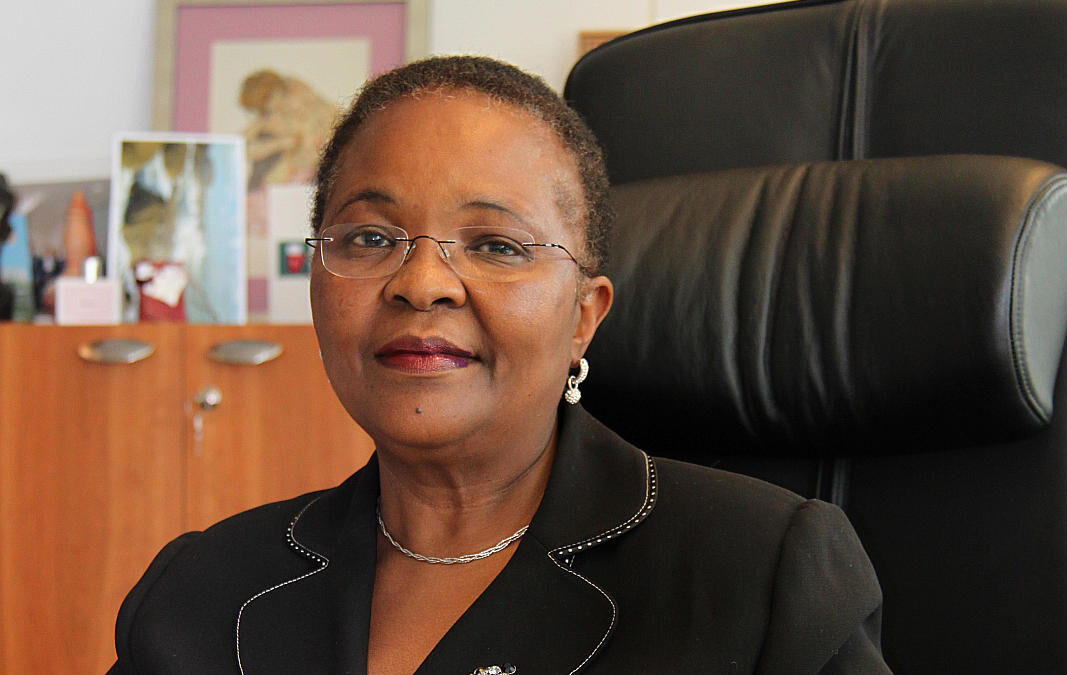
Picture: ICJ Commissioner Sanji Monageng (Botswana) will chair the session on stories from the frontline.
Nov 24, 2013 | News
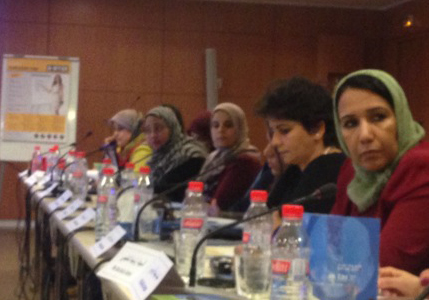
Women judges and lawyers from across the Middle East and North Africa participated in the ICJ Colloquium on Women and the Judiciary in MENA on 22 and 23 November in Tunis.
The event brought together women of different generations from a range of countries including Bahrain, Egypt, Kuwait, Libya Morocco, Palestine and Tunisia.
They discussed the significant personal and professional challenges faced by women judges and lawyers in the region.
Sharing their personal testimonies and experiences, participants underscored the specific challenges which arise for women judges and lawyers in situations of transition, conflict and occupation or in contexts where women’s participation in the judiciary is not possible or subject to significant restrictions.
They identified recommendations for change and highlighted the need for increased cross-regional support networks and opportunities for dialogue and joint action.
The Colloquium marks the initial phase of an ICJ initiative to support women judges, lawyers and human rights defenders in the Middle East and North Africa as agents of change.

Oct 4, 2013 | News, Publications, Reports, Trial observation reports
In a report published today, the ICJ details a catalogue of violations of fair trial rights and other serious human rights violations committed against those detained in the context of the UAE 94 trial.
The report, Mass convictions following an unfair trial: The UAE 94 case, comes amidst a crackdown on individuals calling for peaceful political reform, who continue to be arrested, detained, prosecuted and convicted for the lawful exercise of their rights to freedom of expression, association and assembly.
The UAE authorities must end this crackdown and ensure the immediate and unconditional release of those convicted in the UAE 94 trial, the ICJ says.
“The UAE 94 trial has been marred with a litany of violations of fair trial rights. The convictions of 69 individuals following this trial must be quashed and those imprisoned must be immediately and unconditionally released”, said Said Benarbia, senior legal adviser of the ICJ Middle East and North Africa Programme.
Those convicted on 2 July 2013 were found guilty of “establishing, founding and administering an organization, with the aim of challenging the basic principles upon which the government of the State is based, taking control of the government and establishing a secret structure for the organization”.
Fifty-six of them were sentenced to ten years’ imprisonment, five of them to seven years’ imprisonment and eight others, who were tried in absentia, to fifteen years’ imprisonment. The remaining 25 accused were acquitted.
The ICJ notes that, since 31 July 2013, many of the prisoners convicted in the UAE 94 case have begun a hunger strike to protest against the conditions of their detention.
They have reportedly been subjected to various forms of ill-treatment, including beatings by prison guards and light depravation.
The authorities have failed to investigate the many human rights abuses alleged to have been committed against those detained in the context of the UAE 94 case, the ICJ says.
Instead, the UAE authorities have continued their crackdown on political activists and government critics, including those that have publicly spoken out in support of the UAE 94 or against the conditions of detention of those imprisoned.
“Rather than live up to the commitment made by the UAE to the Human Rights Council to “place human rights at the top of its priorities”, the UAE authorities have embarked on a sustained campaign to suppress any form of peaceful dissent and all calls for political reform,” Benarbia added. “They must comply with their obligations under international law and bring an end to this cycle of arbitrary arrest, detention, prosecution and unfair trials against of all those that dare to speak out.”
Key findings of the report:
- Most of the detainees were not informed of the reasons for their arrest and promptly notified of the charges against them.
- They were denied their right to prompt access to a lawyer, including during interrogation and were not brought before a judge or a judicial authority within 48 hours of their arrest.
- Most of the detainees were held in incommunicado detention and in secret and unofficial detention centres.
- They were also held in prolonged solitary confinement, which in some cases lasted more than 236 days.
- Most of the detainees were reportedly subjected to torture or other ill treatment by the authorities, including severe beatings, pulling out detainees’ hair, sleep deprivation, exposure to extreme light during the day and night, death threats and other threats and verbal abuse, as well as prolonged incommunicado detention and solitary confinement.
- The Court failed to investigate or order the investigation of such allegations.
- To the contrary, statements and “confessions” alleged to have been obtained as a result of torture or other ill-treatment were admitted as evidence by the court.
Contact :
Said Benarbia, ICJ Senior Legal Adviser of the Middle East and North Africa Programme, tel: 41 22 979 38 17, e-mail: said.benarbia(a)icj.org
UAE-Violations at UAE 94 Trial-Publications-Reports-2013 (full text in pdf)
Sep 4, 2013 | News
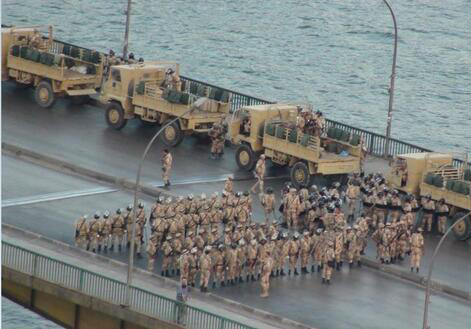
The ICJ calls on Egyptian authorities to conduct a thorough, effective, independent and impartial investigation into the unlawful and excessive use of force by security and armed forces, in particular during the dispersal of the Rabaa Al-Adawyia and Annahda pro-Morsi sit-ins on 14 August.
The statement comes as the ICJ concluded a high-level mission on 29 August to assess the human rights and rule of law situation in Egypt following the ouster of President Mohamed Morsi by the armed forces.
The use of live ammunition to disperse the sit-ins and against pro-Morsi protesters has resulted in the deaths of more than 1000 individuals, most of which appear to amount to unlawful killings.
The investigation should also examine violent attacks by some pro-Morsi supporters, including the use of firearms, against security officers, police stations, and bystanders, and attacks on religious minorities, in particular Christians, their churches, buildings, and homes.
“The Egyptian authorities should investigate the unlawful use of live ammunition against protesters with a view to holding the perpetrators to account, providing remedy and reparation to the victims, and ending the impunity the security and armed forces have enjoyed over human rights abuses,” said ICJ Commissioner Kalthoum Kennou. “In policing demonstrations, security must act to safeguard the right to life, in particular by ensuring that the decision to use lethal firearms is made only when strictly unavoidable in order to protect life.”
The ICJ is also concerned that following the crackdown, thousands of people were arrested under conditions that violate due process guarantees, in particular the rights to have access to a lawyer and to family members.
Hundreds are also reportedly missing and the ICJ fears many of them have been subjected to enforced disappearance.
Hearings for renewing pre-trial detentions orders are conducted in prisons and, as a result of the large number of detainees, most are either not represented by legal counsel, or are not able to have access to and to consult with their lawyers. Many of the detainees are being held arbitrarily under administrative detention, the ICJ further notes.
“The Egyptian authorities must ensure the rights of those arrested to liberty, security of person, to have access to lawyers and family members and to challenge the lawfulness of their detention, ” said ICJ Commissioner Shawan Jabarin ” the Egyptian authorities must fully communicate the list of all the detainees, their places of detentions and the fate and whereabouts of the hundreds who are reportedly missing. They must also comply with their legal obligations under international law and ensure that no one is subjected to enforced disappearance.”
The Office of the Public Prosecutor has charged thousands of individuals who were arrested following the ouster of president Morsi and the dispersal of the sit-ins, including with “ attempted murder”, “opposing authorities”, “attacking law enforcement officials”, “causing disorder”, “blocking roads” and “throwing Molotov cocktails at the police”.
The office also charged President Morsi and his advisers, including leaders of the Muslim Brotherhood, with, among other charges, “inciting followers to commit premeditated murder, use of force, use of firearms and illegal attacks on authorities.”
Moreover, seventy-five judges who called for the reinstatement of former President Morsi have been investigated by an investigating judge, appointed by the Minster of Justice, for “backing a particular political party and deviating from judicial traditions and its values of neutrality, impartiality and non-partisanship.”
The ICJ notes, however, that neither the Office of the Public Prosecutor nor the Minister of Justice have so far investigated, ordered the investigation, or brought criminal action for the unlawful killings of protesters by armed and security forces following the ouster of President Morsi.
In meetings with the ICJ delegation, state officials, including the Minister of Justice, argued that the use of live ammunition and lethal force to disperse sit-ins was legitimate and in line with both national and international standards.
“In times of crisis, judges and prosecutors must safeguard and uphold the rule of law, not curtail the enjoyment of fundamental rights and freedoms,” said Said Benarbia, ICJ Senior Legal Advisor for the Middle East & North Africa Programme.
“The Egyptian authorities must therefore ensure that the Office of the Public Prosecutor and courts are not politicized or used as a means to crackdown on political opponents and protesters, or to shield armed and security officials responsible of human rights abuses from accountability,” Benarbia added.
Contact:
Said Benarbia, ICJ Senior Legal Adviser of the Middle East and North Africa Programme, tel: 41 22 979 38 17, e-mail: said.benarbia(a)icj.org
Additional information:
The ICJ delegation was led by Justice Kalthoum Kennou, judge at the Tunisian Cassation Court and ICJ Commissioner, and Mr. Shawan Jabarin, ICJ Commissioner and General Director of Al-Haq, an ICJ affiliate in the occupied Palestinian territories. The delegation met with Minister of Justice Adel Abdelhamed Abdullah, Minister of Transitional Justice and National Reconciliation Amin El Mahdi, members of the judiciary, including President of the Judges Club Ahmed El Zend, lawyers, civil society, and families of victims of human rights violations after the dismissal of former President Mohamed Morsi.