Jun 24, 2013 | News
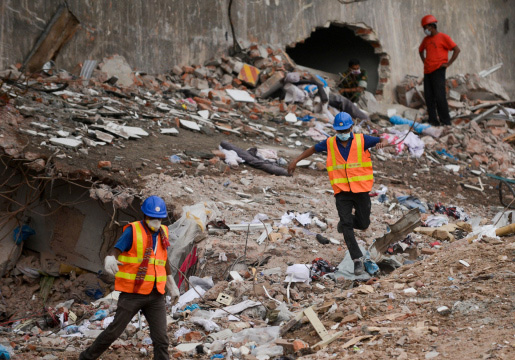
The recent Rana Plaza building disaster, in Bangladesh, could, and should, have been averted if the government had performed its obligation to adequately protect the workers, the ICJ said today.
“The Rana Plaza collapse, which killed 1,131 workers and injured close to 2,500 others, is the most recent in a long list of industrial disasters brought about by the government’s failure to regulate and monitor workplace conditions and sanction private entities violating the law,” said Sheila Varadan, ICJ Legal Advisor on South Asia. “To single out and focus solely on the role of multi-national companies does not reflect the full picture.”
“While the ICJ does not minimize the responsibility of private enterprises, unless the underlying systemic issues such as institutional weaknesses, corruption and lack of enforcement are addressed, such tragedies will continue to happen,” Varadan added.
Litigation is a vital tool to ensure accountability, remedy and reparations, where government agencies fail in their essential functions.
The Bangladesh Legal Aid and Services Trust (BLAST), a leading national human rights organization, has been petitioning the Supreme Court over the past decade, obtaining orders against government agencies and seeking compensation for victims and their families in work-related disasters.
“The government of Bangladesh must take active measures to ensure its regulatory framework is adequate and effective; its laws are rigorously enforced; and victims are adequately compensated,” Varadan also said. “Failing to do so not only violates Bangladeshi law but is also in breach of Bangladesh’s obligations to protect human rights under international law.”
CONTACT:
Sheila Varadan, ICJ Legal Advisor, South Asia Programme (Bangkok), t: +66 857200723; email: sheila.varadan(at)icj.org
Sam Zarifi, ICJ Asia-Pacific Regional Director, (Bangkok), t:+66 807819002; email: sam.zarifi(at)icj.org
Bangladesh-Rana Plaza-Public interest litigation-backgrounder-featured article-2013 (full text in pdf)
Bangladesh-WGBHR5-OralStatement-LegalSubmission-2013 (full statement to the Working Group on Business and Human Rights)
Mar 22, 2013 | Feature articles, News
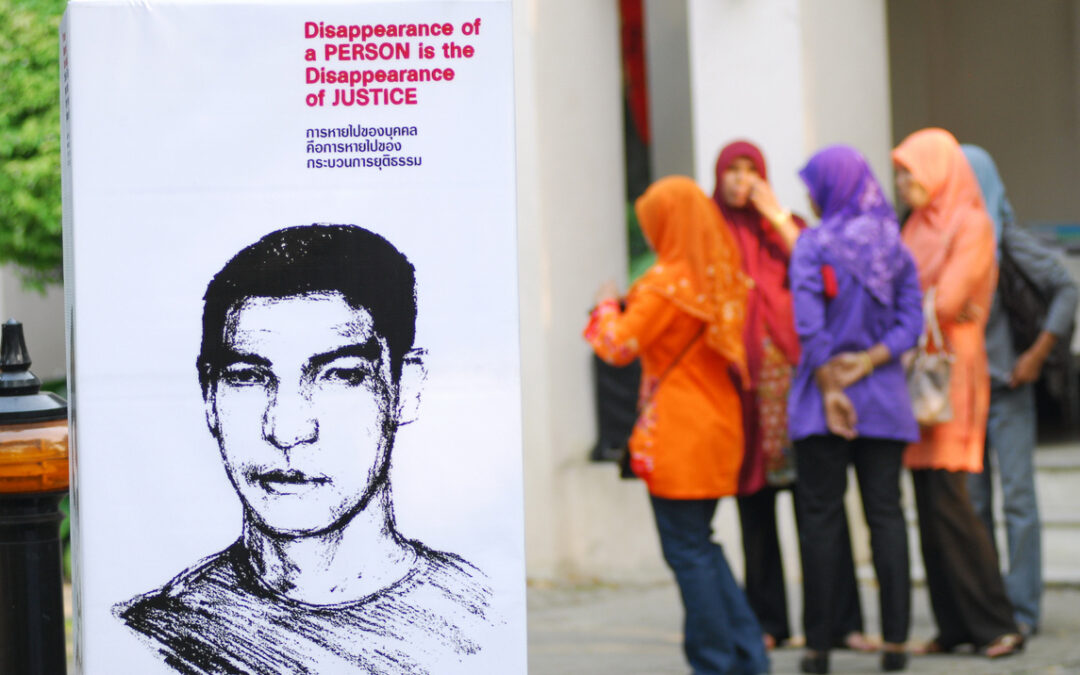
The inclusion of an amnesty provision, which could cover the worst possible crimes, in Nepal’s new Truth, Reconciliation and Disappearance Ordinance, will make it impossible for thousands of victims of gross human rights violations to obtain justice, ICJ and other right groups said today.
The Asian Centre for Human Rights, Human Rights Watch, the International Commission of Jurists and TRIAL pointed to fundamental flaws in Nepal’s new law, passed by President Ram Baran Yadav on March 14, 2013.
“The new ordinance leaves open the door to amnesties for persons implicated in gross human rights violations and crimes under international law,” said Ben Schonveld, ICJ’s South Asia director in Kathmandu. “Amnesties for serious rights violations are prohibited under international law and betray the victims, who would be denied justice in the name of political expediency.”
At least 13,000 people were killed and over 1,300 subjected to enforced disappearance in Nepal’s decade-long conflict between government forces and Communist Party of Nepal (Maoist) combatants.
The fighting ended with the signing of the 2006 Comprehensive Peace Agreement, consolidating a series of commitments to human rights.
However, the government has yet to take steps to ensure that those responsible for crimes under international law during the fighting are identified and prosecuted.
International and local human rights groups have consistently decried the government’s efforts to side-step promises of justice and accountability, represented most recently by this new ordinance.
The revised ordinance calls for the formation of a high-level commission to investigate serious human rights violations committed during Nepal’s armed conflict from 1996 to 2006.
It grants the commission discretion to recommend amnesty for a perpetrator if the grounds for that determination are deemed reasonable.
The government then decides whether to grant an amnesty. There is no definition of what is reasonable.
Confusion over scope of amnesty provision
The ordinance states that “serious crimes,” including rape, cannot be recommended for an amnesty, but it does not define what other “serious crimes” are not subject to an amnesty.
Gross violations of human rights, such as extrajudicial killing, torture and enforced disappearance, are not mentioned.
Torture and enforced disappearance are not specific crimes under Nepali domestic criminal law.
The organizations expressed concern that the commission’s powers to recommend prosecution may mean little without crimes being adequately defined in law.
The final decision on whether to prosecute can only be made by the attorney general, a political appointee of the government, instead of an independent entity.
Human Rights Watch, ICJ and TRIAL have previously documented the systematic failures of the Nepali criminal law system to address serious human rights violations.
“Nepal has had years to investigate some 1,300 suspected enforced disappearances during the conflict and thousands of other human rights violations, but it has failed to deliver any credible or effective investigations,” said TRIAL Director Philip Grant in Geneva. “The provisions on prosecution contained in this ordinance don’t appear to be strong enough to overcome Nepal’s entrenched practices of safeguarding impunity by withdrawing cases or failing to pursue credible allegations. It does not leave victims with much faith that the commission will fulfill its mandate to end impunity.”
Call for review and consultation
The organizations called upon the government to establish a mechanism to review and amend the legislation in consultation with victims of human rights abuses and representatives of civil society.
“This ordinance was signed by the prime minister and president in record time without any consultation with conflict victims and civil society,” Schonveld added. “If the government had carried out proper consultations, the result would have been different, and we wouldn’t have an ordinance that entrenches impunity.”
The rights organizations also expressed concern about the ordinance’s heavy emphasis on reconciliation at the possible expense of justice for victims.
The ordinance cedes authority to the commission to implement “inter-personal reconciliation” between victim and perpetrator, even if neither the victim nor the perpetrator requests it, which could result in pressure being placed on a victim to give up any claims against a perpetrator.
Although the ordinance mentions the need for victim and witness protection, there are no specific safeguards to ensure the safety and security of victims who become involved in reconciliation processes.
Violation of international obligation for political expediency
Under international law, Nepal is obliged to take effective measures to protect human rights, including the right to life and freedom from torture and other ill-treatment.
Where a violation occurs, Nepali authorities must investigate, institute criminal proceedings, and ensure victims are afforded access to effective remedy and reparations.
“The passage of this ordinance is just the latest example of the Nepali government’s cynical willingness to trade meaningful justice and accountability for political expediency,” said Brad Adams, Asia director at Human Rights Watch. “The government is kidding itself if it thinks it can ignore the voices of Nepal’s thousands of victims of human rights abuses. Nepal needs meaningful government initiatives to address its human rights problems, not the veneer of justice that this flawed ordinance represents.”
Contact:
In Kathmandu, for ICJ, Ben Schonveld: ben.schonveld(at)icj.org
In Bangkok, for ICJ, Sheila Varadan: +66-857-200-723; sheila.varadan(at)icj.org
Mar 21, 2013 | News
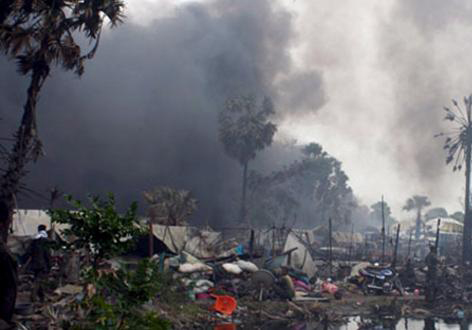
A resolution adopted today by the UN Human Rights Council highlights the Sri Lankan Government’s ongoing failure to provide accountability for serious violations of human rights and the laws of war, the ICJ said.
“The ICJ welcomes this resolution as it underscores the international community’s continuing concern about the horrific atrocities committed by all sides to the Sri Lankan conflict,” said Alex Conte, Director of ICJ’s International Law and Protection Programmes. “The UN, as well as the Commonwealth and other international organizations interested in helping the Sri Lankan people, should now press and assist the Sri Lankan Government to show tangible implementation of their oft-repeated promises.”
Twenty-five States supported the resolution, following from a similar resolution adopted by the Council on Sri Lanka last year.
The resolution reiterates the need for the Sri Lankan Government to demonstrate tangible steps to ensure accountability for violations of human rights and the laws of war, especially during the final months of the three-decade long conflict in 2009.
In particular, the resolution calls on the Sri Lankan Government to implement the recommendations of its own Lessons Learnt and Reconciliation Commission (LLRC).
The LLRC was widely criticized by Sri Lankan civil society as well as international observers as falling short of international standards of providing accountability.
“Sri Lanka has a long history of promising justice but delivering impunity, and the LLRC is only the most recent example of that. With this resolution, the international community shows it wants to see concrete action,” Conte added. “Not only has the Sri Lankan Government not addressed the violations of the past, but there are strong indications that the rule of law has significantly deteriorated.”
The resolution notes with concern the ongoing reports of human rights violations being committed with impunity in Sri Lanka, including enforced disappearances, extrajudicial killings and torture.
In October 2012, the ICJ released a 150-page report Authority without Accountability: The Crisis of Impunity in Sri Lanka, documenting the systematic erosion of accountability mechanisms in Sri Lanka.
In recent months, Sri Lanka’s Government has stepped up its assaults on the independent functioning of the judiciary. In particular, the country’s Chief Justice was removed from office after she had challenged the legality of Government efforts to consolidate authority. The heavily politicized impeachment process was declared unconstitutional by the Supreme Court of Sri Lanka and was inconsistent with international human rights law and standards.
“In light of this resolution and the situation in Sri Lanka, the Commonwealth should change its plans to hold the 2013 Commonwealth Heads of Government Meeting in Colombo,” said Conte. “Sri Lanka has demonstrated its rejection of the Commonwealth Principles, notably democracy, the independence of the judiciary and human rights. This will no doubt be further confirmed when the High Commissioner for Human Rights presents her oral update to the Human Rights Council in September this year, just two months ahead of the scheduled Heads of Government Meeting.”
The ICJ has urged the Commonwealth Ministerial Action Group (CMAG), which meets next month, to address the human rights situation in Sri Lanka with the objective of removing its right to host the Heads of Government Meeting.
CONTACT:
Sam Zarifi, ICJ Asia-Pacific Regional Director, (Bangkok); t:+66(0) 807819002; email: sam.zarifi(at)icj.org
Sheila Varadan, ICJ Legal Advisor, South Asia Programme (Bangkok); t: +66 857200723; email: sheila.varadan(at)icj.org
NOTES:
- The resolution of the Council was adopted by 25 votes in favor, 13 against and 8 abstentions (with Congo, Ecuador, Indonesia, Kuweit, Maldives, Mauritania, Pakistan, Philippines, Qatar, Thailand, Uganda, United Arab Emirates and Venezuela voting against; and Angola, Botswana, Burkina Faso, Ethiopia, Japan, Kazakhstan, Kenya, Malaysia abstaining)
- The resolution was led by the United States of America and co-sponsored by Austria, Canada, Estonia, Germany, Ireland, Italy, Montenegro, Poland, Romania, Spain, and Switzerland; as well as by the following non-member States of the Council: Belgium, Bulgaria, Croatia, Denmark, Finland, France, Georgia, Greece, Hungary, Iceland, Liechtenstein, Lithuania, Malta, Monaco, Norway, Portugal, Saint Kitss and Nevis, Slovakia, Slovenia, Sweden and the United Kingdom of Great Britain and Northern Ireland.
- In January 2012, Chief Justice Dr Shirani Bandaranayake was removed in an impeachment process that violated international standards of due process and was declared unconstitutional by the Supreme Court. The impeachment was widely condemned internationally. The ICJ issued a letter supported by fifty-six senior jurists from over thirty countries worldwide.
RELATED ARTICLES:
Open letter: Sri Lanka should not host the 2013 Commonwealth Heads of Government Meeting
ICJ calls for International Commission of Inquiry on accountability in Sri Lanka
The International Commission of Jurists welcomes key Human Rights Council resolution on Sri Lanka
Sri Lanka: judges around the world condemn impeachment of Chief Justice Dr Shirani Bandaranayake
Mar 18, 2013 | News
The ICJ strongly condemns today’s suicide attack on the Peshawar court complex in Pakistan.
“An independent judiciary, free from violence, threats of violence or intimidation is a basic precondition to a functioning democracy under the rule of law,” said Alex Conte, Director of ICJ’s International Law and Protection Programmes.
“The suicide attack drives home the failure of the Pakistani government to fulfill its obligation to protect the right to personal security of the millions of people living in northwest Pakistan who have to face the daily threat of suicide bombings or unlawful killings,” said Sam Zarifi, ICJ’s Asia & Pacific Regional Director.
Under the United Nations Basic Principles on the Independence of Judges, the State must take steps to protect the judiciary from threats, violence or any other interference from any quarter for any reason.
Under international law, notably the International Covenant on Civil and Political Rights, Pakistan must take active steps to ensure the safety of all persons within its territories.
Under the Beijing Statement of Principles on the Independence of the Judiciary in the LAWASIA Region, the executive authorities must at all times ensure the security and physical protection of judges and their families.
“Insurgent groups in northwest Pakistan have a long record of human rights abuses, including the use of suicide bombers to commit unlawful killings,” Zarifi added. “If this bombing was perpetrated by militants as part of a widespread or systematic attack against civilians, it constitutes a crime against humanity and must be treated as such.”
Earlier today, two suicide bombers detonated heavy explosives inside a Peshawar courthouse killing four people and injuring thirty others, including lawyers, police officers and civilians.
One of the bombers detonated the explosives in the courtroom of Judge Kulsoom Nawaz.
The Peshawar courthouse complex was attacked in November 2009, killing 19 people.
CONTACTS:
Laurens Hueting, ICJ Associate Legal Adviser, Centre for the Independence of Judges and Lawyers (Geneva), t: +41 229793848, email: laurens.hueting(a)icj.org
Sam Zarifi, ICJ Asia-Pacific Regional Director, (Bangkok); t:+66 807819002; email: sam.zarifi(a)icj.org
Sheila Varadan, ICJ Legal Advisor, South Asia Programme (Bangkok), t: +66 857200723; email: sheila.varadan(a)icj.org
Mar 14, 2013 | News
 Chief Justice Khil Raj Regmi should not keep his position on the Supreme Court after he was appointed today as the country’s interim prime minister so as to preserve the independence of the judiciary and the rule of law.
“The Supreme Court under the leadership of Chief Justice Khil Raj Regmi, has demonstrated a strong commitment to upholding the rule of law and protecting human rights in Nepal,” said Ben Schonveld, ICJ’s South Asia Director in Kathmandu. “To preserve the Nepali judiciary’s hard-won independence, the Chief Justice should step down from his post as soon as he assumes his position at the top of the Executive Branch.”
The Chief Justice Khil Raj Regmi was appointed as Chairperson of the Council of Ministers – effectively the country’s Prime Minister – today.
The country’s four key political parties agreed on an arrangement whereby Chief Justice Khil Raj Regmi will refrain from participating in his duties as Chief Justice of the Supreme Court while exercising powers of the Prime Minister conferred by the Interim Constitution, in brokering an election of the Constituent Assembly.
After the election is held, the agreement provides that the Chief Justice will resume his power and regular duties as Chief Justice.
In the interim, the senior-most judge of the Supreme Court will act as Chief Justice.
“Appointing the serving Chief Justice to act as Chairperson of the Council of Ministers throws the country into uncharted constitutional waters,” Schonveld added. “This agreement obliterates the line between the executive and the judiciary.”
A petition challenging the constitutional validity of the Agreement is currently before the Supreme Court.
The interim Constitution of Nepal guarantees the independence of the judiciary and the separation of powers.
Article 106 bans sitting and retired judges from assuming any appointment in government service apart from a role in the national human rights commission.
To enable the Chief Justice’s appointment as Prime Minister, the President under the recommendation of the Council of the Ministers amended several provisions of the Interim Constitution, including Article 106.
These amendments were made in contravention of the requirements of the Interim Constitution, which calls for a mandatory two-thirds majority of Parliament.
Under international law and standards, including the United Basic Principles on the Independence of the Judiciary, States are required to ensure an independent judiciary at all times.
Under the Bangalore Principles on Judicial Conduct, judges must be free, and be seen to be free, from inappropriate connections with the executive and legislative branches of government.
The Beijing Statement of Principles on the Independence of the Judiciary stresses the importance of the independence of the judiciary in a free society observing the rule of law.
Judges must uphold the integrity and independence of the Judiciary by avoiding impropriety and the appearance of impropriety in all of their activities.
CONTACTS:
Ben Schonveld, ICJ South Asia Director, (Kathmandu); t: 977 9804596661; email: ben.schonveld(at)icj.org
Govinda Bandi Sharma, ICJ Senior Legal Advisor, Nepal (Kathmandu), t: +977 9851061167; email: govinda.sharma(at)icj.org
Sheila Varadan, ICJ Legal Advisor, South Asia Programme (Bangkok), t: +66 857200723; email: Sheila.varadan(at)icj.org
Photo by Bikash Dware

Feb 28, 2013 | News
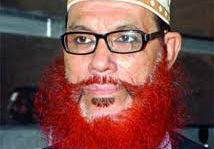 The death sentence handed down by the International Crimes Tribunal today against Delwar Hossain Sayeedi (photo) violates international standards of due process and fair trial, and, if carried out, would violate his right to life, says the ICJ.
“The ICJ wholly condemns the atrocities committed in Bangladesh’s war of liberation in 1971, notably the widespread and systematic use of rape as a form of torture and the unlawful killings. It is paramount that those responsible should be held accountable,” said Sam Zarifi, ICJ Asia Pacific Regional Director. “But even perpetrators of atrocities have rights. They should be brought to justice, not subjected to vengeance.”
Delwar Hossain Sayeedi, vice-president of the Jamaat-e-Islami party, was indicted on 3 October 2011 on 20 charges including genocide and crimes against humanity. He was arrested and brought before the War Crimes Tribunal for the first time on 2 November 2010. He was accused of working with the Al-Badr group during the independence struggle in the early 1970s.
The International Commission of Jurists opposes the death penalty as a violation of the right to life and a form of cruel and inhuman punishment. The United Nations General Assembly has called on all States to establish a moratorium on the death penalty with a view to universal abolition.
Today, crowds gathered outside the courthouse as the verdict was being read, demanding Delwar Hossain Sayeedi be sentenced to death for his role in the atrocities committed in the 1971 war of liberation. Earlier this month, widespread protests erupted across Bangladesh after the Tribunal imposed a life sentence on Abdul Qadar Mollah instead of the death penalty.
“The enormous demonstrations and the unfortunate violence that have accompanied each decision of the ICT demonstrate the passions still enflamed by the crimes of 1971. But it is in everyone’s interest to ensure that the rule of law and the path to justice are not subject to immediate political pressure,” Zarifi added. “The Government’s obligation to bring those responsible for the atrocities committed in 1971 to justice must not outweigh the presumption of innocence and the duty to ensure the security of all persons.”
The ICJ says that the International Crimes Tribunal does not adhere to international standards of a fair trial and due process.
According to the ICJ, there are serious procedure flaws at all stages: pre-trial release has been routinely and arbitrarily denied; witnesses have been abducted and intimidated; there have been credible allegations of collusion between the Government, prosecutors and judges.
On 14 February 2013, a draft amendment was tabled in Parliament, retroactively changing the International Criminal (Tribunals) Act 1973 to enable prosecutors to appeal a life sentence and seek the death penalty.
This amendment came after protests for a death sentence in the 5 February 2013 verdict against Abul Qadar Mollah.
As a State party to the International Covenant on Civil and Political Rights, Bangladesh is obligated to guarantee due process and fair trial rights to all suspects, even those accused of war crimes.
Such obligations include the right to an public hearing before a competent, independent and impartial tribunal; the right to be tried in one’s presence; the right to counsel and the right to a full defence; and the right not to be punished again for an offence for which there has already been a final conviction in accordance with the law.
“Failing to abide by minimum standards of due process will cast doubt on the Tribunal’s findings and undermine victims’ hard-fought battle for justice,” Zarifi said. “The Bangladesh Tribunal is one of very few transitional justice mechanisms that have imposed the death penalty.”
This verdict is the third issued by the tribunal. Earlier this month, Abdul Qader Mollah, the assistant secretary-general of the Jamaat-e-Islami was found guilty and sentenced to life imprisonment for committing crimes against humanity during the 1971 liberation war.
On 21 January, Abul Kalam Azad, a former leading member of the Jamaat-e-Islami party, was tried and convicted in absentia and sentenced to death for crimes committed during Bangladesh’s war of liberation in 1971. He was convicted on six counts of a crime against humanity and one count of genocide.
The government established the Bangladesh International Crimes Tribunal in 2010, after amending the International Crimes (Tribunals) Act 1973. The International Crimes Tribunal has jurisdiction to try crimes against humanity, crimes against peace, genocide, violations of the Geneva conventions and any other crimes under international law.
The ICJ supports the right of victims to seek truth and justice for the atrocities committed in the 1971 Liberation War.
However, any such process must adhere to international human rights standards, including full guarantees for a fair trial.
CONTACT:
Sam Zarifi, ICJ Asia-Pacific Regional Director, t: +66 26198477; email: sam.zarifi(at)icj.org
Sheila Varadan, ICJ Legal Advisor, South Asia Programme, t: +66 857200723; email: sheila.varadan(at)icj.org