Oct 21, 2018 | News
On 21 October, the ICJ, together with Cross Cultural Foundation (CrCF), organized a lawyers’ meeting in Bangkok on the admissibility of evidence in the context of application of special security laws in Thailand.
Attendees included 30 human rights lawyers, paralegal officers, documentation officers, human rights defenders and journalists from Bangkok and other regions in Thailand.
The objectives of the meeting were:
- To discuss about the challenges that lawyers currently face regarding the admissibility of evidence in criminal proceedings, both in law and in practice, in the context of existing special security laws. These laws include the Martial Law, Emergency Decree, and the Internal Security Act that are applied in the southern border provinces, and certain repressive National Council for Peace and Order (NCPO) Orders that are applied nationwide;
- To discuss how to address the adverse effects on human rights and the administration of justice as a consequence of the implementation of these laws and how lawyers, members of civil society, and other stakeholders, at national and international levels, may work together to address such challenges; and
- To gather recommendations from participants and discuss future advocacy strategies to tackle identified challenges.
The ICJ’s Legal Memorandum on Hearsay Evidence and International Fair Trial Standards was used as one of the main reference materials during the meeting.
A main recommendation of the Workshop, echoed the ICJ’s assessment in the Legal Memorandum, namely that Thailand should review existing standards in all special security laws and relevant articles in the Criminal Procedure Code regarding the admissibility of evidence that are not compatible with international fair trial standards to ensure safeguards required to protect individuals from unfair trials.
Read also
Thailand : legal memorandum – hearsay evidence and international fair trial standards
Oct 14, 2018 | News
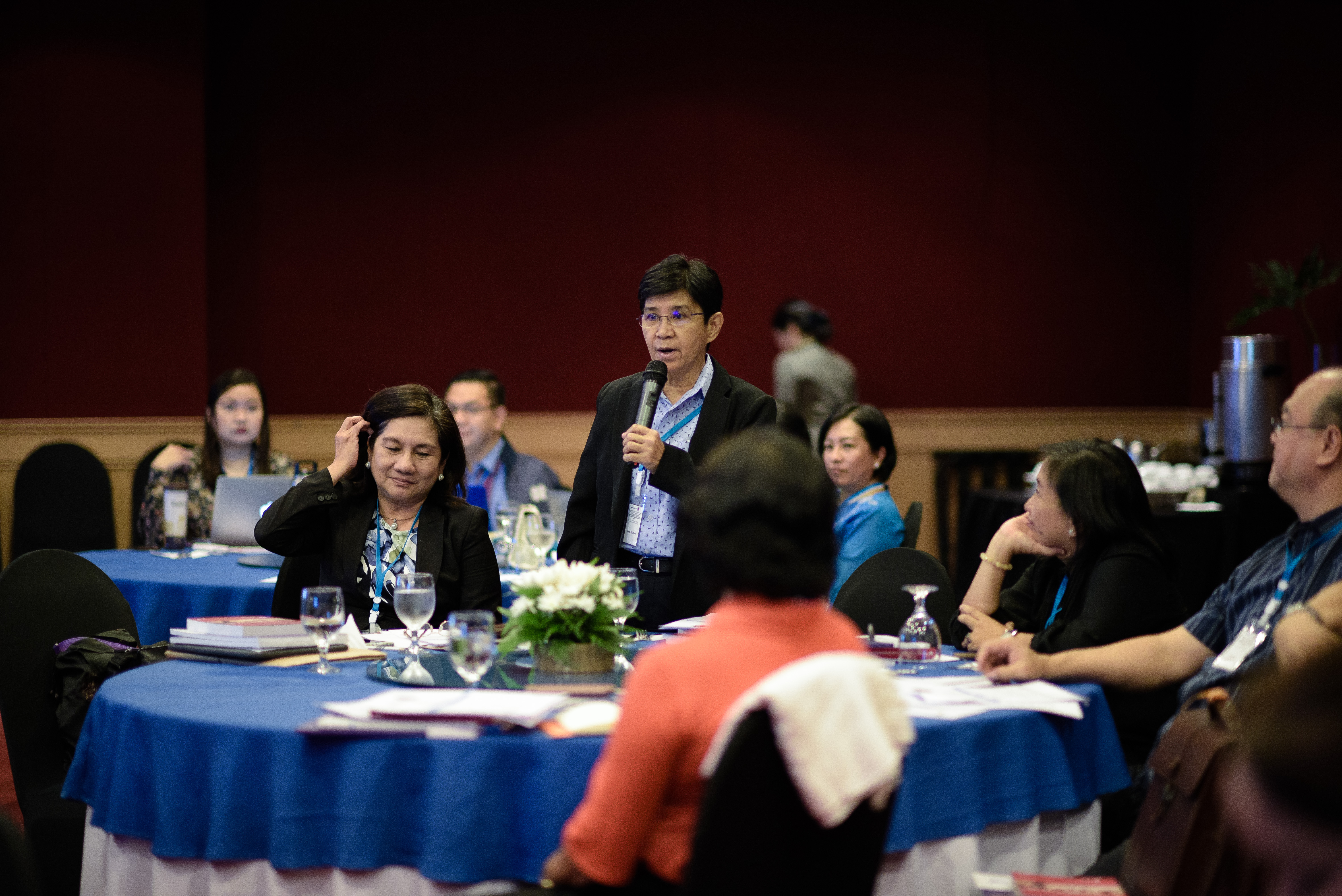
From 12 to 13 October 2018, the ICJ and the Integrated Bar of the Philippines (IBP) held its second national workshop on eliminating gender discriminatory attitudes and behaviours towards women.
Participants at the workshop were members of IBP’s Board of Governors and Committee on Bar Discipline. The workshop was held in Cebu City, Philippines.
Emerlynne Gil, ICJ’s Senior International Legal Adviser opened the workshop by emphasizing that it is crucial for lawyers of all areas of expertise to engage in dialogues such as this in order to further enhance women’s access to justice.
Gil pointed out that gender stereotypes incorporated in laws and perpetuated in the administration of justice impair the capacity of women to exercise their right to access to justice.
She emphasized that lawyers, as frontline formal justice actors, play a key role in eliminating these stereotypes.
Marienne Ibadlit, IBP’s Governor for Western Visayas, spoke about the establishment of the Gender and Development (GAD) Committee as a standing committee of the IBP.
The establishment of the GAD Committee is expected to advance gender and women’s human rights within the IBP.
It is also expected to institutionalize within the IBP efforts to build the capacity of lawyers in the Philippines to assist women in accessing justice.
The participants recognized during the opening session that recourse to gender stereotypes in the practice of law and administration of justice is widespread in the Philippines and that gender stereotypes directly impact women’s access to justice.
A range of stereotypes were identified, including the idea of women being the ‘weaker sex’ and the perception that female lawyers are not suited for litigation of controversial political or criminal cases.
During the workshop, participants discussed how they could maximize their role as lawyers in facilitating women’s access to justice, specifically in the areas of domestic violence, sexual violence, family law, and employment law.
Some of the participants noted that they themselves had been influenced by gender stereotypes and committed to be more consciously gender sensitive in their work and personal life.
While acknowledging that much more must be done to bring about systematic change, it was agreed that incremental measures could be impactful.
Abdiel Dan Fajardo, National President of the IBP, expressed support for more action by lawyers in the Philippines on women’s human rights.
Both the ICJ and IBP reinforced their commitment to joint collaboration in furthering the advancements in women’s access to justice in the country.
Contact
Emerlynne Gil, Senior International Legal Adviser for Southeast Asia, t: +662 619 8477 (ext. 206) ; e: emerlynne.gil(a)icj.org
Oct 5, 2018 | News
The proposal to implement caning on those found guilty of corruption would directly violate the absolute prohibition of torture and other cruel, inhuman or degrading punishment under international law, said the ICJ today.
The Malaysian Anti-Corruption Commission (MACC) called on the Government of Malaysia last week to consider caning as a punishment for those convicted of corruption to underline the efforts of eliminating corruption in the country.
Malaysia currently implements caning in a wide range of offences, including the Immigration Act 1959/63, the Penal Code (rape, criminal breach of trust), and the Dangerous Drugs Act 1952.
At present, under the Malaysian Anti-Corruption Commission (MACC) Act 2009, the punishment for those found guilty of bribery is payment of a fine and imprisonment for up to twenty (20) years.
“Malaysia must immediately and completely abolish caning as a form of punishment. The proposals to implement caning for those found guilty of corruption, bribery, or any other offence is a significant setback for the country.
If this proposal is implemented, it will violate Malaysia’s obligations to prevent, prohibit and prosecute all forms of torture and other cruel, inhuman or degrading treatment or punishment, as.” said Emerlynne Gil, ICJ’s Senior International Legal Adviser.
After Malaysia’s historic election results on 9 May 2018 and the corruption charges levied against its former Prime Minister, Najib Razak, it would be superficial for Malaysia to view the implementation of severe punishments for the crime of corruption as the panacea to the deeply-rooted culture of corruption among those that have held public office and state authorities.
The ICJ also emphasizes that all forms of torture and other cruel, inhuman or degrading treatment are absolutely prohibited by customary international law, as well as international treaties binding on Malaysia, including the Convention on the Rights of the Child (CRC), the Convention on the Elimination of All Forms of Discrimination Against Women and the Convention on the Rights of Persons with Disabilities (CRPD).
The UN Special Rapporteur on Torture has stated that “any form of corporal punishment is contrary to the prohibition of torture and other cruel, inhuman or degrading treatment or punishment.” It cannot be considered a “lawful sanction” under international law.
The ICJ urges the Government of Malaysia to abandon any proposal to implement caning as a form of punishment for any crime. The ICJ also calls on the Government of Malaysia to immediately abolish the practice of caning as it constitutes a form of cruel, inhuman or degrading punishment prohibited under international human rights law and standards.
Contact:
Emerlynne Gil, Senior International Legal Advisor, International Commission of Jurists,
mobile: +66 840923575, email: emerlynne.gil@icj.org
Background:
At a press conference on 1 October 2018, Malaysia’s Anti-Corruption Commission’s Chief Commissioner Datuk Seri Mohamad Shukri Abdul had proposed that the Malaysian government consider implementing caning for bribery offenders.
Section 288 of the Criminal Procedure Code states the mode of executing the sentence of ‘whipping’, in Section 288(3) it defines the ‘Rattan used for whipping shall not be more than half of an inch in diameter’ (the word caning is not mentioned), while Section 289 of the Criminal Procedure Code states that the sentence of whipping is forbidden in the case of ‘females’, males sentenced to death and males whom the Court considers to be more than fifty years of age, except males sentenced to whipping under Section 376, 377, 377CA or 377E of the Penal Code.
Oct 1, 2018 | News
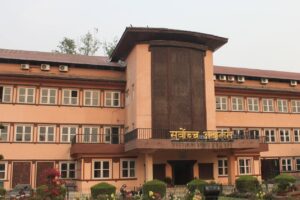
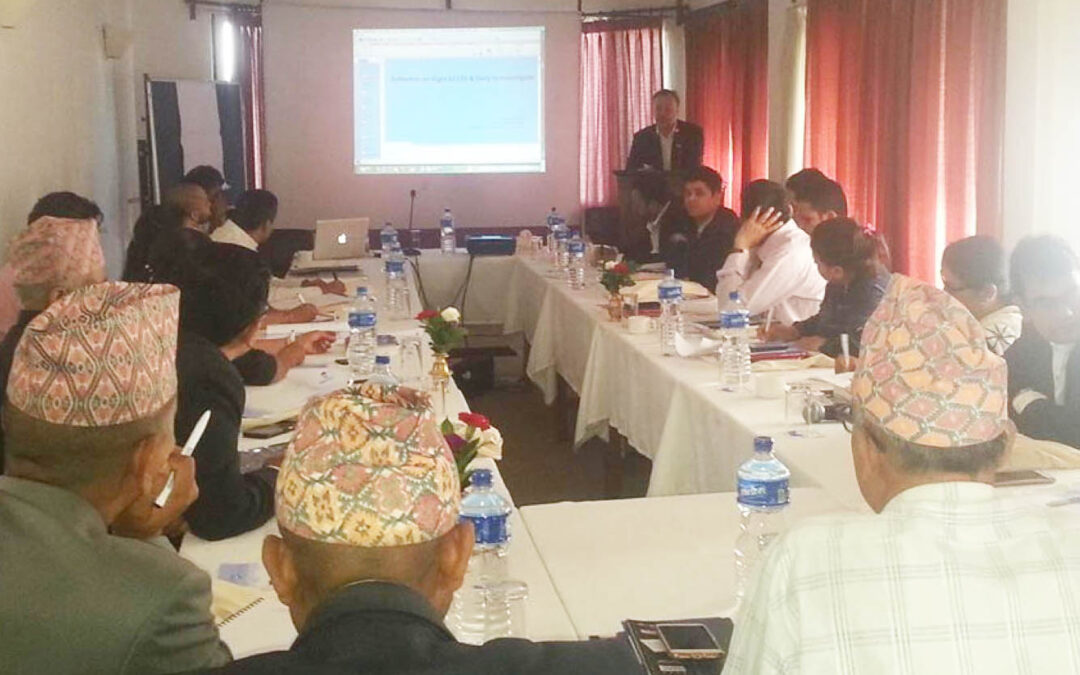
From 29 to 30 September 2018, the ICJ convened a 2nd two-day workshop on application of international law and standards, remarkably focusing on the Minnesota protocol, with special reference to investigation of alleged unlawful killings and enforced disappearances for public prosecutors of Nepal.
The workshop was organized by the ICJ South Asia office and took place as part of the ICJ’s Global Redress and Accountability Initiative, “increasing the knowledge and capacity of lawyers, prosecutors and investigators to deal with challenges of impunity and access to redress.”
The participants of the workshop included 18 public prosecutors working in District Government Office in Kathmandu, Lalitpur, Bhaktapur and Kavrepalanchok, Nepal.
The event started with opening remarks by the Attorney General of Nepal and former minister of Law and Justice, Agni Kharel.
In the opening remarks, Agni Kharel highlighted both commitments made and efforts by the Nepal government in order to protect and promote human rights as well as justice for victims of human rights violations.
Expressing pleasure on the theme of the workshop, he also said the public prosecutors will be benefited as well as be competent to use the knowledge and learning from the workshop in their works.
Senior Legal Consultant of the ICJ Nepal – Govinda Bandi, one of the experts of the workshop and speaker of the opening ceremony, highlighted the objectives of the workshop.
Kingsley Abbott, Senior International Legal Adviser at the ICJ, presented an overview of the relevant international human rights legal framework that applies to the investigation of alleged killing and enforced disappearances.
He further presented an introduction and overview of the revised Minnesota Protocol on the Investigation of Potentially Unlawful Death (2016) and ICJ practitioners Guide no. 9. Both instruments were core materials used at the workshop.
Other speakers included Govinda Bandi, Senior Legal Consultant at the ICJ, who presented on the relevance of the Minnesota protocol in investigating on alleged unlawful killing and enforced disappearances.
Prof. Dr. Hariwar Wasti, Medico-legal expert at the IOM Department of Forensic Medicine of Government of Nepal, presented a power point presentation on the role of forensics in the investigation of gross human rights violations with reference to the Minnesota Protocol.
The workshop focused on investigation techniques of alleged unlawful killings highlighting the significance of public prosecutors in Nepal.
It was also focused on collection and preserving the security of evidences and potential use of the evidences for victims’ right to justice and reparation.
The workshop also covered medico-legal documentation techniques of crime scene and dead wearing tie body, collection of DNA evidence, and drafting of autopsy reports and crime file management.
It was also discussed and outlined some approaches of using the Minnesota protocol in Nepal in the final session of the workshop.
This workshop followed the national workshop the ICJ hosted between 13 to 14 July 2018 in Dhulikhel, Nepal on the investigation of alleged unlawful deaths and enforced disappearances for more than 20 human rights lawyers from diverse regions of Nepal.
Oct 1, 2018 | News
The ICJ expressed disappointment regarding Friday’s ruling by Thailand’s Administrative Court dismissing a case filed against the Royal Thai Police (RTP) for unjustified restriction of the freedom of peaceful assembly and freedom of expression, and again called on Thailand to lift its ban on political gatherings and fully reinstate fundamental freedoms in Thailand.
On 28 September 2018, the Administrative Court dismissed a case filed by the organizers of a “We Walk Friendship March” (‘We Walk march’) against the RTP and six policemen for restricting the march on the basis that it was in violation of Head of NCPO Order No. 3/2558 (2015) (‘HNCPO Order 3’).
The Administrative Court referred to the Thai Constitution, the Public Assembly Act B.E. 2558 (2015), the International Covenant on Civil and Political Rights (ICCPR) to which Thailand is a State party, and HNCPO Order 3, in deciding that the march was a public assembly. Its decision clarified that the case had to be dismissed as the RTP’s actions had complied with the Public Assembly Act.
“It is astonishing that more than four years after the coup, HNCPO Order 3 and other repressive laws, orders and announcements which restrict fundamental freedoms remain in place,” said Kingsley Abbott, Senior Legal Adviser at the ICJ.
“The Administrative Court missed a critical opportunity to deliver an opinion that the ban on political gatherings should be lifted and that all laws, orders and announcements that are inconsistent with Thailand’s international human rights obligations should be amended or revoked immediately to reinstate all fundamental freedoms in Thailand,” added Abbott.
The march, which went ahead peacefully, aimed to bring attention to the need in Thailand for universal healthcare services, policies guaranteeing food security, laws that would not violate human rights, and public participation in the development of the Constitution.
Contact
Kingsley Abbott, ICJ Senior Legal Adviser, email: kingsley.abbott(a)icj.org
The ICJ’s full statement in English is available here: Thailand-Ban on Political Gatherings-News-Web Story-2018-ENG
The ICJ’s full statement in Thai is available here: Thailand-Ban on Political Gatherings-News-Web- Story-2018-THA
Sep 27, 2018 | News
Today’s decision by the UN Human Rights Council to create an ‘independent mechanism’ to collect evidence of crimes in Myanmar, is a significant step toward accountability for gross human rights violations, the ICJ said.
“The creation of this evidence-gathering mechanism is a welcome concrete step towards justice,” said Matt Pollard, Senior Legal Adviser for the ICJ.
“But this is a stopgap measure, effectively creating a prosecutor without a court, that only underscores the urgent need for the Security Council to refer the entire situation to the International Criminal Court, which was created for precisely such circumstances,” he added.
The Council’s decision follows on conclusions and recommendations by the Independent International Fact-Finding Mission on Myanmar (FFM).
The FFM’s 444-page full report described large-scale patterns of grave human rights violations against minority groups in the country, particularly in Rakhine, Kachin and Shan States.
It also highlighted the need for criminal investigations and prosecutions for crimes under international law, something the FFM concluded that national courts and commissions within Myanmar could not deliver.
“National justice institutions within Myanmar lack the independence, capacity and often also the will to hold perpetrators of human rights violations to account, particularly when members of security forces are involved. The latest government-established inquiry in Rakhine State also seems designed to deter and delay justice,” Pollard said.
The Human Rights Council resolution did not create a new international court or tribunal.
Evidence held by the independent mechanism could be made available to international or national proceedings, whether at the International Criminal Court (ICC) or another ad hoc international tribunal, or to national prosecutors asserting jurisdiction over the crimes under universal jurisdiction or other grounds.
While there is no realistic prospect of effective national prosecutions within Myanmar in the near future, evidence held by the mechanism could also be available in future should national institutions eventually become sufficiently impartial, independent, competent, and capable to do so.
A preliminary examination of the situation of Rohingyas, being conducted by the ICC, may also lead to criminal proceedings but will likely be limited to those crimes that have partially occurred within Bangladesh, such as the crime against humanity of deportation.
Bangladesh is a State Party to the Rome Statute of the ICC whilst Myanmar is not.
The Security Council also has authority to refer the entire situation to the International Criminal Court.
“The Myanmar government should stop denying the truth and should work with the international community, and particularly the United Nations, to improve the horrific conditions facing the Rohingya and other ethnic minorities whose rights have been violated so brutally by the security forces, as documented by the Fact Finding Mission,” Pollard said.
“Myanmar’s international partners, including neighbours like India, China, and members of the Association of Southeast Asian Nations (ASEAN), should exercise their influence to help ensure that Myanmar addresses this serious threat to the stability of the country and the region, by ensuring respect, protection and fulfillment of the full range of civil, cultural, economic, political and social rights of the affected minorities,” he added.
The Council resolution makes several other substantive recommendations, including a call on the Government of Myanmar to review the 1982 Citizenship Law, and a recommendation for the United Nations to conduct an inquiry into its involvement in Myanmar since 2011.
Contact:
Matt Pollard, ICJ Senior Legal Adviser (Geneva), e: matt.pollard@icj.org, +41 79 246 54 75.
Frederick Rawski, ICJ Asia Pacific Regional Director (Bangkok), e: frederick.rawski@icj.org
Read also:
Why an IIIM and Security Council referral are needed despite the ICC ruling relating to Bangladesh (13 September 2018)
Government’s Commission of Inquiry cannot deliver justice or accountability (7 September 2018)
ICJ releases Q & A on crime of genocide (27 August 2018)
Myanmar: reverse laws and practices that perpetuate military impunity (16 January 2018)
Summary report of the Fact Finding Mission (12 September 2018)
Full report of the Fact Finding Mission (published 18 September 2018)
Text of the Resolution (unofficial version tabled in advance of the vote)
Myanmar-IIIM statement-Advocacy-2018-BUR (Full story in Burmese)