Dec 3, 2013 | News, Publications, Reports, Thematic reports
Lawyers continue to encounter impediments to the exercise of their professional functions and freedom of association, as well as pervasive corruption, although they have been able to act with greater independence, says the ICJ in a new report launched today.
Right to Counsel: The Independence of Lawyers in Myanmar – based on interviews with 60 lawyers in practice in the country – says authorities have significantly decreased their obstruction of, and interference in, legal processes since the country began political reforms in 2011.
“The progress made in terms of freedom of expression and respect for the legal process is very visible,” said Sam Zarifi, ICJ Asia-Pacific director. “But despite the improvements, lawyers still face heavy restrictions and attacks on their independence, which can result in uncertainty and fear, particularly when it comes to politically sensitive issues.”
Systemic corruption continues to affect every aspect of a lawyer’s career and, as a result, is never absent from lawyers’ calculations vis-à-vis legal fees, jurisdictions and overall strategy.
“Corruption is so embedded in the legal system that it is taken for granted,” Zarifi said. “When the public also generally assumes that corruption undermines the legal system, this severely weakens the notion of rule of law.”
“Lawyers in Myanmar, as elsewhere, play an indispensable role in the fair and effective administration of justice,” Zarifi added. “This is essential for the protection of human rights in the country and the establishment of an enabling environment for international cooperation towards investment and development.”
But lawyers in Myanmar lack an independent Bar Council, the report says, noting that the Myanmar Bar Council remains a government-controlled body that fails to adequately protect the interests of lawyers in the country and promote their role in the fair and effective administration of justice.
The ICJ report shows that other multiple long-standing and systemic problems affect the independence of lawyers, including the poor state of legal education and improper interferences on the process of licensing of lawyers.
In its report, which presents a snapshot of the independence of lawyers in private practice in Myanmar in light of international standards and in the context of the country’s rapid and on-going transition, the ICJ makes a series of recommendations:
- The Union Attorney-General and Union Parliament should significantly reform the Bar Council to ensure its independence;
- The Union Attorney-General and Union Parliament should create a specialized, independent mechanism mandated with the prompt and effective criminal investigation of allegations of corruption;
- The Ministry of Education should, in consultation with the legal profession, commit to improving legal education in Myanmar by bolstering standards of admission to law school, law school curricula, and instruction and assessment of students.
Contact:
Sam Zarifi, ICJ Asia-Pacific Regional Director, (Bangkok), t:+66 807819002 e-mail: sam.zarifi(a)icj.org
Craig Knowles, ICJ Media & Communications, (Bangkok), t:+66 819077653, e-mail: knocraig(a)gmail.com
Myanmar-Right to Counsel-publications-report-2013-ENG (download full text in pdf)
MYANMAR-Right to Counsel-Publications-report-2015-BUR (Burmese version in pdf)

Oct 4, 2013 | News, Publications, Reports, Trial observation reports
In a report published today, the ICJ details a catalogue of violations of fair trial rights and other serious human rights violations committed against those detained in the context of the UAE 94 trial.
The report, Mass convictions following an unfair trial: The UAE 94 case, comes amidst a crackdown on individuals calling for peaceful political reform, who continue to be arrested, detained, prosecuted and convicted for the lawful exercise of their rights to freedom of expression, association and assembly.
The UAE authorities must end this crackdown and ensure the immediate and unconditional release of those convicted in the UAE 94 trial, the ICJ says.
“The UAE 94 trial has been marred with a litany of violations of fair trial rights. The convictions of 69 individuals following this trial must be quashed and those imprisoned must be immediately and unconditionally released”, said Said Benarbia, senior legal adviser of the ICJ Middle East and North Africa Programme.
Those convicted on 2 July 2013 were found guilty of “establishing, founding and administering an organization, with the aim of challenging the basic principles upon which the government of the State is based, taking control of the government and establishing a secret structure for the organization”.
Fifty-six of them were sentenced to ten years’ imprisonment, five of them to seven years’ imprisonment and eight others, who were tried in absentia, to fifteen years’ imprisonment. The remaining 25 accused were acquitted.
The ICJ notes that, since 31 July 2013, many of the prisoners convicted in the UAE 94 case have begun a hunger strike to protest against the conditions of their detention.
They have reportedly been subjected to various forms of ill-treatment, including beatings by prison guards and light depravation.
The authorities have failed to investigate the many human rights abuses alleged to have been committed against those detained in the context of the UAE 94 case, the ICJ says.
Instead, the UAE authorities have continued their crackdown on political activists and government critics, including those that have publicly spoken out in support of the UAE 94 or against the conditions of detention of those imprisoned.
“Rather than live up to the commitment made by the UAE to the Human Rights Council to “place human rights at the top of its priorities”, the UAE authorities have embarked on a sustained campaign to suppress any form of peaceful dissent and all calls for political reform,” Benarbia added. “They must comply with their obligations under international law and bring an end to this cycle of arbitrary arrest, detention, prosecution and unfair trials against of all those that dare to speak out.”
Key findings of the report:
- Most of the detainees were not informed of the reasons for their arrest and promptly notified of the charges against them.
- They were denied their right to prompt access to a lawyer, including during interrogation and were not brought before a judge or a judicial authority within 48 hours of their arrest.
- Most of the detainees were held in incommunicado detention and in secret and unofficial detention centres.
- They were also held in prolonged solitary confinement, which in some cases lasted more than 236 days.
- Most of the detainees were reportedly subjected to torture or other ill treatment by the authorities, including severe beatings, pulling out detainees’ hair, sleep deprivation, exposure to extreme light during the day and night, death threats and other threats and verbal abuse, as well as prolonged incommunicado detention and solitary confinement.
- The Court failed to investigate or order the investigation of such allegations.
- To the contrary, statements and “confessions” alleged to have been obtained as a result of torture or other ill-treatment were admitted as evidence by the court.
Contact :
Said Benarbia, ICJ Senior Legal Adviser of the Middle East and North Africa Programme, tel: 41 22 979 38 17, e-mail: said.benarbia(a)icj.org
UAE-Violations at UAE 94 Trial-Publications-Reports-2013 (full text in pdf)
May 28, 2013 | News, Publications
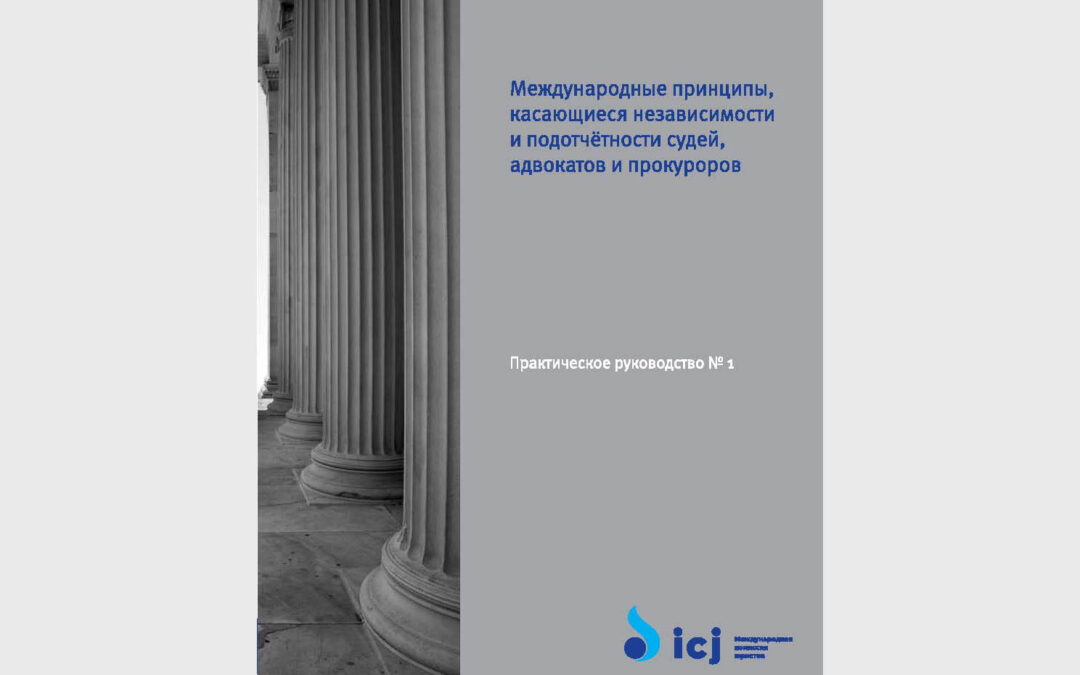
The ICJ has now published a translation of its Practitioner’s Guide, International Principles on the Independence and Accountability of Judges, Lawyers and Prosecutors.
This is the first comprehensive analysis of the existing standards and compilation of universal and regional instruments published in Russian. The Guide outlines the roles to be played by a strong legal profession, an independent judiciary and an impartial and objective prosecuting authority. References to international decisions, reports, texts of treaties and other international standards allow the Guide to be used as a reference book by legal practitioners and policy makers.
International-Principles-on-the-Independence-and-Accountability-of-Judges-Lawyers-and-Procecutors-(No.1)-Practitioners’ Guide series-2013-Rus (full text in pdf)
Nov 13, 2012 | News, Publications, Reports
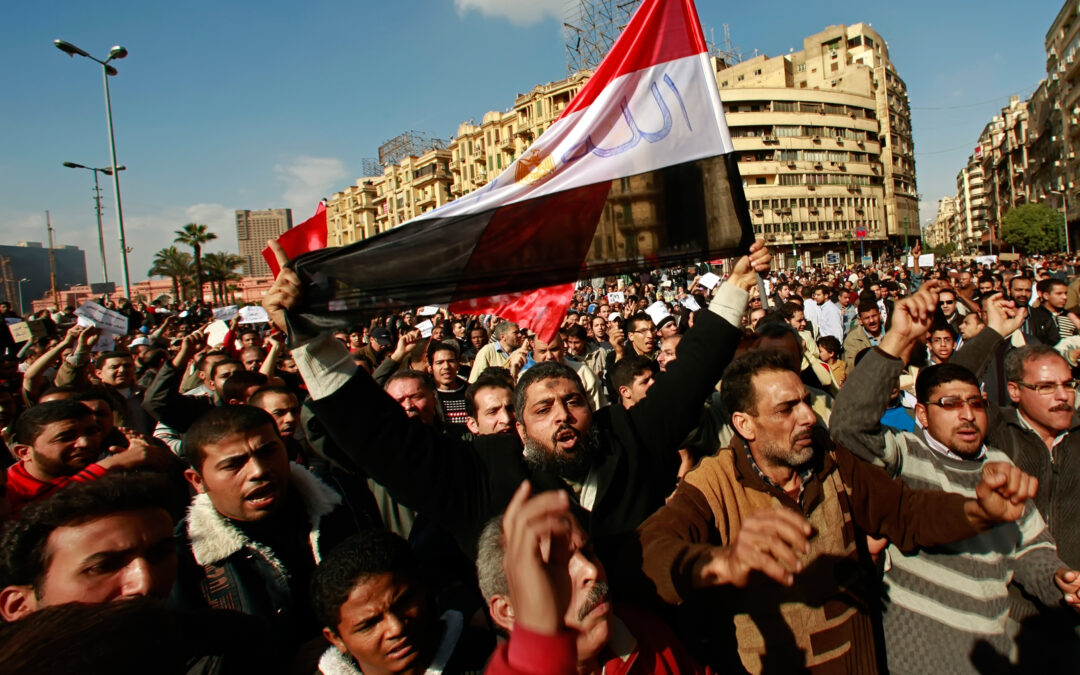
 A new ICJ report shows that the constitutional reform process in Egypt has failed to meet international principles of inclusive participation and transparency, thereby undermining the transition to democracy.
“The Egyptian authorities, including the Constituent Assembly, have failed so far to meet the aspirations of the Egyptian people to adopt a Constitution that establishes the rule of law, recognizes and protects universally accepted human rights without restriction, guarantees the independence of the judiciary in all circumstances, and ensures the effectiveness of democratic institutions,” said Wilder Tayler, ICJ Secretary General.
The ICJ is calling upon the Egyptian authorities to address the challenges currently facing the constitutional reform process, as a matter of urgency; ensure that this process is in full compliance with international standards of inclusive participation and transparency; and guarantee that the new Constitution fully conforms with the rule of law and international law, including human rights standards.
The ICJ report Egypt’s new Constitution: a flawed process; uncertain outcomes details how, in overseeing the process leading to the adoption of a new Constitution, the Supreme Council of Armed Forces (SCAF) failed to ensure the rights of Egyptians to take part in public affairs and to meaningfully participate in the drafting and adoption of a new Constitution.
“Instead of paving the way for a clear and participatory reform process, the SCAF consistently opted for opaque, rushed and non-consensual policies that aimed to shield the armed forces from any form of accountability and that have severely undermined both the legitimacy of the process itself and its outcomes,” Tayler added.
Even though the administration of President Morsi replaced the SCAF on 30 June 2012, the constitution-making process continues to be carried out under the legal framework enacted by the SCAF.
The report also describes how several judicial decisions, in particular the dissolution of the first Constituent Assembly, by a decision from the High Administrative Court, and the dissolution of the People’s Assembly, following a decision by the Supreme Constitutional Court, have contributed to the confusion and uncertainty regarding the drafting of a new constitution.
As a result of this confused process, the draft of the new Constitution, published by the Constituent Assembly on 14 October 2012, has failed to provide for effective guarantees to reinforce the protection of human rights and the supremacy of the rule of law, including by ensuring that the powers of the State are not exercised arbitrarily.
“The draft Constitution does not sufficiently incorporate the rule of law and international law, including human rights standards. This is particularly evident as regards the accountability of the armed forces and their subordination to a legally constituted civilian authority, the content and scope of constitutional human rights, and the compliance of the whole judicial system, including the Office of the Public Prosecutor and the Constitutional Court, with international standards of independence, impartiality and accountability,” said Said Benarbia, ICJ Senior Legal Adviser for the MENA programme.
The report sets out urgent institutional and legal reforms that, together with sufficient political will, may help ensure a clean break with the practices and policies of Mubarak’s regime and the transition to a genuine democracy in Egypt.
Contact:
Saïd Benarbia, Middle East & North Africa Senior Legal Adviser, ICJ, t +41 22 979 3817; e-mail: said.benarbia(at)icj.org
Alice Goodenough, Middle East & North Africa Legal Adviser, ICJ, t +41 22 979 3811; e-mail: alice.goodenough(at)icj.org
Egypt-Flawed constitutional reform process-report-2012
Photo by Reuters

Nov 1, 2012 | News, Publications, Reports
 The Sri Lankan government must immediately cease its assault on the independence of the judiciary, the ICJ said in a new report.

Sep 19, 2012 | News, Publications, Reports, Trial observation reports
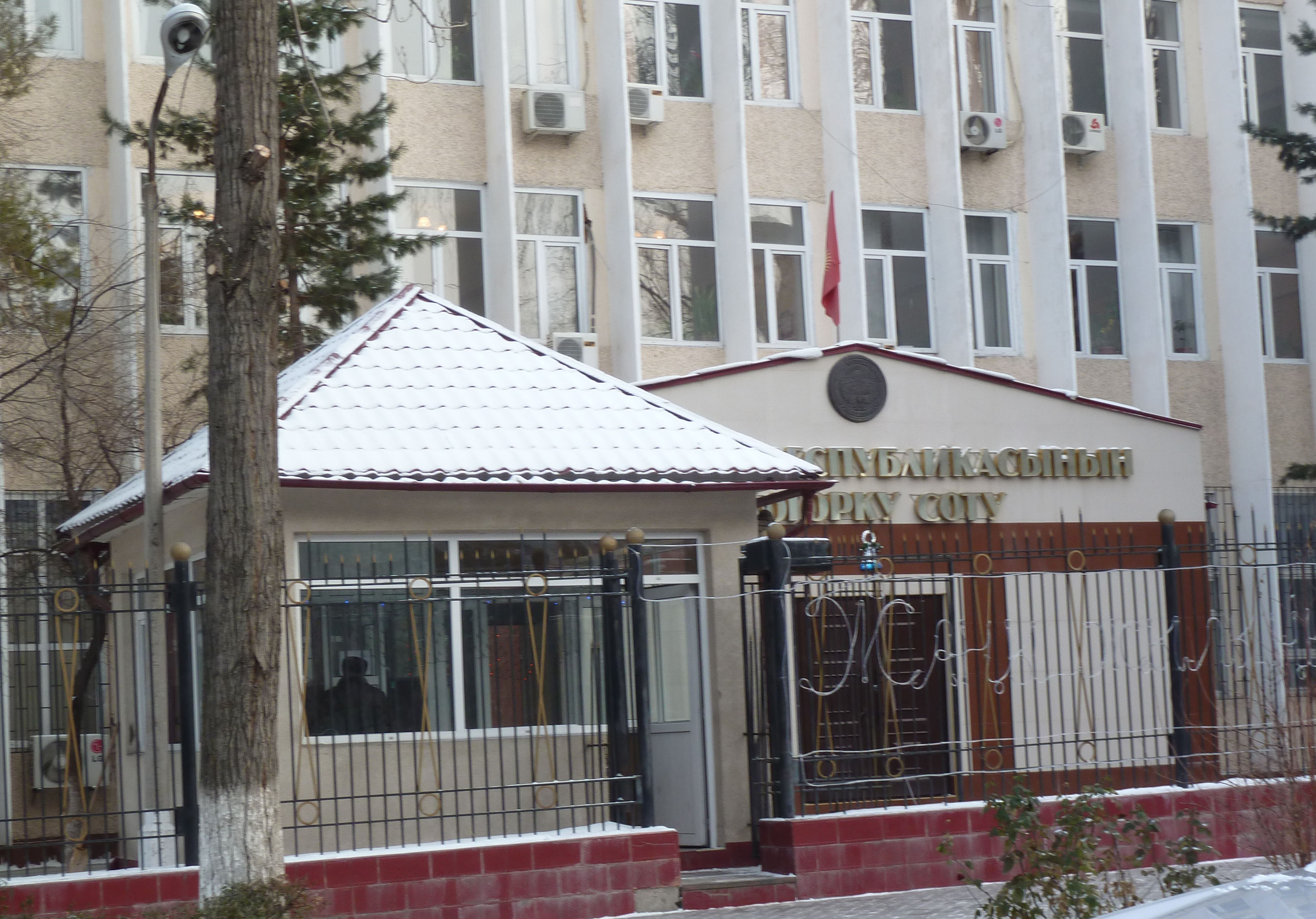 A new report by the ICJ says there have been multiple violations of human rights in the arrest and trial of Azimzhan Askarov, a prominent Kyrgyz human rights defender.