May 24, 2018 | News, Publications, Reports, Thematic reports
The widespread occurrence of sexual and gender-based violence (SGBV) in Swaziland requires prompt action to enact the Sexual Offences and Domestic Violence Bill, says the ICJ in a report released today.
The ICJ’s report found that discriminatory practices based on customary laws and traditional beliefs undermine equality between men and women and contribute to an environment in which SGBV is at crisis point in the country.
“As the Senate of Swaziland deliberates over the Sexual Offences and Domestic Violence Bill, it must recall that enactment of the Bill is an essential step in complying with recommendations of the UN Human Rights Committee and CEDAW Committee and as a means of discharging the commitments made by His Majesty’s Government during the 2016 Universal Periodic Review,” said Arnold Tsunga, Director of the ICJ Africa Regional Programme.
In earlier submissions to the Senate of Swaziland, the ICJ noted that enactment of the Bill is a matter required of the Kingdom of Swaziland pursuant to its international human rights law obligations, including those arising from the Africa region, to criminalize and sanction the perpetrators of SGBV.
His Majesty’s Vision 2022, the aims and targets of the Deputy Prime Minister’s Office and Swaziland’s consensus in the adoption of the 2030 Agenda for Sustainable Development reinforce compliance with those obligations.
The Sexual Offences and Domestic Violence Bill 2015, first drafted over ten years ago, has still not been passed into law, including because there is a perception that some of its provisions will infringe Swazi law and custom.
“Legislative and policy reform is needed as is the enhanced technical capacity and commitment of justice actors and policy makers to combat domestic and sexual violence,” Tsunga added.
Contact
Arnold Tsunga, Director, ICJ Africa Regional Programme, t: +27.73.131.8411; e: arnold.tsunga(a)icj.org
Alex Conte, ICJ Global Redress and Accountability Initiative, t: +41.79.957.2733; e: alex.conte(a)icj.org
Download
Swaziland-GRABaselineStudy-Publications-Reports-Thematic reports-2018-ENG (full report in PDF)
May 15, 2018 | News
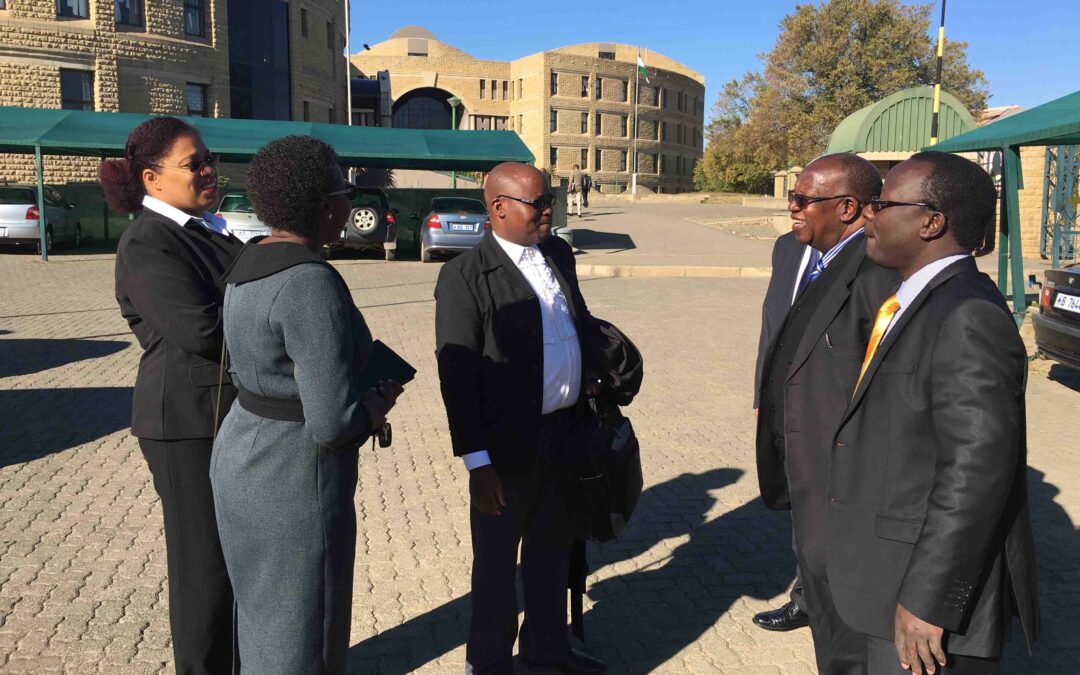
The Africa Judges and Jurists Forum (AJJF) and the ICJ today called on the authorities in Lesotho to guarantee the independence of the judiciary and to immediately take all legal and administrative measures necessary to make the Court of Appeal function independently and impartially.
The call came as the AJJF and ICJ concluded a 5-day Fact Finding Mission to Lesotho (7-12 May 2018).
The mission emphasized the importance of the Lesotho authorities ensuring that the constitutional and legal framework on the selection, appointment and tenure of judges and the actual practices conform to the international obligations of Lesotho pursuant the international human rights treaties to which it is party, as well as other applicable international standards.
“During our mission we were troubled to discovered that the Court of Appeal has not sat in the past two of its scheduled sessions and with the current impasse we are concerned that it may not convene anytime soon,” said Retired Chief Justice Othman Chande of Tanzania who led the AJJF/ICJ mission.
“We also found that the Prime Minister had initiated a process that may result in the impeachment of the Chief Justice under controversial circumstances,” he added.
The AJJF and the ICJ have been concerned for a number of years about threats to judicial independence in Lesotho.
The ICJ carried out a fact finding mission in 2013 exposing and evaluating some of these concerns. The report of the mission contained specific recommendations.
The AJJF and the ICJ are concerned that most of the recommendations that were made to address structural issues to do with guaranteeing the independence of the judiciary at law and in practice have not been implemented or otherwise addressed.
The appointment of the Chief Justice and the President of Court of Appeal is made by the King on the singular advice of the Prime Minister.
Any impeachment of the Chief Justice and the President of the Court of Appeal is also initiated by the Prime Minister.
These arrangements do not comport with international standards and give rise to the perception that the appointment of judicial officials and any impeachment action against them will be politically motivated.
This has also lead to friction or strong perception of friction between the Executive and the Judiciary in a deeply polarized society.
The appointment process of the President of the Court of Appeal has been subject to prolonged political dispute and litigation that has resulted in a leadership vacuum at the appex court that has made it dysfunctional.
The result is that all litigants who expect justice from the Court of Appeal have years of waiting before they can get their matters resolved.
While the case challenging the appointment of an acting President of the Court of Appeal is presently set down for hearing at the High Court in the coming weeks, it is not clear that this adjucation will conclude the legal process and pave way for the appointment of the acting President of the Court of Appeal.
The appointment of ordinary judges of the High Court is done by the King on the advice of the Judicial Services Commission (JSC), which is chaired by the Chief Justice chairing a panel of only four people comprising the Chief Justice herself, Chairperson of the Public Service Commission, the Attorney General and one Judge.
All these officials are effectively appointed by the Prime Minister or closely work with the Chief Justice, resulting in an appointment process of judges of the High Court that lacks transparency and is perceived as open to cronyism.
“It is important that the legal profession and the judiciary speak strongly in defence of independence of the judiciary, but currently the legal profession is deeply divided, distrustful and polarized,” said Retired Chief Justice Sakala (Zambia).
“It is therefore important that a practice of regular bar-bench dialogue be initiated to reduce toxic relations that are being exploited to undermine judicial independence,” he added.
The broader reforms that were recommended by the SADC Commission of Inquiry to strengthen governance in Lesotho have not been wholly implemented.
The country needs broad reforms including in the judicial sector, but these reforms have been threatened or at least slowed down significantly by the instability in the successive coalition governments that make it impossible for the reforms to be carried out when the country is in a constant electoral mode.
The AJJF/ICJ mission hopes that the ongoing efforts to impeach the Chief Justice will fully respect her right to a fair hearing as stipulated in international obligations binding on Lesotho and that such efforts will strengthen rather than weaken the rule of law in an already fragile environment.
A report of the mission will be published and made publicly available.
Lesotho-End of Mission statement-News-2018-ENG (full story, in PDF)
Mar 23, 2018 | Advocacy, Non-legal submissions
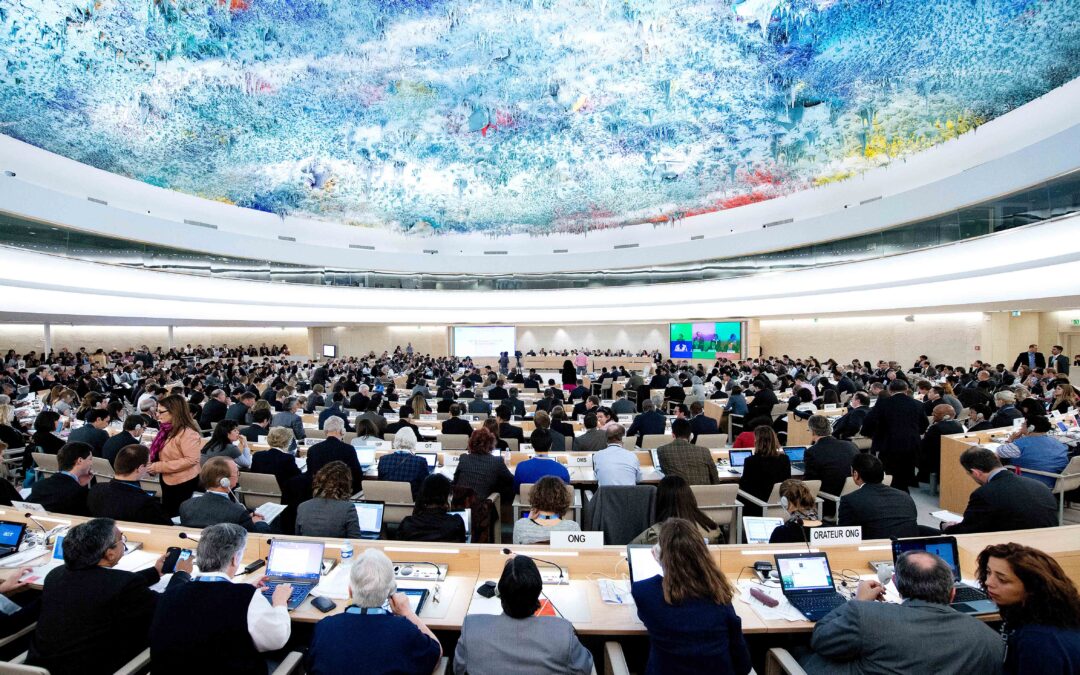
The ICJ today joined other NGOs in an end-of-session statement, reflecting on the 37th ordinary session of the UN Human Rights Council.
The statement was delivered by the International Service for Human Rights (ISHR) on behalf of:
- The East and Horn of Africa Human Rights Defenders Project (DefendDefenders)
- The Global Initiative for Economic, Social & Cultural Rights
- CIVICUS
- International Commission of Jurists
- International Federation for Human Rights Leagues
- Conectas Direitos Humanos
- Human Rights House Foundation
- Amnesty International
- International Lesbian and Gay Association
- Human Rights Watch
- Asian Forum for Human Rights and Development (FORUM-ASIA).
The statement read as follows (text in italics was not read aloud for lack of time):
“Our organisations welcome the adoption of the resolution on the promotion and protection of human rights and the implementation of the 2030 Agenda for Sustainable Development, particularly in reaffirming that all approaches to development must comply with the State’s international human rights obligations.
We agree that “cooperation and dialogue” are important for the promotion and protection of human rights, and that States should fully cooperate with the Council and its mechanisms, and ensure that all stakeholders are able to cooperate and engage with them without fear of reprisals.
However, we must now be vigilant to ensure that the resolution on Mutually Beneficial Cooperation, lacking in balance, does not undermine other important parts of the Council’s mandate: to address human rights violations and respond promptly to human rights emergencies in specific countries.
The Council has failed to take meaningful action to address the alarming situation on the ground in Cambodia. We welcome and echo the joint statement on Cambodia by over 40 states calling for further action if the situation does not improve in the lead up to the elections and for a briefing by the High Commissioner before the next Council session. We are concerned by Cambodia’s attempt to shut down criticism under item 10 debate on the worsening human rights situation in the country, as they are doing domestically.
We are disappointed by the weak outcome on Libya. Given the gravity of the human rights situation on the ground and the lack of accountability for crimes under international law, the Council cannot justify the lack of a dedicated monitoring and reporting mechanism.
We welcome the co-sponsorship of the Myanmar resolution by groups of States from all regions, making a joint commitment to address the continuing human rights violations and crimes against humanity in the country and support for the Special Rapporteur and Fact-Finding Mission to fulfil its mandate to establish truth and ensure accountability for perpetrators.
We also welcome the renewal of the mandate of the Commission on Human Rights in South Sudan allowing it to continue its vital investigations and identification of perpetrators. These developments acknowledge the importance of accountability for serious human rights violations and crimes under international law, which cannot be understated.
We welcome the adoption of the resolution on drugs and human rights as the OHCHR report will provide human rights indicators related to the drug issue that would help in future policies.
We welcome the resolution on Eastern Ghouta adopted after an urgent debate, demonstrating how this Council can respond in an agile manner to crises.
Having long supported the resolution on “protection of human rights while countering terrorism”, we appreciate the efforts that led to the end of the separate and deeply flawed initiative on “effects of terrorism on the enjoyment of human rights“. Future versions of the resolution must address the relevant issues exclusively and comprehensively from the perspective of the effective protection of human rights.
We welcome the Dutch-led joint statement on strengthening the Council, emphasising the importance of substantive civil society participation in any initiative or process and that the Council must be accessible, effective and protective for human rights defenders and rights holders on the ground.
Finally, we call on the Bureau co-facilitators on improving the efficiency and strengthening the Council to closely engage with all Members and Observers of the Council, human rights defenders and civil society organisations not based in Geneva.”
Mar 22, 2018 | News
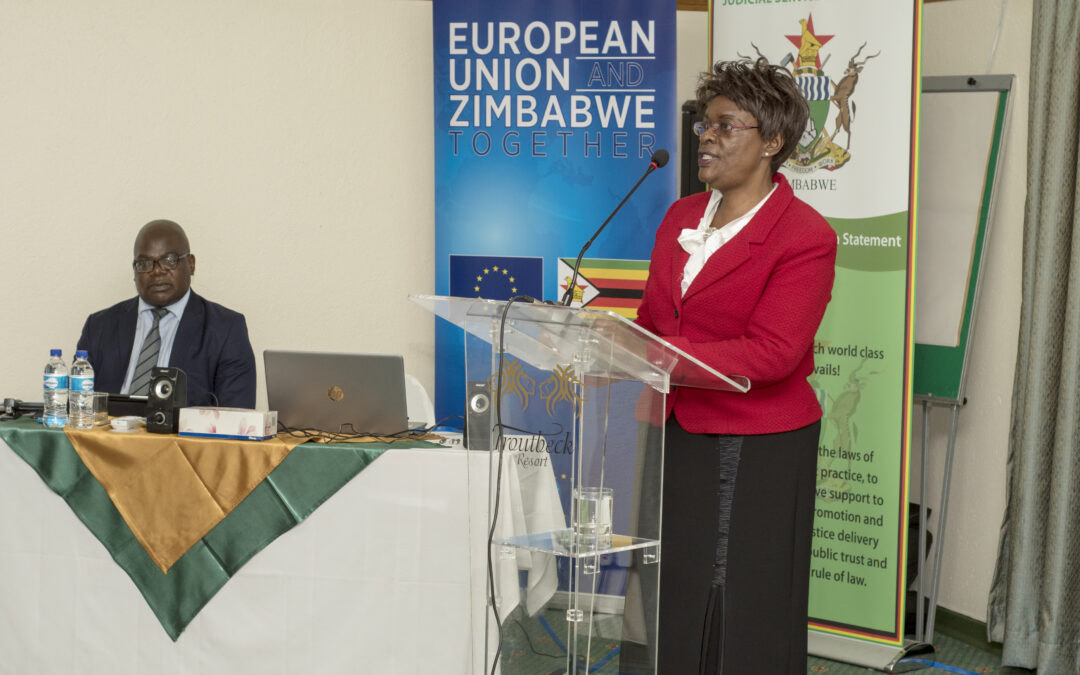
The ICJ and the Judicial Service Commission (JSC) of Zimbabwe, are convening a three-day Orientation Workshop for newly appointed judges.
It is held until 24 March at Troutbeck Inn, Nyanga.
The workshop is the fourth such meeting that the ICJ and the JSC have convened with the support of the European Union.
The training provides a useful bridge for the new appointees as they transition from the bar to the bench.
The topics covered during the training include judgement writing, court procedure and decorum, substantive law, judicial independence and issues of integrity on the bench.
The Hon. Judge President Chiweshe in his opening remarks stated that the objectives of the workshop are to familiarize incoming judges with their new work environment and to acquaint them with the specific divisions of that court.
This is to prepare them for the full assumptions of work in the judiciary. Justice Chiweshe noted that each division, criminal, civil and family law, will expose the judges to its own activities, guided by the judge from that division.
After the training the hope is that the judges will be deployed to their respective regions and stations fully acquitted with the tasks before them and can dispense justice diligently, impartially, fairly, without fear, favour or promise.
In attendance at the first day of the workshop were 17 judges (four female and thirteen male).
Mar 20, 2018 | Advocacy
The ICJ today submitted a briefing note to the Senate of Swaziland calling for its urgent adoption of the Sexual Offences and Domestic Violence Bill 2015.
The ICJ’s briefing note concludes that enactment of the Bill is a matter required of the Kingdom of of Swaziland pursuant to its regional and universal human rights law obligations to criminalize and sanction the perpetrators of sexual and gender-based violence. Compliance with those obligations is reinforced by the ‘Vision 2022’ of His Majesty King Mswati III, the aims and targets of the Deputy Prime Minister’s Office and Swaziland’s consensus in the adoption of the 2030 Agenda for Sustainable Development.
The ICJ’s briefing note also concludes that, ten years after initial drafting of the Bill, its enactment during the current session of the Parliament of Swaziland is an essential step in complying with recommendations of the UN Human Rights Committee and CEDAW Committee and as a means of discharging the commitments made by His Majesty’s Government during the 2016 Universal Periodic Review.
Swaziland-SOADVBill-Advocacy-ParliamentaryBriefingNote-2018-ENG (Parliamentary Briefing Note, in PDF)