Nov 23, 2014 | Events
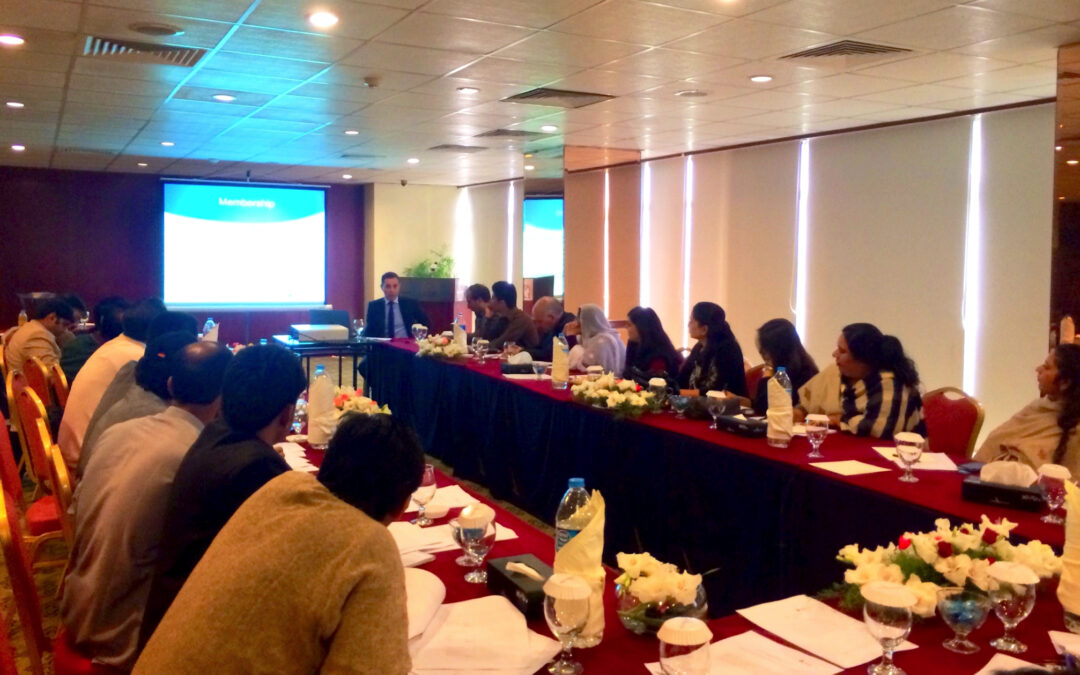
In partnership with the Human Rights Commission of Pakistan (HRCP), the ICJ convened and participated in a one-day workshop on the Universal Periodic Review (UPR) mechanism of the UN Human Rights Council, held in Lahore on 22 November 2014.
The workshop was convened by the ICJ and HRCP as a follow up to, and in response to requests by participants at, training workshops held in Pakistan in February 2014. Now half way between Pakistan’s second and third periodic reviews under the UPR mechanism, the workshop brought together representatives from civil society from throughout Pakistan working on a wide range of human rights issues. It drew from the experience of national and international advocates and human rights lawyers and defenders to discuss:
- The importance of international human rights law at the national level;
- The UPR as a mechanism for human rights protection and how it fits within the broader framework of UN human rights mechanisms;
- Opportunities for NGO engagement in the UPR, especially in the development of a mid-term civil society evaluation report and in preparation for Pakistan’s third cycle UPR in 2017; and
- Weaknesses in Pakistan’s engagement with the UPR.

Nov 19, 2014 | News
Thailand must end immediately the prosecution of civilians in military tribunals and transfer all remaining cases to the civilian courts, said the International Commission of Jurists (ICJ) today.
On 18 November 2014, the Bangkok Military Tribunal convicted a political broadcaster, Khathawut B., of lese majeste under article 112 of the Thai Criminal Code and Article 14 of the Computer Crimes Act, and sentenced him to five years in jail following a plea of guilty. The court barred observers and the public from the proceedings on the ground that they “concerned matters of national security.”
There is no appeal possible under article 61 of the Thai Act for the Organization of the Military Court so long as Thailand remains under Martial Law, which has been in force nationwide since May 22.
“Under international standards, civilians should not be subject to the jurisdiction of military tribunals, particularly where, like in military-ruled Thailand, military tribunals lack the institutional independence from the executive required by international law regarding fair trials. Thus, civilians convicted before such tribunals should have the right to a new trial before a civilian court,” said Wilder Tayler, Secretary General of the ICJ. “This case also highlights another very serious problem with the state of human rights in Thailand: Thailand’s misuse of criminal defamation laws to imprison people exercising their right to freedom of expression.
The National Council for Peace and Order (NCPO) extended the jurisdiction of military tribunals over civilians after it took power by a coup d’etat and imposed Martial Law throughout Thailand. Prior to this, civilians had not been subject to military jurisdiction in Thailand for crimes not directly involving the military for decades, including during the state of emergency in place in southern Thailand since 2004.
Among crimes now within the jurisdiction of military tribunals in Thailand is lese majeste – criminalizing the making of statements that could be construed as defaming or insulting the Thai Monarchy. Such broad restrictions violate the right to freedom of expression guaranteed under article 19 of the International Covenant on Civil and Political Rights (ICCPR), to which Thailand is a state party.
Since the coup, at least 69 civilians have faced prosecution before military tribunals in Thailand on charges ranging from breaching NCPO orders, to planning a terrorist act and lese majeste.
Under article 14 of the ICCPR, everyone has the right to a “fair and public hearing by a competent, independent and impartial tribunal established by law.” The imposition of Martial Law, and the State’s suspension of some of its obligations under the ICCPR, including the right to appeal guaranteed by article 14(5) for cases heard by military tribunals, does not affect the applicability of this provision.
“All prosecutions of civilians before military tribunals must be transferred to civilian courts immediately, if Thailand is to comply with its international obligations,” said Tayler. “There is absolutely no excuse or justification for the use of military tribunals to prosecute civilians in Thailand, and especially not for simply exercising the right to freedom of expression.”
The Draft Principles Governing the Administration of Justice through Military Tribunals, set out principles that apply to state use of military tribunals.
Principle 5 states “Military courts should, in principle, have no jurisdiction to try civilians. In all circumstances, the State shall ensure that civilians accused of a criminal offence of any nature are tried by civilian courts.”
Further, Principle 2 states “Military tribunals must in all circumstances apply standards and procedures internationally recognized as guarantees of a fair trial.” Military tribunals must in all circumstances respect the principles of international law relating to a fair trial, even in times of crisis.
Thailand-military courts-news-press release-2014-THAI (full text, PDF)
Nov 7, 2014 | Multimedia items, News, Video clips
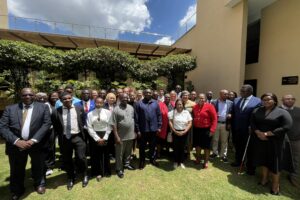
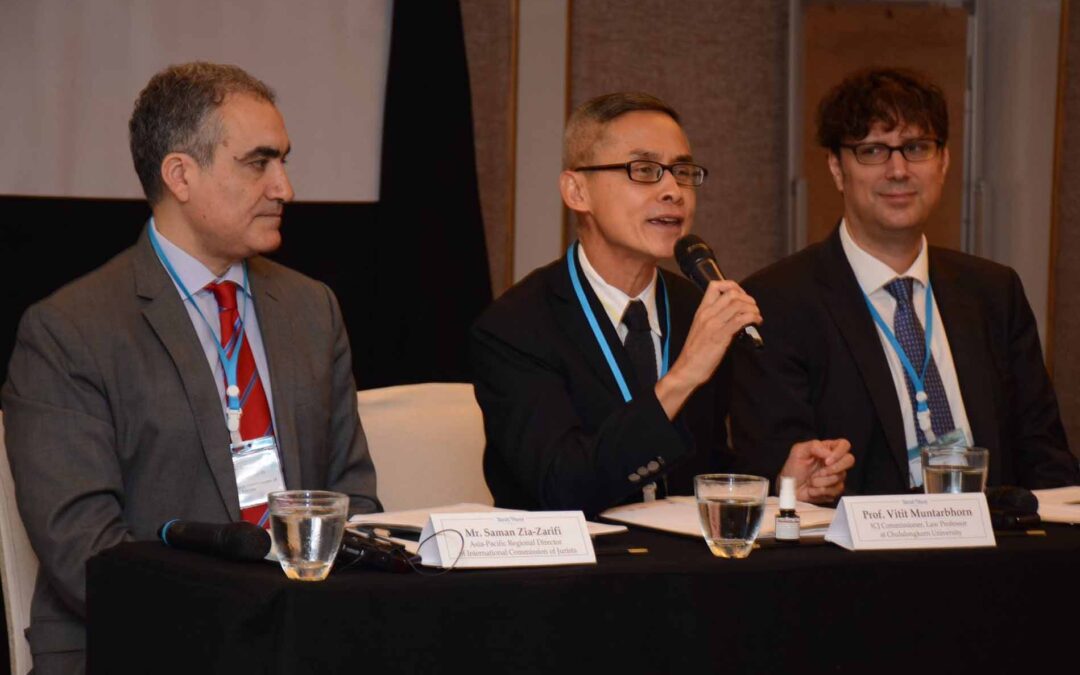
For the fist time, about 40 judges and representatives from judicial training institutions across Southeast Asia gathered to discuss recent developments in international human rights law on the right to life, with a focus on extrajudicial executions, deaths in custody and enforced disappearances.
Nov 5, 2014 | Events, News
On 6 and 7 November 2014, judges and representatives of judicial training institutions from most ASEAN Member States will gather in Manila to discuss recent developments in international human rights law on questions relating to the right to life.
Among the areas of consideration will be custodial deaths and other extrajudicial killings and enforced disappearances.
The two-day event, entitled Judicial Dialogue on Deciding Cases Involving Human Rights Violations in the ASEAN, is organized by the ICJ in collaboration with the Working Group for an ASEAN Human Rights Mechanism.
This initiative is also part of ICJ’s continuous efforts to support Southeast Asian judiciaries through the facilitation of colloquia and dialogues.
Among the event’s participants are Honourable Dato Seri Paduka Hj Kifrawi bin Dato Paduka Hj Kifli, Chief Justice of Brunei Darussalam; ICJ Commissioners Justice Adolfo S. Azcuna and Professor Vitit Muntarbhorn; and Dato’ Param Cumaraswamy, Co-Chairperson of the Working Group for an ASEAN Human Rights Mechanism and Former UN Special Rapporteur on the independence of Judges and Lawyers.
This Judicial Dialogue is aimed to be a platform for peer-to-peer sharing of experiences among judges, representatives from judicial training institutions, and lawyers and other jurists in the ASEAN.
Some of the discussions expected to take place include the international legal framework on the right to life, including custodial deaths and other extrajudicial executions; landmark cases that have previously found state authorities accountable for serious violations of human rights; and challenges faced by judges in cases involving serious violations of human rights and practical solutions to overcome them.
ASEAN-Programme Judicial Dialoghe-News-Events-2014-ENG (full text PDF)

Nov 3, 2014 | News
The ICJ deplores that in less than a week, Bangladesh courts ordered the death penalty in three cases. All three condemned men are leaders of the Jamaat-e-Islami, the country’s largest Islamist party and an ally of the main opposition party, Bangladesh Nationalist Party.