Oct 21, 2020 | News
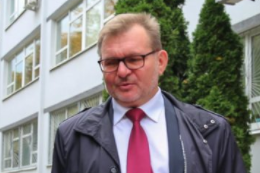
The ICJ calls on the Belarus authorities to revoke the disbarment of lawyer Aleksandr Pylchenko and to end harassment or other interference with the work of lawyers in the country.
His disbarment appears to be arbitrary and in violation of rights to freedom of expression as well as international standards on the role of lawyers.
The decision of 15 October 2020 of the Ministry of Justice to disbar the lawyer is clearly related to his work in defence of human rights and his representation of clients, including, opposition leaders or protesters.
This disbarment is part of a pattern of increasing obstruction of lawyers who represent those associated with recent protests in Belarus, including through arrests and detention of lawyers, and prevention of their access to clients.
Aleksandr Pylchenko represented Viktor Babariko and Maria Kolesnikova, two leaders of the opposition in Belarus.
Disbarment proceedings against Mr Pylchenko started as a result of his public criticism of the response of the law enforcement authorities to claims of ill-treatment of protesters.
On 14 August 2020, in a media interview Mr Pylchenko called on the Prosecutor General’s Office to take action, in particular to launch criminal investigations into the ill-treatment of protesters by the police and to remove the Minister of Interior and other officials from their posts because of their involvement in human rights violations.
According to the Ministry of Justice, Mr Pylchenko called for “illegal actions, including blocking and disarming military units” and his statements “mislead the public about the powers of state bodies and do not comply with procedural norms”.
Belarus has obligations under international law to protect the right to freedom of expression (Article 19 ICCPR). Lawyers have a particular role in publicly raising concerns about violations of the human rights of their clients, or problems in the justice system that lead to violations of human rights.
The UN Basic Principles on the Role of Lawyers affirm that lawyers, like others, are entitled to freedom of expression and in particular, have the right to take part in public discussion of matters concerning the law, the administration of justice and the promotion and protection of human rights.
Furthermore, the UN Basic Principles on the Role of Lawyers provide that governments must ensure that lawyers ‘are able to perform all of their professional functions without intimidation, hindrance, harassment or improper interference”. (Principle 23). Lawyers should not suffer, or be threatened with, prosecution or administrative, economic or other sanctions for any action taken in accordance with recognized professional duties, standards and ethics (Principle 16). They should never be identified with their clients’ causes.
Background:
Following the presidential elections of 9 August 2020 in Belarus, widespread protests across Belarus took place.
On 18 June and 7 September 2020, Victor Babaryka and Maria Kolesnikova, opposition leaders in Belarus, were detained.
There are reports that defence lawyers were denied access to those arrested including in high-profile cases, such as the case of the former presidential candidate Victor Babaryka whose lawyer was not allowed to see his client in the detention centre for significant period of time.
On 9 September 2020, lawyers Ilya Salei and Maxim Znak, were detained allegedly on politically motivated charges.
On 25 September 2020, the Minsk city Oktyabrsky District Court sentenced Luidmila Kazak, lawyer of Maria Kolesnikova, to a fine (220 Euro) for “disobeyance to a lawful order” of a police officer (Article 23.4 of the Code of Administrative Offences). The lawyer stated that the arrest and administrative fine are connected to her legal representation of the opposition leader Maria Kolesnikova.
The ICJ has previously called on Belarus to comply with its international human rights obligations, including by releasing those arbitrarily detained and ceasing abusive prosecutions as well as harassment of lawyers.
Oct 8, 2020 | News
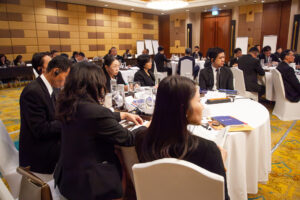
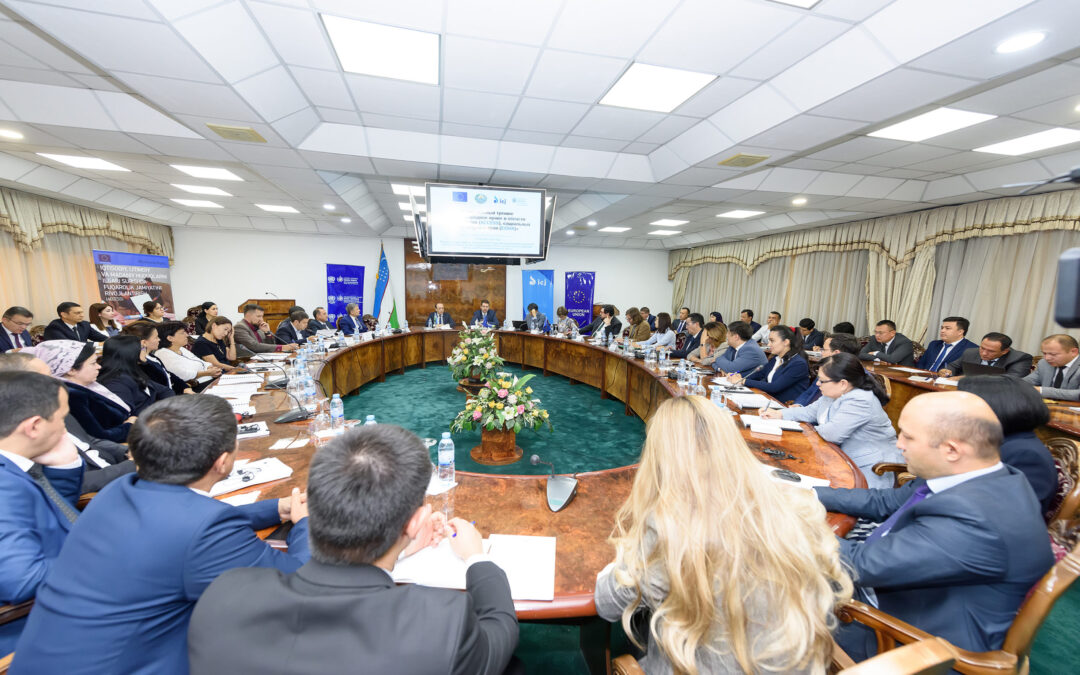
Today, the ICJ, the Regional office of the UN High Commissioner for Human Rights (OHCHR) for Central Asia and the Supreme School of Judges of the Republic of Uzbekistan (SSJ) are beginning a national training on “International law on economic, social and cultural (ESC) rights.”
This two-day online-training is the second of a series of trainings on ESC rights, including, the right to health, education, housing, child protection and rights in the workplace.
The online-training aims to build the capacity of judges, lawyers, prosecutors, legal academics and other representatives of civil society to apply international law and standards on ESC rights. Trainers will share best practices on implementation by States of their international obligations, including through judicial practice, and in ensuring access to justice for ESC rights. The online-training will also allow for exchanges between members of the judiciary, other legal practitioners, and members of civil society.
The training will be based on four modules: (1) introduction to international law on ESC rights; (2) international obligations concerning access to justice and effective remedies for ESC rights in national courts and comparative examples of good practices; (3) children`s ESC rights and (4) women`s ESC rights. The office of the UN Special Rapporteur on independence of judges and lawyers and representatives of the UN Committee on the Elimination of Discrimination against Women will participate in the training.
“Nobody could imagine the challenges the world will face only in few months after my visit to Uzbekistan. We are witnessing and living this unprecedently challenge for individuals, societies and states to response to crisis at global and national level to protect right to life and health, and to protect individuals from impact of lockdowns and restrictions. Economic, social and cultural rights are the heart of these challenges,” said Diego Garcia-Sayan, the UN Special Rapporteur on independence of judges and lawyers in his video-address to the participants of the training.
Francois Begeot, Head of Cooperation of the Delegation of the European Union to the Republic of Uzbekistan pointed out, “COVID-19 pandemic showed the urgency and importance of economic, social and cultural rights that have to be ensured by the states, even in the emergency situations. Taking international obligations, Uzbekistan has to respect, protect and fulfil human rights including during the state of emergency and ensure access to justice and legal remedies.”
Read full press release here.
Watch Diego García-Sayán speech for the event:
Contact:
Ms. Dilfuza Kurolova, Legal Consultant, ICJ Europe and Central Asia Programme, e: dilfuza.kurolova@icj.org
Ms. Guljakhon Amanova, National Program Officer, Uzbekistan, Regional Office of the UN High Commissioner for Human Rights (OHCHR), e:gamanova@ohchr.org
Mr. Utkir Khalikov, Head of the international department The Supreme School of Judges under the Supreme Judicial council of the Republic of Uzbekistan for Central Asia, e: inter.dep.ssj@mail.ru
Oct 5, 2020 | Advocacy, Non-legal submissions
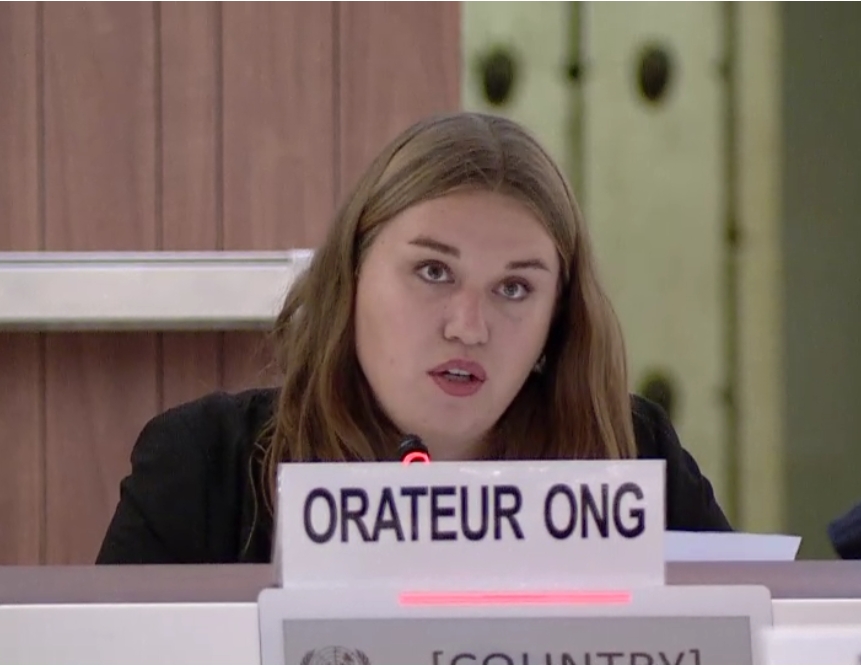
The ICJ today highlighted the need for accountability for crimes under international law in Libya, and concerns for the independence of lawyers in Ukraine, at the UN Human Rights Council in Geneva.
The oral statement, delivered in the general debate on technical cooperation and capacity building, read as follows:
“Madame President,
The International Commission of Jurists (ICJ) welcomes the oral updates on Ukraine and Libya.
Technical assistance and capacity building objectives in Libya can only be achieved if the protection of human rights, entrenchment of the rule of law and pursuit of accountability are prioritized.
States should support the Fact-Finding Mission by extending its reporting mandate, increasing contributions to the UN budget necessary to establish the Mission’s secretariat, and fully cooperating with it.
States should also support the Berlin Process working groups, ensuring that the political and accountability pillars work in unison and making meaningful commitments to implement their recommendations.
Across all of Ukraine, lawyers continue to be associated with their clients and may face consequences for representing them by private individuals and also through abuse of legal proceedings. High-profile cases bear risks for independent lawyers who choose to diligently represent their clients.
The decline in security of lawyers in and outside of courts, and the problem of threats, harassment, and attacks against lawyers, should be addressed as a matter of priority, including through technical cooperation. Measures should be taken to build the capacity of law enforcement agencies and court security personnel to ensure that lawyers and others involved in court proceedings can work in an atmosphere free from intimidation, harassment, and improper interference.
Thank you.”
Sep 30, 2020 | News
The ICJ today welcomed the first annual rule of law report of the European Commission, which analyses the compliance of all EU Member States with rule of law standards, including on judicial independence, freedom of the media and civil society.
The report is a welcome recognition that rule of law guarantees cannot be taken for granted in any European country, and that all EU institutions must be particularly vigilant in their defence.
But the ICJ warns that the report is only valuable if it leads to strengthened EU enforcement action to address the serious rule of law crises in Poland and in Hungary.
“This report is further testimony to the actions of governments of Poland and Hungary, to deliberately and systematically dismantle protections for judicial independence and other essential rule of law protections,” said Róisín Pillay, ICJ Europe and Central Asia Programme Director.
“We need the EU to use its powers of enforcement promptly and to the full, to defend these fundamental guarantees, including through prompt progression of Article 7 and enforcement proceedings. It is welcome that the European Commission calls on Member States to accelerate the resolution of problems raised under the Article 7 proceedings against Poland and Hungary. This report should lead to renewed efforts of all the institutions to urgently progress these proceedings,” she added.
Additional information
The full text of the European Commission report is available here: https://ec.europa.eu/info/publications/2020-rule-law-report-communication-and-country-chapters_en
The International Commission of Jurists has repeatedly expressed serious concern at the deteriorating rule of law situation in both Poland and Hungary, see for example:
https://www.icj.org/poland-judges-and-lawyers-from-around-the-world-condemn-rapidly-escalating-rule-of-law-crisis/
And here: https://www.icj.org/european-union-icj-joins-call-for-urgent-eu-response-to-hungarys-covid-19-emergency-law/
Contact:
Róisín Pillay, ICJ Europe and Central Asia Programme Director, t: +32 476 97 42 63; e: roisin.pillay@icj.org
Karolina Babicka, Legal Adviser, ICJ Europe and Central Asia Programme, t: +32 475 46 20 67; e: karolina.babicka@icj.org
Sep 29, 2020 | Advocacy, Non-legal submissions
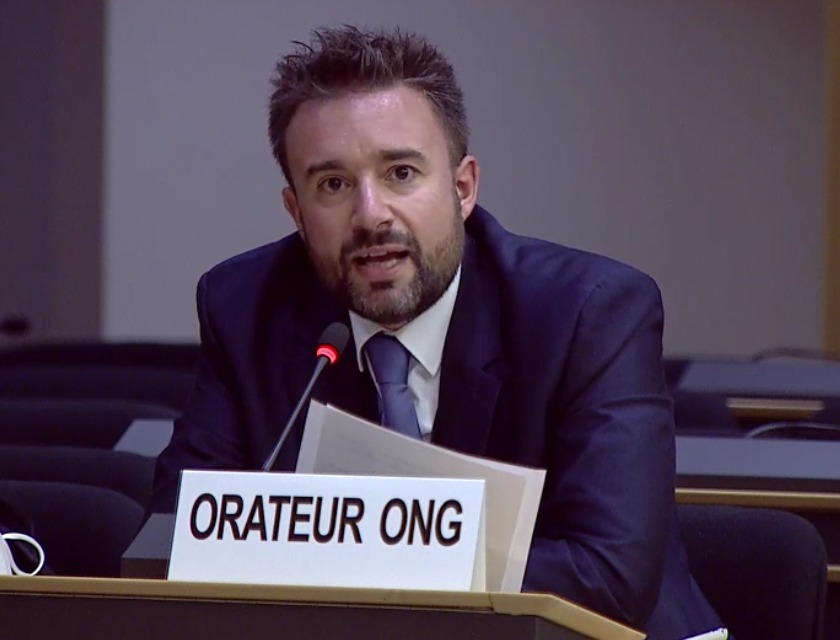
The ICJ and IHOP today put the spotlight the lack of independence of the judiciary and the abuse of criminal and anti-terrorism laws in Turkey, speaking at the UN Human Rights Council in Geneva.
The statement, made during the consideration of the Universal Periodic Review (UPR) of Turkey, reads as follows:
The International Commission of Jurists (ICJ) and the Human Rights Joint Platform (IHOP) welcome the acceptance by Turkey of recommendations to ensure the independence of the judiciary (recommendations 45.112, 45.113, 45.114, 45.115, 45.118, 45.120, 45.121, 45.124, 45.125, 45.126, 45.127, 45.128, 45.129, 45.132, 45.133).
The ICJ and IHOP however regret to report that, based on their research and experience, the statements by the Turkish Government that the recommendations on the independence of the judiciary have already been implemented is simply not correct.
On the contrary, during the state of emergency more than 4000 judges and prosecutors were dismissed, more than 2000 judges and prosecutors were detained, through arbitrary processes that did not meet international standards.
The judiciary in Turkey does not enjoy basic guarantees of institutional independence because its Council of Judges and Prosecutors is fully appointed by the Legislative and Executive powers contrary to international standards on judicial independence.
The ICJ and IHOP further regret that Turkey only noted and did not explicitly support the recommendations to reform its penal and counter-terrorism legislation in line with international standards on freedom of expression (recommendations 45.90, 45.91, 45.92, 45.93, 45.94, 45.95, 45.96, 45.97, 45.98, 45.99, 45.100, 45.101, 45.102, 45.103, 45.104, 45.148, 45.158).
The statement by the Government that “legal amendments have already been adopted” and that these laws are in line with international standards is also fundamentally incorrect.
Anti-terrorism laws and other criminal offences continue to be abused to unjustifiably prosecute political opposition members, judges, lawyers, prosecutors and human rights defenders.
To actually implement the recommendations accepted by Turkey, ICJ calls on Turkish authorities to
- radically reform the governance of the judiciary to restore its independence in line with international standards;
- promptly finalize all criminal and administrative cases concerning former judges and prosecutors, respecting international standards of judicial independence;
- truly reform the country’s anti-terrorism law, and
- stop all arbitrary prosecution of human rights defenders, lawyers, judges, prosecutors and academics.
Contact:
Massimo Frigo, ICJ Senior Legal Adviser, e: massimo.frigo(a)icj.org, t: +41797499949