Sep 14, 2020 | News
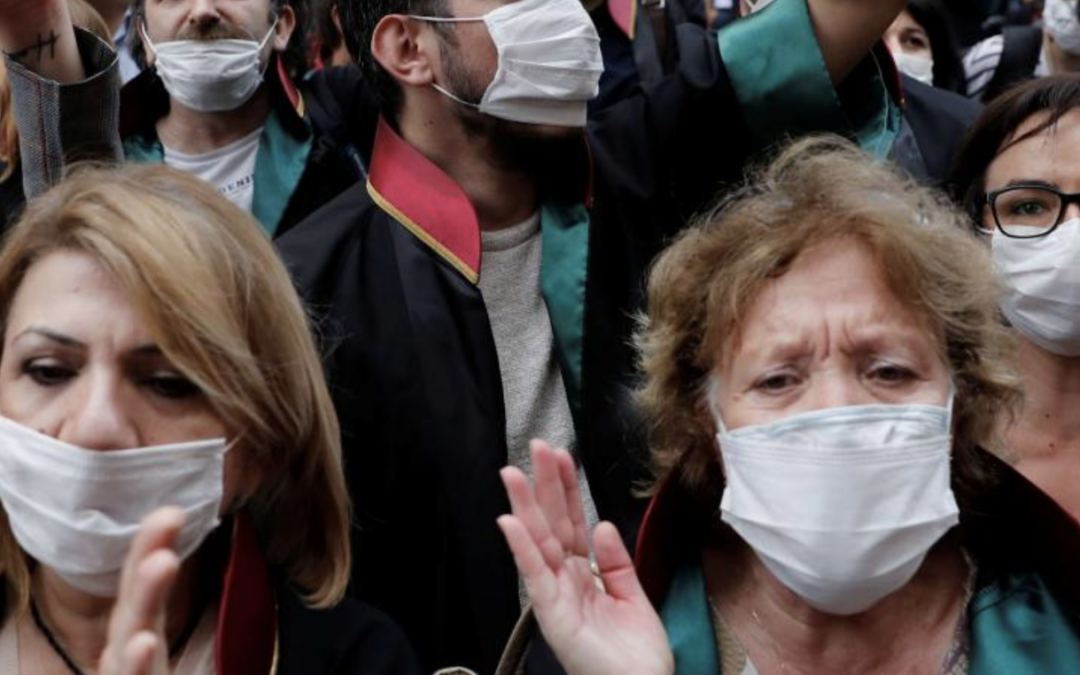
The ICJ expressed today its deep concern at the arrest order of some 60 lawyers in Turkey on grounds allegedly linked to the representation of their clients, in breach of Turkey’s international law obligations.
The ICJ understands that around 47 lawyers have been arrested on 11 September in Turkey while 13 others are being searched by police for allegedly acting on behalf of clients accused of participation in the Gülenist movement, called by Turkish authorities the “Fetullahist Terrorist Organisation” (FETO). It has been reported that lawyers were interrogated about their professional activities.
“Lawyers should never be arrested or sanctioned for representing their clients, or identified with their clients causes,” said Roisin Pillay, Director of the ICJ Europe and Central Asia Programme,
“This is a basic principle of the independence of the legal profession and international law and its respect is essential to ensure that everyone has the right to a fair trial.”
The ICJ will follow the case closely to ensure that international law and standards are respected concerning any action against the lawyers arrested.
“If the sole charges against the lawyers arrested are related to their work as lawyers representing their clients, they should be immediately released,” added Roisin Pillay.
The ICJ stressed that they should not be subject to arrest for the legitimate exercise of any human rights and fundamental freedoms. In the event that any of them are subject to charges for cognizable crime consistent with Turkish and international law, they must be brought immediately before a court to consider whether any continued detention is lawful. If charged, they must be in ensured all rights of fair trial by independent and impartial courts.
The UN Basic Principles on the Role of Lawyers say that “lawyers shall not be identified with their clients or their clients’ causes as a result of discharging their functions” (article 18).
Contact:
Roisin Pillay, e: roisin.pillay(a)icj.org
Massimo Frigo, e: massimo.frigo(a)icj.org – t: +41797499949
Sep 14, 2020 | Advocacy, Cases, Legal submissions
The ICJ and ECRE intervened today before the Grand Chamber of the European Court of Human Rights in the case of the extradition of a Kyrgyz national of Uzbek ethnicity back to his country of origin where he would be at risk of torture or other forms of ill-treatment .
In their submissions, the ICJ and the European Council on Refugees and Exiles (ECRE) analysed thenon-refoulement obligations of the Russian Federation under international human rights law in relation to the consideration of evidence to assess the substantial grounds to believe that a concerned person will face real risk of a serious human rights violation; and the use of diplomatic assurances purportedly to protect against torture and other serious human rights violations in light of international law.
The two NGOs also provided the Court with an update on the legal framework governing extraditions from the Russian Federation to Central Asian States, in particular Kyrgyzstan, as well as Russia’s extradition practice. They concluded that the analysis of the law and practice revealed a number of critical human rights deficits.
They submitted that the lack of respect for the procedural aspect of the principle of non-refoulement, the consequent ineffectiveness of domestic remedies in this regard, in the Russian Federation, and the abysmal record of Kyrgyzstan in upholding its obligation to respect and protect the prohibition of torture or other ill-treatment mean that extraditions from the Russian Federation to Kyrgyzstan entail a high risk of violations of both substantive and procedural aspects of the principle of non-refoulement.
These submissions are an update of the third party intervention submitted by the ICJ before the Chamber of the European Court of Human Rights on 22 September 2016. The Chamber had ruled that no risk of breach of the principle of non-refoulement existed in the case but the judgment is now subject to the review of the Grand Chamber.
ECtHR-TK and others v Russia-GC-ICJECRE-Final (download the third party intervention)
Sep 7, 2020 | News
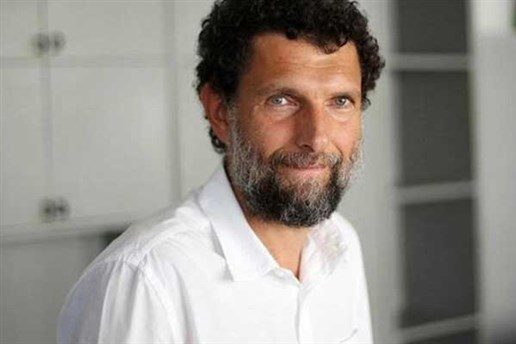
Turkish authorities should immediately release human rights defender Osman Kavala, in compliance with the Council of Europe Committee of Ministers’ decision of 3 September 2020, the International Commission of Jurists (ICJ), Human Rights Watch and the Turkey Human Rights Litigation Support Project said today.
The decision followed a Committee of Ministers hearing to assess the execution of the judgment of the European Court of Human Rights in the case of Osman Kavala. The Committee, acting in its supervisory capacity for Court Judgments, ordered the Turkish authorities, “to ensure the applicant’s immediate release,” pointing to, “a strong presumption that his current detention is a continuation of the violations found by the Court.”
“After the finding by the European Court of Human Rights that Kavala’s detention is unlawful, the Committee of Ministers has affirmed that Turkey is continuing to violate his rights by keeping him in detention” said Roisin Pillay, director of the Europe and Central Asia Programme at the International Commission of Jurists. “European Court rulings are binding, and Osman Kavala should be released immediately.”
Despite the unlawful detention and an acquittal by the Turkish criminal court presiding over his trial, Osman Kavala has been kept behind bars under a newly issued charge of “espionage” since March 2020. His lawyers are currently challenging the lawfulness of the detention before Turkey’s Constitutional Court. However, the Committee of Ministers indicated in its decision that Turkey should not wait for a ruling of the Constitutional Court but should release Kavala immediately.
In June, the ICJ, Human Rights Watch and the Turkey Human Rights Litigation Support Project made a detailed submission to the Committee of Ministers of the Council of Europe, which oversees enforcement of European Court of Human Rights judgments. The submission argued that the sequence of events and repeated local court decisions to ensure Kavala’s detention subsequent to the European Court’s ruling in December 2019 demonstrated that Turkey was prolonging the violations found by the European Court.
The European Court judgment in Kavala v. Turkey (Application no. 28749/18) found violations of the following provisions of the European Convention on Human Rights: Article 5(1) (right to liberty and security), Article 5(4) (right to a speedy decision on the lawfulness of detention), and the rarely used Article 18 (limitation on use of restrictions on rights) taken together with Article 5(1). The Court required Turkey to release Kavala and said that any continuation of his detention would prolong the violations and breach the obligation to abide by the judgment in accordance with Article 46(1) of the Convention.
The judgment on Osman Kavala’s case is particularly significant because it is the first final ruling of the European Court of Human Rights against Turkey in which the Court determined that, in interfering with an individual’s rights, Turkey acted in bad faith and out of political motivations, violating Article 18 of the European Convention on Human Rights. The Court said that by detaining Kavala since November 2017 and prosecuting him, the Turkish authorities had “pursued an ulterior purpose, namely to silence him as human rights defender.”
Kavala has been held in detention since November 2017, initially on bogus allegations that he used the 2013 Istanbul Gezi Park protests as a pretext for an attempt to overthrow the government, and that he was involved in the July 15, 2016 attempted military coup. On February 18, 2020, Kavala and his eight co-defendants were acquitted on charges of “attempting to overthrow the government by force and violence” in the Gezi Park trial.
But Kavala was not released, and a court ordered his detention again immediately on one of the grounds for his initial detention on 1 November 2017, namely the charge of “attempting to overthrow the Constitution by force and violence” because of the ongoing July 15, 2016 coup attempt-related investigation against him. Turkey’s President Recep Tayyip Erdoğan had publicly criticized his acquittal just before he was detained again. Weeks later a court ordered his detention a second time on another charge (“espionage”) but under the same investigation file on the coup attempt and relying on the same evidence.
“The decision by the Council of Europe Committee of Ministers confirms our submission that political considerations are behind the court orders prolonging Osman Kavala’s detention , and that there has been a concerted official effort to prevent Kavala’s release,” said Emma Sinclair-Webb, Turkey director at Human Rights Watch.
“Instead of complying with the European Court’s judgment, Turkey has continued to violate Kavala’s human rights.”
The targeted harassment in Turkey of rights defenders is part of a wider practice of arbitrary detentions and abusive prosecutions of journalists, elected politicians, lawyers, and other perceived government critics. This practice has been well-documented in many reports by the Council of Europe, the European Union, and human rights organizations.
“The campaign of persecution against Osman Kavala and the failure to release him and drop all charges have perpetuated a chilling environment for all human rights defenders in Turkey,” said Ayşe Bingöl Demir, co-director of the Turkey Human Rights Litigation Support Project.
“Ending this blatantly unlawful detention, which has been ongoing for over 1000 days, will not only play a role in preventing further violations to Osman Kavala’s rights, it will also give a strong signal to the human rights defenders community that the oversight mechanisms in place to ensure Turkey’s compliance with its international human rights obligations can still be effective.”
Contact:
Róisín Pillay, Director of ICJ’s Europe and Central Asia Programme, t: +32-2-734-84-46 ; e: roisin.pillay(a)icj.orgMassimo Frigo, Senior Legal Adviser, ICJ’s Europe and Central Asia Programme, t: +41-79-749-99-49 ; e: massimo.frigo(a)icj.org ; Twitter: @maxfrigo
Türkiye: Osman Kavala Serbest Bırakılmalı
Yetkililer, Avrupa Konseyi’nin İnsan Hakları Savunucusunu Serbest Bırakma Kararına Uymalıdır
(Cenevre, 7 Eylül 2020) Uluslararası Hukukçular Komisyonu (ICJ), İnsan Hakları İzleme Örgütü ve Türkiye İnsan Hakları Davalarına Destek Projesi, yaptıkları açıklamada Türkiye makamlarının insan hakları savunucusu Osman Kavala’yı Avrupa Konseyi Bakanlar Komitesinin 3 Eylül 2020 tarihli kararına uygun olarak derhal serbest bırakması gerektiğini ifade etti.
Bu karar, Osman Kavala davasında Avrupa İnsan Hakları Mahkemesi’nin kararının uygulanmasını değerlendiren Bakanlar Komitesi oturumunu müteakiben alındı. Mahkeme kararlarının uygulanmasını denetleme yetkisi olan Komite, Türk makamlarına “başvuranın derhal serbest bırakılmasını sağlama” talimatı vererek “mevcut tutukluluğunun mahkeme tarafından tespit edilen ihlallerin devamı olduğuna dair güçlü bir karine bulunduğuna” işaret etti.
Uluslararası Hukukçular Komisyonu Avrupa ve Orta Asya Programı Direktörü Roisin Pillay,” Avrupa İnsan Hakları Mahkemesi’nin, Kavala’nın tutukluluğunun hukuka aykırı olduğunu tespit etmesinden sonra, Bakanlar Komitesi, Türkiye’nin Kavala’nın tutukluluğunu sürdürerek onun haklarını ihlal etmeye devam ettiğini doğruladı” dedi. Pillay, “Avrupa Mahkemesi kararları bağlayıcıdır ve Osman Kavala derhal serbest bırakılmalıdır” dedi.
Hukuka aykırı tutukluluğuna ve davasının görüldüğü Ceza Mahkemesinin verdiği beraat kararına rağmen, Osman Kavala yeni ileri sürülen bir “casusluk” suçlaması nedeniyle Mart 2020’den bu yana parmaklıklar ardında tutulmaya devam ediliyor. Kavala’nın avukatları, Türkiye’nin Anayasa Mahkemesi önünde tutukluluğun hukuksuz olduğuna ilişkin itirazlarda bulunuyorlar. Ancak Bakanlar Komitesi, kararında Türkiye’nin Anayasa Mahkemesinin vereceği bir kararı beklemeksizin Kavala’yı derhal serbest bırakması gerektiğini işaret ediyor.
Haziran ayında, ICJ, İnsan Hakları İzleme Örgütü ve Türkiye İnsan Hakları Davalarına Destek Projesi, Avrupa İnsan Hakları Mahkemesi kararlarının uygulanmasını denetleyen Avrupa Konseyi Bakanlar Komitesi’ne ayrıntılı bir bildirim sundu. Bildirim, Avrupa Mahkemesi’nin Aralık 2019’daki kararının ardından Kavala’nın alıkonmasını sağlamak için gelişen olaylar serisinin ve tekrarlanan yerel mahkeme kararlarının, Türkiye’nin Avrupa Mahkemesi tarafından tespit edilen ihlalleri devam ettirdiğini gösterdiğini savundu.
Avrupa Mahkemesi, Kavala/Türkiye kararında (Başvuru no. 28749/18), madde 5/1 (özgürlük ve güvenlik hakkı), madde 5/4 (alıkonmanın yasaya uygunluğuna ilişkin ivedi karar alma hakkı) ve nadiren kullanılan madde 18 (haklara getirilecek kısıtlamaların sınırlanması) ile birlikte madde 5/1’in ihlal edildiğine karar vermiştir. Mahkeme, Türkiye’nin Kavala’yı tahliye etmesini zorunlu kılmış, tutukluluğunun devam etmesinin ihlalleri devam ettireceğini ve Sözleşmenin 46(1) maddesi uyarınca AİHM kararlarına uyma yükümlülüğünü ihlal edeceğini belirtmiştir.
Osman Kavala kararı, Türkiye’nin kötü niyetle ve siyasi amaçlarla bir bireyin haklarına müdahale ettiğini ve Avrupa İnsan Hakları Sözleşmesi’nin 18. maddesini ihlal ettiğini tespit eden Türkiye aleyhindeki ilk nihai karar olduğundan özel bir önem taşımakta. AİHM, Osman Kavala’yı Kasım 2017’den bu yana alıkoyup yargılayan Türk makamlarının “başvuranın bir insan hakları savunucusu olarak susturulmasını sağlamak için örtülü bir amaç taşıdığını” tespit etmişti.
Kavala, Kasım 2017’den bu yana, 2013 İstanbul Gezi Parkı protestolarını, hükümeti devirme girişimi için kullandığı ve 15 Temmuz 2016 askeri darbe girişimine müdahil olduğu yönündeki asılsız iddialarla tutuklu. 18 Şubat 2020’de Kavala ve diğer sekiz sanık, Gezi Parkı davasında “cebir ve şiddet kullanarak hükümeti ortadan kaldırmaya teşebbüs” suçlamasından beraat etmiştir.
Ancak Kavala cezaevinden tahliye edilmemiş ve bir hakim kararıyla 2016 darbesiyle ilgili devam eden bir soruşturmayla ilişkili olarak “anayasal düzeni cebir ve şiddet kullanarak ortadan kaldırmaya teşebbüs” suçlamasıyla tekrar tutuklanmıştır. Tekrar tutuklanmasından kısa bir süre önce Cumhurbaşkanı Recep Tayyip Erdoğan halka açık şekilde Kavala’nın beraatini eleştirmiştir. Kavala haftalar sonra, yine bu delillere ve soruşturma dosyasına dayanan bir başka suçlama ile (casusluk) bir kez daha tutuklanmıştır.
İnsan Hakları İzleme Örgütü Türkiye Direktörü Emma Sinclair-Webb,” Avrupa Konseyi Bakanlar Komitesi’nin kararı bildirimimizi doğrulamakta, Osman Kavala’nın tutukluluk halini uzatan mahkeme kararlarının arkasında siyasi değerlendirmelerin olduğunu ve Kavala’nın serbest bırakılmasını önlemek için ortak bir resmi çabanın bulunduğunu ortaya koymaktadır” dedi.
Sinclair-Webb, “Avrupa Mahkemesi’nin kararına uymak yerine, Türkiye, Kavala’nın insan haklarını ihlal etmeye devam etmiştir” dedi.
Türkiye’de insan hakları savunucularına yönelik baskı, daha genel olarak gazetecilere, seçilmiş siyasetçilere, hukukçulara, hükümeti eleştirdiği düşünülenlere yönelik keyfi alıkoymalar ve yargısal tacizin bir parçasıdır. Bu uygulama Avrupa Konseyi, Avrupa Birliği ve insan hakları örgütlerine ait birçok raporla belgelendirilmiştir.
Türkiye İnsan Hakları Davalarına Destek Projesi Eş Direktörü Ayşe Bingöl Demir “Kavala’ya karşı yürütülen yıldırma kampanyası, onun tahliye edilmemesi ve hakkındaki suçlamaların düşürülmemesi, Türkiye’deki tüm insan hakları savunucuları için baskı ortamının sürmesine sebep olmuştur” dedi.
“1000 gün boyunca devam eden açıkça hukuka aykırı olan tutukluluğun sona ermesi, yalnız Osman Kavala’nın haklarının daha fazla ihlal edilmesini önlemek konusunda değil, aynı zamanda insan hakları savunucuları topluluğuna Türkiye’nin uluslararası insan hakları yükümlülüklerine uyumunu denetleyen mevcut gözetim mekanizmalarının hala etkili olabileceği yönünde güçlü bir sinyal verecektir.”
İnsan Hakları İzleme Örgütü’nün Türkiye ile ilgili diğer raporları için tıklayınız:
https://www.hrw.org/europe/central-asia/turkey
Daha fazla bilgi için :
İstanbul’da, Emma Sinclair-Webb (İngilizce, Türkçe): +90-538-972-4486 (Whatsapp); ya da sinclae@hrw.org. Twitter: @esinclairwebb
Cenevre’de, Massimo Frigo (İngilizce, Fransızca, İspanyolca ve İtalyanca): +41-79-749-99-49; ya da massimo.frigo@icj.org. Twitter: @maxfrigo
Brüksel’de, Róisín Pillay (İngilizce, Fransızca): +32-2-734-84-46 (cep telefonu); ya da roisin.pillay@icj.org
New York’ta, Aisling Reidy (İngilizce) +1-917-378-3178 (cep telefonu); ya da reidya@hrw.org

Sep 2, 2020 | Advocacy, Non-legal submissions
The ICJ has made submissions to the Human Rights Committee, today, on Ukraine’s implementation of, and compliance with, the provisions of the International Covenant on Civil and Political Rights.
The ICJ broughtto the Committee’s attention some issues of concern pertaining to Ukraine’s compliance with and implementation of the ICCPR.
This submission highlights a number of concerns relating to the security and independence of lawyers in Ukraine, and their consequences for the protection of certain Covenant rights. In particular, this submission addresses:
- the institutional independence of the legal profession;
- security of lawyers and their right to life;
- restrictions on access to clients and the rights of the defence; and
- security of lawyers and access to justice in uncontrolled territories in Ukraine.
These concerns highlight Ukraine’s lack of compliance with its obligations under the Covenant, including in respect of the right to life under article 6 and the right to a fair trial under article 14, in particular, as well as under other Covenant rights, such as Ukraine’s obligations under articles 2, 7, 9, 10, and 17 of the ICCPR.
Ukraine-ICJ-Submission-CCPR-Advocacy-Non-Legal-Submissions-2020-ENG
Aug 31, 2020 | Advocacy, News
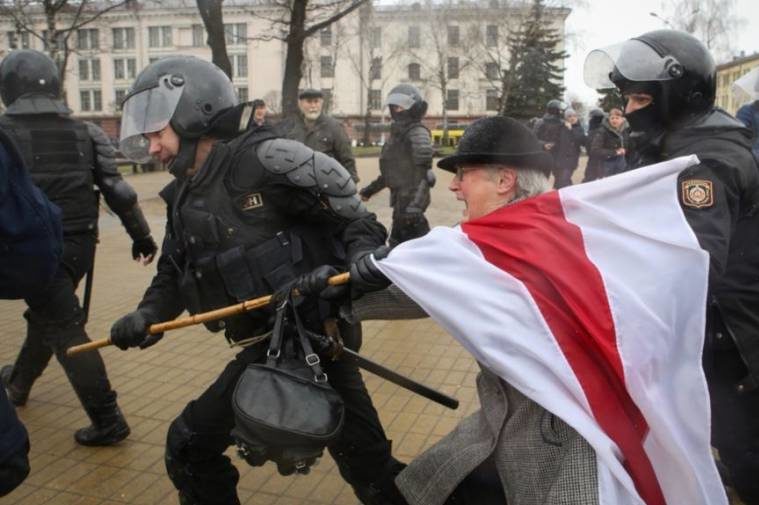
Today, the ICJ called on Belarus to comply with its international human rights law obligations in its response to the protests taking place in the aftermath of the presidential elections and in the treatment of those detained.
This includes immediately releasing persons arbitrarily detained, providing prompt access to lawyers for those still detained, accounting for the fate and whereabouts of missing protestors and promptly and effectively investigating torture and other ill-treatment.
The widespread arbitrary arrests of peaceful protesters, and credible allegations of torture and ill-treatment and enforced disappearances of detainees, are particularly alarming in light of obstacles faced by detainees in accessing lawyers, the ICJ said.
The ICJ recalls that under international human rights law, all persons have the right to peaceful assembly, and any restriction of this right must be provided in law be strictly necessary and proportionate to a specified legitimate purpose. The mass arrest of protesters does not appear to meet these requirements.
Belarus has obligations, including under treaties to which it is party, to respect the right to liberty and refrain from arbitrary arrests or other unwarranted interferences with the freedom of assembly, or freedom of expression, of protesters, protected under international law.
Law enforcement authorities must respect the right to life and the prohibition on torture or other ill-treatment at all times. Allegations of arbitrary killing, enforced disappearances and torture and other ill-treatment must be promptly, thoroughly and independently investigated, and those responsible brought to justice.
Effective remedies must be provided to victims of such serious human rights violations.
The ICJ is concerned about reports of the widespread denial of access to a lawyer and further obstacles that lawyers face while carrying out their professional duties in the current context in Belarus.
Reportedly, lawyers are not provided with access to the case file or further information necessary for the provision of effective legal assistance to their clients. This is of particular concern in light of multiple reports of torture or other ill-treatment of those detained following the election.
The ICJ stresses that the right of access to qualified legal representation is crucial for the protection of the human rights of those arrested in connection with the current political upheaval in Belarus.
The right of access to a lawyer is recognized as an essential element of the right to a fair trial and the right to liberty, protected under the International Covenant on Civil and Political Rights, to which Belarus is a party.
The UN Basic Principles on the Role of Lawyers provide that governments should ensure that lawyers are able to perform all of their professional functions without intimidation, hindrance, harassment or improper interference and should be able to consult with their clients freely and have access to appropriate information, files and documents in their possession or control in sufficient time to provide effective legal assistance to their clients.
It is essential that lawyers and other human rights defenders can carry out protection of human rights of their clients especially in times of emergency.
The ICJ also calls on the Belarus Republic Bar Association to bolster its efforts in protecting its members who provide legal representation in cases related to the ongoing protests.
Background:
The Republic of Belarus ratified the International Covenant on Civil and Political Rights in 1973
Following the presidential elections of 9 August 2020 in Belarus, widespread protests across Belarus took place following the discredited result, which were recognized as neither free nor by the European Union and other observers. Following the initial dispersal of these protests by the authorities, more than 6000 people were arrested and detained, many arbitrarily. There is credible evidence that many of those arrested or detained have been subjected to torture or other ill-treatment and that decisions regarding their arrest and detention have been made by courts temporarily established in detention centres.
While estimates of numbers differ, the whereabouts of at least tens of those who took part in the protest have not been established to date. One of the missing persons, Nikita Krivtsov, was recently found dead in a forest near Minsk.
The reports that defence lawyers were denied access to those arrested include high-profile cases, such as the case of the former presidential candidate Victor Babaryka whose lawyer was not allowed to see his client in the detention centre for more than a week.
According to the Belarusian Republican Bar Association, lawyers face problems with meeting their clients held in the detention centres and access to the case files and further information necessary to carry out their professional duties.