Sep 20, 2019 | News
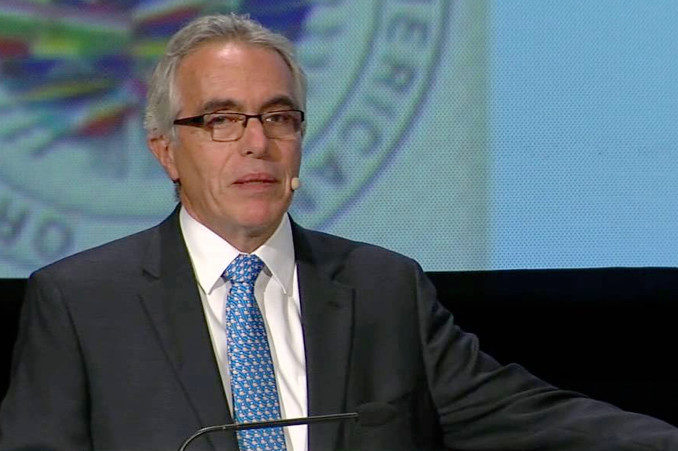
The ICJ welcomes this week’s visit to Uzbekistan of the UN Special Rapporteur on the independence of judges and lawyers, Diego García-Sayan, during which he will assess reforms of the judicial system, the independence of the judiciary and the independence and role of lawyers.
“The visit of the Special Rapporteur to Uzbekistan, at the invitation of the government, is an indication that the Uzbekistan authorities are serious about the ongoing reforms of the justice system. This visit is only a starting point for the deep reforms needed to establish an independent and fair justice system in Uzbekistan. Realising these reforms will require sustained commitment of all institutions of government, lawyers and civil society,” said Temur Shakirov, Senior Legal Adviser of the ICJ Europe and Central Asia Programme.
The ICJ, along with other NGOs and IGOs, met with the Special Rapporteur in Tashkent yesterday on the first day of his visit, and drew his attention to issues concerning the independence of judges and lawyers in Uzbekistan.
“The visit will be followed by the report of the Special Rapporteur containing findings and recommendations. These recommendations should be effectively implemented and the ICJ is committed to provide expert and other support in the Uzbekistan’s effort to bring its justice system in line with the recommendations,” Shakirov added.
Background
The visit of the UN Special Rapporteur on independence of judges and lawyers takes place from September 19-25, 2019.
The Special Rapporteur will hold meetings with representatives of the government, judiciary, prosecutors, lawyers and civil society and is expected to issue a report analyzing the independence of judges and lawyers in Uzbekistan, following his visit.
The Special Rapporteur on the independence of judges and lawyers is one of the special procedures of the United Nations Human Rights Council, appointed as an independent expert to monitor the compliance of UN Member States with international standards on the independence of judges and lawyers.
Sep 16, 2019 | Advocacy, Non-legal submissions
The ICJ today put the spotlight the increase and “normalisation” of enforce disappearances and abductions worldwide, with examples about Turkey, Egypt and Saudi Arabia, speaking at the UN Human Rights Council in Geneva.
The statement, made during the general debate, reads as follows:
The International Commission of Jurists (ICJ) shares concerns highlighted by the Working Group on Enforced and Involuntary Disappearances in its report (UN doc. A/HRC/42/40) at the “increasing use of extraterritorial abductions” and at the “normalization of these practices” globally. ICJ previously documented such practices in our 2017 report, Transnational Injustices.
The killing of Jamal Khashoggi by Saudi Arabia is an example of particular concern, as is the reported abduction, by Turkish authorities, of persons they claim to be linked to “terrorist organisations.” Several of these people, who later reappeared in Turkish prisons, are currently facing serious challenges in mounting a proper legal defence. Complaints of the families have not been properly investigated.
In Egypt, the National Security Agency (NSA) has been abducting and forcibly disappearing hundreds as a technique to suppress dissent. This year, the ICJ and Adalah reported on the disappearance of 138 detainees for between 10 to 219 days, many of whom were subjected to torture.
The ICJ urges the Council to address these worrying developments and calls on all countries:
- to stop all practices of enforced disappearance, abduction or informal international transfer;
- to ratify the International Convention for the Protection of All Persons from Enforced Disappearance, and
- to provide to the victims of enforced disappearance and their families full access to their rights, including an effective remedy.
Sep 10, 2019 | News
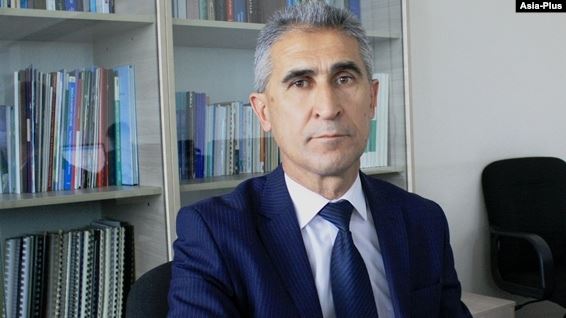
The ICJ today expressed concern that a Government anti-corruption agency has engaged in acts of intimidation against the Chairperson of the Union of the Lawyers of the Republic of Tajikistan, Saidbek Nuritdinov, and 15 other lawyers.
The intimidation apparently relates to the lawyers’ defence of Abdulaziz Abdurahmonzoda, a lawyer facing trial on charges of fraud, who was allegedly ill-treated in detention by officers of the city Department of the Agency for Financial Control and Combating Corruption of the Republic of Tajikistan (Anti-Corruption Agency).
After the lawyers representing Abdurahmonzoda alleged that he had been ill-treated, the judge of the Sino district of Dushanbe city hearing the case, Ahmadzoda Farogat, requested the Prosecutor General’s Office to investigate the allegations.
Following the initiation of the inquiry of the allegations of ill-treatment, the Head of the Anti-Corruption Agency of Dushanbe, allegedly sent requests to a number of district courts of Dushanbe to obtain information about civil and criminal cases in which Saidbek Nuritdinov had participated as a lawyer.
The requests are said to seek information such as the names and, place of residence of clients: subject matter of civil cases, and details of the charges against his previous clients. In addition, it was reported to the ICJ that Judge Akhmadzoda Farogat, transmitted a list of the fifteen lawyers and copies of their official orders, the documents authorizing the representation of the lawyer, to the Anti-Corruption Agency at its request.
The ICJ notes, that while this information is not confidential per se, previous such investigations of the Anti-corruption Agency have led to criminal prosecution and conviction of lawyers.
“In this case, representation of a lawyer subject to criminal proceedings was undertaken by a group of his colleagues, including the head of the association of lawyers, in line with professional ethics, said Temur Shakirov, Senior Legal Adviser of the ICJ. “Such representation is consistent with international standards on the role of lawyers as well as national law of Tajikistan”.
“If the investigation is related to the lawyers’ representation in the case of Abdurahmonzoda, it would constitute a means of intimidation of the lawyers. And as such it should be ceased, and the lawyers should be able to continue to act freely and diligently in accordance with the national law and international law and standards on the role of lawyers”, Shakirov added.
Background
The criminal case against lawyer Abdulaziz Abdurahmonzoda was initiated under article 247.2, of the Criminal Code (fraud) on 17 April 2019. At the court hearings observed by the ICJ, Abdurahmonzoda insisted on his innocence and alleged breaches of the criminal procedure in course of the preliminary investigation: initiation of a criminal case without legal grounds (the case was said to lack the victim’s statement about the fraudulent actions committed on the part of Abdurahmonzoda); violation of the procedure of the preliminary investigation and submission to the court of evidence knowingly obtained by illegal means. The ICJ is observing the trial.
According to the UN Basic Principles on the Role of Lawyers, governments “shall ensure that lawyers are able to perform all of their professional functions without intimidation, hindrance, harassment or improper interference” and they should not “suffer, or be threatened with, prosecution or administrative, economic or other sanctions for any action taken in accordance with recognized professional duties, standards and ethics.”(Principle 16).
Furthermore, interference or obstruction of lawyer’s activity is prohibited by the Law of the Tajikistan on Lawyers and Lawyers’ Activities. According to the law, a lawyer cannot be held liable for any opinion expressed by him/her as part of his/her lawyers’ activity, with the exception of actions that may constitute a crime. The request from lawyers or lawyer’s unions of information related to the provision of legal assistance in specific cases is not allowed.
According to the Draft Universal Declaration on the Independence of Justice (“Singhvi Declaration”), enable the Bar Association to fulfil its function of preserving the independence of lawyers, they should “be informed immediately of the reason and legal basis for the arrest or detention of any of its members or any lawyer practising within its jurisdiction”. In these cases, bar associations are “ entitled to be represented by its president or nominee to follow the proceedings and in particular to ensure that professional secrecy and independence are safeguarded”.

Aug 30, 2019 | Advocacy, Non-legal submissions
The ICJ has presented information to the UN Human Rights Committee in preparation for the Committee’s examination of the eighth periodic report of Ukraine under the International Covenant on Civil and Political Rights (ICCPR).
In this submission, the ICJ draws the Committee’s attention to the situation with the security and independence of the legal profession and Ukraine’s compliance with and implementation of its obligations under Articles 2, 6 and 14 of the ICCPR, as well as the UN Basic Principles on the Role of Lawyers.
The ICJ stresses that attacks on lawyers are likely to lead not only to violations the rights of the individual lawyers concerned, but also to violations of the rights of the clients they represent, including the right to a fair trial (Article 14 ICCPR), the right to liberty (Article 9 ICCPR), the right to freedom from torture or other ill-treatment (Article 7 ICCPR), and the right to an effective remedy (Article 2.3 ICCPR) as attacks on lawyers may, in turn, hinder the provision of effective legal representation.
Ukraine-List of Issues-Advocacy-non legal submission-2019-ENG (full submission, in PDF)
Aug 27, 2019 | News
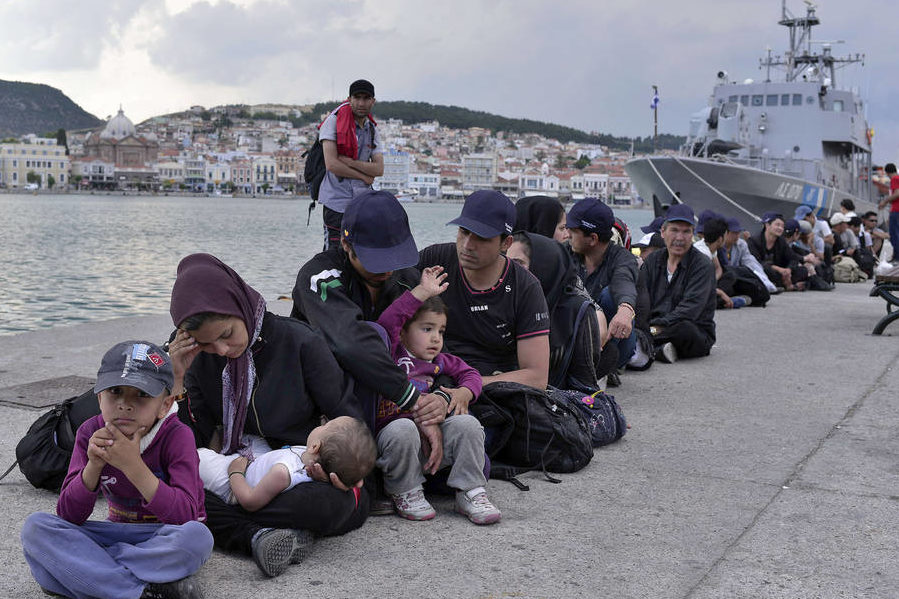
Following the killing of an Afghan boy in the Moria reception center in Greece, the ICJ calls on the Greek authorities to effectively implement measures of protection prescribed to Greece this May by the European Committee on Social Rights.
According to information by the UN High Commissioner for refugees, the 15-year-old Afghan boy was killed and two other boys injured after a fight broke out at the Moria reception centre on the Greek island of Lesvos.
The safe area at the Moria Reception and Identification Centre, RIC, hosts nearly 70 unaccompanied children, but more than 500 other boys and girls are staying in various parts of the overcrowded facility without a guardian and exposed to exploitation and abuse.
“This is not a situation unique to Moria. In other parts of Greek islands and also on mainland Greece human rights of migrant children are being violated,” said Karolína Babická, ICJ Legal Adviser.
Security of children as well as access to basic needs, such as appropriate shelter, food water or medical care, were the focus of a recent case the ICJ brought together with ECRE and Greek Council for Refugees (GCR) to the European Committee on Social Rights (ECSR).
The ECSR acknowledged the urgency of the situation and decided on immediate measures in the case already on 23 May 2019.
“It is unacceptable that the decision on interim measures has not yet been implemented by the Greek government and now we have to witness such tragic events like a death of a child in the camp,” said Karolína Babická.
“It is a sad wake-up call to the Greek administration that the situation cannot remain like this,” she added.
In its decision, the Committee members required the Greek government to immediately provide migrant children with appropriate shelter, food, water, education and medical care; to remove unaccompanied migrant children from detention and from Reception and Identification Centers (RICs) at the borders, place them in suitable accommodation for their age and appoint effective guardians.
“Greece must urgently bring those children to safety and make sure their basic needs are met and human rights are protected, in order to comply with its international legal obligations,” said Róisín Pillay, ICJ Europe and Central Asia Programme Director.
Contact:
Karolína Babická, Legal Adviser, ICJ Europe and Central Asia Programme, m +32 475 46 2067 ; e: Karolina.Babicka(a)icj.org