Jul 3, 2019 | Advocacy, Non-legal submissions
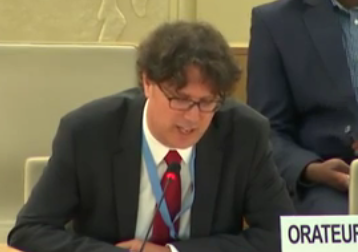
The ICJ today highlighted rising threats to the rule of law in Europe, specifically mentioning Poland, Hungary, Turkey, and Kazakhstan in a statement to the UN Human Rights Council in Geneva.
The statement read as follows:
“The International Commission of Jurists (ICJ) adopted a Declaration on Reinforcing the Rule of Law last March at its 19th World Congress in Tunis.
The Tunis Declaration (link) stresses that not only are human rights and the Rule of Law indispensable to the betterment of the human condition, but to address such contemporary challenges as catastrophic climate change and the effects of digital technology.
Against these standards, however, the ICJ is concerned at the increasing and serious threats to the Rule of Law and those who defend it around the world, including across Europe.
In Poland, the attacks on the judiciary continue under the guise of disciplinary proceedings against judges who took recourse to EU institutions to defend the Rule of Law.
Hungarian authorities, while pausing their reforms of administrative courts, have not abandoned unjustified restrictions on the judiciary’s independence and on civil society.
Finally, in Turkey, the judiciary continues to have no guarantees in law to guarantee its independent functioning.
Across Central Asia, lawyers may face disciplinary or criminal persecution for discharging their profession independently. For example, in Kazakhstan, Sergey Sizintsev was disbarred on arbitrary grounds for criticizing a problematic reform of the legal profession.
The ICJ urges the Council to give attention to these developments of extreme concern.
Jun 24, 2019 | Advocacy, Non-legal submissions
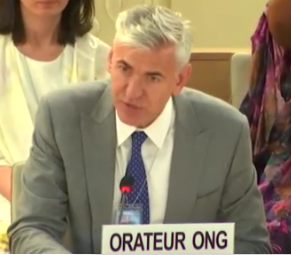
At the UN, the ICJ today highlighted the rights and duties of judges and prosecutors to exercise their freedoms of expression, assembly and association to defend the rule of law and human rights.
The oral statement was delivered in a Clustered Interactive Dialogue with the Independent Expert on Sexual Orientation and Gender Identity and the Special Rapporteur on the Independence of Judges and Lawyers, at the UN Human Rights Council in Geneva.
It read as follows:
“The International Commission of Jurists (ICJ) welcomes the report of the Special Rapporteur on the Independence of Judges and Lawyers on freedom of expression, association and peaceful assembly of judges and prosecutors.[1]
As the report acknowledges, exercise of these rights can be subject to restrictions arising from the fundamental need for judges and prosecutors to be perceived as independent and impartial. At the same time, as the report also emphasizes, any such restrictions must be provided by law and be demonstrably necessary to such legitimate aims, which in turn crucially requires proportionality.[2] These standards have been recognized both globally and in all regions of the world.[3] Any such restrictions on judges should be adopted and enforced by the judiciary itself.
We particularly welcome the recognition in the report that in situations where democracy and the rule of law are under threat, judges and prosecutors have not only the right, but potentially a duty, to speak out and organize in defence of democracy, the rule of law, and human rights, and that this can include participating in peaceful public demonstrations.[4]
Far too often in the ICJ’s work around the world, we see Executive and Legislative bodies, as well as compromised judicial hierarchies, arbitrarily or selectively targeting judges and prosecutors for removal, demotion or other disciplinary measures, precisely for exercising these rights to defend against threats to the rule of law. Examples highlighted in our submission to your study included Egypt, Morocco, Honduras, Hungary and Bulgaria.[5]
Mr. Rapporteur, how can judiciaries, governments, and civil society organisations (including international or regional legal professional associations) act internationally to support judges and prosecutors who are facing such abuse in another country?
The ICJ also welcomes the reports of the Independent Expert on protection against violence and discrimination based on sexual orientation and gender identity. We urge all States to strongly support the renewal of this essential mandate at the current session.
Thank you.”
[1] ICJ’s detailed submission to the Special Rapporteur’s consultation is available at: https://www.icj.org/judgesexpression2019/
[2] Paragraphs 39, 45, 46, 89.
[3] In addition to the global and European, Asian, and American standards cited in the report, see the African Commission on Human and Peoples’ Rights, Principles and Guidelines on the Right to a Fair Trial and Legal Assistance in Africa (2005), paras A(4)(s) and (t), and F(d) and (e).
[4] Paragraphs 61, 69, 90, 102.
[5] See for further information: https://www.icj.org/judgesexpression2019/

Jun 24, 2019 | Events, News
The OHCHR, ICJ and the Geneva Bar Association invite you to a discussion on the criminalization of solidarity in migration in Europe and State’s obligations under international law.
Thursday, 27 June, 13h00,
UN Cinema (Room XIV),
Palais des Nations, Geneva
The event will feature the screening of the movie “The Valley” by Nuno Escudeiro, documenting the situation of human rights defenders and migrants in South of France, with an introductory panel and a discussion session after the movie.
The Valley is a coproduction of Point du Jour (France) and Miramonte Film (Italy), and was awarded the Emerging international filmmaker at the HOT DOCS film festival, Toronto.
Panelists:
- Obiora C. Okafor, UN Independent Expert on human rights and international solidarity
- Nuno Escudeiro, Director of The Valley
- Zia Oloumi, Lawyer at the Paris and Nice Bar, Doctor at Law
- Carolina Hernandez, OHCHR
- Massimo Frigo, ICJ Senior Legal Adviser
If you do not already have a grounds pass to access the Palais des Nations, please send your name and surname at migration@ohchr.org before the end of Sunday 23 June.
For more information contact massimo.frigo(a)icj.org
A flyer for the event is avaiable here.
Jun 24, 2019 | News
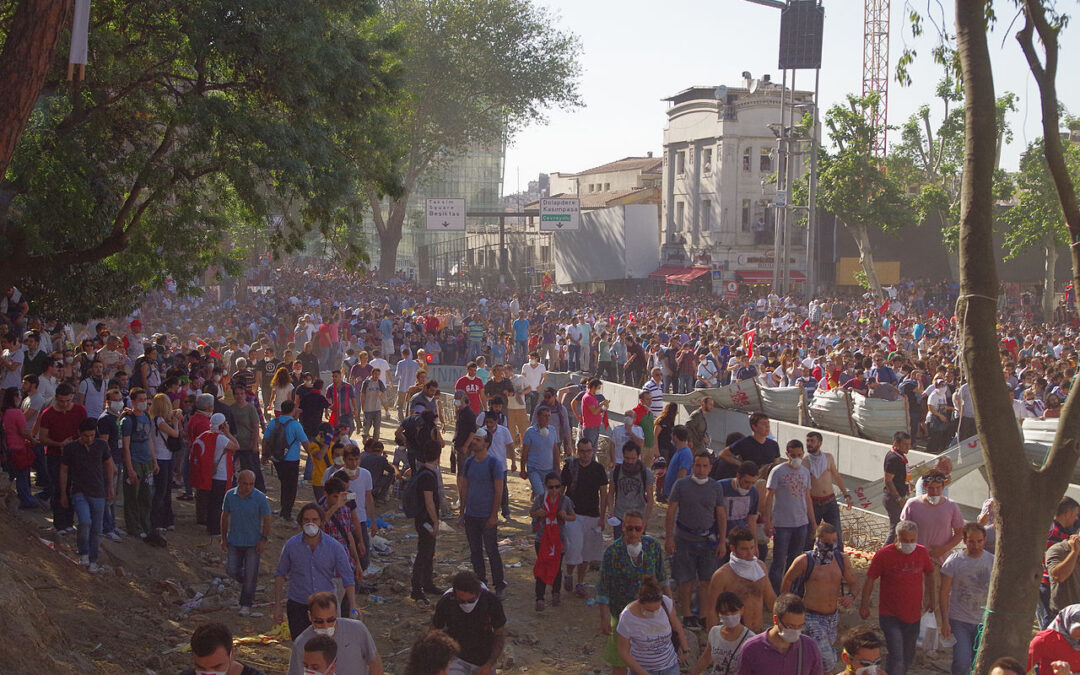
The ICJ and the International Bar Association’s Human Rights Institute (IBAHRI) have jointly sent international observers to attend the first hearing of the criminal trial on the “Gezi Park” protest at the Silivri Prison Courthouse in Istanbul, scheduled to take place on 24 and 25 June 2019.
The International Observers who will be attending are Justice Ketil Lund, former judge of the Supreme Court of Norway and ICJ Commissioner, and Dr Mark Ellis, Executive Director of the International Bar Association.
Justice Lund and Dr Ellis will be observing a trial hearing before İstanbul 30th Assize Court with principal defendant Osman Kavala and 15 others: Ali Hakan Altınay, Ayşe Mücella Yapıcı, Ayşe Pınar Alabora, Can Dündar, Çiğdem Mater Utku, Gökçe Yılmaz, Handan Meltem Arıkan, Hanzade Hikmet Germiyanoğlu, İnanç Ekmekci, Memet Ali Alabora, Mine Özerden, Şerafettin Can Atalay, Tayfun Kahraman, Yiğit Aksakoğlu and Yiğit Ali Ekmekçi.
The observers will report directly to the IBAHRI and ICJ Secretariats on the proceedings following the mission.
The Gezi Park protests began in May 2013 as an effort by a group of environmentalists to save a park in central Istanbul from being rezoned, but soon turned into nationwide demonstrations. The protest was quelled by police with the use of tear gas and water cannons against the protesters in Taksim Square.
Following a six-year investigation into the events, the 657-page indictment issued by the Istanbul Chief Public Prosecutor’s Office was accepted by the 30th A Court in Istanbul on 4 March 2019.
The defendants are to be charged under Turkish Criminal Code Article 312 (attempt to overthrow the Turkish Government or attempt to prevent it from fulfilling its duties), Article 151 (damage to property), Article 152 (qualified damage to property), Article 174 (possession or exchange of hazardous substances without permission), Article 153 (damaging places of worship and cemeteries), Article 149 (qualified robbery), Article 86 (intentional injury); crimes under the Law on Firearms, Knives and Other Tools no. 6136, and crimes under the Law on Protection of Cultural and Natural Assets no. 2863. The total sentence asked for by the prosecution for these offences amounts to approximately 47,520 years imprisonment.
Contact:
Massimo Frigo, Senior Legal Adviser, t: +41 22 979 38 05 – e: massimo.frigo(a)icj.org
Jun 13, 2019 | News
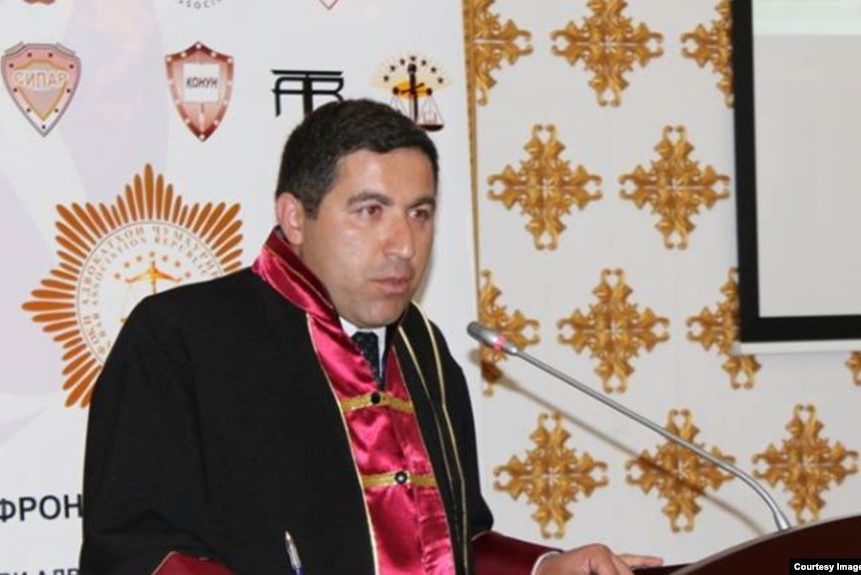
Today, the ICJ called on the authorities in Tajikistan to immediately release a prominent lawyer who is currently serving a sentence of imprisonment of 28 years on dubious charges.
The UN Working Group on Arbitrary Detention (WGAD) published a decision in Mr Yorov’s case on (date), finding that “the trials of Mr. Yorov were carried out in total disregard for the guarantees encapsulated in article 14 of the Covenant, being of such gravity as to give the deprivation of liberty of Mr Yorov an arbitrary character […].”
The Working Group recommended that the government remedy the situation of Yorov without delay and to this end “release Mr. Yorov immediately and accord him an enforceable right to compensation and other reparations, in accordance with international law”.
The ICJ has previously expressed concern that Buzurgmehr Yorov’s conviction may constitute a reprisal for his defense work in high-profile political trials in connection with his representation of thirteen leaders of the Islamic Renaissance Party of Tajikistan (IRPT).
The ICJ earlier expressed concerns at the conviction of the lawyer to a 28 year sentence in prison, which is based on clearly improper charges related to the defense of his clients.
The ICJ welcomes the decision of the WGAD and calls on the Tajikistan authorities to fully implement the decision and to take all necessary measures to protect lawyer Yorov, his family and his lawyers against any threats to their security, or any intimidation, hindrance, harassment or improper interference with their performance of their professional functions as lawyers.
In this regard, the ICJ notes recent protests by dozens of individuals who took part in a rally against Yorov in front of the representative offices of the United Nations and the European Union in Tajikistan, soon after the decision of the WGAD.
Posters of the demonstrators called on the UN High Commissioner of Human Rights to “take her hands off Tajikistan” and named organisations that had defended Mr Yorov or brought the petition on behalf of Yorov to the UN WGAD.
In this context, it is imperative that the Tajikistan government immediately publicly affirm the legitimacy of the decision of the WGAD and make clear its commitment to complying with it, the ICJ underlined.
Background
Buzurgmekhr Yorov was arrested two years ago on 28 September 2015, on charges of “fraud” and “forgery of documents.” Later, he was accused of violating three more articles of the Criminal Code, including in relation to alleged “public calls for extremist activity.”
On 6 October 2016, The Dushanbe City Court sentenced Yorov to 23 years imprisonment in a strict regime prison.
In March 2017, Yorov was sentenced to an additional two years’ deprivation of liberty for “contempt of court and insulting the representative of power.” In August 2017, he received a further three years sentence on charges of “insulting the president.”
The ICJ has, on a number of occasions, expressed its serious concerns over the arrest and conviction of Buzurgmehr Yorov and other lawyers in Tajikistan.
On 24 May 2019, the UN Working Group on Arbitrary Detention, a group of independent experts established in 1991 whose members are appointed by the UN Human Rights Council, published an Opinion finding a number of violations of human rights of Yorov protected under the International Covenant on Civil and Political Rights and recommended as a remedy his immediate release, payment of compensation or other reparation and conducting an investigation into the violation of Yorov’s rights.
The UN Basic Principles on the Role of Lawyers require that the Governments ensure that lawyers “are able to perform all of their professional functions without intimidation, hindrance, harassment or improper interference ”. Under these Principles “where the security of lawyers is threatened as a result of discharging their functions, they shall be adequately safeguarded by the authorities.” The right to “offer and provide professionally qualified legal assistance or other relevant advice and assistance in defending human rights and fundamental freedoms” is guaranteed by the Declaration on the Right and Responsibility of Individuals, Groups and Organs of Society to Promote and Protect Universally Recognized Human Rights and Fundamental Freedoms (Article 9.3(c)).