Mar 12, 2019 | Advocacy, Non-legal submissions
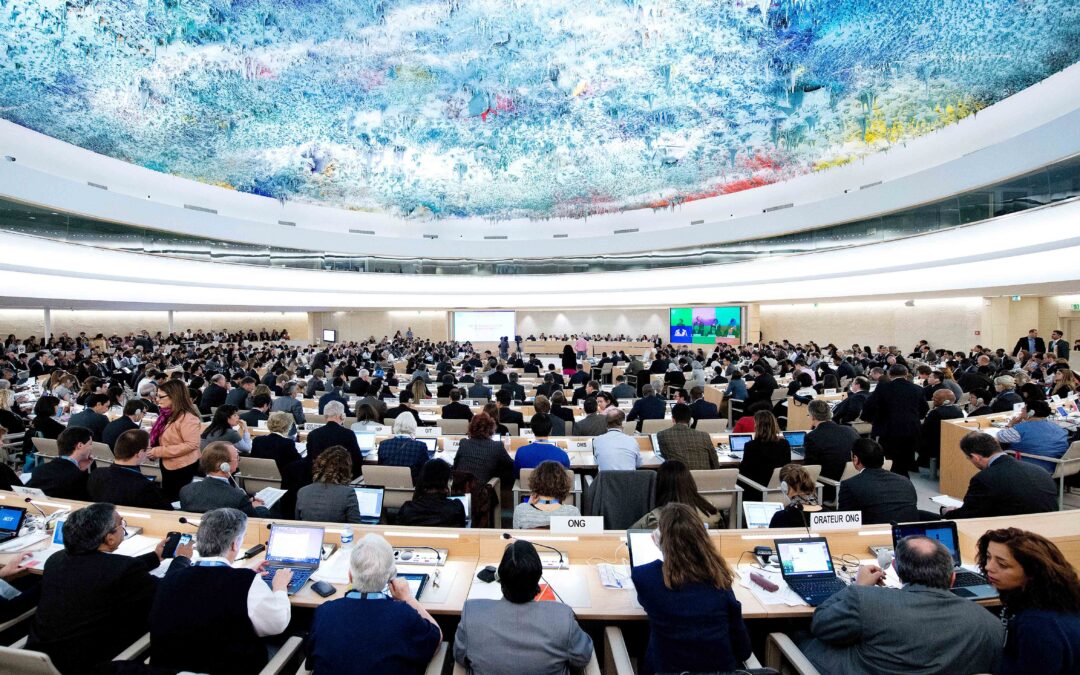
The ICJ today highlighted threats to the rule of law in Turkey, Poland, Hungary and Azerbaijan, and the need to address corporate complicity in South Sudan, at the UN Human Rights Council in Geneva.The statement, delivered during general debate, read as follows:
“The situation remains grave for the rule of law and legal protection of human rights in Turkey and Poland.
In Turkey, constitutional reforms in 2017 that undermined the independence of the judiciary should be abolished. Civil society members are prosecuted under overbroad and vague terrorism offences.
In Poland, the Legislature is trying arbitrarily to remove one third of the Supreme Court, a measure that is on hold only temporarily. Unjustified disciplinary proceedings are also being pursued against Polish judges for having sought a ruling of the Court of Justice of the EU.
Elsewhere, in Hungary civil society is ostracized and subject to legislation that risks criminalizing their legitimate activities. In Azerbaijan, as one example of a broader pattern of interference with lawyers and other human rights defenders, lawyer Elchin Sadigov was reprimanded for advising in a confidential manner to his client in detention to complain about torture to which he allegedly had been subjected.
The ICJ is also concerned at the findings by the Commission on Human Rights in South Sudan (A/HRC/40/69, A/HRC/40/CRP.1) that point to the oil industry as a “major driver” in the continuation of the armed conflict and resulting human rights violations. Potential corporate complicity with crimes under international law demand investigation and a strong monitoring mechanism for the use of oil revenues should be established.”
Mar 6, 2019 | News
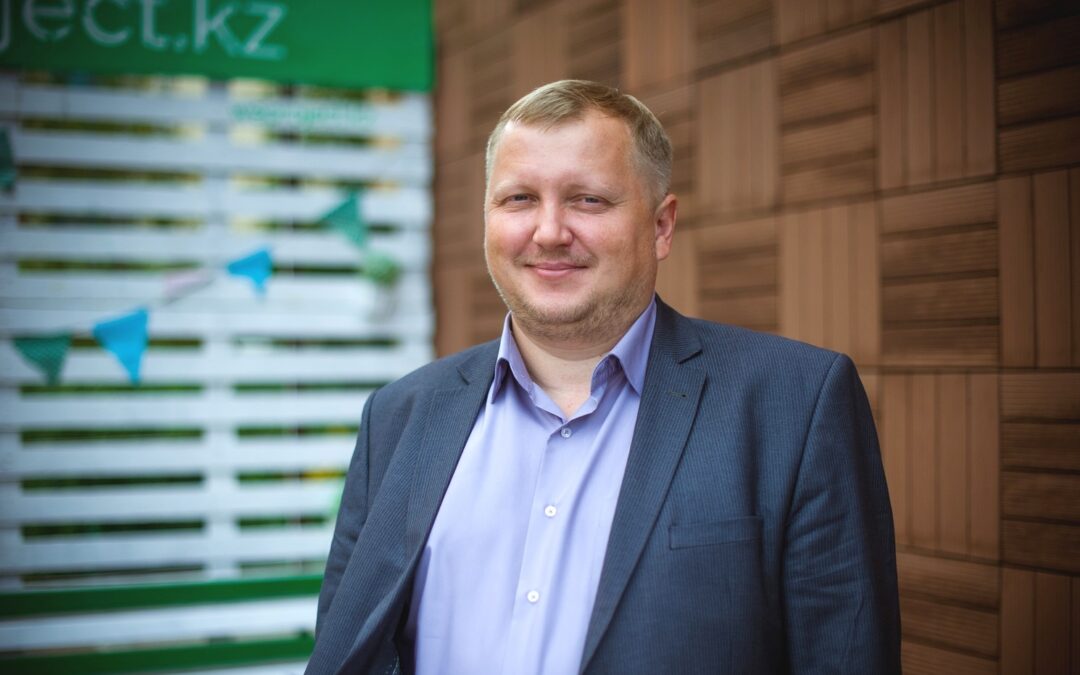
Today, the ICJ expressed concern at the initiation of disbarment proceedings by the Ministry of Justice of Kazakhstan against Sergey Sizintsev, former Executive Director of the National Bar Association and the newly-elected head of the Scientific-Consultative Board of the National Bar Association.
The official ground for disbarment of Sizintsev is his work as the Director the National Bar Association in 2016-2018 while continuing his legal practice at the same time.
On his facebook public account, however, Sizintsev alleged that this initiative is not related to the officially stated grounds, and that in fact continuing to practice while working as Director of the Bar Association is clearly permitted by the Kazakhstan’s law. Rather, he alleges, he is being pursued for his criticism of the law “On lawyers’ activity and legal aid” as well as his public statements in different international and national fora in regard to issues related to the independence of the legal profession.
The ICJ recalls that freedom of expression and association, in particular, constitute essential requirements for the proper and independent functioning of the legal profession and must be guaranteed by law and in practice.
According to Principle 23 of the UN Basic Principles on the Role of Lawyers, lawyers “[…] have the right to take part in public discussion of matters concerning the law, the administration of justice and the promotion and protection of human rights and to join or form local, national or international organizations and attend their meetings, without suffering professional restrictions by reason of their lawful action or their membership in a lawful organization. In exercising these rights, lawyers shall always conduct themselves in accordance with the law and the recognized standards and ethics of the legal profession.”
Sergey Sizintsev as Executive Director of the National Bar Association and as a member of the Parliament working group on the Law on Lawyers’ Activities, was expected to voice concerns of members of the legal position including on the new law which the legal profession consider to be restrictive.
Moreover, his position demanded that he expresses his position on behalf of the National Bar Association including to draw attention to legislative developments which can jeopardise the independence of the legal profession in Kazakhstan.
The ICJ is concerned that this initiative appears to constitute an attack on the independence of lawyers in Kazakhstan and may have a chilling effect on members of the legal profession.
The ICJ therefore calls on the Ministry of Justice to end this lawsuit immediately.
The ICJ will closely follow the case of Sergei Sizintsev and the proceedings at the Rayon Court in Petropavlovsk.
In December 2017, the ICJ organized a mission to Kazakhstan and raised concerns over the then planned reform.
In November 2018, the ICJ raised concern at the disbarment proceedings against Presidents of Aktybinsk and Pavlodar Bar Association as well as resignation of Anuar Tugel, the President of the National Bar Association of Kazakhstan, allegedly as a result of the pressure from the Ministry of Justice.
Mar 4, 2019 | News
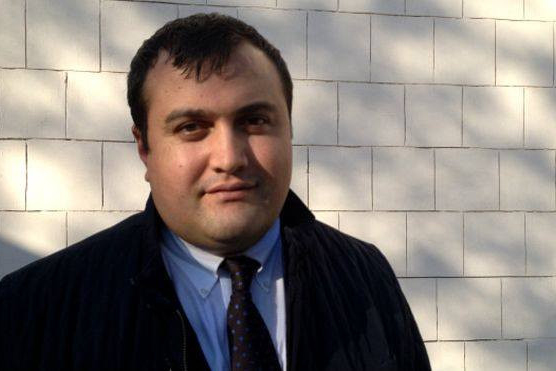
Today, the ICJ expressed concern at the disciplinary proceedings against lawyer Elchin Sadigov who was sanctioned with a reprimand on 25 February 2019 by the Presidium of the Bar Association of Azerbaijan.
The ICJ called on the Bar Association to reverse this sanction and take measures to end interference with the independent exercise of the representation of victims of human rights violations.
The decision to hold the lawyer accountable for actions taken in accordance with professional ethics and responsibilities jeopardizes the independence of lawyers and their capacity to protect human rights, and is likely to have a chilling effect on the independent exercise of lawyers’ duties in Azerbaijan, the ICJ said.
Elchin Sadigov represented Yunis Safarov, who was charged with the attempted murder of Elmar Valiyev, former mayor of Ganja City in Azerbaijan. According to Sadigov, he informed his client in a confidential conversation in detention, of the right to complain about torture or ill treatment.
Shortly afterwards, he was told that he had violated the law by persuading his client to complain about the ill-treatment which, the Prosecutor General’s Office officials “decided” in an official document, never took place.
On 5 September 2018, the Prosecutor General’s Office removed Elchin Sadigov as Safarov’s representative and complained to the Bar Association, seeking disciplinary action against the lawyer, among others, on the basis of “[…] creating false grounds to file a complaint to the European Court of Human Rights […], clearly knowing that it is not true, proposed his client to complain about torture inflicted by the police and investigative authorities, despite the fact that the accused told him that he had not been tortured, Sadigov continued psychological influence on his client again – as if he had been tortured – to refuse giving testimony, to refuse services of the State appointed lawyer […]”.
The complaint referred to the confidential conversation between the lawyer and his client, which was apparently overheard and possibly recorded by law enforcement officials. It also refers to a letter which appeared during the disciplinary proceedings, in which Sadigov’s client complained that his lawyer had tried to convince him to complain about use of torture in custody.
According to Elchin Sadigov, however, this letter may have been signed by his former client under pressure from the detention authorities.
The ICJ recalls that according to the UN Basic Principles on the Role of Lawyers, it is indispensable that lawyers “always loyally respect the interests of their clients.”
The Principles specify that they assist their clients “in every appropriate way, and taking legal action to protect their interests”. In the present case, as submitted by Elchin Sadigov and evident from the publicly available materials including photos and videos of Safarov with clear and multiple signs of severe beatings, the lawyer had every reason to believe that his client had been subjected to torture and ill treatment in custody.
Therefore, he had not only the right, but an affirmative professional duty to advise his client to use available remedies for this violation of human rights through procedural means such as a complaint. A failure to do this would be a breach of professional ethics and duties on the part of the lawyer as a trusted representative of his client. The ICJ is concerned that in this case a lawyer was held accountable for attempting to discuss with his client, in a confidential manner, issues related to the human rights of his client.
The ICJ is furthermore concerned that the principle of lawyer-client confidentiality has been violated in this case.
This principle is a fundamental component of the right to a fair trial, as protected under the International Covenant on Civil and Political Rights and the European Convention of Human Rights, to both of which Azerbaijan is a party.
According to the UN Basic Principles on the role of lawyers “[a]ll arrested, detained or imprisoned persons shall be provided with adequate opportunities, time and facilities to be visited by and to communicate and consult with a lawyer, without delay, interception or censorship and in full confidentiality…”
The ICJ is also concerned that lawyer Sadigov’s conversations may have been monitored in violation of the guarantees of professional secrecy with his client and contrary to international law and national procedure.
The ICJ considers it essential that the Bar Association send a strong signal in support of independent lawyers by lifting the sanction against lawyer Sadigov and consider legislative and practical improvements to ensure that confidentially of lawyers and their clients in detention is effectively guaranteed in practice.
Azerbaijan-Statement Sadigov-News-web stories (full story with additional information, in PDF)
Mar 1, 2019 | Advocacy, Non-legal submissions
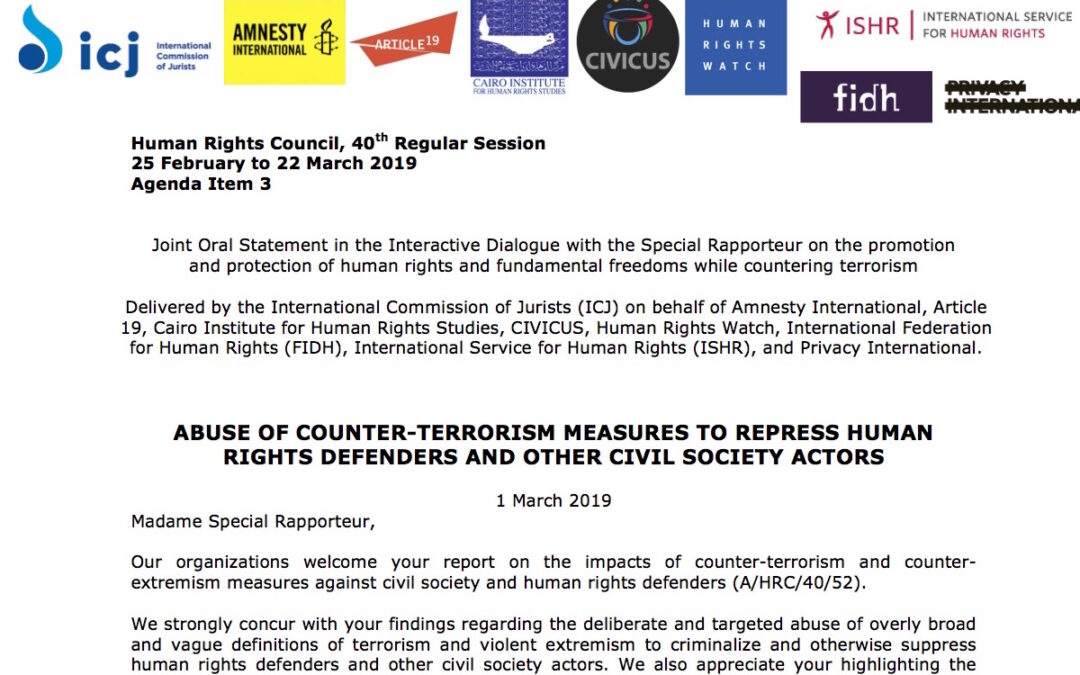
The ICJ today delivered a joint oral statement to the UN Human Rights Council, addressing the abuse of counter-terrorism measures to repress human rights defenders and other civil society actors, and highlighting deep concerns about possible moves to allow Egypt a significant role over the UN’s independent expert on human rights and counter-terrorism.
The statement was delivered in an interactive dialogue with the UN Special Rapporteur on the promotion and protection of human rights and fundamental freedoms while countering terrorism. The ICJ made the statement jointly on behalf of Amnesty International, Article 19, Cairo Institute for Human Rights Studies, CIVICUS, Human Rights Watch, International Federation for Human Rights (FIDH), International Service for Human Rights (ISHR), and Privacy International.
The organisations had earlier sent a joint letter to all States’ delegations to the Council in Geneva, highlighting Egypts appalling record of abuse of counter-terrorism measures, and urging States to strongly oppose any attempts to weaken the mandate of the Special Rapporteur, whether by diluting or distorting it by importing the flawed Egyptian-led approach into the Mexican-led resolution for its renewal, or any moves by longstanding leader Mexico to share co-leadership of the mandate renewal resolution with Egypt or other States with such an appalling record in relation to the very issues the mandate is to address.
The joint oral statement to the Council read as follows (check against delivery):
“Madame Special Rapporteur,
Our organizations welcome your report on the impacts of counter-terrorism and counter-extremism measures against civil society and human rights defenders (A/HRC/40/52).
We strongly concur with your findings regarding the deliberate and targeted abuse of overly broad and vague definitions of terrorism and violent extremism to criminalize and otherwise suppress human rights defenders and other civil society actors. We also appreciate your highlighting the need to prevent indirect impacts on civil society.
Among those States with a particularly appalling record of deliberate and targeted abuse, Egypt, which is mentioned in your report (paras 53 and 56), is a prominent example. As Human Rights Watch recently stated: “Using counterterrorism as a guise to crush all forms of dissent could be Egypt’s hallmark of 2018… There’s simply not much room left to peacefully challenge the government without being detained and unfairly prosecuted as a ‘terrorist’.”[1] Other examples from the reports before the Council include Turkey (para 53), Saudi Arabia (A/HRC/40/52/Add.2 paras 21-29), and China particularly as regards Uyghurs and Kazakhs (paras 55 and 57).
We share your concern about the elements lost from the previous Human Rights Council and General Assembly resolutions on “protection of human rights and fundamental freedoms while countering terrorism” in their March 2018 merger with the deeply flawed Egyptian-led initiative on “effects of terrorism” (para 29). We reiterate our call from March 2018 for future versions of the resolution to address the relevant issues exclusively and comprehensively from the perspective of the effective protection of human rights.[2] We strongly oppose any attempts to dilute your mandate, including by importing the flawed Egyptian-led approach into the resolution for its renewal, or any sharing of co-leadership of the mandate renewal resolution with States that have such an appalling record in relation to the very issues the mandate is to address.
Madame Rapporteur, beyond the particular cases mentioned in your report (para 53), what are your views on the broader situation within Egypt in terms of abuse of counter-terrorism measures and what can States, the United Nations, civil society, and other stakeholders do to stop such abuses in the name of counter-terrorism in Egypt and other egregious situations?
Thank you.
[1] https://www.hrw.org/news/2019/01/17/egypt-new-moves-crush-dissent (17 January 2019). See also among others: Human Rights Watch World Report 2019, https://www.hrw.org/world-report/2019/country-chapters/egypt; EuroMed Rights, Egypt – Finding Scapegoats: Crackdown on Human Rights Defenders and Freedoms in the Name of Counter-terrorism and Security (Feb 2018) https://euromedrights.org/wp-content/uploads/2018/03/EuroMed-Rights-Report-on-Counter-terrorism-and-Human-Rights.pdf; Joint NGO Statement, Egypt: Civil society faces existential threat (23 June 2016) https://www.icj.org/wp-content/uploads/2016/06/Egypt-Advocacy-JointNGOStatement-2016.pdf.
[2] Joint NGO end-of-session statement (23 March 2018) https://www.icj.org/hrc37-endofsession/.”
The statement can be downloaded in PDF format here: HRC40-JointOralStatement-SRCTHR-2019-EN
For more information email un(a)icj.org.
Mar 1, 2019 | Events, Multimedia items, News, Video clips
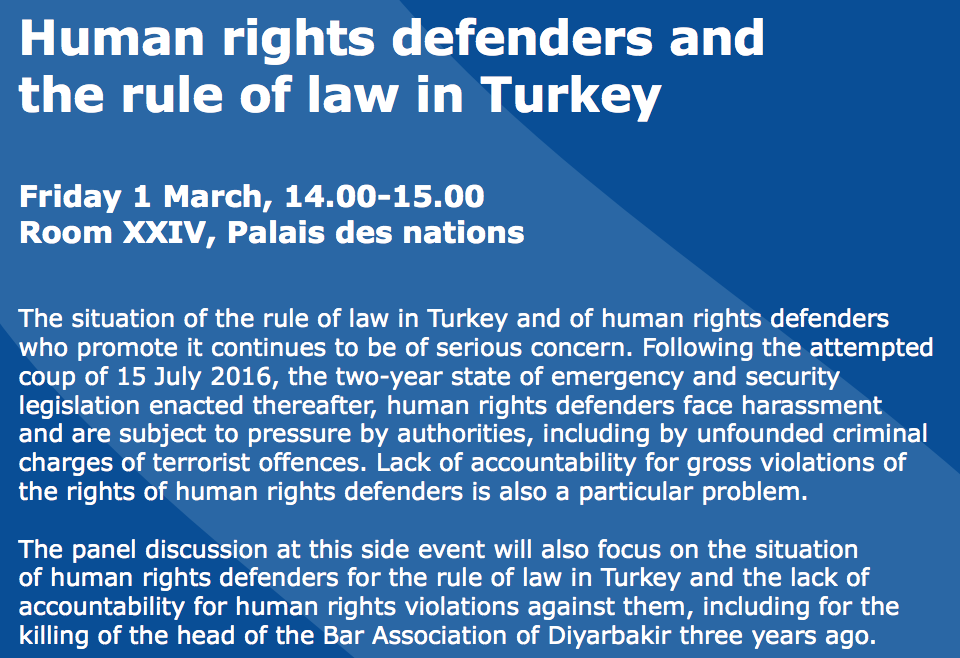
This event took place today at the Palais des Nations, United Nations, in Geneva. Watch it on video.
The situation of the rule of law in Turkey and of human rights defenders who promote it continues to be of serious concern.
Following the attempted coup of 15 July 2016, the two-year state of emergency and security legislation enacted thereafter, human rights defenders face harassment and are subject to pressure by authorities, including by unfounded criminal charges of terrorist offenses. Lack of accountability for gross violations of the rights of human rights defenders is also a particular problem.
The panel discussion at this side event will also focus on the situation of human rights defenders for the rule of law in Turkey and the lack of accountability for human rights violations against them, including for the killing of the head of the Bar Association of Diyarbakir three years ago.
The event is organized by the ICJ jointly with the International Bar Association’s Human Rights Institute.
Speakers:
– Michel Forst, UN Special Rapporteur on human rights defenders
– Feray Salman, Coordinator of the Human Rights Joint Platform (IHOP)
– Kerem Altiparmak, ICJ Legal Consultant
– Jurate Guzeviciute, International Bar Association’s Human Rights Institute
Chair:
Saman Zia-Zarifi, ICJ Secretary General
Event Flyer:
Turkey- HRD side event HRC40-News-Events-2019-ENG
https://www.facebook.com/ridhglobal/videos/795507517477571/