Oct 24, 2018 | News
The three finalists who will compete for this prestigious award given to human rights defenders having shown deep commitment and facing great personal risk are: Eren Keskin (Turkey), Marino Córdoba Berrio (Colombia) and Abdul Aziz Muhamat (Papua New Guinea/Australia). The ICJ is member of the MEA Jury.
The finalists were selected by the International Human Rights Community (members of the jury are the ICJ, Amnesty International, Human Rights Watch, Human Rights First, International Federation for Human Rights, World Organisation Against Torture, Front Line Defenders, EWDE Germany, International Service for Human Rights and HURIDOCS).
Nominees and laureates of the Martin Ennals Award for Human Rights Defenders (MEA) are human rights defenders that have demonstrated a deep commitment to human rights, often working under threat of imprisonment, torture, or worse.
The international recognition provided by the Award, on top of raising their profile and their work, often provides significant protection.
The 2019 Martin Ennals Award will be presented on 13 February 2019 at a ceremony hosted by the City of Geneva, which for many years has strongly supported the Award.
Eren Keskin (Turkey)
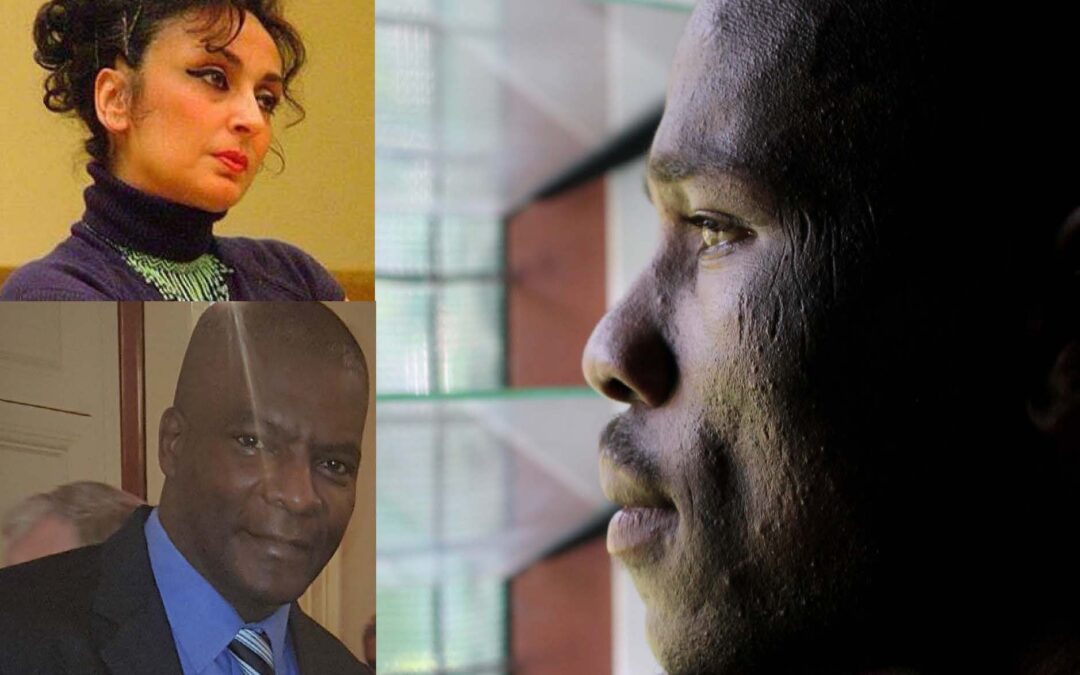
Eren Keskin (upper left corner of the picture) is a lawyer and human rights activist.
For more than thirty years, she has struggled for fundamental rights and freedoms in Turkey, especially for the Kurds, women and the LGBTI+ community.
Within the context of the worsening human rights situation in Turkey, Keskin is once again at the centre of intimidation attempts.
As part of a solidarity campaign to support the Özgür Gündem newspaper, Keskin held the title of “editor-in-chief” of the newspaper from 2013 to 2016, when it was closed by the authorities.
On 30 March 2018, she was convicted and sentenced to 12.5 years in jail for having published articles deemed to have “degraded” the Turkish nation and “insulted” the Turkish president.
She is currently free while the case is appealed.
She said: “To defend human rights is not easy in our territory. I am being prosecuted with 143 charges for my solidarity with an opposition newspaper in the context of freedom of expression. International awards and solidarity have “protective” characteristics and reassure those of us in repressive societies. It also it gives us a morale boost and helps our motivation for the struggle. Thank you for not forgetting us. Your solidarity and protection mean so much.”
Marino Córdoba Berrio (Colombia)
A member of the Afro-Colombian ethnic group, Marino Córdoba Berrio (bottom left corner of the picture) led his community as they faced the loss of their land to powerful commercial interests, notably in logging and mining.
After successfully working towards the legal recognition of their community’s land rights, much of his community was driven out by force in 1996.
Constant threats and attacks drove him to seek asylum in the United States in 2002 where he built a network of supporters.
He returned to Colombia in 2012 and worked to ensure a role for ethnic communities in the peace agreement, notably as a member of “Ethnic Commission for Peace and the Defense of Territorial Rights ” that provides input as the peace agreement is implemented.
He has regularly received death threats and is under constant armed guard.
He said: “We have historically been excluded politically, socially and economically, also affected by war, providing measures of overcoming is a primary responsibility of the State. I believe in the power of my mind and my hands as a determinant to do what is right, therefore the justice that is applied to my people is crucial for their survival. It is also in our hands to promote those changes so this effort involves exposing my own life.”
Abdul Aziz Muhamat (Papua New Guinea/Australia)
Abdul Aziz Muhamat (Aziz, on the right-hand side of the picture), from Sudan, is a compelling and tireless advocate for refugee rights.
Seeking asylum, he has been held in Australian immigration detention on Manus Island, Papua New Guinea since October 2013, when his boat was intercepted by the Australian authorities.
Aziz has seen friends die. He has been shot at by local police. He was also sent to a local prison for refusing to eat in protest at the cruelty and suffering being inflicted on others.
Aziz is one of the primary public voices among the men held on Manus Island. Despite the isolated location, he has exposed the harsh conditions there through podcasts and media interviews.
He has paid a price for this as he is seen as a “ring leader” by both the PNG and Australian authorities.
He stated: “My work to expose this cruel system helps preserve my self-respect and inherent human dignity. It helps me fight for the rights of every refugee around the universe, which I’ll do until my last breath. It is not always easy when living under conditions of fear and persecution. Yet even under the most crushing state machinery, courage rises up again and again, for fear is not the natural state and I will do everything to keep going.”
Contact
Olivier van Bogaert, Director Media & Communications, ICJ representative in the MEA Jury, t: +41 22 979 38 08 ; e: olivier.vanbogaert(a)icj.org
Michael Khambatta, Director, Martin Ennals Foundation, t: +41 79 474 8208 ; e: khambatta(a)martinennalsaward.org
TUR-Eren Keskin_Bio-News-2018-ENG (Eren Keskin full bio in PDF)
COL-Marino Cordoba Bio-News-2018-ENG (Marino Córdoba Berrio full bio in PDF)
AUS-Abdul Aziz Muhamat Bio-News-2018-ENG (Abdul Aziz Muhamat full bio in PDF)
Oct 23, 2018 | News
In light of new information released by Turkish President Recep Tayyip Erdogan about the apparent murder of prominent Saudi journalist Jamal Khashoggi, the Turkish government should seek cooperation from independent and impartial international investigators into the apparent extrajudicial killing of prominent Saudi journalist Jamal Khashoggi in the Saudi Arabian Consulate in Istanbul, the ICJ urged today.
Turkish President Recep Tayyib Erdogan today told the Turkish Parliament that investigations suggested that Saudi officials had planned to kill Khashoggi and he called for all those responsible for the killing to be punished regardless of rank.
“Given the highly political nature of this case and its emblematic impact for journalists and dissidents around the world, Turkey should work with the United Nations to establish a special independent mechanism to carry out the investigation with a view to identifying the perpetrators and prescribing recommendations for appropriate accountability measures,” said Said Benarbia, ICJ’s MENA Programme Director.
“Alternatively, the investigation should be conducted by competent Turkish authorities, given that Turkey already has jurisdiction and an obligation to carry out an investigation,” he added.
Investigations by Turkey to date suggest that the crime was planned, at least in part, in Saudi Arabia, and that perpetrators, evidence and witnesses are located in at least two countries.
Turkish Foreign Minister, Mevlut Cavusoglu, stated today that Turkey is ready to cooperate with an international investigation into Jamal Khashoggi’s death.
“Given the gravity of the crime and the fact that evidence and perpetrators are located outside Turkey, Saudi Arabia and other States should cooperate with an international investigation and waive any diplomatic protections and immunities that may apply to State officials and premises. They should also hand over all forensic, video, audio and other evidence, facilitate investigators’ access to State territory and witnesses, including State officials, and provide the necessary support to locate, retrieve and identify other evidence such as human remains and trace evidence and to carry out an autopsy on Khashoggi’s remains,” Benarbia said.
The ICJ dismissed statements by Saudi Arabia that it would carry out an independent, impartial investigation of the apparent murder.
On 20 October 2018, after initially denying any involvement in Jamal Khashoggi’s enforced disappearance, the Saudi Ministry of Foreign Affairs issued a statement claiming Khashoggi died when a “fight broke out” in discussions with Saudi officials at the consulate.
“Saudi Arabia has provided no evidence to support its incredible claim two weeks on that Jamal Khashoggi died after a fight broke out. Their investigation into his death lacks transparency and independence. Given Saudi Arabia’s past record in countenancing complete impunity for officials involved in serious human rights violations, it is reasonable to expect that this investigation and will result in a cover-up in which those most responsible avoid accountability,” Benarbia added.
Saudi Arabia’s repeated denials that it had any knowledge of the fate of Khashoggi, followed by its claims that “rogue” State operatives were responsible for his death, indicate that any Turkish investigation will be unlikely to elicit any meaningful cooperation from Saudi authorities.
“The denials, obfuscation and scapegoating by Saudi Arabia reveals a contempt for human rights that’s indicative of its modus operandi,” Benarbia said.
“Saudi authorities have repeatedly failed to carry out independent and impartial investigations into allegations that State officials have engaged in widespread arbitrary arrested and detention, torture and other ill-treatment and enforced disappearances, including of journalists, human rights defenders and critics of the government. Since Crown Prince Mohammad bin Salman was appointed in June 2017, repression of the exercise of human rights for political reasons has increased. Those convicted for exercising their lawful rights to freedom of expression, assembly and association face lengthy prison terms or the death penalty, after trials marred by fair trial rights violations,” he added.
Saudi Arabia-Khashoggi intl investigation-News-press releases-2018-ENG (full story with additional background, in PDF)
Oct 19, 2018 | News
The ICJ welcomes the interim measures prescribed today by the Court of Justice of the EU as a necessary step in stemming the evident erosion of the rule of law in Poland.
The Court provisionally ordered Poland to preserve the composition of its Supreme Court of 3 April 2018, before a law forcing into retirement a third of the Court’s members entered into force.
The ICJ urges the Polish authorities to comply with the EU Court order by maintaining in office the Supreme Court judges .
“In accordance with today’s court’s order, Polish authorities should immediately rescind all measures taken since April 2018 that modify the composition of the Supreme Court. They are obliged to do this under EU law as it is binding on Polish authorities and by the fundamental principle of the rule of law that decisions of the judiciary must be respected and implemented.” said Róisín Pillay, Director of the ICJ Europe and Central Asia Programme.
On 10 October, President Andrzej Duda appointed 27 judges to the Supreme Court in place of those forcibly “retired” last July. The ICJ condemned this act of the President of Poland because it contravened an order of the Supreme Court suspending the law under which these appointments were made, pending a decision by the EU Court. Critically, the mass and forced retirement of sitting judges before the end of the established terms of tenure undermines their security of tenure, a key principle regarding the independence of the judiciary.
Background
The independence of the judiciary in Poland has been systematically undermined by the Polish executive and legislative authorities.
Earlier this year Poland issued a new law on the Supreme Court that attempts to force the “retirement” of one third of the Supreme Court judges, including the First President, by lowering the mandatory retirement age for its judges from 70 to 65. This measure clearly contravenes international human rights law and standards.
The European Commission has launched an infringement procedure for lack of compliance of this law with EU law.
In the absence of satisfactory reforms by Poland, on 24 September, the Commission referred Poland to the Court of Justice of the European Union (CJEU) and asked for interim measures to restore Poland’s Supreme Court to its situation before 3 April 2018. Today’s decision by the Court of Justice granted this interim measures request.
At the same time, the Supreme Court of Poland submitted a preliminary ruling request to the CJEU seeking its interpretation on the compliance of the legislation on retirement ages of judges with EU law, in particular with the prohibition of discrimination on grounds of age under Directive 2008/78.
An ICJ letter of 11 July 2018, signed by 22 senior judges from all regions of the world, urged the Polish government to act immediately to reinstate the forcibly retired judges in office.
Oct 11, 2018 | News
The ICJ today condemned the appointment by President Andrzej Duda of 27 judges to the Supreme Court in place of those forcibly “retired” last July.
“These appointments are patently illegitimate and deal a severe blow to the rule of law in Poland,” said Róisín Pillay, Director of the ICJ Europe and Central Asia Programme.
The new appointments purport to replace the Supreme Court Justices including President of the Supreme Court Małgorzata Gersdorf, whose forced “retirement” is in clear violations of international standards on the security of tenure and independence of judges.
The decision of the President is even more concerning since it contravenes an order of the Supreme Court suspending the law under which these appointments were made, pending a decision by the Court of Justice of the European Union.
It is a fundamental tenet of the rule of law and principles on the independence of the judiciary that the executive respect decisions duly made by the judiciary.
“In announcing these appointments now, while cases on the forced retirement of Supreme Court judges are still pending at the EU Court, President Duda has disregarded the proceedings of the EU’s apex judicial body,” Róisín Pillay added.
The ICJ considers that the legality of the appointments of the new judges is further compromised by the role played by the now politicized National Council for the Judiciary, whose independence and impartiality has been seriously compromised following recent legislative amendments.
The ICJ urges the Polish authorities to cease all interference with the Supreme Court in carrying out its legitimate functions, and to reverse the measures taken to force the retirement of Supreme Court judges.
Background
This attack against the actions of the Supreme Court occurs amid a systematic undermining of the independence of the judiciary in Poland by the Polish executive and legislative authorities, which attempt to increase political influence in the judiciary and which the ICJ has repeatedly condemned.
Earlier this year Poland issued a new law on the Supreme Court that attempts to force the “retirement” of one third of the Supreme Court judges, including the First President, by lowering the mandatory retirement age for its judges from 70 to 65. This measure clearly contravenes international human rights law and standards.
The European Commission has launched an infringement procedure for lack of compliance of this law with EU law.
In the absence of satisfactory reforms by Poland, on 24 September, the Commission referred Poland to the Court of Justice of the European Union (CJEU) and asked for interim measures to restore Poland’s Supreme Court to its situation before 3 April 2018.
At the same time Supreme Court of Poland submitted a preliminary ruling request to the CJEU seeking its interpretation on the compliance of the legislation on retirement ages of judges with EU law, in particular with the prohibition of discrimination on grounds of age under Directive 2008/78.
Following the jurisprudence of the CJEU, the Supreme Court suspended the effect of national law on the forcible retirement of the judges.
An ICJ letter of 11 July 2018, signed by 22 senior judges from all regions of the world, urged the Polish government to act immediately to reinstate the forcibly retired judges in office.
Oct 3, 2018 | News
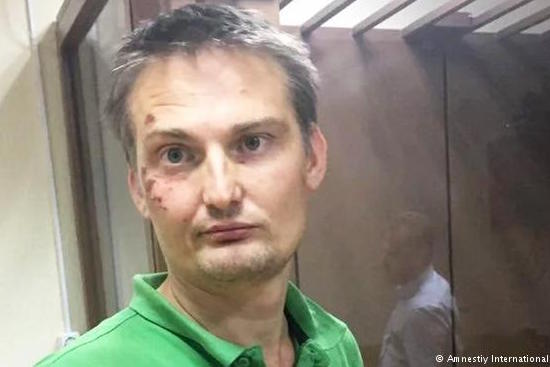
Today, the ICJ expressed concern at ongoing criminal proceedings against Mikhail Benyash, a lawyer practicing in Russia, who is charged with use of force against the police and impeding justice.
The lawyer has been detained until 23 November. The ICJ called on the responsible authorities to drop any criminal charge relating to his conduct of professional duties in the courtroom, and to ensure that the lawyer’s rights are protected and that allegations of his ill-treatment are fully investigated.
Benyash alleges that following his apprehension by the police on 9 September, the police beat him up in the car. According to the police report he inflicted the injuries on himself, contrary to demands of the police that he stop doing so.
He was charged with disobedience to the police, which according to the police report was due to “the fact that the police asked Benyash not to injure himself, but he continued self-beating”. Benyash was convicted and sentenced to 14 days of imprisonment and 40 hours of correctional works.
On 23 September, the day of his release, Benyash was arrested again. He was charged with two further offences: violence against a representative of authority (Criminal Code Article 318(1)) based on an allegation, seemingly not raised at the time of his earlier charge and conviction in relation to the same incident, that in the course of his arrest on 9 September he allegedly bit a police officer and hit another.
On 23 September he was also charged with obstruction of justice (Criminal Code Article 294(1)), reportedly on the basis of an allegation that in a court hearing on 6 May 2018, Benyash had “repeatedly interrupted, gave instructions and objections to the decisions of the judge” and after he had been removed from the courtroom “continued unlawful behaviour”.
According to the lawyer, he was taken out of the courtroom by force due to his motions to allow certain members of the public to be present at the open hearing.
The ICJ is concerned that the criminal obstruction charge against Mikhail Benyash appears to relate at least in part to statements he made in court in the course of carrying out his professional duties of representation of his clients.
The fact that this charge was only laid following his recent arrest, some five months after the alleged incident occurred, also raises questions as to the motivation for bringing the charge forward now.
“Benyash is currently charged on account of his alleged attack on a police officer and obstruction of justice. While the first charge requires an impartial and independent inquiry, the second charge should be of concern to the entire lawyers’ community”, said Karinna Moskalenko, ICJ honorary member. “We fear that this may lead to lawyers in Russia being charged with obstruction of justice simply for actively expressing their position and objections in accordance with the procedure prescribed by law”, she added.
Furthermore, the ICJ emphasises that under international human rights law, states have obligations to investigate allegations of treatment that may amount to torture or inhuman or degrading in violation of Article 3 of the European Convention on Human Rights, as well as other international law norms binding on the Russian Federation.
The investigative authorities have duty to investigate allegations of ill-treatment of the lawyer by police following his arrest on 9 September promptly, effectively and impartially and any persons responsible should be brought to justice.
Read the ICJ’s full statement here: Russia-Statement on Benyash-News-Web Story-2018-ENG