Mar 11, 2020 | Advocacy, Non-legal submissions
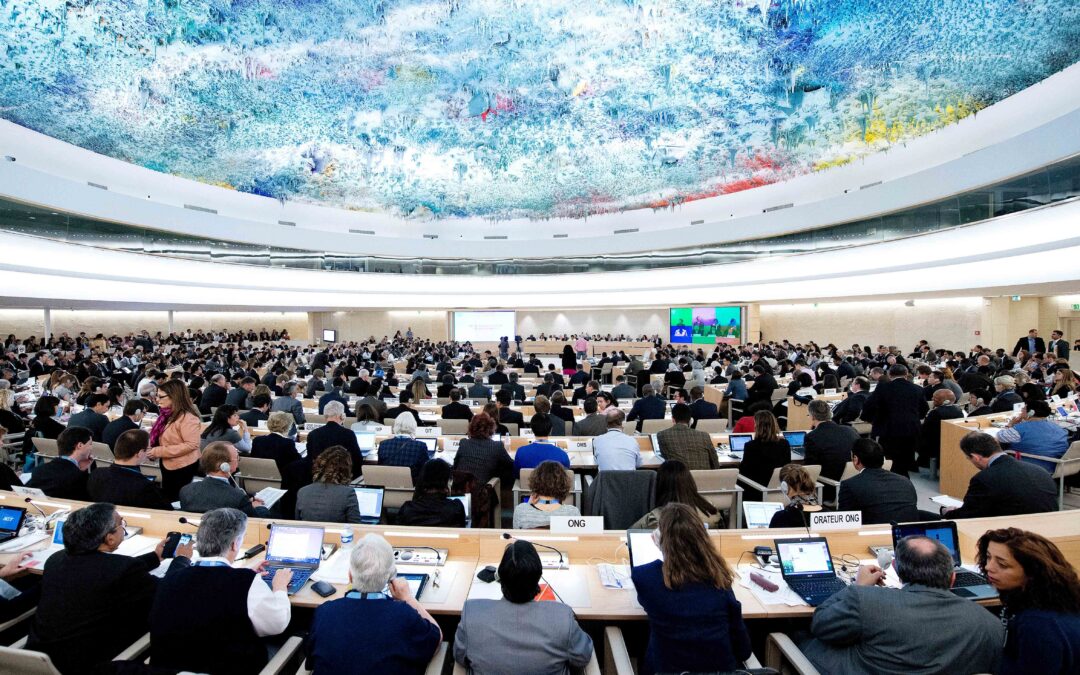
ICJ has joined other NGOs in urging India, Pakistan and the Human Rights Council, to take action to address the grave situation for human rights in Jammu & Kashmir.
The joint statement read as follows:
“Our organizations express grave concern over the human rights situation in Jammu & Kashmir, where the authorities imposed severe restrictions after a decision to revoke constitutional autonomy on 5 August 2019, including one of the world’s longest internet shutdowns, which the Indian Supreme Court has said violates the right to freedom of expression.
Hundreds were arbitrarily arrested, and there are some serious allegations of beatings and abusive treatment in custody, including alleged cases of torture. Three former chief ministers, other leading politicians, as well as separatist leaders and their alleged supporters, remain in detention under the Public Safety Act (PSA) and other abusive laws, many without charge and in undisclosed locations outside of Jammu & Kashmir. This violates fair trial safeguards of the criminal justice system and undermines accountability, transparency, and respect for human rights. Journalists and human rights defenders have been threatened for criticizing the clampdown. These violations, as those committed over the past decades, are met with chronic impunity.
We urge the government of India to ensure independent observers including all human rights defenders and foreign journalists are allowed proper access to carry out their work freely and without fear, release everyone detained without charge, and remove restrictions on the rights to freedom of expression and freedom of movement, including where they have been denied the right to leave the country by being placed on the ‘Exit Control List’.
We also call on the governments of India and Pakistan to grant unconditional access to OHCHR and other human rights mechanisms to Kashmir.
We further urge the Council to establish an independent international investigation mechanism into past and ongoing crimes under international law and human rights violations by all parties in Kashmir, as recommended by the UN High Commissioner for Human Rights.
Thank you.
- Amnesty International
- Asian Forum for Human Rights and Development (FORUM-ASIA)
- CIVICUS – World Alliance for Citizen Participation
- Human Rights Watch
- International Commission of Jurists
- International Federation for Human Rights Leagues (FIDH)
- International Service for Human Rights
- World Organisation Against Torture (OMCT)”
Mar 10, 2020 | Advocacy, Non-legal submissions
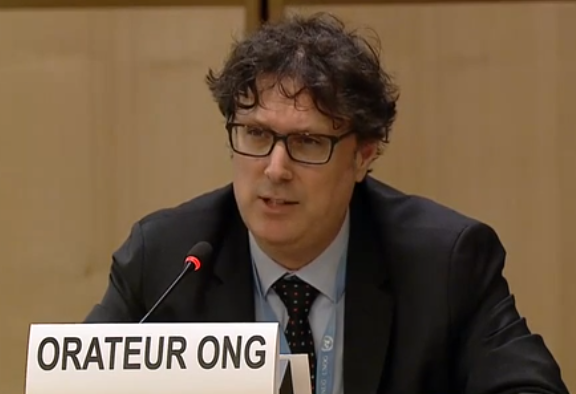
The ICJ and other NGOs today highlighted the discriminatory character of India’s Citizenship Amendment Act, and called for accountability for violence and excessive use of force in relation to protests against it, today at the Human Rights Council in Geneva.
The joint statement, delivered in a general debate, read as follows:
“India’s Citizenship (Amendment) Act, 2019 (CAA) arbitrarily excludes certain groups at risk of persecution, such as Muslims, from accessing an expedited path to citizenship, based on their religious affiliation.
The CAA is inconsistent with rule of law principles and international law, including the right to equality before the law and the right to non-discrimination, protected under human rights treaties such as the International Covenant on Civil and Political Rights and the International Convention on the Elimination of All Forms of Racial Discrimination, to which India is a party.
The implementation of the National Register of Citizens (NRC) in Assam risks making 1.9 million persons stateless. A nationwide NRC will put more people at risk.
Our organizations urge the Indian government to amend the CAA to ensure that any path to citizenship provides for equal protection for persecuted persons, and does not discriminate on grounds such as religion or national origin.
We also urge India to develop a comprehensive refugee law that addresses the plight of persecuted minorities in a non-discriminatory manner, and to accede to the 1951 Refugee Convention and its 1967 Protocol.
We further call on India to respect the right to peaceful assembly, and to ensure accountability for those alleged to have instigated violence or used excessive force in relation to the nationwide protests against the CAA.”
The statement was delivered by ICJ on behalf also of Asian Forum for Human Rights and Development (FORUM-ASIA), CIVICUS – World Alliance for Citizen Participation, Human Rights Watch, International Service for Human Rights (ISHR), Minority Rights Group International, and World Organization against Torture (OMCT).
The statement can be downloaded in PDF format here: ICJ statement GD item 4 India (10-03-2020)
Feb 27, 2020 | Events, News
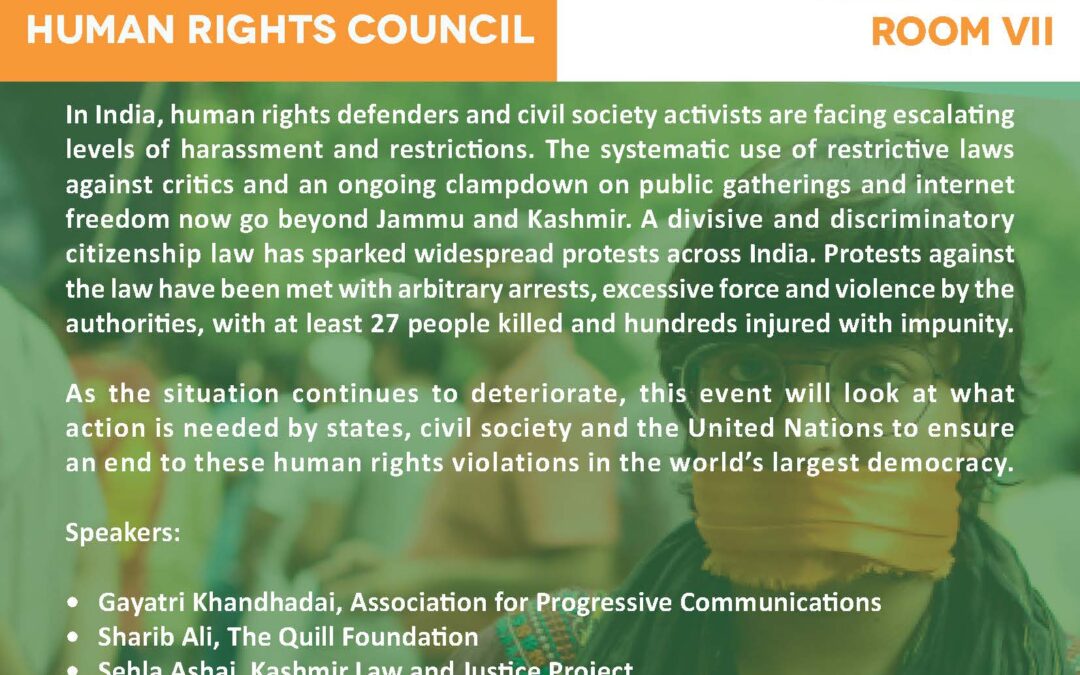
On 2 March, the ICJ and other NGOs will present discussion of the situation for human rights in India at a side event to the UN Human Rights Council in Geneva.
The event takes place Monday 2 March 2020, 14:00 – 15:00, in Room VII, Palais des Nations, Geneva.
In India, human rights defenders and civil society activists are facing escalating levels of harassment and restrictions. The systematic use of restrictive laws against critics and an ongoing clampdown on public gatherings and internet freedom now go beyond Jammu and Kashmir. A divisive and discriminatory citizenship law has sparked widespread protests across India. Protests against the law have been met with arbitrary arrests, excessive force and violence by the authorities, with at least 27 people killed and hundreds injured with impunity.
As the situation continues to deteriorate, this event will look at what action is needed by states, civil society and the United Nations to ensure an end to these human rights violations in the world’s largest democracy.
A flyer for the event can be downloaded here in PDF format: UN-Event-India-2019
Jan 15, 2020 | News
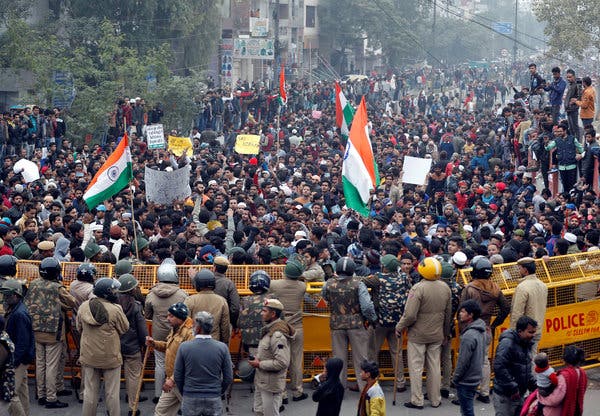
The Indian government must investigate the use of excessive and unlawful force by Uttar Pradesh police against demonstrators protesting the imposition of a discriminatory new law, the International Commission of Jurists said today in a briefing paper.
The briefing paper, based in part on firsthand interviews with witnesses and victims, documents the unnecessary, excessive and indiscriminate use of force in the state of Uttar Pradesh that have led to more than 19 deaths and several more critical injuries since 11 December 2019 as a result of use of firearms as well as teargas, water cannons, and baton charging by the police in response the ongoing protests against the Citizenship (Amendment) Act, 2020.
Section 144 of the Code of Criminal Procedure, which restricts right to assembly of more than 4 persons, has been imposed in Uttar Pradesh since December 19, 2019, thereby effectively preventing people from protesting. However, protests broke out in several cities in Uttar Pradesh despite the ban. While police authorities claim that the protestors initiated the violence, firsthand interviews with victims and witnesses and numerous other credible reports indicate that the police used force on peaceful protestors including lathis, teargas, bullets.
“The high death toll of peaceful protestors in Uttar Pradesh highlights the use of excessive force by the police, in contravention of international standards of policing and human rights. The state and federal governments must investigate any death or injury that occurs during protests by law enforcement officials and to ensure access to justice to victims and their families,” Sam Zarifi, ICJ Secretary General said.
Individuals reported that they had not been able to get their medico-legal certificates and victims’ families reported inability to access postmortem reports.
The right to life and freedom from ill treatment is protected under international law including the International Covenant on Civil and Political Rights to which India is a party and requires that when arbitrary deprivation of life occurs, there is accountability and reparation for victims.
The Allahabad High Court is hearing Shree Ajay Kumar v. State of Uttar Pradesh starting 16 January 2020, wherein it has taken suo moto cognizance of a letter sent by Ajay Kumar a lawyer in Bombay and has treated it as a basis for the commencement of a public interest litigation. The letter alleges that “the situation in the State of Uttar Pradesh is antithetical to core constitutional values and warrants interference of this Court.”
“A ruling that the Uttar Pradesh police violated protestors right to life by use of firearms and indiscriminate use of batons, teargas will serve as an important reminder to the police and the Indian State to respect the rights to life, freedom from ill-treatment and freedom of assembly and expression of protestors and that the use of such force against peaceful protestors will not be condoned by the State” said Sam Zarifi.
To download the full statement with additional background information, click here.
Contact
Sam Zarifi, ICJ Secretary General , e: sam.zarifi(a)icj.org
Maitreyi Gupta, International Legal Adviser for India, t: +91 7756028369 ; e: maitreyi.gupta(a)icj.org
Read also
ICJ Press Release: India: Discriminatory citizenship law passed by Parliament violates international and constitutional law, December 11, 2019
ICJ Press Release: India: Authorities must cease the excessive use of force and ill-treatment of Citizenship (Amendment) Act 2019 protestors, December 16, 2019
Dec 16, 2019 | News
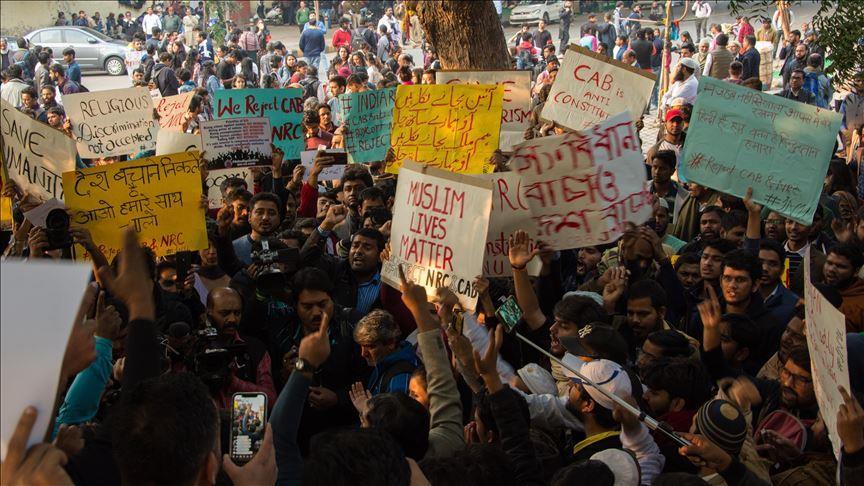
The Indian Police Service and the paramilitary Central Reserve Police Force must desist from the use of unlawful force and ill-treatment against demonstrators protesting the Citizenship (Amendment) Act, the ICJ said today.
The Indian authorities must also hold police and other public officials accountable for the human rights violations arising from these police actions, the ICJ added.
“The violent tactics that police have used over the past several days in Delhi, Uttar Pradesh, and other Indian states must cease and the government must address the legitimate concerns raised by the public about the discriminatory impacts of both the Citizenship Amendment Act and National Register of Indian Citizenship,” said Frederick Rawski, ICJ Asia Pacific Director.
“Any officials who use excessive force, including the unlawful or disproportionate use of pellet guns or tear gas cannons against unarmed student protestors, must be fully and impartially investigated and held accountable for their actions,” he added.
In its operations policing the demonstrations, the ICJ called on the authorities to abide by Indian Constitutional guarantees and international legal obligations on human rights.
These protect persons from torture and ill-treatment and the rights to freedom of expression, association and assembly.
They also require that police refrain from using unnecessary and disproportionate force and never use potentially lethal force unless to protect against an imminent threat to life.
The ICJ also called on the authorities to ensure that any person detained not be subjected to torture or other ill-treatment; have prompt and confidential access to counsel; and that those injured or otherwise provided with access to medical services.
“The police need to respond to prevent acts of violence, but they must use force only when strictly necessary. Potentially lethal force is only justifiably employed in self-defence or in defence of others against an imminent threat of death or serious injury,” said Rawski.
“If arrests need to be made, they must be done without exception in accordance with the law, respecting the rights of detainees to have access to legal counsel, to be free of torture and other ill-treatment of any kind, and to receive needed medical treatment,” he added.
The ICJ said that the authorities must undertake prompt, independent, impartial and thorough investigation of all allegations of unlawful use of force, with a view to holding accountable any responsible authorities and providing an effective remedy and reparation to victims.
Background
In response to the passage of the Citizenship (Amendment) Act, 2019, protests erupted all over the country, including in Assam, Tripura, Meghalaya, Arunachal Pradesh, Delhi, West Bengal, Kerala, and Hyderabad.
In Delhi and Uttar Pradesh, yesterday, members of the police and Central Reserve Police Force forced their way onto the campuses of Jamia Milia University and the Aligarh Muslim University in response to protests against the Citizenship (Amendment) Act, 2019.
At Jamia Milia University, the police and Central Reserve Police Force used tear gas cannons upon students who had been reportedly protesting peacefully. Police entered the university library and beat students who were there studying for their exams. The police detained (and subsequently released) some 50 students. Some reported being beaten while in detention, held for over six hours in a locked police station, and denied access to lawyers and family. Medical attention was also reportedly denied to some injured students.
At Aligarh Muslim University, the police and Central Reserve Police Force reportedly demolished the gates, and used tear gas, pellet guns, and lathi (wooden sticks) charge. They were said to have entered student hostels, wherein they reportedly caused damage to one room which had students inside it. According to a lawyer at the University, at least one’s student whereabouts is unknown and some 50 students and others have reported been injured, some severely. Some were reportedly taken to the hospital by the police.
The Citizenship (amendment) Act, 2019 amends the Citizenship Act, 1955, which governs questions of citizenship and aspects of lawfulness of migration status in India. The Act gives protected status to Hindu, Sikh, Jain, Parsi, Buddhist and Christian migrants from Pakistan, Afghanistan and Bangladesh, all Muslim-majority countries, who entered India on or before 31 December 2014. Similarly situated Muslims are categorized as “illegal migrants”.
The Bill provides to the above-mentioned religious communities and countries an expedited route of citizenship giving them the opportunity to be eligible for citizenship by naturalization if they have lived or worked in India for six years, as opposed to twelve years, as otherwise required. The Bill controversially excludes from its ambit certain ethnic and religious groups, such as Muslims, in violation of international law and standards protecting against discrimination.
To download the full statement with additional background information, click here.
Contact
Maitreyi Gupta, ICJ India Legal Adviser, t: +91 77 560 28369 e: maitreyi.gupta(a)icj.org
Frederick Rawski, ICJ Asia-Pacific Director, t: +66 64 478 1121; e: frederick.rawski(a)icj.org