Dec 11, 2019 | News
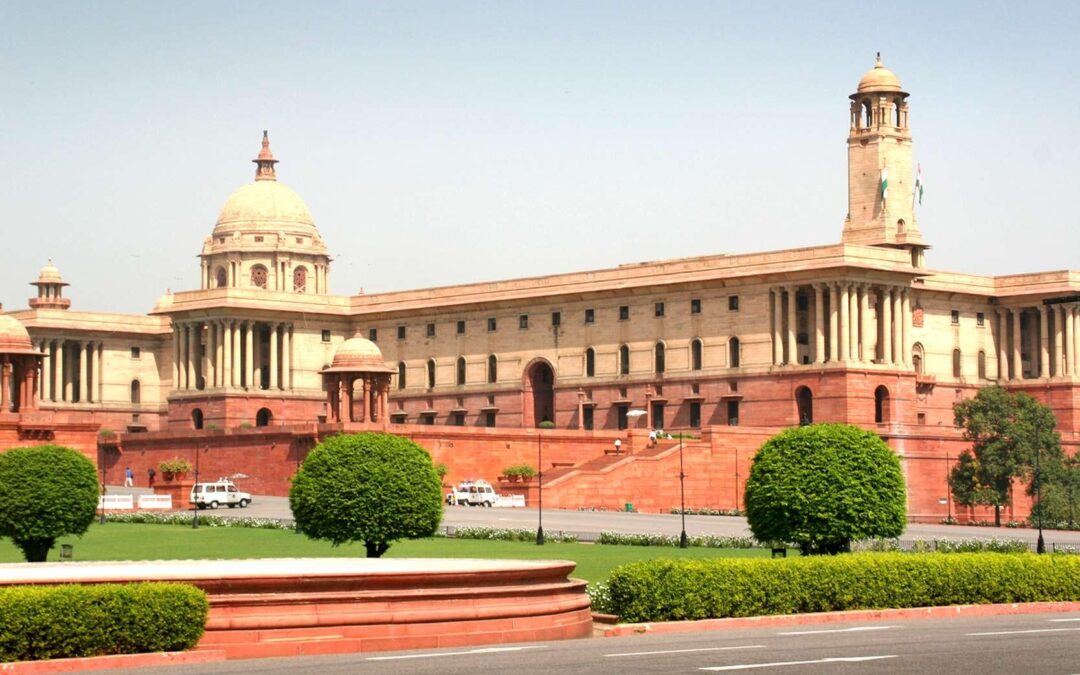
The ICJ today condemned The Citizenship (Amendment) Bill 2019 passed by the Rajya Sabha (upper house of the Indian Parliament) on 11 December 2019, after the Lok Sabha (lower house of the Parliament) adopted it on 9 December.
The ICJ calls on India to reconsider and repeal, or substantially amend, the Bill to bring it in line with international legal obligations and Indian Constitutional principles.
“The implementation of this proposed legislation would violate core principles of non-discrimination, equal protection of the law and freedom of religion, guaranteed under international law and the Indian Constitution,” said Frederick Rawski, ICJ’s Asia Director.
The Bill amends the Citizenship Act, 1955, which governs questions of citizenship and aspects of lawfulness of migration status in India. While it purports to provide protection and shelter to religious groups such as Hindus and provides them paths to citizenship, it excludes from its ambit certain religious groups such as Muslims.
The Bill gives protected status to Hindu, Sikh, Jain, Parsi, Buddhist and Christian migrants from Pakistan, Afghanistan and Bangladesh, all Muslim-majority countries, who entered India on or before 31 December 2014. Similarly situated Muslims are categorized as “illegal migrants”.
Furthermore, the Bill provides to the above-mentioned religious communities and countries an expedited route of citizenship giving them the opportunity to be eligible for citizenship by naturalization if they have lived or worked in India for six years, as opposed to twelve years, as otherwise required.
“The Citizenship (Amendment) Bill creates two tiers of citizenship and migration status in India based on religion, with Muslims relegated to the lower end,” added Rawski. “This Bill, which entrenches discriminatory practices into law, must not be implemented unless substantially amended to provide for equal protection for persons of all religions or other status.”
The legal framework for citizenship identified by this Bill is incompatible with bedrock rule of law and democratic principles. It is highly discriminatory and arbitrary, and manifestly fails to satisfy the State’s obligations under international human rights law, including the International Covenant on Civil and Political Rights (ICCPR), to which India is a party.
The arbitrary inclusion of some groups while excluding others violates Article 14 of the Indian Constitution and Article 26 of the ICCPR. India’s international obligations require that its regulation of citizenship under domestic law be compliant with the principle of non-discrimination, equality before the law, and equal protection of the law without discrimination on the grounds of, inter alia, race, religion, or ethnic or national origin. This Bill, which provides for differentiated criteria for citizenship and other legal protection based on membership of religious group, complies neither with international law nor Indian constitutional law.
The arbitrary inclusion of some groups while excluding others would only be permissible under Article 14 of the Indian Constitution and Article 26 of the ICCPR if the classification is founded on an intelligible differentia between the group excluded and the group that is included, and (ii) the differentia has a rational relation to the objects sought to be achieved by the Act.
The Bill claims religious persecution as the ground of reasonable classification, but then arbitrarily excludes several similarly situated and widely persecuted religious minorities such as Ahmediya Muslims and Shia Muslims from Pakistan and Bangladesh, Rohingyas from Myanmar, Hazaras from Afghanistan from its protective ambit. It therefore does not meet these criteria under the Indian Constitution and international law.
The adoption of the Bill comes as the Ministry of Home Affairs of the Indian Government issued a directive on August 8, 2017 to state governments to “identify and deport” 40,000 Rohingya refugees from Myanmar, which has led to deportation of 7 Rohingya men to Myanmar already.
In addition, the Indian Government has indicated that it will pursue nationwide National Register of Indian Citizens, which will likely exclude numerous people, many also Muslim, who should be recognized as Indian Nationals. A similar exercise undertaken in Assam earlier this year was an arbitrary and discriminatory process that rendered some 1.9 million people stateless. This violates international law and standards which protects the right to nationality and safeguards against statelessness.
Contact
Frederick Rawski, ICJ Asia-Pacific Director, t: +66 64 478 1121; e: frederick.rawski(a)icj.org
Maitreyi Gupta, ICJ India Legal Adviser, t: +91 77 560 28369 e: maitreyi.gupta(a)icj.org
Dec 7, 2019 | News
The ICJ called on the Indian government to conduct an independent and impartial investigation into the apparently unlawful killings by Telangana Police of the four men accused of raping and killing of Dr. Priyanka Reddy on November 27, 2019.
The men had been in police custody for over a week at the time of the killings.
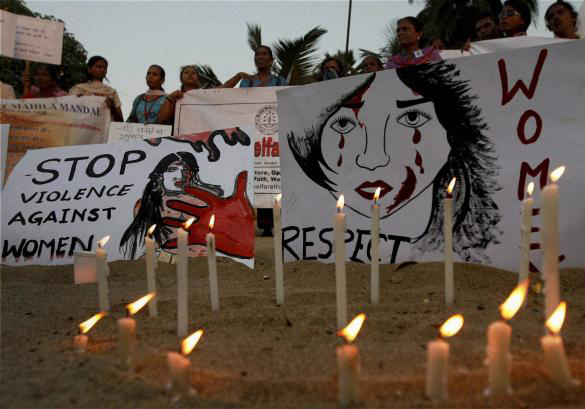
“The rape and killing of Dr. Reddy is a heinous crime, and sadly only the latest in a pattern of rampant sexual violence that plagues India. The perpetrators of such acts must be held accountable,” said Frederick Rawski, ICJ Asia-Pacific Director. “However, the unlawful killing of suspects in custody helps no-one. It denies victims true justice, rewards unlawful behavior by the police, and generally undermines the rule of law.”
On November 27, Dr. Priyanka Reddy, a veterinarian, was returning home when she was gangraped. Her body was subsequently burned by the perpetrators. The next day, four suspects were arrested. According to the police, they remained in custody until Friday, 6 December, when all four were shot and killed after they allegedly attempted to take weapons from the police and tried to escape during a re-enactment at the crime scene. Details of the incident remain unclear, though it has the appearance of a custodial execution.
“The suspicious circumstances of these deaths in custody, and the history of the use of extrajudicial killings in India, demands a thorough, independent and impartial investigation,” said Rawski. “The nationwide alarm at the trend of sexual violence is completely warranted. However, celebrating the unlawful behavior of police will not ultimately protect women from sexual violence or address their lack of access to justice.”
Several Indian women’s rights activist groups have also condemned the killings. A statement by the All India Progressive Women’s Association’s statement pointed out that “This is not justice. This is a ploy to shut down our demand for accountability from the police, judiciary, governments, and justice and dignity for women.” The National Human Rights Commission of India has also called for an investigation into the circumstances of the killing.
According to international standards including the International Convention of Civil and Political Rights (ICCPR), to which India is a party, States have a duty to investigate allegations of extrajudicial executions with due diligence and good faith, regardless of whether or not there is a formal complaint. The investigation of extrajudicial, summary or arbitrary executions must be thorough prompt, impartial and independent, towards establishing the crime committed and prosecuting those responsible for the crimes. This has been reiterated by the Supreme Court of India, which has condemned encounter killings, and set out guidelines for their investigation.
The ICJ urges the Indian Government to conduct a thorough and impartial investigation into the killings by the police, in line with the Supreme Court’s decisions, and India’s constitution and international obligations. The ICJ calls upon the courts to ensure that police officials who conduct unlawful killings are held accountable. It also calls upon the Government to take immediate steps to address the lack of an effective response from police personnel to allegations of rape and sexual violence, and to take effective lawful measures to prevent the unacceptable attacks upon victims of rape and other sexual violence seeking a remedy in the courts.
Contact
Frederick Rawski, ICJ Asia-Pacific Director, t: +66 64 478 1121; e: frederick.rawski(a)icj.org
Maitreyi Gupta, ICJ India Legal Adviser, t: +91 77 560 28369 e: maitreyi.gupta(a)icj.org
Nov 21, 2019 | News
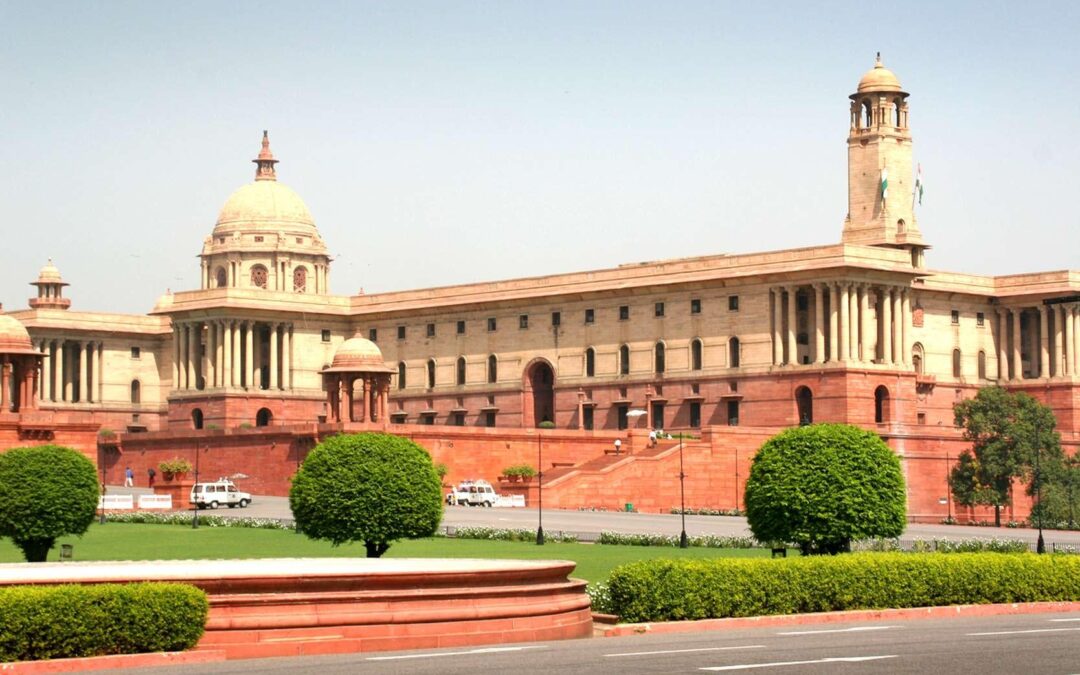
The Upper House of Parliament must revise the Transgender Persons (Protection of Rights) Bill, 2019, which was passed by the Lower House of Parliament on 5 August 2019.
The Bill does not adequately protect the rights of transgender people, and fails to comply with India’s constitutional and international human rights obligations, the ICJ said today.
The Government introduced the Transgender Persons (Protection of Rights) Bill, 2019, before the Parliament on 19 July 2019. It was passed by the Lok Sabha (the Lower House of Parliament) on 5 August, 2019, despite a lack of consultation with the transgender community and serious weaknesses in the Bill, which would be in violation of the Supreme Court’s NALSA judgment.
“If the Upper House of Parliament adopts the Bill in its current form, without any amendments, it will miss an important opportunity to introduce a law that respects, protects and fulfills the human rights of transgender people as required by the Supreme Court’s decision in NALSA v. UOI and India’s international obligations,” said Frederick Rawski, ICJ Asia Pacific Director.
The current draft, fails to address key concerns that have been repeatedly raised by the transgender community and human rights organizations.
Critically, the Bill appears to continue to mandate sex reassignment surgery for transgender people. This requirement would contravene the Supreme Court’s judgment in NALSA v. UOI, which guarantees the right to self-identification without the need for medical intervention. Further, the Bill does not make provision for affirmative action in employment or education despite the Supreme Court’s mandate in NALSA v. UOI.
Moreover, the Bill sets out lighter sentences for several criminal offences, such as “sexual abuse” and “physical abuse”, when they are committed against transgender people. In addition, the Bill does not adequately define these offences and retains provisions that could be used in a discriminatory manner to target transgender people for criminal prosecution. It also fails to address the lack of an effective mechanism to enforce the legal prohibition against discrimination on the ground of gender identity.
The ICJ has recommended the deletion of provisions that mandate sex reassignment surgery and that set out lighter sentences for criminal offences against transgender people. In addition, the ICJ recommends the inclusion of provisions addressing affirmative action for transgender persons in education and employment.
“We urge the Upper House of Parliament to address these deficiencies before passing the Bill into law, in accordance with India’s constitutional and international law obligations, and to ensure meaningful consultation with the transgender community” Rawski said.
Contact
Maitreyi Gupta (Delhi), ICJ International Legal Adviser for India, e: maitreyi.gupta(a)icj.org, t: +91 7756028369
Read also
ICJ 2019 Report on India Living with Dignity: Sexual Orientation and Gender Identity-Based Human Rights Violations in Housing, Work, and Public Spaces in India. The Report details human rights violations suffered by LGBTQ persons in their family homes, workplaces, and public spaces including streets, public toilets, public transport and shopping centres.
ICJ Briefing Paper on India: Legal and Jurisprudential Developments on Transgender Rights, SAATHII Vistaara Coalition. The paper analyses in detail the domestic judicial developments on transgender rights as well as the legislative process undertaken until the Transgender Persons (Protection of Rights) Bill, 2018 was passed on 17 December 2018.
ICJ Briefing Paper on The Transgender Persons (Protection of Rights) Bill, 2016, analyzes the 2016 Bill, its shortcomings, and India’s international obligations, as it is the basis of the 2018 Bill.
ICJ Briefing Paper on Implementation of NALSA Judgment discusses the 2014 April NALSA decision that affirmed that transgender people have the right to decide their self-identified gender. The paper analyses the responsibilities placed on Indian authorities, gaps in implementation, and India’s relevant international law obligations.
Sep 27, 2019 | Advocacy, Non-legal submissions
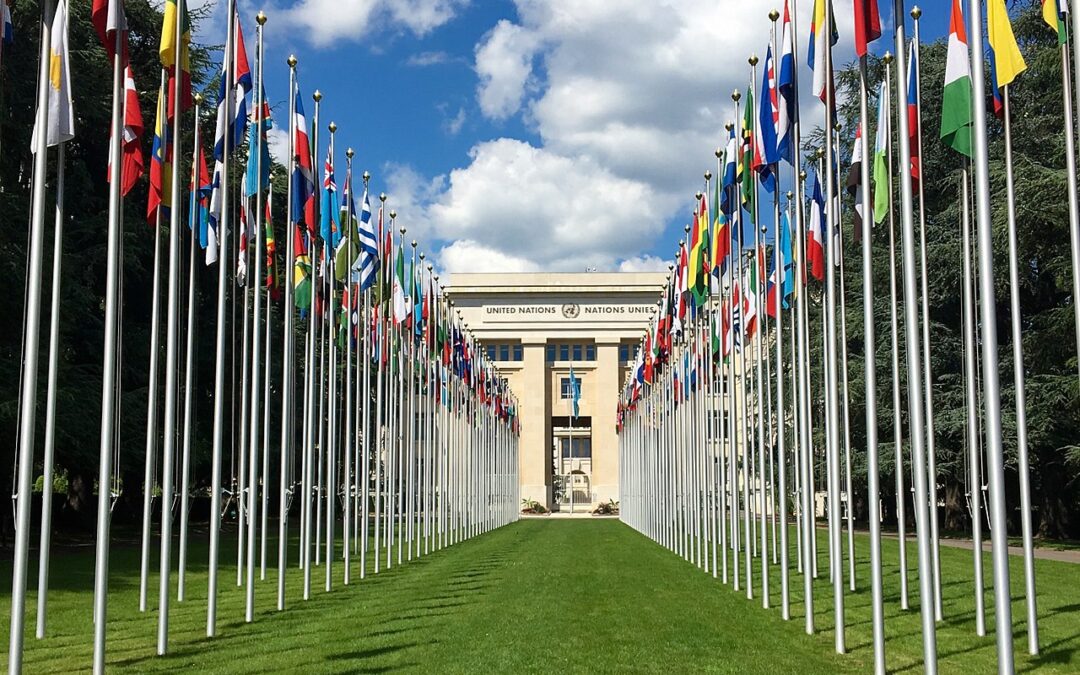
Today, at the close of the 42nd regular session of the UN Human Rights Council in Geneva, the ICJ and other NGOs highlighted key acheivements and failures.
The joint civil society statement, delivered by International Service for Human Rights (ISHR) on behalf of the group, read as follows (not all text could be read aloud due to time limits):
“The Council reaffirmed that reprisals can never be justified. Council members rejected attempts to weaken the text including attempts to delete the references to the roles of the Assistant Secretary-General and the Human Rights Council Presidents. The resolution listed key trends such as the patterns of reprisals, increasing self-censorship, the use of national security arguments and counter-terrorism strategies by States as justification for blocking access to the UN, acknowledged the specific risks to individuals in vulnerable situations or belonging to marginalized groups, and called on the UN to implement gender-responsive policies to end reprisals. The Council called on States to combat impunity and to report back to it on how they are preventing reprisals, both online and offline. The Bahamas and the Maldives responded to this call during the interactive dialogue and we encourage more States to follow their good practice. We also encourage States to follow the good practice of Germany and Costa Rica in raising specific cases of reprisals. The Council also welcomed the role of the Assistant Secretary-General and invited the General Assembly to step up its efforts to address reprisals and ensure a coherent system-wide response.
We welcome the creation of a Fact-Finding Mission (FFM) on Venezuela as an important step towards accountability for the grave human rights violations documented by the High Commissioner. We urge Venezuela to cooperate with the FFM and to honor the commitments they have made during this session, including by allowing OHCHR unfettered access to all regions and detention centers and implementing their recommendations. Cooperation and constructive engagement and measures for international accountability and justice should be seen as complementary and mutually reinforcing.
We welcome the renewal and strengthening of the mandate of the Group of Eminent Experts on Yemen, sending a clear message to parties to the conflict – and to victims – that accountability is at the center of the mandate, and providing a crucial and much-needed deterrent to further violations and abuses. States should support the recommendations made by the GEE in their recent report, including prohibiting the authorization of transfers of, and refraining from providing, arms that could be used in the conflict to such parties; and clarifying the GEE’s role to collect and preserve evidence of abuses.
We welcome the renewal of the mandate of the Special Rapporteur on Cambodia, but regret that calls to strengthen the mandate of the OHCHR to monitor and report on the situation have been ignored. We regret that the resolution fails to accurately depict the continuing crackdowns on civil society and the severity and scale of recent attacks on the political opposition.
We welcome the renewal of the mandate of the Commission of Inquiry on Burundi. Its work is vital as the country heads towards elections in 2020. The Burundian Government should desist from denial and insults, and should cooperate with the Commission and other UN bodies and mechanisms.
We welcome that the EU and OIC have jointly presented a resolution on Myanmar requesting the High Commissioner to report on the implementation of the recommendations of the Fact-Finding Mission at HRC 45. However, the international community needs to take stronger action to ensure accountability for and cessation of grave international crimes, in particular by referring Myanmar to the ICC and imposing a global arms embargo – and by acting on the FFM’s reports, including those on economic interests of the military and on sexual and gender-based violence in Myanmar and the gendered impact of its ethnic conflicts.
The joint EU/OIC resolution on Myanmar welcomes the FFM report on the military’s economic interests, which identifies companies contributing to abuses. The High Commissioner, however, has still not transmitted the database of companies facilitating Israel’s illegal settlements more than 2 and a half years after its mandated release. The High Commissioner pledged in March to fulfil the mandate “within the coming months”. The ongoing unexplained and unprecedented delays have become a matter of credibility, for both the High Commissioner and the HRC. Mr. President, we request that you confer with the High Commissioner and advise as soon as possible when this important Council mandate will be fulfilled.
‘Cautious optimism’ best defines our approach to Sudan. While this year’s resolution, which welcomes the peaceful popular uprising, renews the Independent Expert’s mandate, supports the opening of an OHCHR country office, and highlights the role and needs of civil society, is an improvement on 2018, significant challenges remain. Ensuring accountability for the perpetrators of grave human rights and humanitarian law violations should be a central priority for the new Government, and the Council should assist in this regard.
We regret the lack of Council action on Kashmir and urge the Council, as well as India and Pakistan, to act on all the recommendations in the report of the UN High Commissioner for Human Rights.
On terrorism and human rights, we are deeply disappointed that Mexico and other States have partially acquiesced in attempts by Egypt to dilute or distract the work of the Special Rapporteur on counter-terrorism away from its appropriate focus on human rights violations while countering terrorism and human rights of victims of terrorism. We regret that States have asked the Special Rapporteur to spend the limited time and resources of the mandate, to comment on the overbroad concept of the “effects” of terrorism, by which Egypt and some other States seem primarily to mean macroeconomic, industrial, and investment impacts, rather than the human rights of individual victims. The length to which States seem willing to put the existing Special Rapporteur’s mandate at risk, in the name of protecting it, while failing even to incorporate stronger consensus text on human rights issues included in the most recent merged parallel resolution at the General Assembly, suggests that the merger of the previous Mexican and Egyptian thematic resolutions no longer holds any real promise of positive results for human rights.
We welcome the adoption of the resolution on the question of the death penalty, which is an important reflection of the movement towards the international abolition of this cruel punishment. Significantly, this resolution reiterates and affirms the position of international law that the abolition of the death penalty is an irrevocable commitment and that an absolute prohibition exists to guard against its reintroduction. We also welcome the acknowledgement of the ‘most serious crimes’ threshold that acts to restrict the death penalty, in States that have yet to abolish it, only to crimes of extreme gravity; this resolution plainly identifies that criminal conduct that does not result directly and intentionally in death can never meet the threshold test and can never serve as a basis for the use of the death penalty. We are very pleased to acknowledge that the adoption of this resolution is complimentary to the General Assembly’s resolution calling for an international moratorium on the death penalty and, together, they serve to illustrate the advancing global commitment to abolition.
We welcome the Council’s renewed attention to the protection of the right to privacy in the digital age: fully integrating human rights into the design, development and deployment of Artificial Intelligence, machine learning technologies, automated decision-making, and biometric systems, is essential to safeguard not only the right to privacy, but also to freedom of expression, peaceful assembly, and association, and economic social and cultural rights.
On human rights in the administration of justice, we welcome the focus in this year’s resolution on concrete measures to prevent and respond to violence, death and serious injury in situations of deprivation of liberty, which illustrates the potential of thematic resolutions to set out specific practical, legal and policy steps that can be drawn on by governments, civil society, and other stakeholders to have real positive impact at the national level.
We commend Australia for its leadership on Saudi Arabia, as well as the other States who stood up for women’s rights activists and accountability. We urge more States to live up to their commitment to defend civil society and sign the statement in the coming 2 weeks.
We appreciate the attention paid by individual governments to the situation in China, including the dire situation facing Uyghurs and other Turkic Muslims; the crackdown on human rights defenders, including those working to draw attention to violations of economic, social and cultural rights; and the suppression of fundamental freedoms in Tibet. However, we deplore that the Council and many of its members have once again failed to take decisive action to ensure monitoring and reporting on the human rights situation in the country, especially Xinjiang, and press for access for the High Commissioner.
For five years since the last joint statement in March 2014, the Council has failed to hold Egypt accountable for continuing systematic and widespread gross human rights violations. In the latest crackdown on peaceful protests, reports indicate that more than 2000 people have been arrested in the past week. When will the Council break its silence and convene a Special Session to address the grave and deteriorating human rights situation in Egypt?”
Signatories:
- International Service for Human Rights (ISHR)
- DefendDefenders (the East and Horn of Africa Human Rights Defenders Project)
- Commonwealth Human Rights Initiative (CHRI)
- CIVICUS: World Alliance for Citizen Participation
- Cairo Institute for Human Rights Studies
- Asian Legal Resource Centre
- Asian Forum for Human Rights and Development (FORUM-ASIA)
- International Commission of Jurists (ICJ)
- Amnesty International
- Association for Progressive Communications (APC)
- Human Rights Watch
- International Federation for Human Rights (FIDH)
Sep 6, 2019 | News
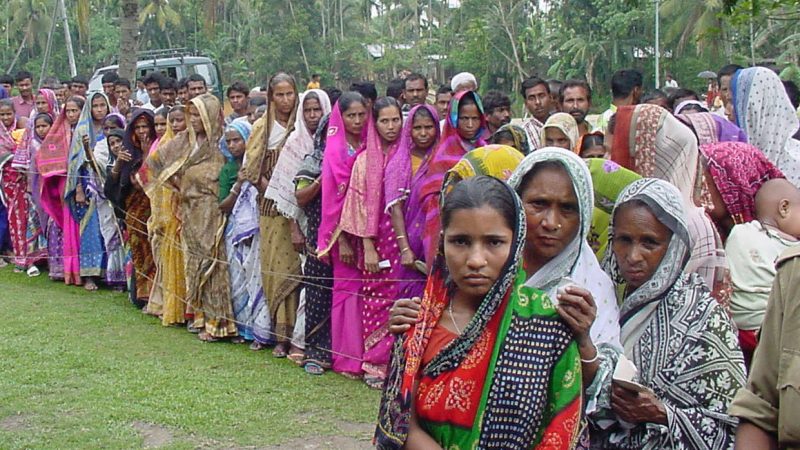
The ICJ, along with 124 other international and domestic civil society groups from around the world have condemned the actions of Indian government in publishing an incomplete and discriminatory Assam National Register of Citizens (NRC) on 31 August, 2019.
The NRC excludes some 1.9 million people – nearly 6 percent of the population of Assam – thereby rendering them at risk of statelessness. The statement points to violations of rights to equality and non-discrimination, as the process has disproportionately affected Muslims of Bengali descent, undocumented women and children as well as other minorities.
The groups call on India to take measures to redress the situation in a non- discriminatory and non-arbitrary manner, with full regard to due process rights and a commitment to protect the right to a nationality and to avoid statelessness of all long-term residents and their children.
Arbitrary deprivation of nationality is a human rights violation, which undermines the enjoyment of the human rights of those affected and their ability to participate fully in society. International law prohibits the arbitrary deprivation of nationality and obliges States to avoid statelessness, while guaranteeing the right of every child to acquire and preserve their nationality and to be protected from statelessness.
In 2015, the Assam state government, pursuant to a Supreme Court decision, announced it would initiate a process of updating the NRC, requiring every person in Assam who recognized themselves as an Indian citizen, to submit proof of their ancestry (or birth) in the country pre-dating 1971, the year that Bangladesh was formed. The act of requiring individuals to prove their citizenship by providing documentary evidence dating back over 50 years, and excluding applicants on the basis of their inability to fulfill this evidentiary burden, has led to arbitrary deprivation of nationality, contrary to Article 15 of the Universal Declaration of Human Rights.
Further, poor birth registration rates, despite an obligation under Article 7 of the Convention of the Rights of the Child to immediately register every birth has denied numerous applicants of a critical piece of evidence to establish their citizenship. Similarly, many people who possessed the required documents, have nonetheless been penalized due to administrative errors.
Despite repeated calls to action by UN human rights authorities, India has refused to reverse the process and other States have done little to press the Indian government to reverse course.
Those excluded from the list must appeal within 120 days to Foreigners Tribunals (FT), a quasi-judicial institution mandated to determine citizenship. In essence, this implies that the government already considers those excluded from the NRC to be foreigners, and not Indian citizens.
Find the full statement, endorsed by the ICJ and 124 other international and domestic civil society groups from around the world here: https://files.institutesi.org/cso-joint-statement-on-assam-nrc.pdf
Contact:
Maitreyi Gupta (Delhi), ICJ International Legal Adviser for India, t: +91 7756028369 e: maitreyi.gupta(a)icj.org
Frederick Rawski, ICJ Asia-Pacific Director, t: +66 64 478 1121; e: frederick.rawski(a)icj.org