Mar 16, 2021 | Advocacy, Non-legal submissions
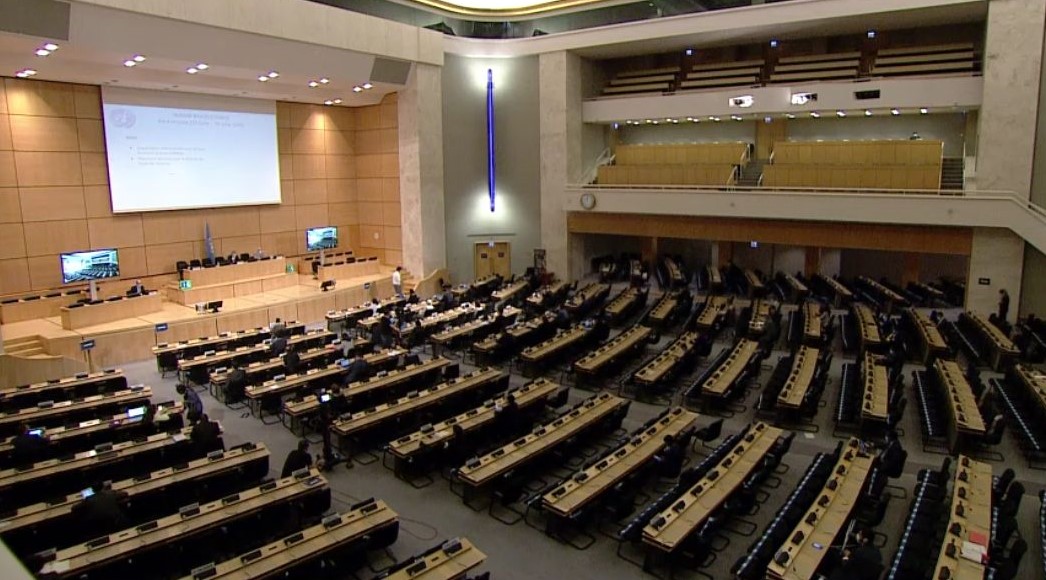
Today, during a debate on the outcome of the Universal Periodic Review of Libya, the ICJ called on Lybian authorities to bring the country’s criminal legislation in line with international law, in particular by defining clearly crimes under international law.
The statement reads as follows:
“Madame President,
The International Commission of Jurists (ICJ) welcomes Libya’s acceptance of the recommendation to cooperate fully with the Independent Fact-Finding Mission on Libya and ensure that it has unfettered access throughout the country’s territory (148.7-8, 148.11-17).
The ICJ regrets that Libya has only taken note of – as opposed to accepting ‒ Estonia’s recommendation (148.80) to bring the Penal Code in line with international standards, and Libya’s rejection of Zambia’s recommendation (148.70) to define crimes under international law in Libya’s domestic legal system clearly.
Libyan domestic law fails to criminalize: arbitrary deprivation of life; torture and other ill-treatment; enforced disappearance; rape and other forms of sexual and gender-based violence; slavery; war crimes; and crimes against humanity, in line with international law and standards.
The ICJ further welcomes Libya’s acceptance of the recommendations (148.144-146, 148-149, 151-161, 165-166) to investigate effectively crimes under international law and bring perpetrators to justice.
The ICJ expresses concern, however, at the prevailing impunity in the country. Crimes under international law are not being effectively investigated and prosecuted, largely because of the absence of political will, inadequate resources, and the frequent threats against justice actors, particularly by armed groups.
The ICJ also regrets that Libya failed to accept the recommendations of: Ukraine (148.25); Costa Rica (148.31); Cyprus (148.32); France (148.33); the Holy See (148.34); Liechtenstein (148.35); Namibia (148.36); Portugal (148.37); Rwanda, Croatia and Slovakia (148.37); Argentina (148.38); Australia (148.39); Honduras (148.40); Iceland (148.41); Italy (148.42); and Latvia (148.43). These recommendations call on Libya to establish a moratorium on executions, and to accede to the Second Optional Protocol to the International Covenant on Civil and Political Rights with a view to abolishing the death penalty. The death penalty constitutes a violation of the right to life and of the absolute prohibition of torture and other cruel, inhuman or degrading treatment or punishment.
I thank you.”
Contact:
Massimo Frigo, ICJ UN Representative, e: massimo.frigo(a)icj.org, t: +41797499949
Vito Todeschini, Legal Adviser, ICJ MENA Programme, e: vito.todeschini(a)icj.org
Mar 2, 2021 | News
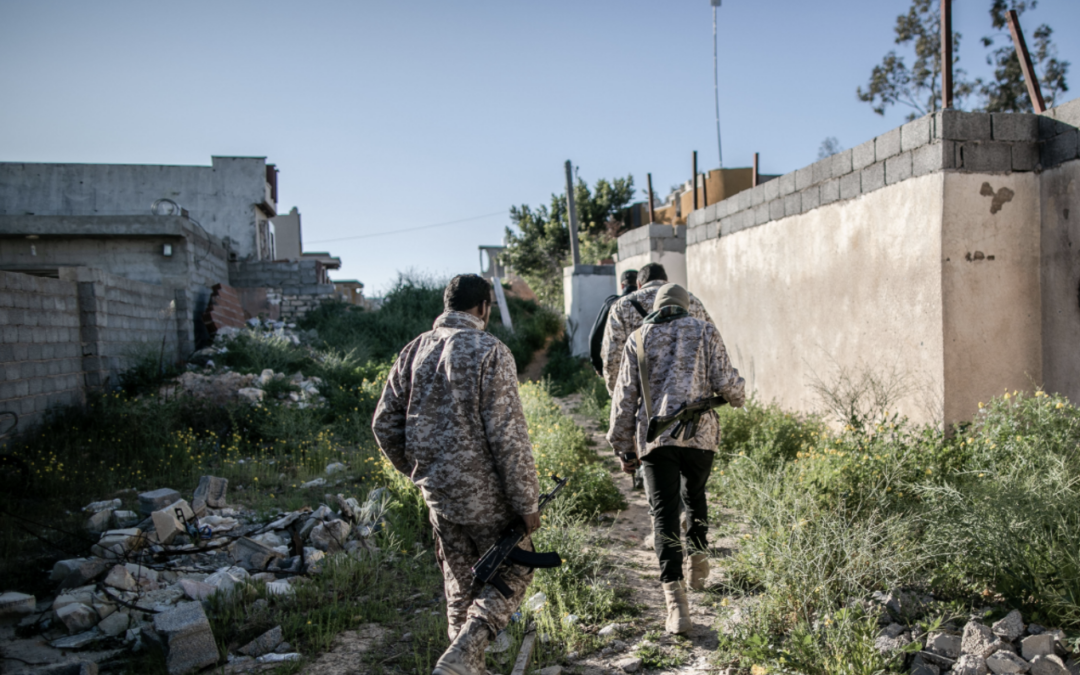
Justice and accountability in Libya can only be achieved if activists and lawyers fully engage with and support the UN Independent Fact-Finding Mission on Libya (FFM) in documenting and collecting evidence of serious violations in the country, the ICJ said today.
To facilitate such engagement, the ICJ’s Question and Answer (Q&A) published today provides guidance for Libyan and international civil society actors on:
- the role and mandate of the FFM;
- the FFM’s relationship with other accountability mechanisms, such as the International Criminal Court (ICC);
- what the FFM may be expected to achieve; and
- how to engage with the FFM.
“The success of the FFM’s mandate rests largely on its ability to establish the facts about and collect evidence of violations and abuses of international human rights and humanitarian law perpetrated in Libya.”
“We urge lawyers, activists and civil society actors to fully support the FFM in achieving these objectives and bringing about the accountability that has so far eluded Libya.”
– Said Benarbia, the ICJ’s MENA Programme Director.
The FFM was established by the UN Human Rights Council on 22 June 2020 through resolution 43/39. Its mandate includes:
- Establishing facts and circumstances of the human rights situation throughout Libya;
- Collecting and reviewing relevant information;
- Documenting alleged violations and abuses of international human rights law and international humanitarian law, including any gendered dimensions of such violations and abuses; and
- Preserving evidence with a view to ensuring that perpetrators be held accountable.
While the FFM cannot conduct criminal investigations or prosecute individuals, the evidence preserved may be used by Libyan judicial authorities, the ICC, and third countries exercising universal jurisdiction.
The FFM has issued a call for submissions of relevant information and materials, the deadline for which is 30 June 2021.
Contact
Said Benarbia, Director, ICJ Middle East and North Africa Programme; t: +41 22 979 3817, e: said.benarbia(a)icj.org
Vito Todeschini, Legal Adviser, ICJ Middle East and North Africa Programme; t: +216 53 334 679, e: vito.todeschini(a)icj.org
Asser Khattab, Research and Communications Officer, ICJ Middle East and North Africa Programme; e: Asser.Khattab(a)icj.org
Download
Q&A on the UN International Fact-Finding Mission in English and Arabic.
Press Release in English and Arabic.
Feb 17, 2021 | News
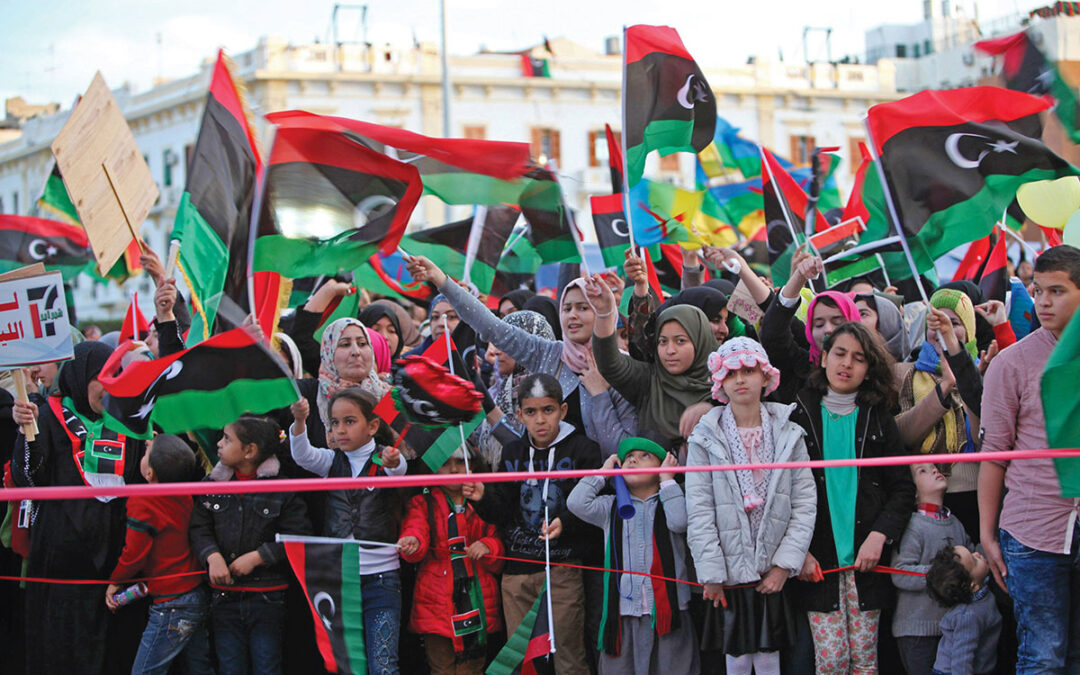
17 February 2021 marks the tenth anniversary of the Libyan revolution.
Back then, protestors had taken to the streets calling for an end to Gadhafi’s authoritarian rule: a regime beset by the commission of widespread and systematic gross human rights violations, including arbitrary arrest and detention; enforced disappearances; torture and other ill-treatment; the oppression of women, minority groups, political dissidents and government critics; and the curtailment of freedom of expression, association and assembly.
Libyans who supported the 2011 revolution hoped it would usher in a nascent democracy and present an opportunity to address the country’s bleak legacy. A decade on, however, the pursuit of justice and accountability remains unfulfilled, and the cycle of impunity unbroken, as a multitude of State actors and armed groups continue to perpetrate crimes under international law, including against thousands of migrants, refugees, asylum seekers and stateless persons.
Attacks against human rights defenders, lawyers and activists, including extrajudicial executions, enforced disappearances and torture, are pervasive, particularly so against women. The post-2011 period has also witnessed an increasingly brutal crackdown on civil society, journalists and bloggers, in addition to the violent suppression of peaceful protests through excessive use of force and arbitrary arrests.
Against a backdrop in which domestic accountability efforts are hindered by cycles of violence, weak and ineffective law enforcement agencies, and by the arbitrary exercise of policing and detention powers by armed groups, international efforts to fight impunity in the country are underway. The Office of the Prosecutor of the International Criminal Court (ICC) is currently investigating some of the crimes under international law committed after 2011, including war crimes committed in the context of armed conflicts. However, certain individuals against whom ICC arrest warrants have been issued, including Mahmoud Al-Werfalli, remain at large.
In June 2020, the UN Human Rights Council established an International Fact-Finding Mission (FFM) tasked with investigating violations and abuses of international human rights law and international humanitarian law committed by both State and non-State actors in Libya since 2016. The FFM’s work will be key in addressing impunity in the country and will complement national efforts to address the accountability vacuum.
The country’s interim executive, selected by the Libyan Political Dialogue Forum on 5 February 2020, and any future elected government must put the peoples’ demands for justice and accountability at the forefront. In particular, the Libyan authorities must commit to implementing a transitional justice process, neglected so far, that could genuinely pursue accountability, and guarantee full participation of victims and the public in the process, and thereby realize the right to truth and reparations of the victims of past and ongoing human rights violations and abuses.
To this end, the International Commission of Jurists and the Defender Center for Human Rights call on the Libyan authorities to:
- Guarantee freedom of assembly, association and expression of all persons, and protect human rights defenders, activists and journalists from reprisals and unwarranted prosecutions;
- Protect all persons from arbitrary arrest and detention, extrajudicial executions, torture and other ill-treatment, and enforced disappearances;
- Effectively investigate and prosecute crimes under international law, and ensure that no amnesty, immunity or statute of limitations apply to such crimes;
- Reform the security sector to ensure effective civilian oversight over security and armed forces;
- Set up a concrete plan to disband and disarm all militias and armed groups;
- Guarantee the independence of the judiciary, the respect of international fair trial standards, and refrain from trying civilians before military tribunals;
- Protect refugees, asylum seekers, stateless persons and migrants in line with international law;
- Ensure that the right to an effective remedy and adequate reparations are granted to victims of human rights violations;
- Cooperate fully with the ICC and support their efforts to obtain custody of any suspects;
- Provide the FFM with full support and access to victims, witnesses and any other interested persons throughout Libya’s territory.
Download
Libya-Impunity-Joint-Statement-2021-ENG (English)
Libya-Impunity-Joint-Statement-2021-ARA (Arabic)
Contact
Said Benarbia, Director, ICJ Middle East and North Africa Programme, t: +41-22-979-3817; e: said.benarbia(a)icj.org
Asser Khattab, Research and Communications’ Officer, ICJ Middle East and North Africa Programme; e: Asser.Khattab(a)icj.org
Nov 12, 2020 | News
The ICJ, the Cairo Institute for Human Rights Studies (CIHRS), the Defender Center for Human Rights (DCHR), Lawyers for Justice in Libya (LFJL) and the Libyan Women’s Platform for Peace (LWPP) have issued today a joint statement on the assassination of lawyer and political activist Hanan al-Barassi .
The undersigned human rights groups are appalled by the assassination of lawyer and political activist Hanan al-Barassi in Benghazi on 10 November 2020, and call on the competent authorities to launch an independent, impartial and effective investigation into the killing and bring those responsible to justice through fair trials.
On 10 November, a group of unknown armed men shot al-Barassi in Benghazi city centre in broad daylight. Al-Barassi was known for her political engagement and criticism of the human rights violations and abuses and corruption allegedly committed by authorities in Eastern Libya and their affiliated militias. Al-Barassi was active on social media, and often posted videos on Facebook in which she criticised the Libyan Arab Armed Forces (LAAF). Her last video was posted a few hours before her killing.
Al-Barassi’s murder follows a disturbing pattern in recent years of violent attacks against prominent women activists who are critical of the authorities and affiliated militias. In June 2014, gunmen assassinated prominent human rights activist and lawyer Salwa Bugaighis. This was followed by the killing of former Derna Congress member Fariha Al-Berkawi on 17 July 2014, and human rights activist Entisar El Hassari on 24 February 2015. Women’s rights defender and member of the Tobruk-based House of Representatives Seham Sergiwa was abducted from her home by armed men on 17 July 2019, and her whereabouts remains unknown.
The failure of Libyan authorities to effectively investigate these attacks, despite public commitments to do so, has created an environment of impunity, in which women are frequently targeted, both online and offline, with threats, smear campaigns and violence for their political or human rights views. Al-Barassi’s assassination is also a stark demonstration of how online violence against women can carry over to have lethal consequences on the ground.
Such atrocities are prevalent in Libya today. The pattern of violence including enforced disappearances and assassinations of activists, human rights defenders, judges and journalists across the country is alarming, and will only continue in the absence of any effective, independent and impartial investigations. Addressing these crimes by holding the perpetrators to account must be a priority, including within any political process.
Al-Barassi’s killing has taken place as the Libyan Political Dialogue Forum (LPDF) continues talks aimed at ending the conflict and preparing for national elections, underscoring the importance of ensuring accountability and justice in the country. There can be no meaningful democratic transition in Libya until the basic security and human rights of the population are guaranteed.
Given the absence of any real commitment to effectively investigating ongoing crimes under international law being committed in Libya, the newly established Independent Fact-Finding Mission (FFM) on Libya must be urgently provided with the necessary resources to begin its investigations and preserve evidence without delay. We urge the Libyan authorities to fully cooperate with the FFM, and UN Member States to swiftly provide the needed support and adequate resources.
Signatories
- International Commission of Jurists (ICJ)
- Cairo Institute for Human Rights Studies (CIHRS)
- Defender Center for Human Rights (DCHR)
- Lawyers for Justice in Libya (LFJL)
- Libyan Women’s Platform for Peace (LWPP)
Find the Joint Statement in Arabic and English here:
Lybia-Hanan_Albarassi -JointStatement-2020-ARA
Lybia-Hanan_Albarassi -JointStatement-2020-ENG
Oct 5, 2020 | Advocacy, Non-legal submissions
The ICJ today highlighted the need for accountability for crimes under international law in Libya, and concerns for the independence of lawyers in Ukraine, at the UN Human Rights Council in Geneva.
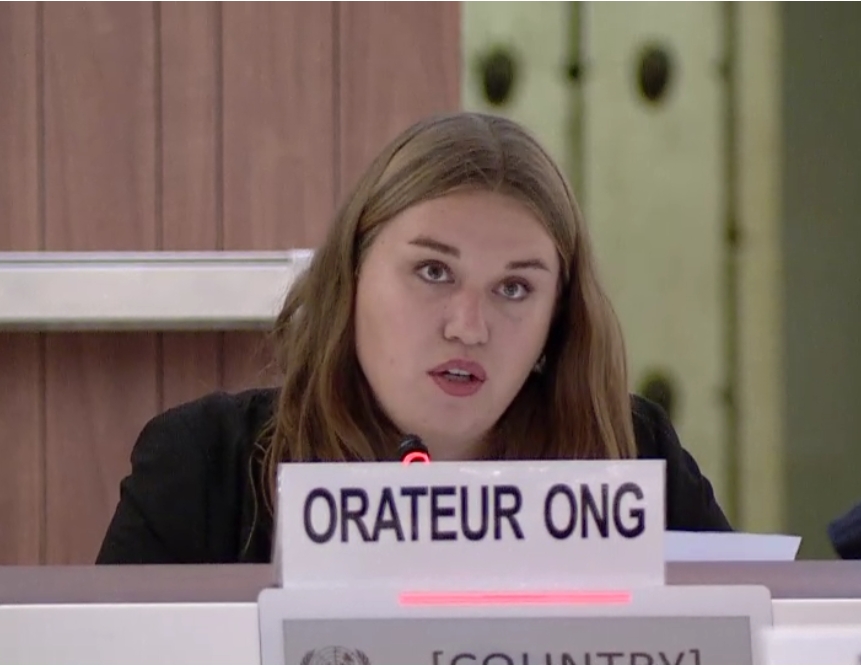
The oral statement, delivered in the general debate on technical cooperation and capacity building, read as follows:
“Madame President,
The International Commission of Jurists (ICJ) welcomes the oral updates on Ukraine and Libya.
Technical assistance and capacity building objectives in Libya can only be achieved if the protection of human rights, entrenchment of the rule of law and pursuit of accountability are prioritized.
States should support the Fact-Finding Mission by extending its reporting mandate, increasing contributions to the UN budget necessary to establish the Mission’s secretariat, and fully cooperating with it.
States should also support the Berlin Process working groups, ensuring that the political and accountability pillars work in unison and making meaningful commitments to implement their recommendations.
Across all of Ukraine, lawyers continue to be associated with their clients and may face consequences for representing them by private individuals and also through abuse of legal proceedings. High-profile cases bear risks for independent lawyers who choose to diligently represent their clients.
The decline in security of lawyers in and outside of courts, and the problem of threats, harassment, and attacks against lawyers, should be addressed as a matter of priority, including through technical cooperation. Measures should be taken to build the capacity of law enforcement agencies and court security personnel to ensure that lawyers and others involved in court proceedings can work in an atmosphere free from intimidation, harassment, and improper interference.
Thank you.”