Jul 8, 2018 | News
As the government begins a process of consultations around proposed amendments to the transitional justice mechanisms, the ICJ and Human Rights Watch have called on authorities to ensure the amendments comply with international human rights standards.
The government must also take into account concerns of all stakeholders, the organizations said.
The current draft law fails to address the many gaps in Nepali law that make it difficult to prosecute, especially at senior levels, for international crimes such as torture and crimes against humanity.
The Nepal government has ensured an extension of its two transitional justice commissions while also committing to future amendments to comply with international standards and Supreme Court rulings, the groups said.
The government is holding consultations around a proposed Commission on the Investigation of Enforced Disappeared Persons (CEIDP) and the Truth and Reconciliation Commission (TRC) (Amendment) Bill.
“While Nepal has engaged in a transitional justice process over the last few years, with official commissions collecting complaints, holding meetings and generic consultations throughout the country, this is still without any tangible result, and victims say it has left them confused,” said Brad Adams, Asia Director at Human Rights Watch.
“For a successful, internationally accepted process, the authorities in Nepal should focus on providing justice to victims, and not engage in trying to get perpetrators off the hook,” he added.
Human Rights Watch and the ICJ issued the statement after the Nepal government shared a draft bill purportedly to amend flaws in the laws of the CEIDP and TRC Acts.
Ahead of submitting further analysis and recommendations in the consultative process, the organizations said that Nepal authorities should take into account concerns of all stakeholders, including the groups representing victims of serious crimes by all sides during the civil war, other civil society organizations, the National Human Rights Commission (NHRC) and the United Nations Office of the High Commissioner for Human Rights (OHCHR).
Nepal’s new government under Prime Minister Khadga Prasad Oli of the Nepal Communist Party promised that the Nepali law on transitional justice would be brought into conformity with international law and standards as had been directed several times by the Supreme Court.
After years of previous governments failing to comply with the Supreme Court rulings, the new attorney general had announced that reforms to the law were underway, which victims’ groups said gave new hope, and as explicitly requested by the United Nations Human Rights Council (UNHRC) and human rights organizations.
While positive changes are noticeable including in relation to reparations, the proposed law authorizes the two transitional justice commissions to authorize prosecutions without strengthening the commissions themselves, proposes a special court without clear guidelines on impartial investigations, and includes a section permitting non-custodial sentences for the most serious crimes.
These raise concerns that the proposed draft may not meet international standards of justice and accountability.
The two commissions, which experts say require crucial bolstering, have conducted country-wide hearings and gathered nearly 60,000 cases between them.
Victim groups complain that the process has been arbitrary and confusing.
The organizations also noted a number of continuing obstacles to justice, which the bill has not addressed.
These include the continued failure to incorporate specific crimes into Nepali law that are serious crimes under international law, including torture, enforced disappearance, war crimes, and crimes against humanity.
In addition, the bill provides for the wholly inadequate sanction of short-term community service as an alternative punishment for those convicted of serious crimes, which may constitute effective impunity.
Nor does the bill address the question of command and superior responsibility for such crimes, leaving doubt as to whether those at the highest levels of authority will be held accountable for these crimes.
The international organizations were invited to a meeting with the attorney general and other stakeholders on June 21 but did not have a translated draft available ahead of the discussion.
However, during the consultation, the groups stressed the need for meaningful consultations on the bill.
The organizations noted also that universal jurisdiction, which allows for any state to prosecute those believed to have engaged in torture, enforced disappearance, or other serious crimes under international law, will remain an available option for victims to seek justice in cases of serious abuses during the civil war.
“Without a justice process that meets international standards for prosecuting the most serious crimes, such as torture and enforced disappearances, anyone suspected of such crimes in Nepal risks arrest, extradition, and prosecution in the many countries that are committed to prosecuting such crimes,” said Ian Seiderman, ICJ Legal and Policy Director.
“It is very welcome that the Nepal government is finally looking to address longstanding demands of war victims and should use this opportunity to abide by its obligations, draw up security sector reforms, and pave the way to end impunity,” he added.
Full text in English (PDF): Nepal-ICJ-HRW-Transnational-justice-reform-News-Press-releases-2018-ENG
Jun 29, 2018 | Advocacy, Non-legal submissions
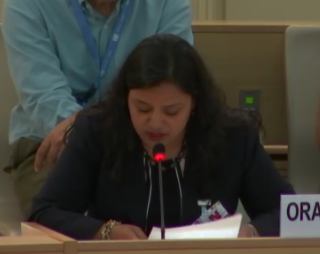
The ICJ today highlighted Nepal’s failure to implement recommendations accepted under its Universal Periodic Review, at the United Nations.The statement was made during General Debate on the Universal Periodic Review, at the UN Human Rights Council in Geneva. The statement read as follows:
“The UPR can help ensure that States comply with international human rights standards, but only if accepted recommendations are in fact implemented. Lack of follow-up on States’ implementation after adoption of UPR outcomes allows States to disregard their UPR commitments, undermining the mechanism, as is illustrated by the example of Nepal.
More than two years after its last review, the Government has still not implemented accepted recommendations related to transitional justice and accountability for past human rights violations.
Of particular concern is the continuing failure of the Government to establish credible transitional justice mechanisms to effectively address past human rights violations.
The Truth and Reconciliation Commission and Commission on Investigation of Disappeared Persons continue to fall short of international standards, both in constitution and operation.
The recently published draft bill on transitional justice provides for short-term community service as an alternative punishment for perpetrators convicted of international crimes, including torture and enforced disappearance. Such manifestly inadequate punishment would constitute a form of impunity.
Furthermore, the establishment of a special court under the bill will not be effective unless crimes such as torture, enforced disappearance, war crimes and crimes against humanity are criminalized in national law in accordance with international standards.
The ICJ urges the Council to adopt measures to ensure effective implementation of accepted UPR recommendations.”
May 17, 2018 | Feature articles, News
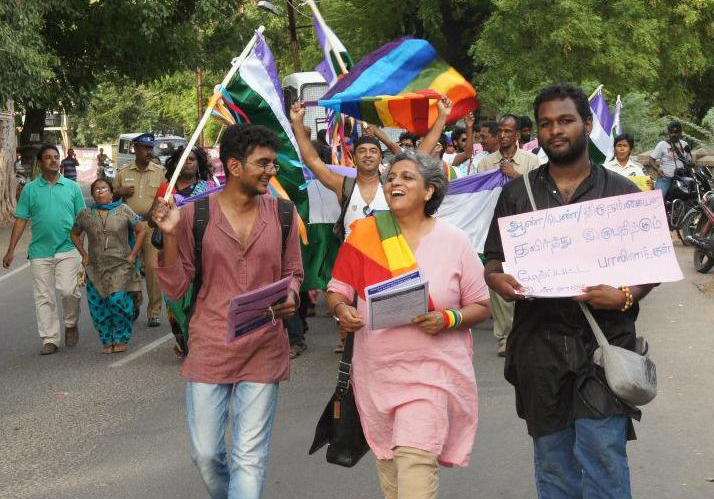
South Asian States must repeal laws that discriminate against LGBTI persons, and must respect, protect and fulfill the full range of their human rights, the ICJ said today on International Day Against Homophobia and Transphobia (IDAHO-T).
These rights include the right to equality before the law and equal protection of the law for all without discrimination, to which LGBTI persons are entitled due to their inherent dignity as human beings.
Across South Asia, discriminatory laws have enabled socially constructed gender and sexual norms to foster and perpetuate intimidation, harassment, threats of violence and violence against lesbian, gay, bisexual, transgender and intersex (LGBTI) persons, due to animosity, hostility and hatred motivated in whole or in part by their actual or perceived sexual orientation, gender identity, gender expression and/or intersex status.
Under international law, including the International Bill of Rights, that is the Universal Declaration of Human Rights and the two Covenants – the International Covenant on Civil and Political Rights and the International Covenant on Economic, Social and Cultural Rights – discrimination on the grounds of sexual orientation and/or gender identity is prohibited.
In this context, the Office of the UN High Commissioner of the Human Rights has underscored five core international human rights law obligations for States: (1) protecting individuals from homophobic and trans-phobic violence; (2) preventing torture and cruel, inhuman, and degrading treatment of LGBTI persons; (3) decriminalizing homosexuality; (4) prohibiting discrimination based on sexual orientation and gender identity; and (5) respecting the freedom of expression, association and peaceful assembly of LGBTI persons.
Under international human rights law, the principle of non-discrimination includes the right to determine one’s sexuality, sexual orientation, and gender identity and gender expression.
Contrary to their international human rights law obligations in this respect, States’ policing of gender and sexuality has created a pattern of stigma, harassment and violence.
For example, consensual same-sex sexual relations remain criminalized in seven out of eight countries in South Asia – Afghanistan, Bangladesh, Bhutan, India, Maldives, Pakistan, and Sri Lanka – based on colonial era laws, such as S. 377 of the Penal Codes of Pakistan, India, Maldives and Bangladesh, and similar legal provisions in Sri Lanka and Bhutan, that criminalize “carnal intercourse against the order of nature”.
While the enforcement of these laws rarely lead to actual criminal convictions and sentences of imprisonment, their mere continued existence creates an ominous and ongoing threat against and criminalizes entire sectors of the populations in these countries.
This, in turn, gives rise to a climate that encourages and is ripe for extortion, harassment and blackmail of LGBTI persons, by the police, as well as non-State actors, including the general public and even their own families.
While there have been some progressive developments, discrimination, violence and other human rights abuses against LGBTI people – both at the hands of State and non-State actors – remain rampant in South Asia.
Hence, on IDAHO-T, the ICJ renews its call on all South Asian Governments to repeal discriminatory laws against LGBTI persons, including laws that criminalize consensual same-sex sexual relations.
In addition, the organization urges all South Asian Governments to enable transgender persons’ right to self-identification of their gender, and to enact legislation that establishes prior, free, full, informed, genuine and consistent consent for any medically unnecessary interventions on intersex persons.
Contact
Maitreyi Gupta, ICJ International Legal Adviser in India, t: +91 7756028369; e: maitreyi.gupta@icj.org
Full text in ENG (PDF): India-IDAHO-T call-News-Feature article-2018-ENG
Apr 13, 2018 | Multimedia items, News, Video clips
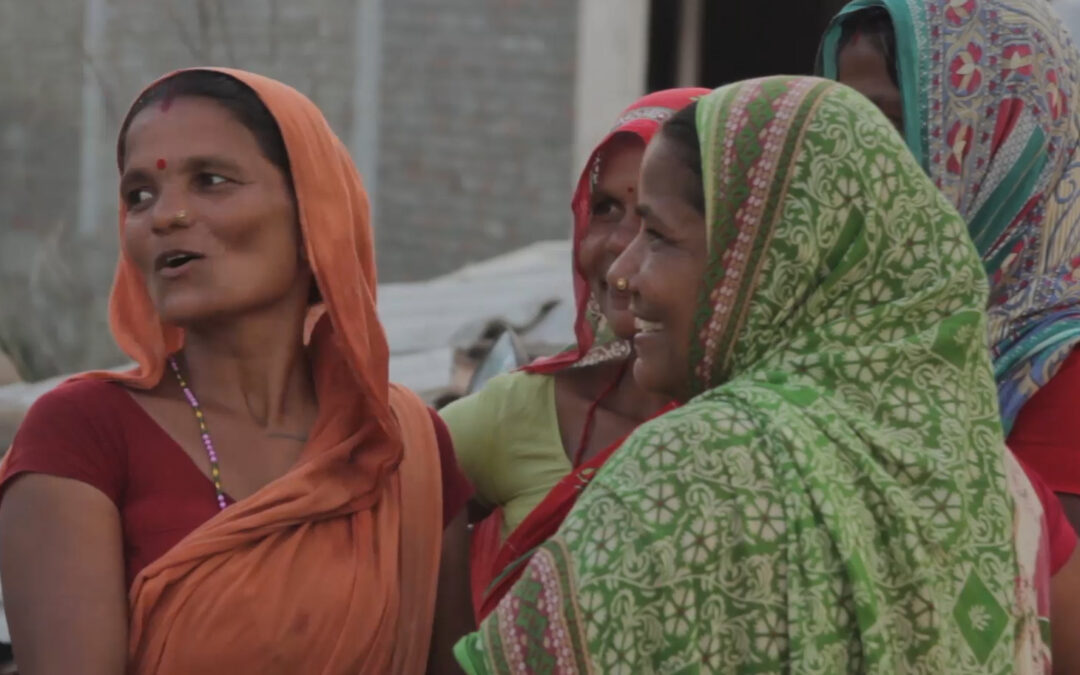
In 2017, Nepal held its first local-level elections for almost 20 years and the first ever conducted under the new federal state structure established under the 2015 Constitution. They were significant because of the unprecedented number of women who stood as candidates and won.
Women in Nepal have experienced systemic discrimination for decades, especially those in rural areas, among ethnic minorities and marginalized groups.
These elections presented the women of Nepal with the opportunity to break through barriers that have prevented them for decades from participating in political and public life.
The Local Level Governance Act lays out the mandate and functions of newly formed local bodies.
If the recently elected women are allowed to meaningfully participate in local governance, the new law could empower them further so that they can take the lead in addressing key human rights issues, especially the human rights of women.
This video documents the campaign of Rikam BK, a Nepalese politician, belonging to the Communist party of Nepal-Maoist (CPN-M).
In the Nepal Legislative Election held on 26 November 2017, she was elected as a Sub-Mayor (NCP Maoist) of Lahan Municipal Council winning 5000 votes.
She is the chairperson of the Dalit Preservation Abhiyan Forum, in Siraha. She has been advocating the issue of land certificates in the names of both husband and wife.
She continues to call for those deprived of land rights to have equal access to land. She is also the member of National Alliance for Women Human Rights Defenders (NAWHRD).
Many of the women featured in this video are women human rights defenders who have been working to promote and protect human rights in Nepal for decades.
Many of them participated in the Regional Conference on Women Human Rights Defenders as Political Actors, which was organized by the ICJ, with the cooperation of NAWHRD.
The conference was held from 28 to 29 August 2017 in Kathmandu.
The ICJ recently released a briefing paper laying out the key points of the conference and offering a set of future actions aimed at supporting WHRDs in their role as political actors pursuing a human rights agenda.
Watch the video
Apr 3, 2018 | News
The secret military trials of civilians charged with terrorism-related offences are a continuing breach of Pakistan’s international human rights obligations, the ICJ said today.
Military courts were first empowered to try civilians for certain terrorism-related offences on 7 January 2015 by the 21st amendment to the Constitution and amendments to the Pakistan Army Act, 1952, which were in operation for a period of two years.
One year ago, on 31 March 2017, President Mamnoon Hussain signed into law the 23rd amendment to the Constitution to renew military courts’ jurisdiction over civilians until 6 January 2019.
“The renewal of military trials for civilians accused of terrorism last year has only weakened the rule of law, and undermined the right to fair trial and equality before the law in Pakistan,” said Matt Pollard, ICJ’s Senior Legal Adviser.
“Pakistan should end the role of military courts in such cases, and instead strengthen the ability of ordinary courts and law enforcement to ensure investigations and trials that are both fair and effective, in line with its domestic law and international human rights obligations,” he added.
According to the military’s media office and information collected by the ICJ, military courts have convicted 346 people since January 2015, out of which 196 people have been sentenced to death and 150 people have been given prison sentences.
At least 56 people have been hanged. Only one person has been acquitted.
The ICJ has documented serious fair trials violations in the operation of military courts, including: denial of the right to counsel of choice; failure to disclose the charges against the accused; denial of a public hearing; failure to give convicts copies of a judgment with evidence and reasons for the verdict; and a very high number of convictions based on “confessions” without adequate safeguards against torture and ill treatment.
Such use of military courts to try civilians is inconsistent with international fair trial standards, and the imposition of the death penalty after such trials violates the right to life.
Families of more than a hundred people convicted by military courts have alleged the convicts were denied a right to a fair trial in petitions to the Supreme Court and various high courts in the country.
Despite acknowledging possible denial of fair trial, the ordinary courts have thus far refused to provide relief to the petitioners due to their lack of jurisdiction over military courts.
The expansion of the jurisdiction of military tribunals through the amendments to the Constitution and the Pakistan Army Act were a part of the Pakistani government’s 20-point “National Action Plan”, adopted following the horrific attack on the Army Public School in Peshawar in December 2014.
The NAP contemplated military courts only as a short-term “solution” to try “terrorists”, on the basis that they would be operational only for a short period during which the Government would bring about necessary “reforms in criminal courts system to strengthen the anti-terrorism institutions.”
However, with less than a year left before the extension under the 23rd Constitutional Amendment is set to expire, no such reforms have taken place.
Contact
Matt Pollard, ICJ Senior Legal Adviser and UN Representative (Geneva); e: matt.pollard@icj.org
Reema Omer, ICJ International Legal Adviser for South Asia (London), t: +447889565691; e: reema.omer@icj.org
Background
The 23rd constitutional amendment allows military tribunals to try civilians who allegedly belong to “a terrorist group or organization misusing the name of religion or a sect” and are suspected of committing a number of offences, including: abducting any person for ransom; raising arms of waging war against Pakistan; causing any person injury or death; using or designing vehicles for terrorist attacks; creating terror or insecurity in Pakistan; and attempting, aiding or abetting any of these acts.
In July 2017, in its Concluding Observations after Pakistan’s first periodic review under the International Covenant on Civil and Political Rights (ICCPR), the UN Human Rights Committee stated that it was concerned by the extension of the jurisdiction of military courts over civilians and allegations of fair trial violations in military courts’ proceedings.
The Human Rights Committee recommended that Pakistan “review the legislation relating to the military courts with a view to abrogating their jurisdiction over civilians and their authority to impose the death penalty” and “reform the military courts to bring their proceedings into full conformity with articles 14 and 15 of the Covenant in order to ensure a fair trial.”