Jul 6, 2018 | Advocacy, News, Non-legal submissions
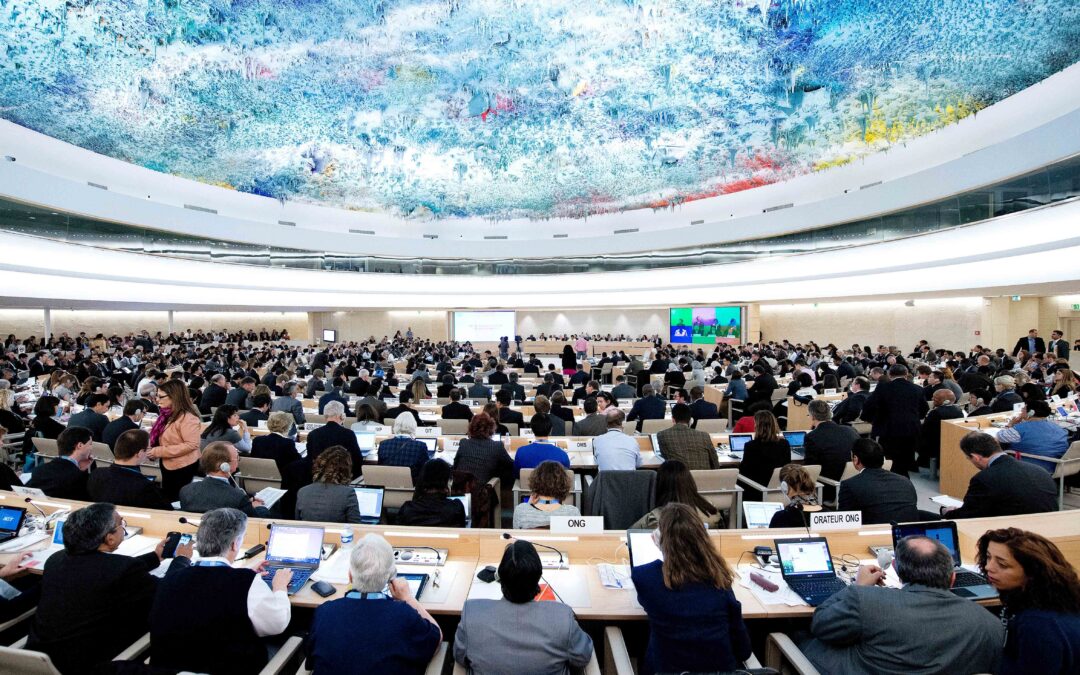
The ICJ today joined other NGOs in highlighting key outcomes of the 38th ordinary session of the UN Human Rights Council.
The statement, delivered by International Service for Human Rights (ISHR) at the end of the session, read as follows (text in italics was not read aloud due to the limited time available):
“Our organisations welcome the adoption of the resolutions on civil society space, peaceful protest, on violence against women and girls and on discrimination against women and girls and the Council’s rejection of attempts to impede progress on protecting civic space, peaceful protest and the rights to sexual and reproductive health.
On civil society space, the resolution recognizes the essential contribution that civil society makes to international and regional organisations and provides guidance to States and organisations on improving their engagement with civil society. On peaceful protest, it sets out in greater detail how international law and standards protect rights related to protests.
On violence against women and on discrimination against women, we consider that ensuring sexual and reproductive health and rights are vital in efforts to combat violence and discrimination against women, online and offline, as well as to ensure targeted and specific remedies to victims. We appreciate that the work of women human rights defenders towards this is recognised.
We consider the adoption of the resolution on the contribution of the Council to the prevention of human rights violations as an important opportunity to advance substantive consideration on strengthening the Council’s ability to deliver on its prevention mandate.
Following challenging negotiations, we welcome the adoption by consensus of the resolution on human rights and the Internet, reaffirming that the same rights that people have offline must also be protected online, and calling on States to tackle digital divides between and within countries, emphasising the importance of tools for anonymity and encryption for the enjoyment of human rights online, in particular for journalists, and condemning once more all measures that prevent or disrupt access to information online.
We welcome continued Council attention to Eritrea‘s abysmal human rights record. This year’s resolution, while streamlined, extends expert monitoring of, and reporting on, the country and outlines a way forward for both engagement and human rights reform. We urge Eritrea to engage in long-overdue meaningful cooperation.
We welcome the renewal of the mandate of the Special Rapporteur on Belarus under item 4 with an increased vote – as it is still the only independent international mechanism to effectively monitor human rights violations in Belarus – while remaining concerned over a narrative to shift the mandate to item 10 in the absence of any systemic change in Belarus.
We welcome the consensus resolution on the DRC, putting in place continued monitoring and follow up on the expert’s recommendations on the Kasais. However, given violations and abuses throughout several regions in the country, occurring against the backdrop of an ongoing political crisis, delayed elections, and the brutal quashing of dissent, we urge the Council to promptly move towards putting in place a country-wide mechanism that can respond to events on the ground as they emerge.
We welcome the strong resolution on Syria, which condemns violations and abuses by all parties, and appropriately addresses concerns raised by the COI about the use of chemical weapons, sexual and gender-based violence, and the need to address situations of detainees and disappearances. The Council cannot stay silent in the face of continued atrocities as the conflict continues unabated into its seventh year.
We welcome the joint statements delivered this session on Cambodia, the Philippines, and Venezuela. We urge Council members and observers to work towards increased collective action to urgently address the dire human rights situations in these countries.
On the Philippines, we emphasise that the Council should establish an independent international investigation into extrajudicial killings in the ‘war on drugs’ and mandate the OHCHR to report on the human rights situation and on moves toward authoritarianism.
The joint statement on Cambodia represents a glimmer of hope after the Council’s failure to take meaningful action against clear sabotage of democratic space ahead of elections. Close scrutiny of the human rights situation before, during and after the elections is paramount and the Council must take immediate action on current and future human rights violations in this regard.
We welcome the joint statement delivered by Luxembourg calling on the HRC President to provide oral updates on cases of alleged intimidation or reprisal, including actions taken, at the start of the Item 5 general debate of each Council session and also provide States concerned with the opportunity to respond.
Finally, the new Council member to replace the United States of America should demonstrate a principled commitment to human rights, to multilateralism and to addressing country situations of concern by applying objective criteria.
Signatories:
- Asian Forum for Human Rights and Development (FORUM-ASIA)
- The Association for Progressive Communications
- The Center for Reproductive Rights (CRR)
- CIVICUS: World Alliance for Citizen Participation
- DefendDefenders (the East and Horn of Africa Human Rights Defenders Project)
- Human Rights House Foundation (HRHF)
- International Commission of Jurists (ICJ)
- The International Lesbian, Gay, Bisexual, Trans and Intersex Association (ILGA)
- International Service for Human Rights (ISHR)
Jul 5, 2018 | Advocacy, Non-legal submissions
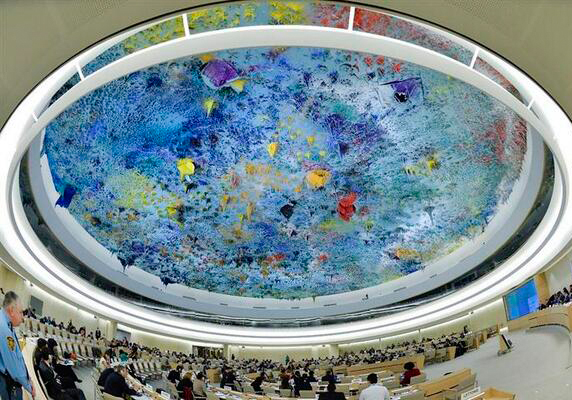
The ICJ today joined other NGOs in urging open discussion and debate about countries at the UN Human Rights Council in Geneva, including in discussions of cooperation, despite attempts by some States to interrupt and suppress debate.
The statement was delivered in a General Debate on items 2 and 10 of the Council, by Asian Forum for Human Rights and Development (FORUM-ASIA) on behalf of the group of NGOs. It read as follows:
“Thank you, Mr. President. While we appreciate the importance of technical cooperation, we wish to stress that a debate on technical cooperation will be incomplete if it does not address non-cooperation and country situations that have worsened despite technical cooperation. We are alarmed by efforts to restrict discussion on such situations by some states under Agenda Item 10, including for instance by (the Bolivarian Republic of) Venezuela earlier today.
While we recognise that all delegations including NGOs are required to speak on the topic under discussion, we are deeply concerned when NGOs making relevant statements are interrupted and not given a chance to explain the relevance of their statement, and in some cases are even prevented from finishing the statement. This has happened even when an NGO is speaking specifically on concerns addressed by UN reports listed for discussion in the relevant debate. Statements on Cambodia during the March session of the Council are recent examples.
The concept of international cooperation should never be invoked to shut down any criticism of human rights situations in individual countries. Cooperation cannot succeed without accountability. To be effective, debates on technical assistance and capacity building must be open to frank discussion of the true gravity, character and extent of on-going violations in the country in question, as well as the impact or lack of impact of any assistance already undertaken.
Thank You”
Asian Forum for Human Rights and Development (FORUM-ASIA)
Cairo Institute for Human Rights Studies
Conectas Direitos Humanos
Freedom House
Human Rights House Foundation
Human Rights Watch
International Commission of Jurists
International Humanist and Ethical Union (IHEU)
International Service for Human Rights (ISHR)
Jul 4, 2018 | Advocacy, Non-legal submissions
The ICJ today urged accountability for and the need to address the root causes of violations of human rights of Rohingya people in Myanmar, at the UN in Geneva.
The statement was made in an interactive dialogue with the UN High Commissioner for Human Rights, on his oral update on the situation, at the Human Rights Council.
The statement read as follows:
“The Government of Myanmar is duty-bound to investigate, prosecute and punish perpetrators of human rights violations. Yet impunity at domestic level necessitates international action: to secure criminal accountability, to provide redress and to deter repetition of crimes under international law.
In May, the government announced a new inquiry into rights violations in Rakhine State. Its mandate, composition and legal framework remain unclear – and there is no indication this will be more effective than previous national inquiries – which have not shed light on the facts, have rarely led to prosecutions and have failed to provide redress.
Justice cannot be further delayed. The International Commission of Jurists supports calls for establishing an international accountability mechanism.
It is also imperative to address the laws and practices discriminating against Rohingyas and other minorities, particularly the 1982 Citizenship Law, as recommended by the government’s Rakhine Advisory Commission.
As a UN Member State, Myanmar must fully cooperate with all UN organs. This includes allowing access to the Special Rapporteur, and permitting the UN Human Rights Office to establish in the country with a full mandate.
Quiet diplomacy and downplaying human rights concerns have failed to improve the situation for Rohingyas. UN organs and envoys present in Myanmar must engage in frank and direct dialogue with the Government about ongoing human rights violations – consistent with the UN Charter and the Human Rights Up Front initiative.
Human rights violations are the root cause of this humanitarian crisis. There can be no voluntary and sustainable return of Rohingya refugees without addressing the sources of human rights violations.
Thank you.”
Jul 4, 2018 | News
The ICJ held a workshop in Mawlamyine on 3 July attended by religious leaders and youth activists from southern Mon State in Myanmar’s southeast.
The workshop aimed to facilitate discussion on strategic litigation options for communities adversely affected by existing and proposed investment projects.
The ICJ and civil society organizations have extensively documented how human rights abuses continue to occur in the context of business activities in Myanmar.
Communities generally have limited understanding of their rights, while government actors and businesses regularly flout their legal obligations.
The ICJ’s international legal adviser Sean Bain first set out applicable international standards, with a focus on the UN Guiding Principles on Business and Human Rights.
He identified Myanmar’s nascent legal framework for environmental protection as a key area of law with potential to deter rights abuses. He noted that while in December 2015 the Government of Myanmar issued the Environmental Impact Assessment Procedure, its provisions are rarely followed or enforced in practice.
Workshop participants, from two different areas of Mon State, shared experiences of community mobilization and ideas on how to use law to protect human rights.
Presentation on Corporate Social Responsibility
Prior to this workshop, also in Mawlamyine, on 29 June the ICJ’s legal adviser presented on Corporate Social Responsibility (CSR) at invitation of the national assembly of MATA, the Myanmar Alliance for Transparency and Accountability.
Introduced to Myanmar only in recent years, CSR activities are increasingly invoked by foreign and local companies as evidence of responsible investment.
But in reality, many companies doing CSR have been and continue to be involved in unlawful business activities, sometimes constituting human rights abuses.
Participants from different areas of Myanmar shared stories of businesses using CSR activities in a non-transparent way without accountability.
Cases were described where CSR has allegedly been associated with corruption, undermining trust and cohesion in communities affected by large investment projects.
The presentation from ICJ pointed out that while CSR activities are voluntary and without a specific legal framework, all businesses are subject to national law and should respect human rights in accordance with international law and standards, including the UN Guiding Principles.
Lawful conduct that respects human rights lies at the core of any responsible business, and CSR activities do not change these obligations.
These activities in Mon State are part of the ICJ’s ongoing support to civil society actors in Myanmar, from community-level up to national level actors.
Jul 4, 2018 | News
Today the ICJ called on Thai prosecutorial authorities to immediately end the prosecution of five persons associated with academic activities in Chiang Mai. The five have been made subject to prosecution solely for exercising their rights to free expression and assembly.
Those subject to prosecution include Pakawadee Veerapatpong, an independent writer and translator; Chaipong Samnieng, a PhD candidate at Chiang Mai University; Nontawat Machai, an undergraduate student at Chiang Mai University; Teeramon Bua-ngam, a Masters student at Chiang Mai University and news editor; and Dr. Chayan Vaddhanaphuti, a Professor at Chiang Mai University.
The ICJ also called for the revocation or amendment of all laws, orders and announcements inconsistent with Thailand’s international human rights obligations.
Today, the Region V Public Prosecutor in Chiang Mai province formally notified the five individuals that they would be prosecuted for violating HNCPO Order No. 3/2558 (2015) (‘HNCPO Order 3’) for merely expressing their opinions at an academic forum at Chiang Mai University in July 2017.
HNCPO Order 3 prohibits the gathering of five or more persons for political purposes, carrying a penalty of imprisonment not exceeding six months and/or a fine not exceeding 10,000 Baht.
“The ongoing and abusive use of HNCPO Order 3 to stifle free expression in Thailand remains indefensible and an obstacle to the full restoration of the rule of law in Thailand,” said Kingsley Abbott, Senior Legal Adviser at the ICJ.
“The decision to indict these five individuals is clearly in breach of Thailand’s international human rights obligations and should be reversed immediately together with the termination of the proceedings and the revocation of HNCPO Order 3,” he added.
The Public Prosecutor’s decision to indict the five was made against a backdrop of recently increasing repression of fundamental freedoms in the country.
This year alone, at least 132 persons were reportedly charged under HNCPO Order 3 in 10 cases and six incidents in connection with a movement calling for elections to be held this year.
Twenty-seven of these individuals were also charged with a sedition-like offence, which carries a maximum penalty of seven years’ imprisonment.
Since the military coup of 22 May 2014, at least 378 persons have been reportedly charged in relation to 50 cases of violating the ban on political gatherings of five or more persons according to a report launched on 22 June 2018 by leading Thai NGO, Thai Lawyers for Human Rights (TLHR).
In March and June 2018, at the Human Rights Council, the ICJ called on Thailand to revoke or amend all laws, orders and announcements that are contrary to the rule of law and human rights protections.
“Four years have passed since the military coup resulting in numerous unjustifiable restrictions on fundamental freedoms – it is long past time for Thailand to undertake reform necessary to prevent the legal system from being misused to harass individuals who merely exercise their human rights,” said Abbott.
Contact
Kingsley Abbott, ICJ Senior International Legal Adviser, email: kingsley.abbott@icj.org
Background
The Region V Public Prosecutor’s decision in Chiang Mai province follows charges filed against the individuals by a military officer in 2017.
Pakawadee Veerapatpong, Chaipong Samnieng and Nontawat Machai had allegedly held up three A4-sized messages which read “an academic forum is not a military barracks” at the academic conference.
Teeramon Bua-ngam had reportedly taken a picture of himself standing next to the messages and posted the same on social media.
Dr. Chayan Vaddhanaphuti had reportedly watched the display of the messages without asking for them to be removed, despite being an organizer of the conference.
Thailand is a State party to the International Covenant on Civil and Political Rights (ICCPR). Articles 19, 21 and 22 of the ICCPR guarantee the rights to freedom of opinion and expression, freedom of peaceful assembly and freedom of association.
Since the military coup, the ICJ has expressed its concern about the use of a new legal framework and pre-existing laws to clamp down on the rights to freedom of expression, association and assembly, including criminal defamation (Articles 326-328 of the Thai Criminal Code), the Computer-Related Crime Act B.E.2550 (2007), a sedition-like offence (Article 116 of the Thai Criminal Code), and HNCPO Order 3.
Read also
ICJ and TLHR Joint Submission to the UN Human Rights Committee, 13 February 2017
ICJ and TLHR Joint Follow-up Submission to the Human Rights Committee, 27 March 2018
Thailand-Academics indicted-News-Web Story-2018-THA (story in Thai, PDF)