Jul 24, 2018 | Advocacy, Open letters
The ICJ has submitted recommendations to Thailand’s Criminal Justice Reform Committee concerning the Draft Amending Criminal Procedure Code Act and the Draft Act On Judicial Process Timeframe, which were scheduled for public consultation today.
The ICJ welcomed the Criminal Justice Reform Committee’s efforts to enhance the effectiveness and fairness of the criminal justice system in Thailand, through proposed amendments to Thailand’s Criminal Procedure Code B.E. 2551 (2008) and the Judicial Process Timeframe Act.
The ICJ noted, however, that modifications would be necessary to some of these amendments to ensure they optimally served the ends of justice and were in conformity with international standards.
In particular, the ICJ commended the Committee’s inclusion within the Draft Amending Criminal Procedure Code Act of the following provisions and made recommendations as to how these provisions could be further strengthened:
- Section 13/1. Video and audio recordings of arrests and/or searches
- Section 13/2. Prohibitions against violation of the presumption of innocence
- Sections 121/2, 123 and 124/2. Lodging of criminal complaint with the public prosecutor, at any location and through email or other online medium
- Section 136. Video and audio recordings of inquiry or interrogation
- Section 161/1. Right of the court to dismiss a case where it is filed in bad faith or with misrepresentation of facts in order to harass or take advantage of a defendant
- Section 165/1. Allowing the defendant to submit a defence plea and produce supporting evidence in court
- Section 179/1. Trial in absentia
Contact
Kingsley Abbott, ICJ Senior Legal Adviser, e: kingsley.abbott(a)icj.org
Full letter in English (PDF): Thailand-CPC-Amendments-Advocacy-Open-letters-2018-ENG
Full letter in Thai (PDF): Thailand-CPC-Amendments-Advocacy-Open-letters-2018-THA.pdf
Jul 15, 2018 | News
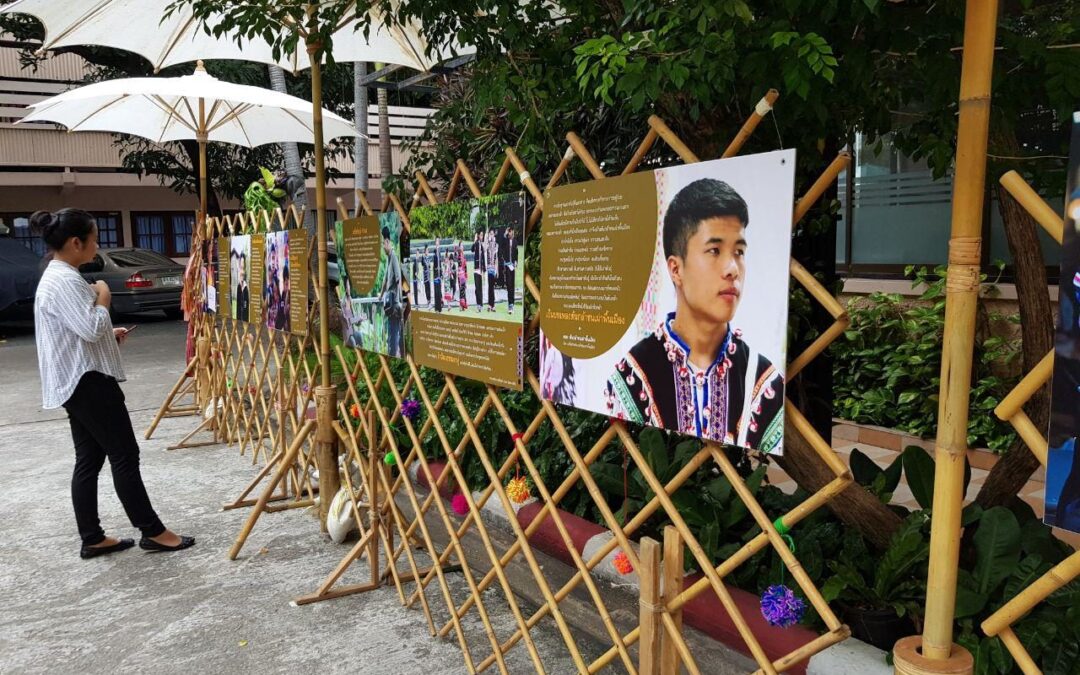
On 14 July 2018, the ICJ co-organized a discussion on extrajudicial killings in Thailand, focusing on the cases of Chaiyaphum Pasae and Abe Saemu.
The discussion was held at the Student Christian Centre in Bangkok.
Chaiyaphum Pasae, a Lahu youth activist, was killed by a military officer in the Chiang Dao district of Thailand’s northern Chiang Mai province in March 2017. The killing took place during an attempt to arrest him as an alleged drug suspect. Officials claimed Chaiyaphum Pasae had resisted arrest and was subsequently shot in “an act of self-defence”.
Abe Saemu, from the Lisu hill tribe, was killed by a military officer in February 2017 in the Chiang Dao district of Chiang Mai province in an attempt to arrest him on allegations of drug coffences. Officials claimed Abe Saemu had resisted arrest and was killed in “self-defence”.
During the discussion, ICJ’s National Legal Adviser Sanhawan Srisod addressed the audience to set out the international law and standards that apply to investigating potentially unlawful deaths, including the rights of victims and family members, referring to the standards set out in the revised Minnesota Protocol on the Investigation of Potentially Unlawful Death (2016), which was launched in Thailand on 25 May 2017.
Participants in the event included members of the families of Chaiyaphum Pasae and Abe Saemu, the lawyers in both of their cases, interested members of the public, media representatives, students and academics.
The discussion opened with an art exhibition and Lahu dance show by the Save Lahu group. Human Rights Commissioner Angkhana Neelapaijit then made a presentation on challenges in seeking accountability for extrajudicial killings in Thailand.
A panel discussion on the latest updates in the cases of Chaiyaphum Pasae and Abe Saemu followed, moderated by Pranom Somwong from Protection International.
The panel included relatives of Chaiyaphum Pasae and Abe Saemu; Ratsada Manuratsada, a lawyer representing the families in both cases and Krissada Ngamsiljamras, a representative from the National Human Rights Commission of Thailand.
A second panel considered challenges on the administration of criminal justice in the context of unlawful deaths.
Moderated by Pratubjit Neelapaijit of UN Office of the High Commissioner for Human Rights, the panel included Malee Sittikreangkrai (Chiang Mai University); Sumitchai Hattasan (Human Rights Lawyers’ Association); Namtae Meeboonsalang (Provincial Chief Public Prosecutor, Office of the Attorney-General); Kritin Meewutsom (Forensic doctor, Ranong Hospital); and Sanhawan Srisod (ICJ).
The event was conducted in collaboration with Cross Cultural Foundation (CrCF); Protection International (PI); UN OHCHR; Human Rights Lawyers’ Association (HRLA); Thai Volunteer Services (TVS); Dinsorsee Creative Group; Center for Ethnic Studies and Development, Chiang Mai University (CESD); Legal Research and Development Center, Chiang Mai University (LRDC) and Network of Indigenous Peoples in Thailand (NIPT).
Contact
Kingsley Abbott, Senior Legal Adviser, ICJ Asia Pacific Regional Office, kingsley.abbott(a)icj.org
Jul 12, 2018 | Advocacy, Non-legal submissions
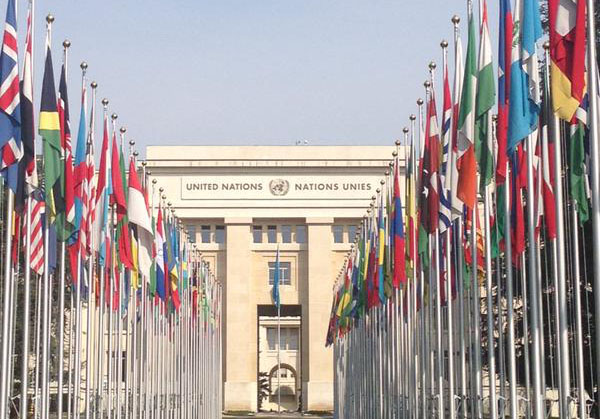
Today, the ICJ filed a submission to the Human Rights Council’s Working Group on the Universal Periodic Review in advance of its review of Cambodia’s human rights record in January/February 2019.
In its submission, the ICJ expressed concern about the following issues:
(1) Misuse of the law under the false pretext of the ‘rule of law’; and
(2) Lack of an independent and impartial judiciary.
The ICJ further called upon the Human Rights Council and the Working Group on the Universal Periodic Review to recommend to the Cambodian authorities to:
(i) Repeal or amend domestic laws to bring them in line with Cambodia’s international human rights obligations;
(ii) Repeal or amend domestic laws to ensure the independence of the judiciary and remove excessive powers granted to members of the Executive branch;
(iii) Abolish government-issued regulations or directives that contravene human rights protected under international human rights law;
(iv) Halt efforts to bring into force legislation drafted with the purpose of – or in any event –violating rights protected under international human rights law;
(v) End the prosecution of individuals on so-called lèse-majesté charges under the Cambodian Criminal Code and release individuals detained in connection with them;
(vi) End all use of legislation as a tool of harassment, intimidation or silencing of members of the political opposition, civil society, critical media, lawyers, prosecutors, judges and/or individuals;
(vii) Release all prisoners currently imprisoned or detained on politically motivated charges;
(viii) Uphold the right to fair trial of all persons, including of detained persons;
(ix) Take necessary measures to hold to account perpetrators of harassment, intimidation and violence against members of the political opposition, civil society, critical media, lawyers, prosecutors, judges and/or individuals for the legitimate exercise of their fundamental freedoms;
(x) Take necessary measures, in law and in practice, to guard against legal harassment of lawyers, prosecutors and judges on the basis of the political affiliations or agendas of their clients.
Contact
Kingsley Abbott, ICJ Senior Legal Adviser, e: kingsley.abbott(a)icj.org
Full submission in English (PDF) : Cambodia-UPR-Advocacy-Non legal-submission-July-2018-ENG
Jul 9, 2018 | News
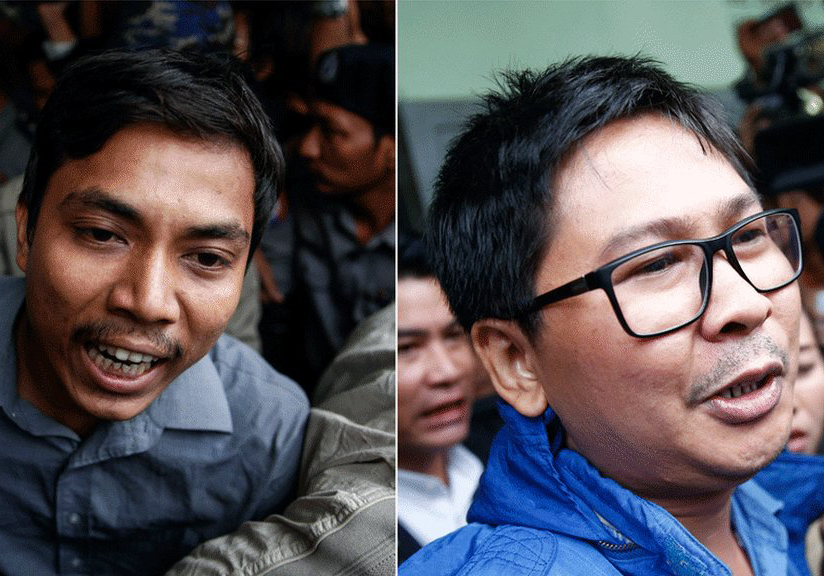
Today the ICJ called on Myanmar’s prosecutorial authorities to immediately end the prosecution of Reuters journalists Wa Lone and Kyaw Soe Oo.
The two have been subject to prosecution solely for doing their job as journalists and for exposing human rights violations in Rakhine State, including unlawful killings in Inn Dinn Village admitted to by the military.
In Yangon this morning a Northern District Court Judge accepted charges filed under the 1923 Official Secrets Act.
This decision permits ongoing prosecution of the journalists and extends their detention.
“The prosecution has failed to provide credible evidence of any wrongdoing throughout six months of hearings. It is therefore hard to imagine a valid legal rationale for allowing ongoing prosecution of the journalists,” said Mr Sean Bain, legal adviser for the ICJ in Yangon.
Section 253(1) of Myanmar’s Code of Criminal Procedure requires a judge to dismiss charges against accused persons if the evidence presented fails to warrant a conviction.
A motion for charges to be dismissed on this basis, submitted by defense lawyers, was effectively rejected by the decision today.
“Today’s decision raises real concerns about the independence and impartiality of the judiciary and prosecution when confronted with politically sensitive cases,” Bain said.
“The case significantly undermines the government’s stated commitments to reforming and building public confidence in judicial process,” he added.
ICJ legal advisers have monitored the case and were present in Court today. The journalists were first detained on 12 December 2017 and had no access to legal representation for almost two weeks.
“The case is also emblematic of the lack of adherence to fair trial rights in Myanmar,” Bain said.
“Their confinement remains unlawful given an initial period of incommunicado detention without access to lawyers, and other flagrant violations of the fair trial rights guaranteed in the Constitution, statues and international law.”
“Authorities should immediately end criminal proceedings against these men who appear to have been lawfully doing their job as investigative journalists,” he added.
The detention and prosecution of anyone, including journalists, based solely on the collection and publication of evidence relevant to serious human rights violations, is inconsistent with international law and standards on freedom of expression and on human rights defenders.
Article 14 of the 1990 UN Guidelines on the Role of Prosecutors states that prosecutors are obliged to discontinue prosecution when the investigation shows the charges to be unfounded.
Myanmar’s new Code of Ethics for Law Officers, launched in 2017, requires prosecutors to protect rights enshrined in the Constitution and to “provide a proper and fair administration of justice.”
The right to legal counsel is a bedrock rule of law principle that is set out in a range of international human rights laws and standards, including in article 11 of the Universal Declaration of Human Rights. Sections 19 and 375 of the Myanmar Constitution guarantee the right of legal defense, as does Myanmar’s Code of Criminal Procedure (section 340), Courts Manual (section 455(1)), the Police Manual (section 1198c) and the Prisons Act (section 40).
Fair trial rights, freedom of expression, and the right to liberty are also recognised by the Universal Declaration of Human Rights.
Also relevant are the UN Declaration on Human Rights Defenders, and the Global Principles on National Security and the Right to Information (The Tshwane Principles).
Contact:
Sean Bain, ICJ legal adviser, e: sean.bain(a)icj.org
Read also:
ICJ (May 2016), Handbook on Habeas Corpus in Myanmar – English and Burmese
ICJ (December 2017), Reuters Journalists in Myanmar: respect their rights, end their incommunicado detention – English and Burmese
Full text in Burmese (PDF): Myanmar-drop-charges-against-Reuters-journalists-News-Press-releases-2018-BUR
Jul 9, 2018 | News
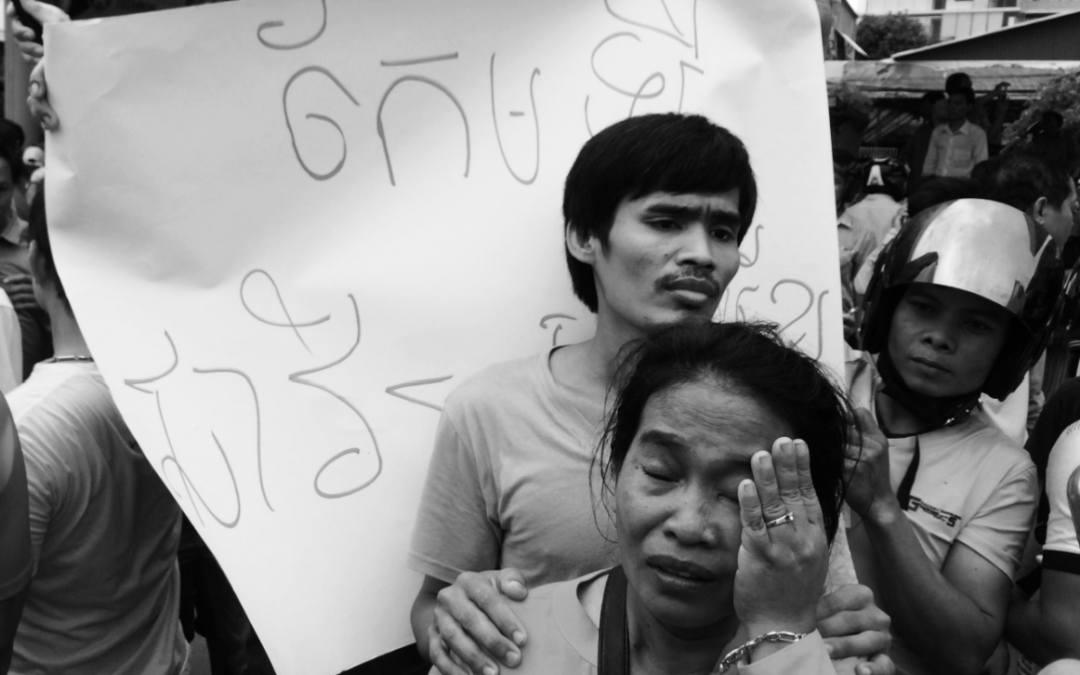
Today, in advance of the second anniversary of the killing of political commentator and human rights defender, Kem Ley, the ICJ reiterates its call for the creation of a independent and impartial Commission of Inquiry to investigate his killing.
The ICJ remains deeply concerned at the apparent lack of progress in investigating the case, as well as the inadequacy of the investigation and prosecution of Oeuth Ang, the only person yet charged or convicted in relation to Kem Ley’s killing.
“The trial of Oeuth Ang left many unanswered questions about the investigation and the killing itself which Cambodia has an duty to resolve as part of the family and public’s right to know the truth,” said Kingsley Abbott, Senior Legal Adviser at the ICJ, who attended the trial.
“The fact that the killing occurred against the backdrop of escalating attacks against human rights defenders and the political opposition and in the context of a history of well-documented apparent extra-judicial killings makes the establishment of an independent and impartial Commission of Inquiry all the more pressing.”
On 7 July 2017, ahead of the one-year anniversary of Kem Ley’s killing, the ICJ and other organizations released a joint letter highlighting crucial concerns about the lack of progress in the investigation of his case, and calling on the Cambodian Government to establish a Commission of Inquiry to carry out an independent, impartial, effective and transparent investigation in line with international law and standards.
These include the International Covenant on Civil and Political Rights and the revised Minnesota Protocol on the Investigation of Potentially Unlawful Death (2016).
Background
At approximately 08:30 on 10 July 2016, Kem Ley, a prominent political commentator and human rights defender, was shot and killed at a petrol station on Monivong Boulevard in Phnom Penh.
Soon afterwards, Cambodian police arrested a suspect approximately two kilometers from the crime scene. The suspect identified himself as “Chuob Samlab”, from Banteay Meanchey province. “Chuob Samlab” means “Meet to Kill” in Khmer.
In a leaked video, “Chuob Samlab” reportedly “confessed” to shooting Kem Ley over a debt the political commentator allegedly owed him – a fact reportedly disputed by Kem Ley’s widow and “Chuob Samlab”’s own wife.
“Chuob Samlab” was later identified as Oeuth Ang from Siam Reap province, according to identity records.
On 23 March 2017, the Phnom Penh Municipal Court found Oeuth Ang guilty of the premeditated murder of Kem Ley on 10 July 2016 and sentenced him to life imprisonment.
The ICJ observed the trial which took place on 1 March 2017, following which it identified eight significant gaps in the investigation which had not been adequately addressed at trial.
Following the verdict, Oeuth Ang’s lawyer told journalists the court had created a new case-file to investigate two men named Pou Lis and Chak who may be relevant to the killing of Kem Ley.
Very little information has been revealed publicly about these possible new case-files.
Oeuth Ang appealed his sentence and, on 4 May 2018, the Court of Appeal reportedly heard the appeal.
There are no reports yet of a judgment being delivered.
Pursuant to international law binding on Cambodia, including the International Covenant on Civil and Political Rights (ICCPR) to which Cambodia is a State Party, Cambodia has a duty to promptly, independently, impartially, and effectively investigate all deaths suspected of being unlawful.
Investigations must seek to identify not only direct perpetrators but also all others who may have been responsible for criminal conduct in connection with the death.
Principle 11 of the UN Principles on the Effective Prevention and Investigation of Extralegal, Arbitrary and Summary Executions calls for the establishment of a Commission of Inquiry when ‘the established investigative procedures are inadequate because of lack of expertise or impartiality, because of the importance of the matter or because of the apparent existence of a pattern of abuse, and in cases where there are complaints from the family of the victim about these inadequacies.’
Read also
ICJ et al, ‘Cambodia: request to create a commission of inquiry into the killing of Kem Ley’
ICJ, HRW, Amnesty International, ‘Cambodia: Significant Questions Remain After Guilty Verdict in Kem Ley Trial’
ICJ, ‘Cambodia: Kem Ley’s killing demands immediate credible and impartial investigation’
Contact
Kingsley Abbott, ICJ Senior Legal Adviser, e: kingsley.abbott(a)icj.org