Aug 23, 2018 | News
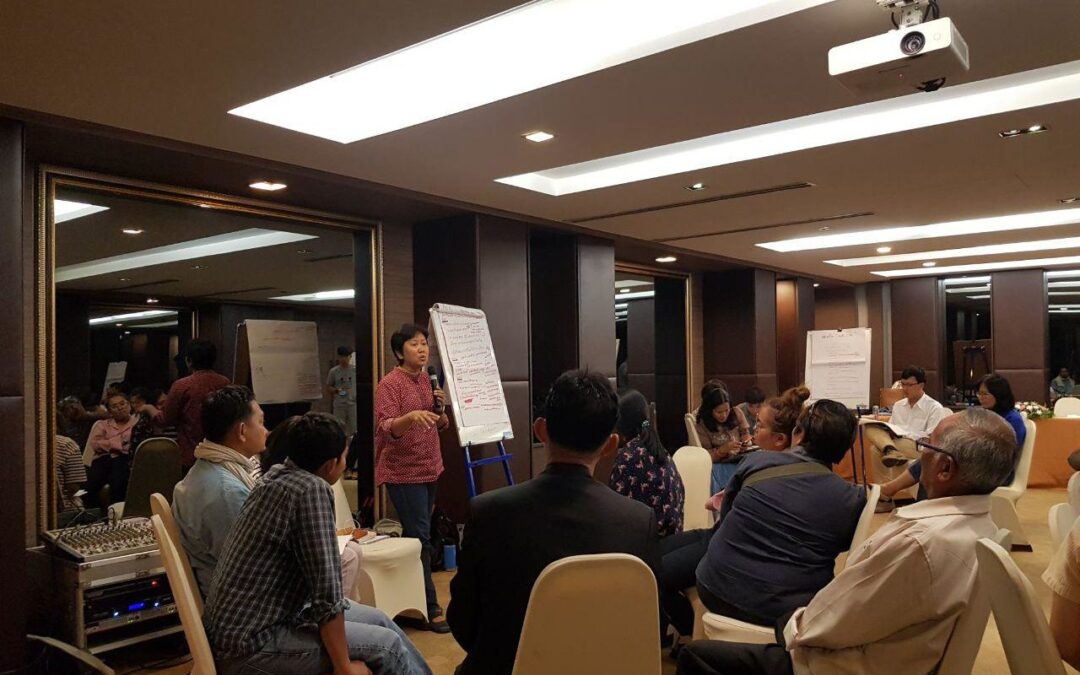
On 22 August, the ICJ co-organized a preparatory discussion in Bangkok for civil society organizations on Thailand’s National Action Plan on Business and Human Rights (NAP).
This event was organized one day in preparation for a formal NGO consultation event on the NAP held today.
The formal NGO consultation event was organized by the National Human Rights Commission of Thailand (NHRCT) to consider the draft NAP released by Thailand’s Ministry of Justice’s Rights and Liberties Protection Department (RLPD) in August 2018.
The ICJ hosted the preparatory discussion jointly with Community Resource Centre Foundation (CRC), Amnesty International Thailand (AI Thailand), Protection International (PI), Fortify Rights and the United Nations’ Office of the High Commissioner for Human Rights (OHCHR).
Thirty members of civil society organizations from all across Thailand attended the preparatory discussion.
Of these participants, four persons from the North of Thailand were supported by the ICJ to attend the discussion, including Ms. Arisara Lekkam, Lecturer of Law at Mae Fah Luang University in Chiang Rai, who was also a speaker at the event.
The event began with a presentation about the NAP and business and human rights issues in Thailand, during which Arisara Lekkam provided an overview of the business and human rights situation in Thailand.
Following the presentation, participants divided into groups to discuss four prioritized areas covered by the NAP: Labour, Land and Natural Resources, Human Rights Defenders and Cross-Border Investment.
At the end of the discussion, each group presented a set of recommendations on the draft NAP pertaining to each prioritized area. These recommendations will be provided to the Ministry of Justice’s RLPD.
This is the third event the ICJ has held on business and human rights in collaboration with partners from the North of Thailand.
On 22 November 2017, the ICJ, in collaboration with Chiang Mai University’s Faculty of Law, held a roundtable discussion on human rights litigation concerning special economic zones in Myanmar and Thailand.
Between 29 and 31 July 2017, the ICJ, in collaboration with Chiang Mai University’s Faculty of Law, held a workshop on ‘Introduction to Business and Human Rights & Basic Principles on Documenting Human Rights Violations” for 25 academics, NGO representatives and lawyers in Chiang Mai.
Background
During the second Universal Periodic Review of Thailand in May 2016, the Royal Thai Government accepted a recommendation to develop, enact and implement a national action plan on business and human rights in order to implement the UN Guiding Principles on Business and Human Rights.
In August 2018, Thailand’s Ministry of Justice’s RLPD, which is currently leading the development of the NAP, released a revised ‘zero draft’ of the NAP.
In line with the release of the revised ‘zero draft’, the NHRCT led the organization of a formal NGO consultation event on 23 August 2018, jointly with Thailand’s Ministry of Justice, Thailand’s Ministry of Foreign Affairs, United Nations Development Programme (UNDP) and OHCHR.
The Royal Thai Government reportedly plans to launch the NAP in September 2018.
Aug 13, 2018 | News
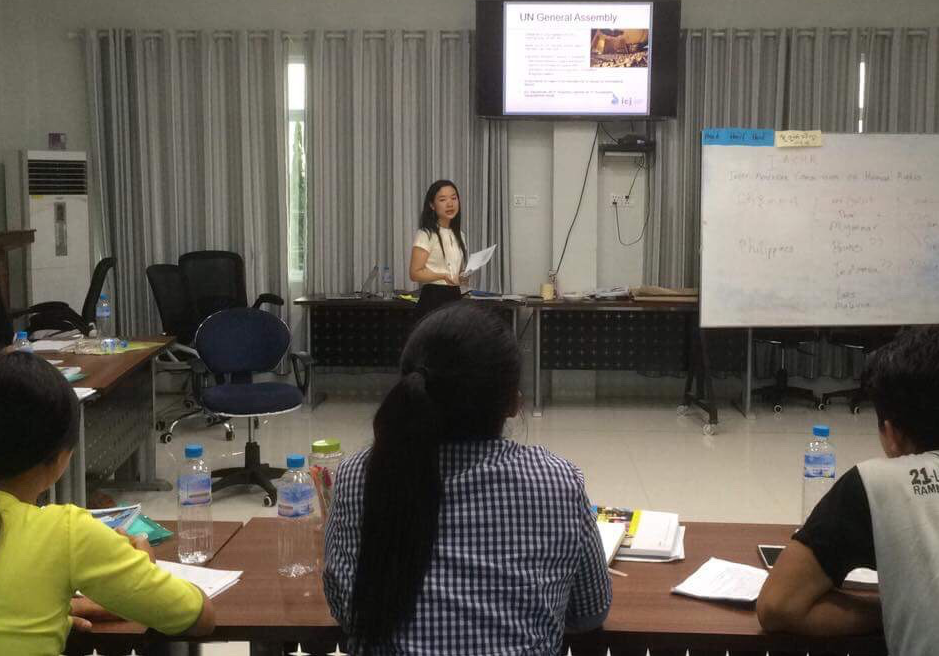
From 9-12 August, the ICJ-supported trainings on human rights and the law for lawyers, youths and activists from Kachin and Shan states in Myanmar’s north.
On 9 and 10 August, the ICJ joined a “training of trainers” organized by the Humanity Institute, a civil society organization based in Myitkyina.
This aims to improve the capacity of local youths and activists from Kachin and Northern Shan State on basic human rights concepts and measures to engage with Regional and UN Human Rights mechanisms.
The ICJ’s national legal researcher, Ja Seng Ing, shared information about the advantages and limitations of regional human rights mechanisms, including the Europe Commission of Human Rights and the ASEAN Commission of Human Rights. She provided an overview of the UN human rights framework and human rights mechanisms.
In addition to explaining how these work, she also focused on how human rights defenders can communicate with and participate in UN human rights mechanisms by reporting on human rights violations.
Then on 10 and 11 August, the ICJ facilitated a legal training for senior law students, and junior lawyers hosted by the Kachin Legal Clinic, an independent lawyers network.
The Kachin Legal Clinic seeks to develop a pool of young lawyers and with knowledge on the role of lawyers in the field of domestic and international human rights setting and the independence of the lawyers.
On the first day, a national legal adviser from the ICJ shared experiences of litigating for human rights in Myanmar. She also noted the critical role of independent lawyers in protecting human rights, by representing clients from all communities in different parts of Myanmar.
On the second day, Ja Seng Ing gave an overview of global and local law and standards and issues related to accountability and redress for gross human rights violations.
The ICJ’s international legal adviser, Sean Bain, gave an overview of international laws and standards related to the protection of human rights in times of conflict or crises, sourced from international human rights law as well as international humanitarian law and international criminal law.
These activities are part of the ICJ’s ongoing support to civil society actors in Myanmar, from community to national level.
Jul 27, 2018 | News
On 26 July 2018, the ICJ Secretary General, Sam Zarifi, met Myanmar’s Union Attorney General, U Tun Tun Oo.
The ICJ Legal Adviser Sean Bain and senior staff from the Union Attorney General’s Office (UAGO) joined the meeting in Nay Pyi Taw.
Rule of law developments in Myanmar were discussed, including progress integrating international standards into the work of the UAGO, such as the new “Code of Ethics for Law Officers”.
The participation of UAGO staff in the ICJ’s recent workshops on the Minnesota Protocol on the Investigation of Potentially Unlawful Deaths was another topic discussed.
Noting the UAGO’s stated reform commitments, Sam Zarifi renewed the ICJ’s call on Myanmar’s prosecution authorities to drop the charges against Wa Lone and Kyaw Soe Oo, two Reuters journalists, which do not appear to have a valid legal rationale.
Efforts to effectively prosecute the assassination of lawyer U Ko Ni were also discussed.
Sean Bain noted the UAGO’s efforts to draft an umbrella land law according to the government’s National Land Use Policy, and highlighted the importance of public participation and consultation in this process, to ensure compliance with Myanmar’s obligations under the International Covenant on Economic, Social and Cultural Rights.
The Attorney General thanked the ICJ for the organization’s ongoing honest advice and support for human rights.
The ICJ has worked with the UAGO since 2014 to provide assistance on prosecutorial independence and human rights in the context of Myanmar’s broader democratic reforms.
Jul 26, 2018 | News, Op-eds
An opinion piece by Kingsley Abbott, ICJ Senior Legal Adviser in Bangkok, Thailand.
Over recent decades, international observers have tended to view the human rights and political situation in Cambodia as a series of predictable cycles that does not warrant too much alarm.
The conventional wisdom has been that Prime Minister Hun Sen and his government routinely tightens their grip on the political opposition and civil society in advance of elections before relaxing it again after victory has been secured.
But that analysis is no longer valid.
The reason is simple: During the course of ensuring it will win the national election scheduled for this Sunday (29 July), Hun Sen’s ruling Cambodian People’s Party (CPP) has, since the last election, systematically altered the country’s constitutional and legal framework – and these changes will remain in place after the election has passed.
Through the passage of a slew of new laws and legal amendments inconsistent with Cambodia’s obligations under international law, and the frequent implementation of the law to violate human rights, the legal system has been weaponized to overwhelm and defeat the real and perceived opponents of the CPP, including the political opposition, the media, civil society, human rights defenders and ordinary citizens.
This misuse of the law is a significant development in the history of modern Cambodia and represents a determined move away from the vision enshrined in the historic 1991 Paris Peace Agreements that ended years of conflict and sought to establish a peaceful and democratic Cambodia founded on respect for human rights and the rule of law.
And it risks cementing the human rights and rule of law crisis that now exists within Cambodia for years to come.
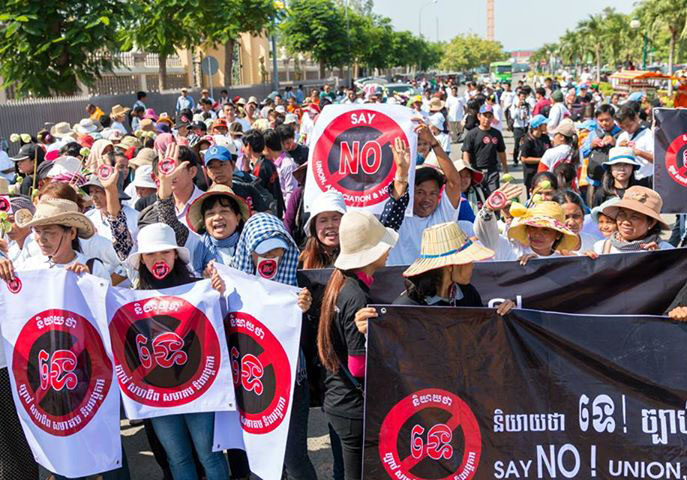
To facilitate the closure of civil society space, and contrary to international law and standards, in 2015 the Law on Associations and Non-Governmental Organizations (LANGO) was passed, which requires the mandatory registration of all NGOs and Associations, provides the government with arbitrary powers to deny or revoke registration, and places a vaguely worded duty on NGOs and associations to “maintain their neutrality towards political parties”.
The biggest blow to the political opposition has been the amendment last year of the Law on Political Parties (1997), amended twice within four months, which empowers the Supreme Court to dissolve parties, and four election laws, which permits the redistribution of a dissolved party’s seats in the country’s senate, national assembly, and commune and district councils.
Last November, the Supreme Court, presided over by a high-ranking member of the CPP, used the amended Law on Political Parties to dissolve the main opposition party, the Cambodia National Rescue Party (CNRP), which had received just under 44% of the vote – or about 3 million votes – in communal elections held in June 2017.
After the CNRP’s dissolution, the amended election laws were then used to redistribute CNRP seats at every level of government, from the commune to the senate, to the CPP and minor parties.
To silence the media, the country’s media and taxation laws have been invoked – local radio stations have been ordered to stop broadcasting Radio Free Asia and Voice of America “in order to uphold the law on media” and the independent Cambodia Daily was forced to close after being presented with a disputed US $6.3 million tax bill which the Daily claimed was “politically motivated” and not accompanied by a proper audit or good faith negotiations.
To curb the exercise of freedom of expression, the Constitution has received vaguely worded amendments placing an obligation on Cambodian citizens to “primarily uphold the national interest” while prohibiting them from “conducting any activities which either directly or indirectly affect the interests of the Kingdom of Cambodia and of Khmer Citizens”.
Meanwhile individual journalists, members of the political opposition including the CNRP’s leader, Kem Sokha, human rights defenders and an Australian documentary filmmaker have been charged with any number of a kaleidoscope of crimes ranging from intentional violence and criminal defamation to treason and espionage.
And Cambodia lacks an independent and impartial judiciary.
In 2014, three “judicial reform laws” were passed which institutionalized the prosecution and judiciary’s lack of independence from the executive.
At the same time, the government perversely uses the doctrine of the “rule of law” to justify its actions.
Just hours after the Supreme Court dissolved the CNRP, Hun Sen announced that the decision was made “in accordance with the rule of law.”
When members of the diplomatic community and senior UN officials meet government officials to express concern at the increasing misuse of the law they receive an absurdist legal lecture on the “importance of the rule of law”.
What is happening in Cambodia is the opposite of that.
The International Commission of Jurists, UN authorities and others have been defining the rule of law since the Universal Declaration of Human Rights was pronounced in 1948.
All agree that that the rule of law entails passing and implementing laws consistent with a country’s international human rights obligations.
It is time for the international community to recognize that a frank and fresh analysis of the situation in Cambodia is urgently required which acknowledges the way the country’s underlying legal and constitutional framework has been deliberately altered, and the way in which this will impact the country adversely long past this month’s election.
This acknowledgment must be accompanied by a coherent and, where possible, joint, plan of action that clearly sets out, with a timeline, what is required to bring Cambodia back on track with the agreed terms of the Paris Peace Agreements – including necessary legal and justice sector reforms – and the political and economic consequences for not doing so.
As long as Hun Sen’s Government deploys increasingly sophisticated justifications for its repressive actions, a more refined, multilayered and vigorous response from the international community is required – grounded on a proper application of the rule of law and Cambodia’s international human rights obligations.
Jul 26, 2018 | News
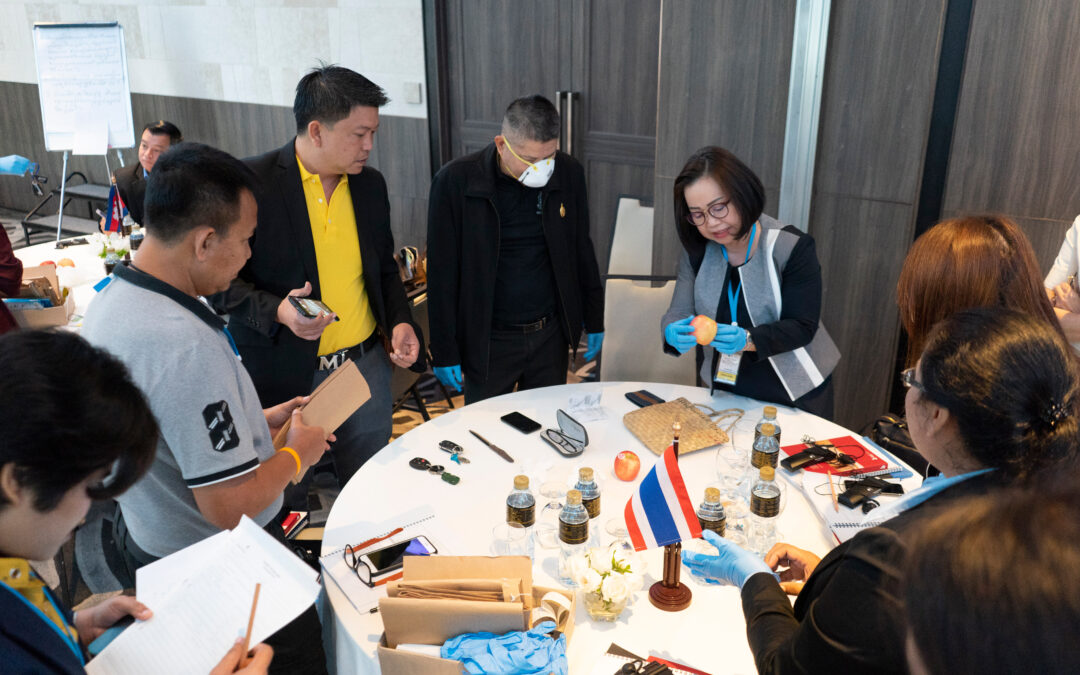
From 24 to 26 July 2018, the ICJ co-hosted a workshop for authorities from Thailand, Cambodia, and Myanmar.
The theme of the workshop was on conducting investigations of potentially unlawful deaths and enforced disappearance in accordance with international human rights law and standards.
The workshop was co-hosted with Thailand’s Ministry of Justice, the United Nations Office of the High Commissioner for Human Rights (OHCHR) and the New Zealand Embassy in Bangkok.
The participants included 25 criminal investigators, public prosecutors and representatives of the Cambodian Ministry of Justice and the Thai Ministry of Justice.
The event commenced with opening remarks by James Andersen, Deputy Head of Mission, Embassy of New Zealand in Bangkok; Aim-orn Siangyai, Deputy Director General of Thailand’s Rights and Liberties Protection Department, Ministry of Justice; Frederick Rawski, Asia Pacific Regional Director, ICJ; and Shivani Verma, Human Rights Officer, OHCHR Regional Office for South-East Asia.
Kingsley Abbott, Senior Legal Adviser at the ICJ, gave a summary of the international human rights legal framework that applies to the investigation of unlawful deaths and enforced disappearance.
He then provided an outline of the revised Minnesota Protocol on the Investigation of Potentially Unlawful Death (2016), which was launched in Thailand on 25 May 2017 and which formed the core of the materials used at the workshop.
Other speakers included Glenn Williams, Detective Inspector, Field Crime Manager, New Zealand Police National Headquarters, who addressed the investigation process including crime scene management; Sean Buckley, International Investigator, who addressed witness interviews; Shivani Verma of the Office of the High Commissioner for Human Rights who addressed Witness Protection; and Dr. Pornthip Rojanasunan, Adviser of Thailand’s Central Institute of Forensic Science (CIFS), who addressed the issue of forensic pathology.
This workshop followed three workshops the ICJ co-hosted between 5 to 8 December 2017 and 30 May to 1 June 2018 in Thailand on the investigation of potentially unlawful deaths and enforced disappearance for lawyers from Thailand and India, academics and State authorities from Thailand, Cambodia, Myanmar and Nepal.
Contact
Kingsley Abbott, Senior International Legal Adviser, ICJ Asia Pacific Regional Office, t: +66 94 470 1345, e: kingsley.abbott(a)icj.org