Dec 13, 2017 | News
The ICJ today urged the Government of Singapore to end the harassment of human rights defender Jolovan Wham and to amend laws used to restrict his work and the work of other human rights defenders.
Jolovan Wham is to appear at a pre-trial conference on seven criminal charges today. Jolovan Wham is a well-known human rights defender in Singapore who previously worked for a group that advocates for the rights of migrant workers and plays a leading role against the death penalty and the promotion of freedom of expression.
“These charges are not only an impermissible attack on Jolovan Wham individually, but human rights work more generally in Singapore,” said Sam Zarifi, Secretary General of ICJ.
“It is an unmistakable message to other human rights defenders that they may face the same harassment and intimidation if they continue their work,” he added.
Jolovan Wham was charged in connection with facilitating a Skype conference with Hong Kong human rights defender, Joshua Wong Chi-Fung, on “civil disobedience and democracy in social change”.
Other charges relate to his organizing peaceful public assemblies, allegedly without permits, to protest the death penalty and to commemorate the day when 16 individuals were arrested by Singapore authorities in 1987 and detained without trial under the country’s Internal Security Act (ISA).
He was also charged for refusing to sign statements prepared by police authorities when he was taken in for investigation on 28 November 2017.
Most of the charges against Jolovan Wham were for alleged violations of Section 7 of the Public Order Act, which makes an offence the holding of a public assembly or public procession without a permit.
The ICJ considers that aspects of Section 7, particularly as applied to the charges against Jolvan Wham, may serve to impermissibly restrict the exercise of the right to freedom of peaceful assembly in Singapore, which is protected under international standards.
“Singapore should immediately act to amend the Public Order Act with a view to ensuring that it is consistent with international human rights law and standards, particularly as they relate to the exercise freedoms of expression and assembly,” Zarifi said.
Under international law and standards, prior authorization of assemblies is generally inconsistent with the right to freedom of peaceful assembly, except for narrow exceptions.
The UN Special Rapporteur on the rights to freedom of peaceful assembly and association, in a 2012 report, clarified that prior authorization should generally not be necessary.
At most, it should require notification that is not unduly burdensome, so as allow the authorities to facilitate the exercise of the right to peaceful assembly and to take measures to protect public safety and public order and the rights and freedoms of others.
The Declaration on the Right and Responsibility of Individuals, Groups and Organs of Society to Promote and Protect Universally Recognized Human Rights and Fundamental Freedoms (Declaration on Human Rights Defenders), emphasizes the right of human rights defenders “to meet or assemble peacefully” and “to study, discuss, form and hold opinions on the observance, both in law and in practice, of all human rights and fundamental freedoms, and through these and other appropriate means, to draft public attention to those matters
Contact:
Emerlynne Gil, ICJ Senior International Legal Adviser, t: +66 840923575 ; e: emerlynne.gil(a)icj.org
Singapore-Wham harrassment-News-Press releases-2017-ENG (full story with additional info, in PDF)
Dec 8, 2017 | News
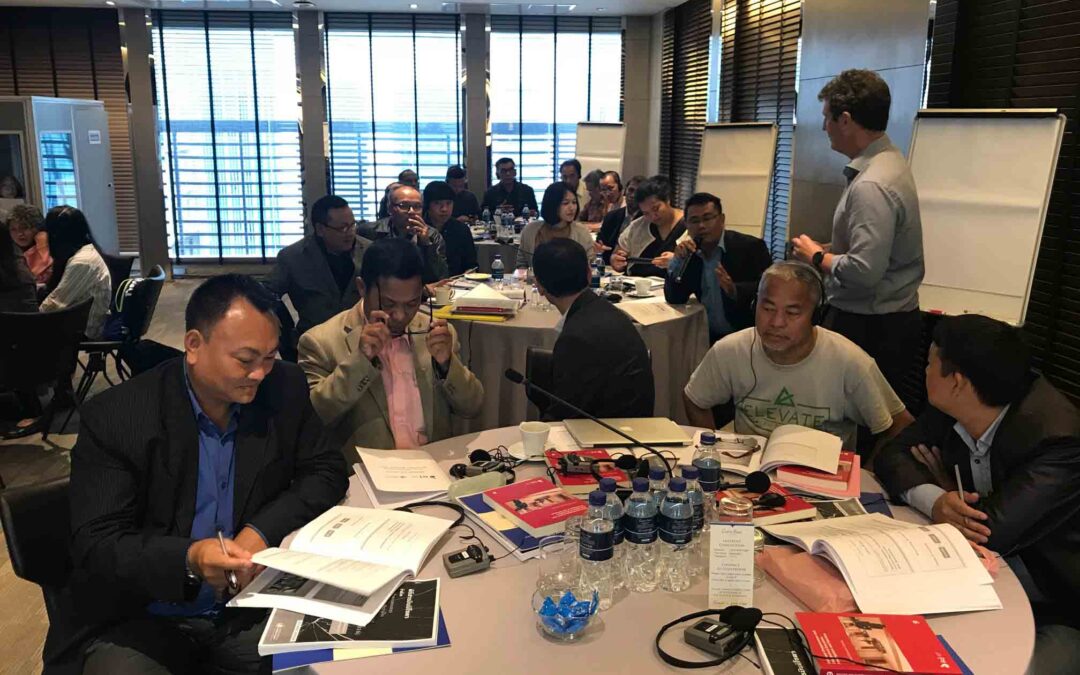
From 5 to 8 December 2017, the ICJ co-hosted two workshops – the first one for lawyers with the UN Office of the High Commissioner for Human Rights (OHCHR) and the second one for authorities in Thailand – on the investigation of potentially unlawful deaths and enforced disappearance.
The first workshop’s attendees included 17 lawyers and academics from Thailand and eight lawyers from India.
Participants in the second workshop included 26 participants from Thailand’s Ministry of Justice, Department of Special Investigation (DSI), Royal Thai Police, Office of the Attorney-General, Ministry of Defence, Ministry of Interior, Southern Border Province Administration Centre and the National Human Rights Commission of Thailand.
The first event commenced with opening remarks by OHCHR Human Rights Officer and Thailand team coordinator, Imesh Pokharel, and Frederick Rawski, the ICJ’s Regional Director for Asia and the Pacific.
Aem-on Siang-Yai, Director of the Office of Rights and Freedoms Protection from the Rights and Liberties Protection Department of Thailand’s Ministry of Justice made additional opening remarks in the second event.
In both workshops, Kingsley Abbott, Senior International Legal Adviser for Southeast Asia at the ICJ provided an introduction to the revised Minnesota Protocol on the Investigation of Potentially Unlawful Death (2016), which was launched in Thailand on 25 May 2017; ICJ Practitioners Guide No 9 – Enforced Disappearance and Extrajudicial Execution: Investigation and Sanction (2015, in English, Spanish and Thai); and the international legal framework governing investigations into unlawful deaths, noting that Thailand has legal obligations including under its Constitution and the International Covenant on Civil and Political Rights (ICCPR), to which it is a State Party, to respect, protect and fulfil the right to life.
These obligations entail a duty to ensure investigations into potentially unlawful deaths are independent, impartial, effective, thorough and transparent.
Sean Buckley of OSACO Group, former New Zealand Police Detective and now an independent, international, investigative specialist with more than 20 years of investigations experience including more than seven years with the United Nations (including at the Special Tribunal for Lebanon and the United Nations High Commissioner for Refugees), provided in both events a technical training on a range of topics relevant to investigations using the revised Minnesota Protocol as a guide.
Kingsley Abbott was a member of the Forensics and Legal Working Groups which assisted with the revision of the Minnesota Protocol, while Sean Buckley was a member of the Advisory Panel.
The workshops focused on investigation techniques of potentially unlawful deaths, including controlling the crime scene, preserving the security of evidence and ensuring the safety of all parties involved in investigations, including witnesses, investigators and family members of victims.
The workshops also covered witness identification and interview techniques, collection of DNA evidence, drafting of investigation reports and crime file management.
Sean Buckley shared with participants different means of international assistance available for investigations of potentially unlawful deaths.
The Workshop also covered the collection and potential use of telecommunications evidence.
Sean Buckley and Imesh Pokharel presented on the interview and protection of witnesses.
Thailand and India are both state parties to the ICCPR.
Contact
Kingsley Abbott, ICJ Senior International Legal Adviser for Southeast Asia, kingsley.abbott(a)icj.org
Dec 5, 2017 | Advocacy, Non-legal submissions
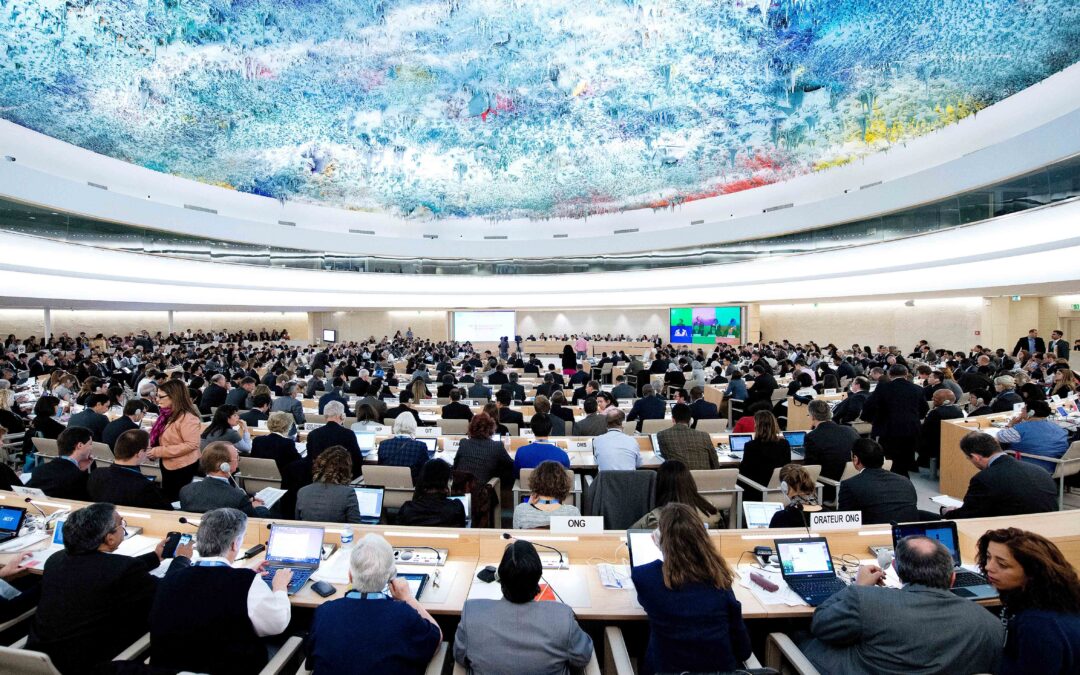
The ICJ today addressed an emergency Special Session of the UN Human Rights Council on Myanmar, outlining key requirements for the protection of the Rohingya minority, including safe and voluntary return of refugees.The Special Session is expected to adopt a resolution to address “The human rights situation of the minority Rohingya Muslim population and other minorities in the Rakhine State of Myanmar.”
The ICJ statement read as follows:
“It is encouraging that the Governments of Bangladesh and Myanmar have recognized the right of displaced Rohingya to return to their places of residence.
However, any provisions for return must comply with international law, including as regards non-refoulement. Effective guarantees that all displaced persons will be able to return to their place of prior residence in a safe, dignified, voluntary and sustainable manner, without discrimination, are essential.
Rohingya refugees must also be provided with alternatives to return, including the option of seeking international protection. Anything short of this would amount to their forcible return and thus violate the non-refoulement principle.
It is of the utmost urgency that the gross and systematic violations that have given rise to the forced displacement are immediately brought to an end and that measures are taken to prevent their recurrence, including by holding perpetrators responsible.
No-one may be forcibly returned to the current circumstances that prevail in Rakhine State, and voluntary returns will only ultimately take place if and when refugees are satisfied they are not returning to further violations in Myanmar.
Any provisions for restrictions on freedom of movement upon return are also of concern, particularly given past experience, with internment camps housing tens of thousands of Muslims displaced in 2012 still in place. Such restrictions elsewhere in Rakhine State contribute to violations of, among other things, the human rights to life, to health, to food, to education and to livelihoods.
To ensure that the rights of refugees are respected and protected, Bangladesh and Myanmar should immediately seek to ensure that UNHCR is involved, and its guidance followed, in any discussion of repatriation processes.
The Government of Myanmar must cooperate with the UN-mandated Fact Finding Mission to independently establish facts and provide a proper foundation for effective responses to human rights violations and humanitarian crises in Rakhine State, as well as in Shan and Kachin States, whose populations also face related patterns of human rights violations by military and security forces.”
The Council adopted a resolution at the end of the session, which reflects many of the concerns raised by the ICJ and others: A_HRC_S_27_L1
Nov 30, 2017 | News
The ICJ addressed representatives of over 400 civil society organizations from all 14 states and regions of Myanmar at the MATA Forum held in the township of Pyin Oo Lwin, close to Mandalay.
Hosted from 28 to 30 November by the Myanmar Alliance for Transparency and Accountability (MATA), the Forum featured seminars and discussions on the ‘The Role of Civil Society Organizations related to Democracy, Federalism, Human Rights and Natural Resource Governance.’
MATA facilitated presentations and discussions by a range of actors on these topics – including by Sean Bain, an International Legal Adviser from the ICJ.
The ICJ’s presentation began with a reflection about key legal concepts, noting the differences between ‘rule by law’ and ‘rule of law’ as understood in the Myanmar context.
MATA members helped facilitate discussion on the application of law in Myanmar, and on key rule of law principles of democracy, human rights, accountability, transparency and justice.
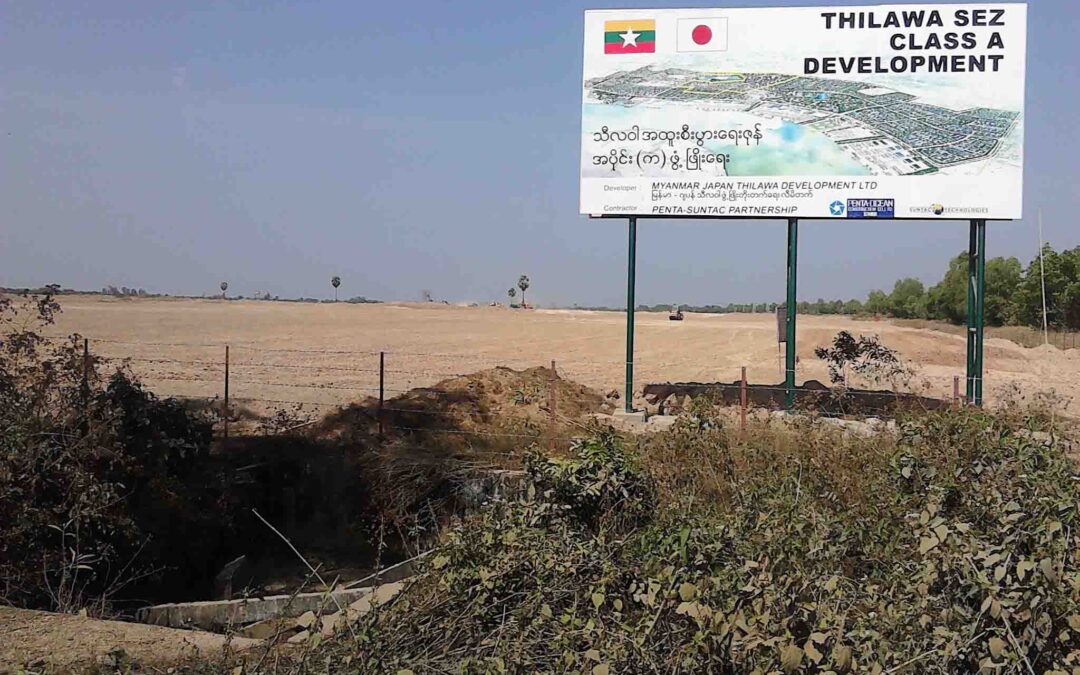
Participants in the Forum were presented with an overview of Myanmar’s laws governing land and investment, assessed in relation to the State’s international legal obligations to respect and to protect human rights.
In particular, Myanmar ratified the International Covenant on Economic, Social and Cultural Rights in October 2017 and its obligations under this treaty will enter into force on 6 January 2018.
It was noted that many national laws – including a proposed new Land Acquisition Bill – fall short on fulfilling the State’s international human rights law obligations.
There was also discussion about how applying the principle of non-discrimination in law and practice is critical for Myanmar’s NLD-led government to meet its international obligations and fulfill its stated commitment to rule of law.
Historical examples were given of legal regimes in South Africa and Australia that legalized discriminatory practices of apartheid and the dehumanization of indigenous peoples. The law must no longer be used in Myanmar as a justification for discrimination.
The ICJ’s involvement in this Forum is part of ongoing engagement with civil society groups in Myanmar.
Nov 27, 2017 | News
Today, the ICJ called on the Royal Government of Cambodia (RGC) to end the escalating repression of civil society in Cambodia and reverse the rapidly deteriorating rule of law and human rights crisis in the country.
Yesterday, it was reported that Prime Minister Hun Sen called for the shut down of one of Cambodia’s leading, independent NGOs, Cambodian Centre for Human Rights (CCHR), and directed the Ministry of Interior to investigate CCHR for its alleged engagement with “foreigners”.
The Prime Minister’s statement appeared to allude to alleged involvement of CCHR in a supposed foreign-backed “colour revolution” to overthrow the government.
“The Cambodian Center for Human Rights plays an essential, independent role in promoting and protecting human rights in Cambodia and must be able to continue its important work without fear of retaliation, reprisal or other unjustified interference,” said Kingsley Abbott, the ICJ’s Senior International Legal Adviser for Southeast Asia.
“Everyone has the right to form and participate in organizations established to work on human rights, and States have a corresponding duty to protect the ability of such organizations and their participants to carry out their work to promote and defend human rights,” he added.
This latest development comes amidst a severe clampdown by the RGC on perceived dissenting voices including civil society, activists, the independent media and political opposition including through the recent dissolution of the major opposition party, the Cambodia National Rescue Party (CNRP), in what appeared to be a highly politicized Supreme Court proceeding, and the arrest and detention of its leader, Kem Sokha.
“This new, targeted focus on the Cambodian Center for Human Rights by the Government should make it clear that the human rights and rule of law crisis gripping Cambodia is not showing any signs of abating and requires the urgent attention of the international community,” said Abbott.
“All legal, political and economic options should be on the table,” he added.
Contact
Kingsley Abbott, Senior International Legal Adviser, ICJ Asia Pacific Regional Office, t: +66 94 470 1345, e: kingsley.abbott(a)icj.org
Background
CCHR was founded by Kem Sokha in 2002 before he left the organization in 2007 to pursue a career in politics.
Yesterday, CCHR released a statement “reaffirming its absolute non-partisanship and independence from all political parties” and emphasizing “strict independence” as a core value of its organization. CCHR also asserted in its statement that an “independent and impartial investigation would find no wrongdoing whatsoever on the part of the organization” and called for “meaningful dialogue” with the RGC.
Articles 19 and 22 of the International Covenant on Civil and Political Rights (ICCPR), to which Cambodia is a State Party, guarantees the rights of all persons to freedom of expression and opinion and to freedom of association with others.
The UN Declaration on Human Rights Defenders, adopted by a consensus of States at the UN General Assembly, including Cambodia, affirms the right of everyone to form and participate in NGOs to promote and protect human rights. The Declaration further dictates that states should take all necessary measures to protect human rights defenders from retaliation and other forms of arbitrary action as a consequence of their legitimate work.
On 18 October 2017, the ICJ released a report which found that the RGC was increasingly “weaponizing” the law to restrict dissent and attack democracy. The report recorded that the “single largest problem facing the Cambodian justice system is the lack of independent and impartial judges and prosecutors,” which includes “an endemic system of political interference in high-profile cases and an equally entrenched system of corruption in all others”.
On 23 October 2017, the 26th anniversary of the 1991 Paris Peace Conference on Cambodia, the ICJ, together with 54 other organizations, issued an open letter to the United Nations Secretary-General and the Conference’s co-chairs calling for the reconvening of the members of the Conference and other concerned stakeholders for an emergency summit to address the human rights crisis in the country.