Oct 6, 2015 | News
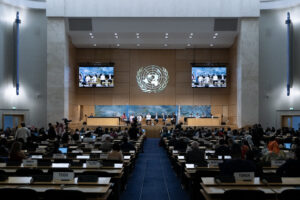
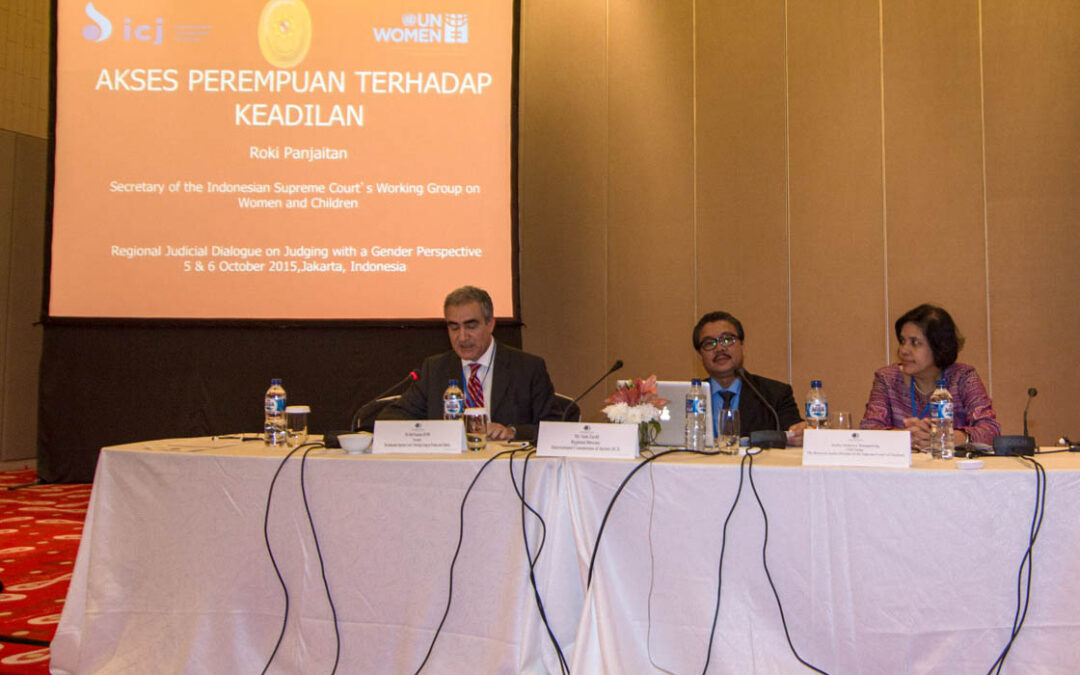
Judges and representatives of judicial training institutions from 9 countries across Southeast Asia gathered in Jakarta, Indonesia, to discuss how judicial decision-making can be further strengthened from a gender perspective.
A two-day event (5-6 October 2015), this judicial dialogue, entitled Regional Judicial Dialogue on Judging with a Gender Perspective, was organized by the ICJ, in collaboration with the Supreme Court of Indonesia and UN Women.
Participants discussed key topics such as initiatives of various courts in Southeast Asia that promote and protect women’s human rights, what are gender stereotypes and how gender stereotyping could be avoided in judicial decisions.
Speakers from the Supreme Court of Mexico were invited to speak about the initiative taken by the judiciary in the country to establish a protocol on judging with a gender perspective.
Senior judges from courts in Southeast Asian countries attended the event: Justice Dr. Takdir Rahmadi of the Supreme Court of Indonesia, Justice Suntariya Muanpawong, Chief Judge of the Research Division of the Supreme Court of Thailand; Justice Teresita De Castro of the Supreme Court of the Philippines, Justice Maria Natercia Gusmao Pereira of the Court of Appeal of Timor Leste; and Ms. Natalia Calero Sanches and Ms. Macarena Saez of the Mexican Supreme Court.
This dialogue is aimed at strengthening the participants’ ability to make decisions based on the rights to equality and freedom from discrimination.
UN Women also launched an online interactive platform that seeks to enhance dialogue among judges, prosecutors, court personnel, judicial training institutions, women’s machineries, scholars and other experts in the region.
The platform called, “Equality for All: community of change makers”, will enable users to access tools such as e-discussion forums, blogs and quick fact sheets that offer tailored learning solutions.
Oct 1, 2015 | News
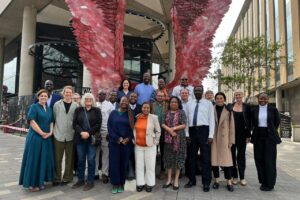
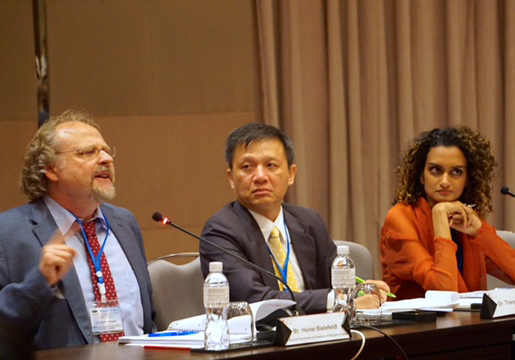
At a two-day conference held in Bangkok, and first of its kind, committed to working to enhance the right to Freedom of Religion or Belief in Southeast Asia.
For the first time, approximately 70 human rights defenders, members of religious groups, rights groups, UN agencies and representatives from the ASEAN Intergovernmental Commission on Human Rights, ASEAN Commission on the Promotion and Protection of Rights of Women and Children, National Human Rights Institutions and other government agencies from across the region gathered together to discuss key pressing concerns regarding the right to freedom of religion or belief in Southeast Asia with the UN Special Rapporteur on Freedom on Religion or Belief, Heiner Bielefeldt.
The event was co-organized by the Asian Forum for Human Rights and Development (FORUM-ASIA), the ICJ, and Boat People SOS (BPSOS) from 30 September to 1 October 2015 in Bangkok, Thailand.
During the event, participants were able to deepen their understanding on the right to freedom of religion or belief under international law and standards, and how religious freedom and other human rights should be interpreted and applied in a complementary manner.
“Many people suffer complex violations of their human rights, for example in the intersection of religious minority status, ethnicity, gender, sexual orientation or indigenous origin,” said Heiner Bielefeldt.
The two-day conference also successfully provided a multi-stakeholder platform for the participants to share challenges and best practices, as well as brainstorm ideas on addressing violations related to state control and regulation of religion, and extreme interpretations of religion.
“The politicization of religion undermines freedom of religion or belief, not only to the detriment of minorities, but also of followers of majority religions who do not wish to see their faith be turned into a tool of political power gambling,” added the Special Rapporteur.
Notable suggestions raised by the group on addressing identified obstacles to the free practice of religion or belief included the need for reforms, such as the repeal of blasphemy laws and mandatory registrations, and the importance of dialogue between groups of the same faith, as well as those of different religions.
“We need more cooperation across boundaries, including between faith-based and secular civil society organization,” stressed the expert.
Participants at the conference also recognized the opportunity presented before them in advancing freedom of religion or belief in the region and committed to working to enhance this right by reaffirming:
- Article 18 of the Universal Declaration of Human Rights, which declares: “Everyone has the right to freedom of thought, conscience and religion; this right includes freedom to change his religion or belief, and freedom, either alone or in community with others and in public or private, to manifest his religion or belief in teaching, practice, worship and observance.”
- Freedom of religion or belief is an inalienable, non-derogable human right, encompassing the right to hold or not to hold any faith or belief, to change belief, and to be free from coercion and to manifest religion or belief.
- For freedom of religion or belief to be fully enjoyed, other human rights must also be respected, particularly the principle of nondiscrimination and freedoms of expression, assembly, association, education, and movement.
The participants also committed to:
- Defend and promote freedom of religion or belief as a universal, inalienable and non-derogable human right, as set out in the Universal Declaration, in international law and declarations, and in the work of national, regional, and global institutions.
- Defend and promote freedom of religion or belief for all persons, as individuals and in community with others, through their work and respective institutions by sharing information and mobilizing effective responses.
- Work toward the nondiscriminatory realization of freedom of religion or belief in recognition of multiple and intersectional discriminations and vulnerabilities, including, among other grounds, on grounds of ethnicity, indigenous identity, gender, sexual orientation, citizenship, and disabilities.
- Enhance global and regional cooperation by working across geographical, national, racial, ethnic, political and religious boundaries.
- Advocate for accountability and remedies for individuals and communities suffering from violence, persecution, discrimination, harassment, marginalization or other abuses of human rights because of their religion or belief.
- Express and act in solidarity with individuals and communities suffering from violence, persecution, discrimination, harassment, marginalization or other abuses of human rights because of their religion or belief.
The Conference Declaration was based on the Charter for Freedom of Religion or Belief and the New York Resolution for Freedom of Religion or Belief of the International Panel of Parliaments for Freedom of Religion or Belief (IPPFORB).
South East Asia-Decla Freedom of religion-Advocacy-2016-ENG (full Declaration, in PDF)
Sep 29, 2015 | Events, News
From 30 September to 1 October 2015, the Asian Forum for Human Rights and Development (FORUM-ASIA), International Commission of Jurists (ICJ), and Boat People SOS (BPSOS) will jointly organize a conference in Bangkok.
The regional conference will discuss pressing concerns on the promotion and protection of freedom of religion or belief.
The UN Special Rapporteur on Freedom on Religion or Belief, Mr. Heiner Bielefeldt, will be joined by approximately 60-70 human rights defenders, members of religious groups, rights groups, UN agencies and representatives from the ASEAN Intergovernmental Commission on Human Rights, ASEAN Commission on the Promotion and Protection of Rights of Women and Children, National Human Rights Institutions and other government agencies.
The event will provide a multi-stakeholder platform to discuss key emerging issues, distinct and shared challenges faced by various Southeast Asian religious groups and advocates of religious freedom, identify advocacy strategies and best practices to overcome these obstacles, and to strengthen cooperation between the different stakeholders important in promoting freedom of religion or belief in Southeast Asia.
The event will also be an opportunity for participants to have a better understanding of the mandate of the UN Special Rapporteur on freedom of religion or belief.
Some of the key topics expected to be discussed include state control and regulation of religion, extreme interpretations of religion, and how freedom of religion together with other human rights are complementary or mutually reinforcing.
Upon the completion of the conference, the Special Rapporteur will hold a press briefing at the Foreign Correspondents’ Club of Thailand (FCCT) at 7.30pm on 1 October 2015 to provide an overview of the status of freedom of religion or belief in Southeast Asia and how this right could be better protected and promoted.

Sep 24, 2015 | News
The ICJ and ten other civil society organizations are concerned about the possible refoulement by the Cambodian government of more than 100 Montagnard asylum seekers to Viet Nam and call on Cambodia not to take such action.
They issued a statement that can be downloaded here:
Cambodia-Refoulement of Montagnard asylum seekers-News-web story-2015-ENG (full text in PDF)

Sep 21, 2015 | Advocacy, Non-legal submissions
Today, the ICJ and Thai Lawyers for Human Rights (TLHR) made a joint submission to the Human Rights Council’s Working Group on the Universal Periodic Review in advance of the Human Rights Council’s review of Thailand in April/May 2016.
In their submission, the ICJ and TLHR expressed concern about the following issues:
(1) the impact of the new legal and institutional framework, imposed since the May 2014 coup d’état, on human rights in Thailand;
(2) instances of suspected enforced disappearance and torture; and
(3) issues concerning international human rights instruments and mechanisms.
A copy of the submission can be found here:
THAILAND-UPR SUBMISSION FINAL AS LODGED-Advocacy-Non legal submission-2015-ENG (full text in PDF)