Jun 20, 2018 | Advocacy, Non-legal submissions
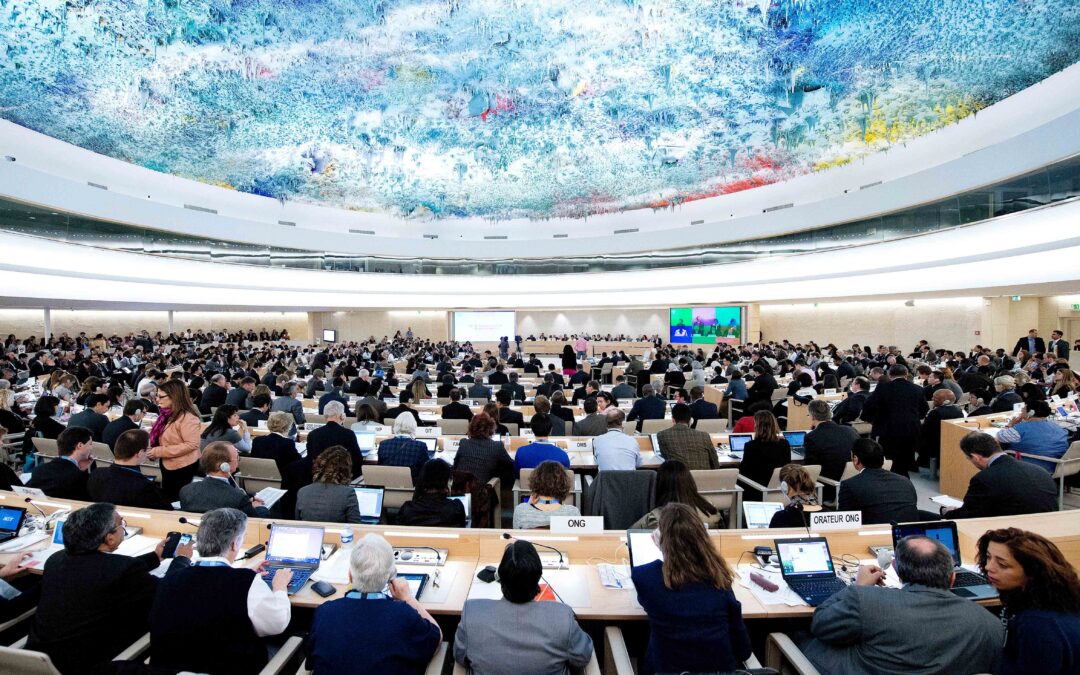
At the UN the ICJ today addressed abuse of laws in Southeast Asia to restrict freedom of expression.The statement was made in an interactive dialogue with the UN Special Rapporteur on Freedom of Expression, at the UN Human Rights Council in Geneva. It read as follows:
“The ICJ welcomes the report of the Special Rapporteur on Freedom of Expression (A/HRC/38/35), on online expression. Such concerns are reflected in the continued weaponization of laws to criminalize and unduly restrict freedom of expression in Southeast Asia. Increasingly, laws are misused to harass and intimidate civil society, journalists, politicians and ordinary individuals.
For example, in Cambodia, three persons were arrested – two charged and detained in May, and one reportedly arrested this past weekend – for sharing content on Facebook in alleged violation of a recent lèse majesté law. Another man was similarly detained, and a woman extradited from Thailand to Cambodia and imprisoned, for Facebook posts deemed critical of the government. An inter-ministerial order signed last month now allows government agencies to monitor and censor information on websites and social media.
Another example is Vietnam, where as well-known bloggers remain in jail, last week lawmakers adopted a cybersecurity law that will compel companies to store users’ data in-country, pass personal data to government authorities, and censor information online when directed to do so by the government.
A further example is Thailand, where this year alone at least 132 people were charged for “illegal assembly” after protesting for elections to be held – 27 were also charged with a sedition-like offence carrying a maximum penalty of seven years’ imprisonment. Last week, arrest warrants were reportedly issued alleging dissemination of false information on Facebook, which may lead to charges under the Computer Crimes Act carrying a maximum penalty of five years’ imprisonment, despite international standards precluding imprisonment as an appropriate penalty.
The ICJ urges all States to implement the recommendations in the report of the Special Rapporteur, and to ensure the right to freedom of expression by revoking or amending all laws, orders, policies or other actions which unjustifiably restrict this fundamental freedom.”
Jun 20, 2018 | Advocacy, News
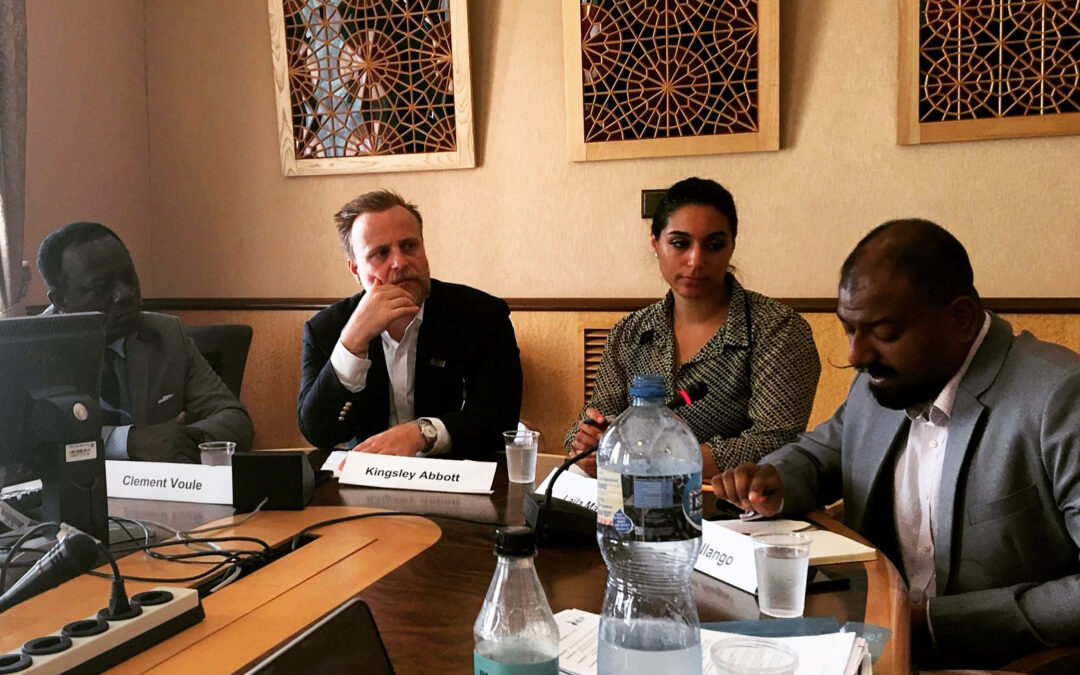
Today, the ICJ held a joint side event at the 38th Regular Session of the Human Rights Council on freedoms of expression, association and assembly in the context of elections in Asia.
The event was co-organized by the ICJ, in collaboration with Forum Asia and Human Rights Watch.
Kingsley Abbott, ICJ Senior Legal Adviser, spoke at the event, highlighting the regression in human rights and the rule of law in the Southeast Asian region, focusing on Thailand and Cambodia in the lead up to elections.
He identified recent developments in the misuse of the law to violate human rights in Thailand and Cambodia, and called for a necessary push back against the weaponization of the law and the misuse of the principle of the ‘rule of law’ in both countries.
Other speakers at the event included Iniyan Ilango, from Forum Asia, who spoke about fundamental freedoms in the context of elections in Bangladesh and the Maldives and other countries in Asia; and UN Special Rapporteur on the rights to freedom of peaceful assembly and of association, Clément Nyaletsossi Voule, who addressed the event more broadly on the protection and promotion of freedom of assembly and association in the context of elections.
The event was moderated by by Laila Matar, Deputy Director, United Nations, Human Rights Watch.
Contact
Kingsley Abbott, Senior Legal Adviser, ICJ Asia Pacific Regional Office, t: +66 94 470 1345, e: kingsley.abbott(a)icj.org
Thailand-Cambodia-Side-event-HRC38-Freedoms-of-Expression-Advocacy-2018-ENG (full speech in PDF)
Jun 6, 2018 | News
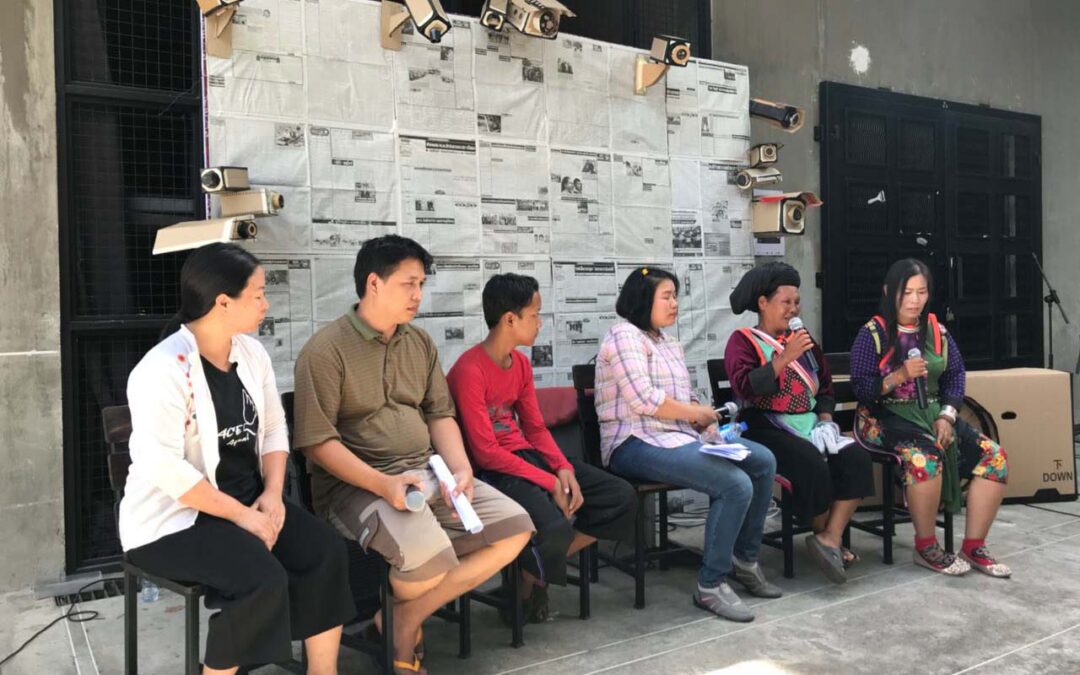
On 5 June 2018, the ICJ co-organized an academic seminar addressing the right to life under international law and the State’s duty to effectively investigate alleged violations.
The event happened on the eve of the post mortem decision to be delivered by Chiang Mai Provincial Court in the case of Chaiyaphum Pasae.
The Lahu youth activist was killed by a military official who was attempting to arrest him as an alleged drug suspect in Chiang Dao district of Thailand’s northern Chiang Mai province in March 2017.
Officials claimed Chaiyaphum had resisted arrest and was subsequently shot in “an act of self-defence”.
On 6 June 2018, Chiang Mai Provincial Court ruled that the bullets shot by the military official had caused the death of Chaiyaphum Pasae.
In its decision, the court made no finding of fault and no finding as to whether Chaiyaphum Pasae had resisted arrest before his death.
The decision by Chiang Mai Provincial Court will now be sent on to the Public Prosecutor and inquiry officers, who will in parallel continue criminal investigations into the case.
The Public Prosecutor is expected thereafter to make a decision regarding any indictment of the military official who shot at Chaiyaphum Pasae.
Participants in the seminar, which was held at Chiang Mai University’s Art Center, included Chaiyaphum Pasae’s family members, interested members of the public, media representatives, students and academics.
Kingsley Abbott, ICJ Senior Legal Adviser, addressed the seminar on the right to life and the international law and standards that apply to investigating potentially unlawful deaths, including the rights of victims and family members, referring to the standards set out in the revised Minnesota Protocol on the Investigation of Potentially Unlawful Death (2016), which was launched in Thailand on 25 May 2017.
The event follows the ICJ’s first regional workshop on the investigation of potentially unlawful deaths and enforced disappearance in Asia, held last week in Bangkok for authorities from Thailand, Cambodia, Myanmar and Nepal.
Other speakers at the Workshop included Ratsada Manuratsada and Sumitchai Hattasarn, lawyers from Human Rights Lawyers Association (HRLA) who represented the family of Chaiyaphum Pasae, and Songkran Pongbunchan, a lecturer from Chiang Mai University’s Faculty of Law.
The Discussion was conducted in collaboration with Legal Research and Development Center Chiang Mai University (LRDC); Center for Protection and Revival of Local Community Rights (CPCR); Center for Ethnic Studies and Development Chiang Mai University (CESD); Human Rights Lawyers Association (HRLA); Protection International (PI); Holding Hands Group; Inter Mountain Peoples’ Education and Culture in Thailand Association (IMPECT); Cross Cultural Foundation (CrCF); Maayimstudio; Save Lahu Group; Lanyim Creative Group; Dinsorsee Creative Group; Northern Activist Community (CAN); and Tonkal Network.
This seminar is part of an ongoing engagement between the ICJ and Chiang Mai University’s Faculty of Law.
Contact
Kingsley Abbott, Senior Legal Adviser, ICJ Asia Pacific Regional Office, t: +66 94 470 1345, e: kingsley.abbott(a)icj.org
Jun 1, 2018 | Events, News
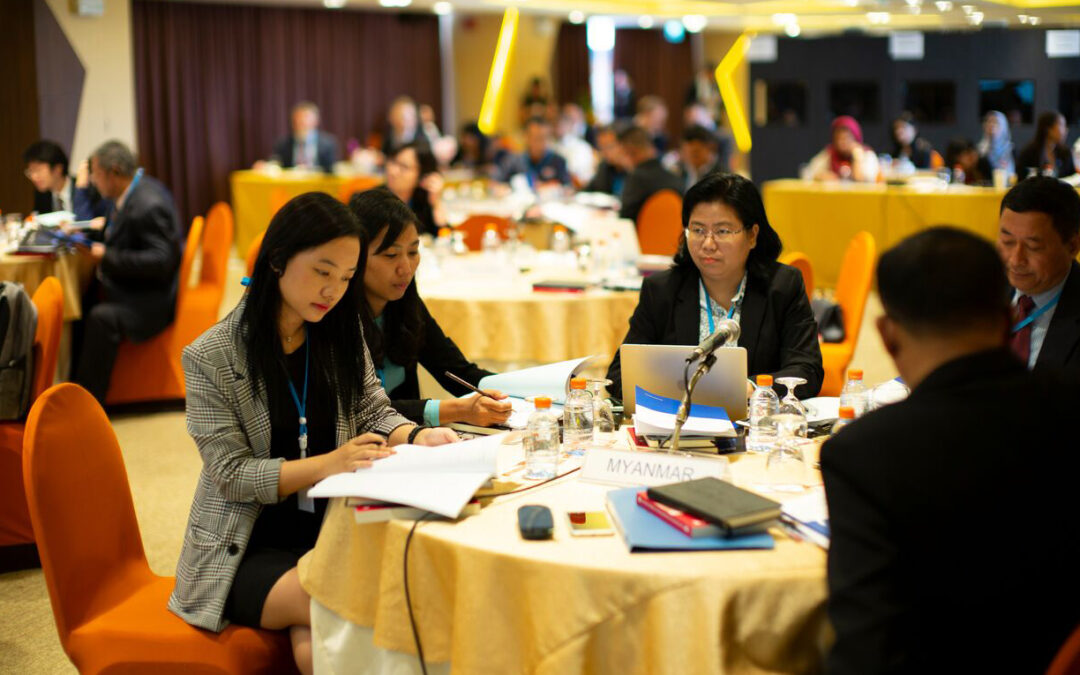
Between 30 May and 1 June 2018, the ICJ co-hosted a workshop for authorities from Thailand, Cambodia, Myanmar and Nepal on the investigation of potentially unlawful deaths and enforced disappearance in accordance with international human rights law and standards.
The workshop was co-hosted with Thailand’s Ministry of Justice and the United Nations Office of the High Commissioner for Human Rights (OHCHR) and took place as part of the ICJ’s Global Redress and Accountability Initiative, which has as one of its core objectives, “increasing the knowledge and capacity of lawyers, prosecutors and investigators to deal with challenges of impunity and access to redress.”
The participants included more than 30 criminal investigators, forensic doctors, forensic scientists, prosecutors, police trainers, senior judges and representatives of the Cambodian Ministry of Justice, the Myanmar Attorney General’s Office, the Thai Ministry of Justice and the Nepal Office of the Attorney General.
The event commenced with opening remarks by the Ambassador of Finland, Ms. Satu Suikkari-Kleven; the Ambassador of Germany, Mr. Peter Prügel; Adviser on the Promotion of the Rights and Freedom from Thailand’s Ministry of Justice, Mr. Pitaya Jinawat; and the Asia Director of the ICJ, Frederick Rawski.
Alex Conte, Senior Law and Policy Advisor, ICJ Global Redress and Accountability Initiative, gave an overview of the international human rights legal framework that applies to the investigation of unlawful deaths and enforced disappearance.
Kingsley Abbott, Senior Legal Adviser at the ICJ, then provided an overview of the revised Minnesota Protocol on the Investigation of Potentially Unlawful Death (2016), which was launched in Thailand on 25 May 2017 and which formed the core of the materials used at the workshop.
Other speakers included Ms. Jennifer Prestholdt, Deputy Director, the Advocates for Human Rights, who presented on the Rights of Victims and Families and witness interviews; Mr. Glenn Williams, Detective Inspector, Field Crime Manager, New Zealand Police National Headquarters, who presented on the investigation process including crime scene management;
Ms. Shivani Verma and Ms. Pratubjit Neelapaijit, of the Office of the High Commissioner for Human Rights who presented on Witness Protection; and Dr. Pornthip Rojanasunan, Adviser, Central Institute of Forensic Science (CIFS)/Member of the Advisory Panel who presented on forensic pathology.
This workshop followed two workshops the ICJ co-hosted between 5 to 8 December 2017 in Thailand on the investigation of potentially unlawful deaths and enforced disappearance for lawyers from Thailand and India, academics and the Thai authorities.
Contact
Alex Conte, ICJ Global Redress and Accountability Initiative, t: +41 79 957 2733; e: alex.conte(a)icj.org
Kingsley Abbott, Senior International Legal Adviser, ICJ Asia Pacific Regional Office, t: +66 94 470 1345, e: kingsley.abbott(a)icj.org
Apr 16, 2018 | News
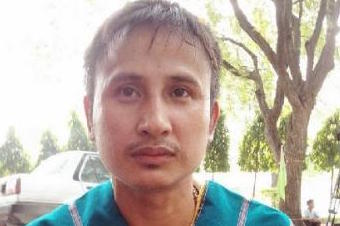
On the fourth anniversary of the apparent enforced disappearance of Karen activist, “Billy,” the ICJ repeats its calls for the Department of Special Investigations (DSI) to assume responsibility for effectively investigating the case.
To date no progress has been made to establish the fate of Billy and the DSI has declined to take up the matter.
Pholachi “Billy” Rakchongcharoen was last seen on 17 April 2014 in the custody of Kaeng Krachan National Park officials.
At the time of his apparent enforced disappearance, Billy had been working with ethnic Karen villagers and activists on legal proceedings the villagers had filed against the National Park, the Wildlife and Plant Conservation Department, the Ministry of Natural Resources and Environment, and the former Chief of Kaeng Krachan National Park concerning the alleged burning of villagers’ homes and property in the National Park in 2010 and 2011.
“The very reason the DSI was created was to investigate complex cases of this kind, including where Government officials may be implicated in gross human rights violations that amount to crimes under international law,” said Kingsley Abbott, Senior International Legal Adviser with the ICJ.
“If the DSI continues to refuse to open a special investigation after four years of little apparent progress by the police, the DSI will risk being perceived as contributing to the pervasive culture of impunity that exists within Thailand,” he added.
This week, Billy’s wife, Phinnapha Phrueksaphan, advised the ICJ that the last time the DSI had discussed Billy’s investigation with her and her family was over a year ago.
The ICJ was further informed that on 9 April 2018, Phinnapha submitted a letter to the Director-General of the DSI seeking updates on the progress of Billy’s case and clarification as to why the DSI had not accepted Billy’s case for a special investigation.
“Thailand has a clear legal duty to continue to investigate the case until Billy’s fate or whereabouts are established and to ensure that the investigative process and any outcomes are transparent – which is especially important to victims’ families who play a crucial role in investigations,” added Abbott.
On 23 May 2017, Thailand established a Committee consisting of 18 officials, including from the DSI, to formulate policies for the prevention of acts of torture and enforced disappearance, and to investigate and provide remedies in accordance with the Convention against Torture and Other Cruel, Inhuman or Degrading Treatment or Punishment (CAT), to which Thailand is a party, and the International Convention for the Protection of All Persons from Enforced Disappearance (ICPPED), which Thailand has signed but not yet ratified.
On 26 June 2017, the Committee reportedly stated that it would consider past, pending and new cases of enforced disappearance, including the case of Billy.
However, the Committee has yet to demonstrate effectiveness in efforts to implement Thailand’s international human rights obligations.
“While any steps Thailand takes towards accountability for allegations of torture, ill-treatment and enforced disappearance is welcome, the Committee should not be seen as a meaningful substitute for establishing these as crimes under domestic law,” Abbott said.
Thailand-Billy disappearance 4th year-News-web story-2018-ENG (Full story in PDF)
Thailand-Billy fourth-News-webstory-2018-THA (Thai version, in PDF)
Further Reading
Billy’s case
ICJ, ‘Launch special investigation into enforced disappearance of “Billy”’, 6 August 2015
ICJ, ‘Strengthen efforts to solve the apparent enforced disappearance of “Billy”, 16 April 2015
ICJ, ‘“Disappearance” of Billy demands special investigation’, 17 July 2014
ICJ, ‘Thai authorities must urgently investigate Billy’s ‘disappearance’’, 28 April 2014
Draft Act criminalizing torture and enforced disappearance
ICJ and Amnesty International, Open letter to Thailand’s Minister of Justice on the amendments to the Draft Prevention and Suppression of Torture and Enforced Disappearances Act, 12 March 2018
English
Thai
ICJ and Amnesty International, Recommendations to Thailand’s Ministry of Justice on the Draft Prevention and Suppression of Torture and Enforced Disappearances Act, 23 November 2017
Human Rights Committee review of Thailand
ICJ and Thai Lawyers for Human Rights and Cross-Cultural Foundation, Joint follow-up submission to the UN Human Rights Committee, 27 March 2018
UN Committee against Torture review of Thailand
ICJ and Thai Lawyers for Human Rights, Joint submission to the UN Committee against Torture, 29 January 2018
Contact
Kingsley Abbott, ICJ Senior International Legal Adviser, email: kingsley.abbott(a)icj.org