Oct 25, 2016 | Advocacy
The ICJ, Amnesty International, FIDH, Fortify Rights and Lawyers’ Rights Watch Canada urge Thailand’s National Legislative Assembly (NLA) to reject currently proposed amendments to the 2007 Computer-Related Crime Act (CCA).
The full text of their statement can be dowloaded here:
thailand-cca-amendments-advocacy-2016-eng (in PDF)
thailand-cca-amendments-advocacy-2016-tha (Thai, in PDF)
Oct 16, 2016 | News
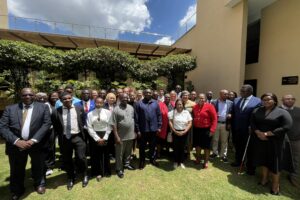
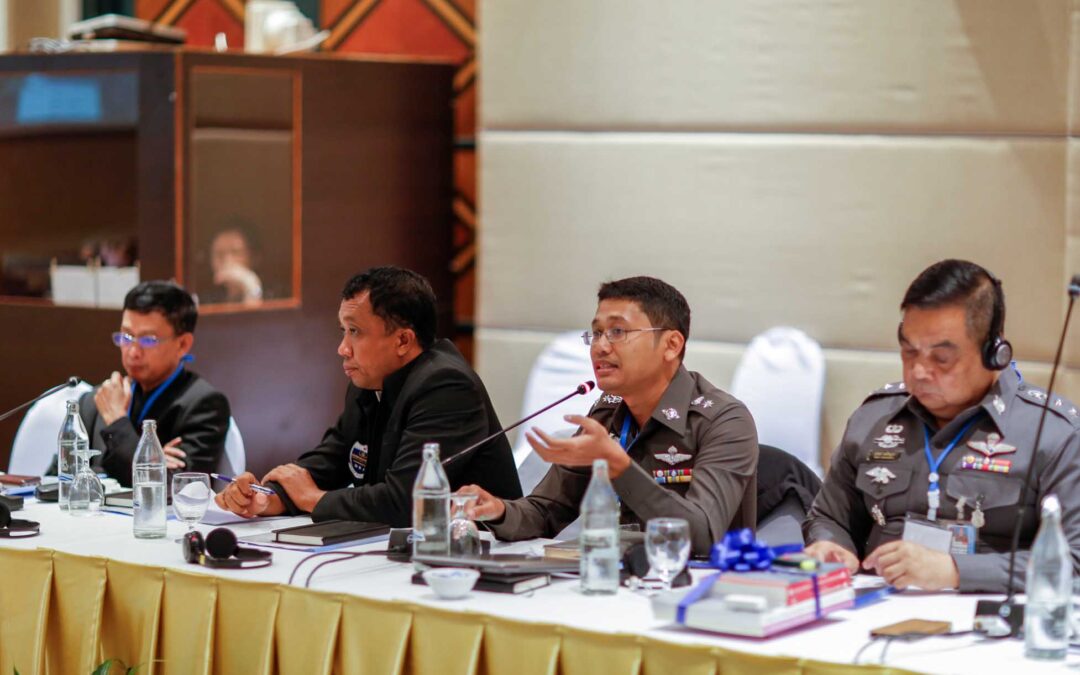
On 15-16 October 2016, the ICJ held a Workshop for justice sector actors in Thailand’s deep South on “the Use of Telecommunication Evidence in Criminal Cases” for police, special investigators, prosecutors and lawyers.
The attendees included 30 public prosecutors, police and Department of Special Investigation (DSI) officials, 15 defense lawyers, and observers from the Thailand Institute of Justice (TIJ) and the Asia Foundation.
This is the sixth ICJ workshop related to strengthening the administration of justice in the deep South since 2011.
The objective of the workshop, held in Hat Yai, was to discuss how telecommunication information may be used as part of an effective criminal investigation, and the ways in which prosecutors, lawyers and judges should consider approaching the use of this kind of information as evidence at trial.
The Workshop observed a moment of silence for the passage of the late King Rama IX.
Kingsley Abbott, ICJ Senior International Legal Adviser, opened by saying that the use of telecommunication evidence is one tool that can be used in an effective investigation of serious criminal and security related cases followed by fair trials.
However, it is important to ensure that the acquisition and use of this information as evidence fully respects the right to privacy guaranteed by the International Covenant on Civil and Political rights (ICCPR) to which Thailand is a State Party.
The ICJ firmly believes that respect for human rights and the rule of law must be the bedrock in countering terrorism and violent crime.
Speakers at the Workshop included Judge Wasupatchra Jongpermwattanapol, Chief Judge of the Office of the Chief Justice Region 9; Mr Sophon Tipbamrung, Executive Director of the Special Office of Criminal Litigation 3, Region 9; Lt. Col. Thatphichai Chanwaranon, Deputy Superintendent of the Investigation Bureau, Southern Border Provinces Police Operation Center and national expert on the use of telecommunication evidence; and Mr Nigel Povoas, a British Barrister with experience leading high profile international serious and organized crime cases and an expert in the use of telecommunication evidence.
Background
Previous ICJ workshops in the deep South have included:
- The Protection of Victims in Criminal Cases (2015)
- The Principle of Inadmissibility of Evidence Obtained by Unlawful Means and Hearsay Evidence: International Standards Compared to Thai Law (2014)
- Rule of Law and Strengthening the Administration of Justice in the Context of Habeas Corpus in the Southern Border Provinces (2012)
- Rule of Law and Strengthening the Administration of Justice in the Context of Bail in the Southern Border Provinces (2012)
- Rule of Law and Strengthening the Administration of Justice in the Context of the Application of Emergency Laws in the Southern Border Provinces (2011)
Oct 11, 2016 | News
Thailand should immediately end the use of Article 44 of the Interim Constitution which gives the Head of the military junta sweeping, unchecked powers contrary to the rule of law and human rights, said the ICJ today.
Despite widespread international condemnation of Article 44, its use has increased every year since the Interim Constitution was promulgated on 22 July 2014 following the coup d’état of 22 May 2014.
The Head of the National Council for Peace and Order (NCPO), Prayut Chan-o-cha, has issued at least 107 Orders under Article 44 (available in the public domain): at least one in 2014; 44 in 2015; and 62 in 2016 to date – with 37 Orders being issued since June 2016 alone.
“The Head of the NCPO’s increasing willingness to use extraordinary powers to make ad hoc, arbitrary changes to existing laws and regulations without judicial oversight should be alarming to everyone, including the business sector,” said Wilder Tayler, Secretary General of the ICJ.
“Article 44 places law making power in the hands of one man, while Articles 47 and 48 of the Interim Constitution block judicial review or access to remedies and reparation. This is entirely inconsistent with the three fundamental pillars of the rule of law, equality, accountability and predictability, and should be revoked immediately,” he added.
The Article 44 orders range from those restricting the civil rights of all people in Thailand to those aimed at seemingly minor and ordinary bureaucratic processes.
To date, Article 44 has been used to introduce a raft of revisions into existing Thai law without observing proper process or practice, including providing for the acquisition of land for the establishment of Special Economic Zones bypassing the usual environmental and social checks and balances provided for in domestic legislation; granting military officers sweeping powers of investigation, arrest and detention; and prohibiting the gathering of five or more persons for political purposes.
“It is long past time for Thailand to revoke Article 44 and all others laws, orders and announcements issued since the military coup that are inconsistent with the rule of law and human rights,” Tayler said.
“The justifications the military presented for such measures were never valid or credible, and certainly not so after more than two years of direct military rule.”
All Orders issued under Article 44 – and all other NCPO Orders and Announcements – will continue to remain in force under the draft Constitution that was accepted at a public referendum on 7 August 2016, and may only be repealed or amended by an Act.
Last week, Deputy Prime Minister Wissanu Krea-ngam announced that the NCPO was considering converting many of the hundreds of orders issued by the NCPO into legislation, including those issued under Article 44.
thailand-art-44-ncpo-news-press-releases-2016-eng (full text with background, in PDF)
thailand-head-of-ncpo-orders-advocacy-2016-eng (full list of all publicly available Head of NCPO Orders, in PDF)
thailand-art-44-ncpo-news-press-releases-2016-tha (full text in Thai, PDF)

Oct 3, 2016 | News
The government should drop all proceedings against human rights lawyer, Sirikan Charoensiri, including the specious accusation of sedition, which apparently relate to her organization’s representation of 14 student activists peacefully protesting in June 2015, the ICJ and other groups said today.
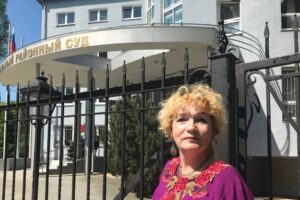
On 27 September 2016, Sirikan Charoensiri (photo), a lawyer and documentation specialist at Thai Lawyers for Human Rights (TLHR), received a summons from the Thai Police following accusations that she violated Article 12 of the Head of National Council for Peace and Order (NCPO) Order 3/2015, prohibiting the gathering of five or more people for political purposes, and Article 116 of the Thai Criminal Code, a ‘sedition’-type offence.
According to the summons, the accusations are made by an army officer, Lieutenant Colonel Pongsarit Pawangkanan.
Sirikan Charoensiri received the summons, dated 20 September 2016, when she returned to Thailand after attending the 33rd Session of the Human Rights Council in Geneva where she conducted advocacy on the human rights situation in Thailand on behalf of FORUM-ASIA and the ICJ.
Sirikan Charoensiri did not receive an earlier summons, dated 14 September 2016, the police claimed had been sent to her apartment, as she was not home at the time.
Sirikan Charoensiri has already been charged with two offences under the Criminal Code of Thailand: “giving false information regarding a criminal offence” and “refusing to comply with the order of an official” in relation to TLHR’s provision of legal aid to 14 student activists – the new summons appears to relate to the same case.
“The army’s accusation that Sirikan Charoensiri has violated the frequently abused sedition law with its extremely serious penalties and risk of a military trial is indefensible and must be withdrawn immediately,” said Wilder Tayler, Secretary General of the ICJ.
“The fact that the authorities have made these accusations more than one year after TLHR’s clients were charged with sedition in the same case suggest the accusations have been made in retaliation for her high-profile national and international human rights advocacy since the military coup,” he added.
The other groups who signed the statement are: Human Rights Watch, Amnesty International, Asian Forum for Human Rights and Development (FORUM-ASIA), the Observatory for the Protection of Human Rights Defenders (an FIDH–OMCT partnership), Protection International (PI), Lawyers’ Rights Watch Canada (LRWC), Fortify Rights, and the International Service for Human Rights (ISHR).
thailand-sirikan-charoensiri-conviction-news-press-releases-2016-eng (full text in PDF)
thailand-sirikan-charoensiri-conviction-news-press-releases-2016-tha (Thai version, in PDF)
Sep 23, 2016 | Advocacy, Non-legal submissions
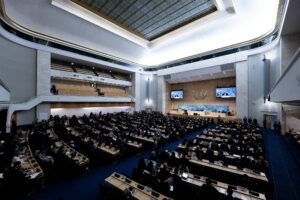
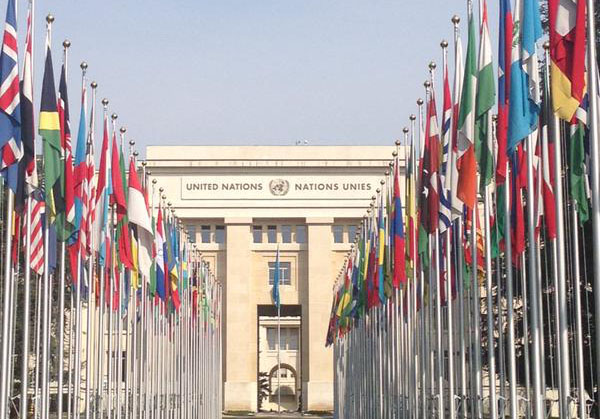
The ICJ, speaking at the UN Human Rights Council, highlighted concerns with criminalization of political gatherings, arbitrary detention, use of military for law enforcement, and trials of civilians before military courts, in Thailand.
The statement was made during discussion of the outcome of the Second Universal Periodic Review (UPR) of Thailand.
While congratulating Thailand on completion of the UPR, the ICJ oral statement continued as follows:
However, the ICJ is disappointed that several key recommendations concerning restrictions of civil and political rights in the country did not enjoy the support of Thailand.
The interim Constitution, put in place by the military government after the May 2014 coup, remains in force. Article 44 gives the government sweeping, unchecked powers inconsistent with the fundamental pillars of the rule of law and human rights.
The military government has issued numerous orders and announcements under the interim Constitution, including some that criminalize political gatherings, allow arbitrary detention for up to seven days without charge, and provide military officers broad powers of law enforcement.
At least 1,811 civilians have faced proceedings in military courts contrary to international law and standards, many merely for exercising their rights to free expression and peaceful assembly.
Thailand did not accept any of the recommendations to remove these restrictions on the rule of law and human rights.
While the ICJ welcomes the Order of 12 September 2016 ending the practice of prosecuting civilians in military courts for crimes committed after that date, approximately 500 civilian cases remain in military courts.
The ICJ is also concerned that in July the government charged three human rights defenders with criminal defamation for raising allegations of torture in the deep South.
The ICJ urges Thailand to accept and implement recommendations relevant to:
- revoking the interim Constitution and all NCPO orders and announcements that are contrary to the rule of law and respect for human rights;
- transferring all pending civilian cases to civilian courts and set aside the convictions of all civilians prosecuted in military courts since the 2014 coup; and
- ending all harassment of human rights defenders in Thailand.
The statement may be downloaded in English and in Thai in PDF here:
thailand-hrc33-upr-advocacy-non-legal submission-2016-eng
thailand-hrc33-upr-advocacy-non-legal-submission-2016-tha