Apr 18, 2016 | Advocacy, Non-legal submissions
The ICJ and Thai Lawyers for Human Rights provided a joint submission to the UN Human Rights Committee for its consideration during the adoption of a list of issues for the examination of the Second Periodic Report of Thailand under the International Covenant on Civil and Political Rights.
During its 117th Session, from 30 June to 25 July 2016, the Committee will prepare and adopt a List of Issues on Thailand.
These issues will be put to the Government of Thailand for formal response ahead of the Committee’s full examination of Thailand’s Second Periodic Report during the Committee’s 119th Session, the exact dates of which have yet to be confirmed but which is expected to take place in March 2017.
The ICJ and Thai Lawyers for Human Rights’ joint submission raises matters and suggests concrete questions to be put to the Government of Thailand concerning the following issues:
– Thailand’s derogation under Article 4 of the Covenant;
– Torture and other ill-treatment, enforced disappearances and custodial deaths in disputed circumstances; and
– Thailand’s new institutional and legal framework since the coup d’état, which severely restricts the exercise of Covenant rights within the country and in particular the recent introduction of the National Council for Peace and Order’s (NCPO) Head Order 13/2016, which grants members of the military wide-ranging law enforcement powers to ‘prevent and suppress’ 27 ‘crimes’, together with blanket immunity from prosecution.
THAILAND-JOINT ICJ TLHR HRC LOI SUBMISSION-Advocacy-non legal submission-2016-ENG (full text in PDF)
Apr 5, 2016 | News
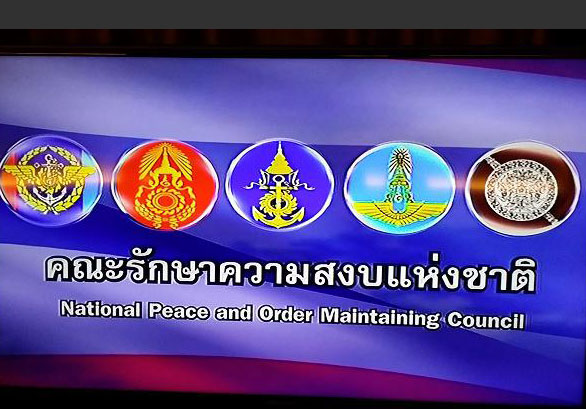
Thailand must immediately revoke National Council for Peace and Order (NCPO) Order 13/2016 which confers sweeping powers on the Royal Thai Armed Forces in contravention of human rights and the rule of law, said today the ICJ and other human rights groups.
On 29 March 2016, pursuant to Article 44 of the Interim Constitution, General Prayuth Chan-o-cha, Head of the NCPO, issued Order 13/2016 which provides appointed “Prevention and Suppression Officers” and their assistants, drawn from the commissioned ranks of the Armed Forces, including the paramilitary Ranger Volunteers, with wide-ranging powers to prevent and suppress 27 categories of crimes including against public peace, liberty and reputation, immigration, human trafficking, narcotics, and weapons.
“The implementation of Order 13/2016 will almost certainly lead to violations of Thailand’s international human rights obligations and the rule of law and must be revoked immediately,” said Wilder Tayler, ICJ’s Secretary General.
“We have observed a steady erosion of human rights protections in Thailand since the military coup of 22 May 2014 and this Order signifies another, jarring, movement in the same direction,” he added.
The Order raises numerous human rights concerns say the ICJ, Human Rights Watch (HRW), Amnesty International (AI), Asian Forum for Human Rights and Development (FORUM-ASIA), FIDH (International Federation for Human Rights), and Fortify Rights (FR). These concerns include:
1. Grants a form of immunity from prosecution to those acting under the Order, leading to impunity contrary to the principle of accountability required by the rule of law.
“Instead of paving the way for a return to democratic rule, the Thai junta has broadened its powers to do almost anything it wants, including committing abuses with total impunity,” said Brad Adams, Asia Director at Human Rights Watch. “Repression becomes a daily reality as Thailand descends further into military dictatorship.”
2. Actions taken under the Order are not subject to judicial review, contrary to the rights to effective remedy, to judicial control of deprivation of liberty, and to a fair trial, as for instance recognized under Articles 2, 9 and 14 of the International Covenant on Civil and Political Rights (ICCPR).
“The Order is yet another example of the pernicious removal of powers from the judicial system to review the military’s actions, to the detriment of rights protection and the rule of law,” said Champa Patel, Interim Director, South East Asia and Pacific Regional Office, Amnesty International.
3. Provides untrained military officials with broadly and ambiguously worded powers of law enforcement likely to lead to abuse, inconsistent with human rights standards including the UN Code of Conduct for Law Enforcement Officials and the UN Basic Principles on the Use of Force and Firearms by Law Enforcement Officials.
“The Order provides law enforcement powers to military officials who do not have law enforcement experience or protocols to summon, search, and arrest persons,” said Evelyn Balais-Serrano, the Executive Director of FORUM-ASIA.
“This makes the absence of judicial oversight all the more concerning. The fact that this may lead to an abuse of power and the disproportionate use of force by military officials in violation of international laws and standards including the UN Code of Conduct for Law Enforcement Officials and the UN Basic Principles on the Use of Force and Firearms by Law Enforcement Officials is very worrying. There is a real risk the Order may be used to restrict the legitimate rights of people such as the rights to freedom of expression, assembly and association,” she added.
4. Authorizes the deprivation of liberty of persons for up to seven days in unrecognized places of detention, without judicial oversight, which increases the risk of further human rights abuses, including torture and enforced disappearance.
“Despite its pretense to suppress criminal activities, this Order is likely to result in the commission of very serious crimes that are prohibited under human rights instruments that Thailand has either signed or ratified,” said FIDH President Karim Lahidji.
5. In practice, the Order is open to abuse to repress and silence those perceived as dissenters, including human rights defenders, in violation of international human rights law and standards.
“This Order stands to fuel the fire of retaliation against human rights defenders in Thailand,” said Amy Smith, Executive Director of Fortify Rights. “Thailand has an obligation to protect human rights defenders, but this Order could easily be used to target and obstruct their legitimate work.”
Contact
Wilder Tayler, ICJ’s Secretary General, t: +41 (0) 229793800 ; e: wilder.tayler(a)icj.org
Thailand-NCPO Order-News-Press releases-2016-THA (full text, in PDF, Thai version)
Thailand-NCPO Order unof trsl-Advocacy-2016-ENG (unofficial translation of the Order, PDF)

Mar 21, 2016 | News
Thailand’s National Council for Peace and Order (NCPO) must end its interference in the elections of the president and committee members of the Lawyers Council of Thailand (LCT), the ICJ and Thai Lawyers for Human Rights (TLHR), said today.
The LCT in turn must ensure the elections are conducted in a fair and impartial manner.
“International standards explicitly prohibit external interference in the elections of the executive body of a lawyers’ professional association by its members, and the association’s leadership must ensure that such elections are conducted in a fair and impartial manner” said Matt Pollard, the Head of the ICJ’s Centre for the Independence of Judges and Lawyers. “Ensuring the independence and democratic representation of the legal profession is essential to safeguarding human rights and the rule of law, especially in the current circumstances of military rule in Thailand.”
On 29 February 2016, Mr Wichien Choobtaisong, a representative of the electoral group of the current LCT President, Mr. Dej-udom Krairit, wrote to the NCPO “seeking permission” to hold meetings and campaigns for the LCT’s regularly-scheduled elections, referring to the NCPO’s ban on political gatherings of more than five persons.
On 16 March 2016, the NCPO replied, stating that the elections “contradict” the ban on political gatherings, which “must apply equally to all groups and sectors in the interest of maintaining national security during the transition period,” and taking the position that that the elections must accordingly be postponed with the current committee continuing its term until elections are held. The NCPO’s reply also notes it received a letter from the LCT on 14 December 2015, which the ICJ and TLHR have not seen.
In its letter, the NCPO referred to NCPO Announcement 7/2014, which bans the political gathering of more than five persons (Announcement 7/2014 was later replaced by Order 3/2015). The ICJ reiterates that these arbitrary and unjustified orders and announcements should be repealed, and calls on the NCPO, in any event, to immediately withdraw its letter of 16 March, replacing it with written confirmation that the LCT elections will be able to proceed as scheduled, without external interference.
The LCT must then put in place procedures to ensure the elections proceed as scheduled and in a fair and impartial manner.
“Since the military took power, we have seen a marked increase in the number of individuals requiring legal aid for sensitive and political cases,” said Yaowalak Anuphan, the Head of TLHR and member of the LCT. “In this environment, it is even more essential that the Lawyers Council of Thailand is able to exercise its functions without external interference and that everyone has effective and equal access to the legal services of lawyers.”
Contacts
In Bangkok: Kingsley Abbott, International Legal Adviser for Southeast Asia, t +66 94 470 1345 ; e: kingsley.abbott(a)icj.org
In Geneva: Matt Pollard, ICJ Senior Legal Adviser, t: +41 22 979 38 12 ; e: matt.pollard(a)icj.org
Background
The Lawyers Council of Thailand was established in 1957. Its mandate and responsibilities are set out in the Lawyers Council Act 1985.
The objectives of the Council include maintaining the ethics of lawyers, promoting legal education and providing legal assistance.
It also registers lawyers and issues them with licenses to practice law in Thailand. Members of the Council elect the president and committee members every three years.
Article 24 of the Basic Principles on the Role of Lawyers, adopted by the UN in 1990, sets out that: “Lawyers shall be entitled to form and join self-governing professional associations to represent their interests, promote their continuing education and training and protect their professional integrity.
The executive body of the professional associations shall be elected by its members and shall exercise its functions without external interference.”
Among other things, the UN Basic Principles also affirm that ensuring all persons have effective access to legal services provided by an independent legal profession is essential for adequate protection of human rights and fundamental freedoms.
They note the vital role of professional associations of lawyers including in protecting their members from persecution and improper restrictions and infringements. The Basic Principles specify that governments should respect and reflect the provisions of the Basic Principles in their national legislation and practice.
The UN Human Rights Committee has applied the Basic Principles as a necessary component of the right to a fair trial guaranteed in Article 14 of the International Covenant on Civil and Political Rights (ICCPR), to which Thailand is a State Party.
The UN Committee will review Thailand’s compliance with the ICCPR at an upcoming meeting.
Thailand-ICJ and TLHR statment on LCT-News-press releasess-2016-THA (full text in Thai, PDF)
Mar 15, 2016 | News
Today’s acquittal of the only person facing charges for the killing of lands rights activist Chai Bunthonglek, highlights the urgent need for the Thai Government to protect human rights defenders in the country, said the ICJ today.
In addition to Chai Bunthonglek, a member of the Southern Peasant Federation of Thailand (SPFT), three other SPFT activists have been killed since 2010: Montha Chukaew and Pranee Boonrat in 2012 and Somporn Pattanaphum in 2010.
No one has been prosecuted for these three killings, reportedly due to insufficient evidence obtained by the police.
“The result in this case underscores the pressing need for the Department of Special Investigations to investigate the pattern of killings of land rights activists in southern Thailand,” said Kingsley Abbott, ICJ International Legal Adviser for Southeast Asia.
Chai Bunthonglek was killed on 11 February 2015. All four SPFT activists killed since 2010 had been advocating for the land rights of poor farmers who are in a dispute with the Government and a palm oil company operated by Jiew Kang Jue Pattana Co. Ltd.
“Today’s acquittal means that no-one has been held accountable for the killing of Chai Bunthonglek, representing another failure to bring to justice those responsible for crimes against human rights defenders and, in particular, those trying to uphold social and economic rights in Thailand,” said Abbott.
“The ICJ calls on the Thai Government to ensure justice and effective remedies for human rights defenders.”
On 15 March, the Viangsra Provincial Court acquitted Santi Wanthong, who was accused of driving the motorcycle from which Chai Bunthonglek, 61-years-old, was shot six times and killed in front of his family in Klong Sai Pattana in Surat Thani Province.
Two other suspects initially arrested for the crime were not indicted.
The DSI has the power to assume jurisdiction over “special” criminal cases including complex cases that require special inquiry, crimes committed by organized criminal groups, and cases where the principal suspect is “an influential person.”
The trial court held today that prosecution witnesses could not properly identify the defendant, and that a cap and gun collected from his house could not be positively identified as belonging to the man who had been involved in attacking Chai Bunthonglek.
Chai Bunthonglek’s family intends to appeal the verdict, the ICJ has been told. They have 30 days to file an appeal.
Witnesses in the case, as well as members of SPFT, have expressed their fear of further attacks. Suraphon Songru, member of the Steering Group of the SPFT, told the ICJ: “the perpetrators – which the community believe may be linked to the local authorities in the area – are still out there, which means another killing could take place.”
The ICJ called on Thai authorities to ensure the safety of all witnesses and ensure the safety of all human rights defenders, including members of SPFT, in Surat Thani.
Background
Santi Wanthong was formally indicted on the following charges: murder of another person (section 288 of the Thai Criminal Code); jointly premeditated murder (section 289 of the Thai Criminal Code); possession of a firearm without a permit (section 371 of the Thai Criminal Code); and possession of ammunition for a firearm without a permit (sections 7, 8 and 72 of the Gun, Ammunition, Explosive Substance, Firework and Artificial Gun Weapon Act).
SPFT was formed in 2008 and campaigns for the right to agricultural land in the Khlong Sai Pattana and Permsub area, in Surat Thani Province and other areas in the region.
Thailand is a state party to the International Covenant on Economic, Social and Cultural Rights (ICESCR) and had its review before the Committee of the ICESCR in June 2015, where the killings of land rights defenders was particularly noted. The Committee urged Thailand to “adopt all measures necessary to protect human rights activists, including those working to defend economic, social and cultural rights, from any and all acts of intimidation, harassment and killings and to ensure that perpetrators of such acts are brought to justice.” The obligation to protect the right to life and other rights of human rights defenders working on economic, social and cultural rights, and to take effective criminal proceedings in response to such crimes, is also an obligation of Thailand under the International Covenant on Civil and Political Rights, and is recognized in numerous UN standards on protection of human rights defenders.
Contact
Kingsley Abbott, International Legal Adviser for Southeast Asia, t +66 94 470 1345 ; e: kingsley.abbott(a)icj.org
Thailand-Chai case-News-2016-THA (full text in Thai, PDF)
Mar 15, 2016 | Advocacy, Non-legal submissions
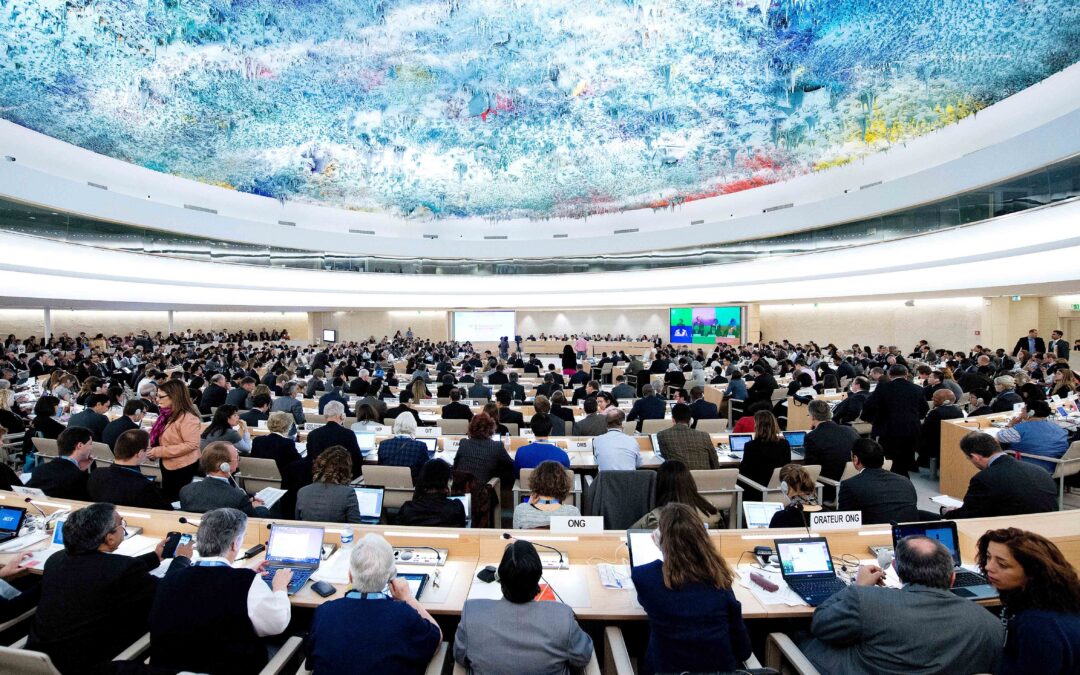
The ICJ today delivered an oral statement on the deteriorating situation for human rights in Thailand, to the UN Human Rights Council in Geneva.The statement may be downloaded in PDF format here: HRC31-Advocacy-OralStatement-Thailand-2016