Sep 1, 2020 | News, Publications, Reports, Thematic reports
In a new report published today, the ICJ called on all States to ensure that their responses to the public health emergency brought on by the COVID-19 comply with the international human rights law and the right to health.
The report emphasized the particularly acute and discriminatory impact of the pandemic on already marginalized people and the need for access to health facilities, goods and services necessary to combat COVID-19 without discrimination.
The report Living Like People Who Die Slowly: The Need for Right to Health Compliant COVID-19 Responses documents the adverse human rights effects wrought by the COVID-19 pandemic.
The title comes from the words of Mama Yuli, an Indonesian transwoman, who has said that the pandemic left many elderly transwomen feeling like “they live like people who die slowly”.
The report emphasizes the need for a human rights and rule of law-based approach to the pandemic, with States working cooperatively to address a health crisis that by its nature knows no national boundaries.
“The COVID-19 pandemic is public health crisis that presents immeasurable threats to human rights and the rule of law globally, said Ian Seiderman, the ICJ’s Legal and Policy Director.
“But what is crucial is that States responses themselves not only respond immediately and effectively to COVID-19 as a public health emergency, but also as a human rights crisis”, he added.
Building on the ICJ’s earlier responses to COVID-19, the report details the disproportionate impact of COVID-19 on non-citizens, older persons, women and girls, LGBT persons, persons deprived of their liberty, persons with disabilities, sex workers and healthcare workers.
The report also emphasizes the need for the provision of health information by State authorities in the context of COVID-19 and scrutinizes measures taken by States which have often curbed the rights to freedom of expression, information and privacy.
For example, though “contracting tracing” measures may be effective they must also be human rights compliant and information gathered through such measures should not be used inappropriately or as an instrument of repression of individuals and human defenders.
Acknowledging the interconnectedness of all human rights, the report emphasizes the need for States to ensure provision and protection of access to the “social determinants of health” such as housing, food and water, themselves also internationally protected rights.
The report provides recommendations to States that may assist in ensuring right to health and human rights compliant responses to COVID-19.
The ICJ called on States to respect the various guidance offered by UN human rights treaty bodies and independent experts on how best to comply with their human rights obligations while responding to the pandemic.
The human rights system provides important guidance to States that was not available, for example, during the 1918 influenza pandemic, which ultimately resulted in an estimated 50 million deaths.
“States must heed these calls for a human rights and rule of law-based response to COVID-19, as failure to do so will certainly result in death and human suffering that can still be avoided,” said Seiderman.
The report also raises the importance of compliance by businesses, including particularly private actors in the healthcare sector, with their responsibility to respect human rights, including the right to health.
This will be critical, for example, in ensuring the success of combined efforts of States and private companies in the development and ultimate distribution of a COVID-19 vaccine.
Contact
Timothy Fish Hodgson, ICJ Legal Adviser on Economic, Social and Cultural Rights, t: +27828719905 e: timothy.hodgson@icj.org
Download
Universal-Global Health COVID-19 Exec Sum-Publications-Reports-Thematic Reports-2020-ENG (Executive Summary, in PDF)
Universal-Global Health COVID-19-Publications-Reports-Thematic Reports-2020-ENG (Full report, in PDF)
Myanmar-ICJ-Right-to-Health-Report-2021-BUR.pdf (Full report in Burmese)
Read also
Human Rights in the time of COVID-19: Front and Centre – ICJ news, articles, op-eds, legal blogs, videos
COVID-19 Symposium: COVID-19 Responses and State Obligations Concerning the Right to Health (Part 1)
COVID-19 Symposium: COVID-19 Responses and State Obligations Concerning the Right to Health (Part 2)
Watch
Aug 28, 2020 | News
The ICJ contributed to and has endorsed a groundbreaking new UN standard aimed at ensuring effective access to justice for persons with disabilities, published today in Geneva.
Published today by the Office of the UN High Commissioner for Human Rights, the International Principles and Guidelines on Access to Justice for Persons with Disabilities were adopted jointly by the UN Special Rapporteur on the rights of persons with disabilities, the Committee on the Rights of Persons with Disabilities, and the Special Envoy of the UN Secretary-General on Disability and Accessibility. They have been endorsed by the ICJ and the International Disability Alliance.
The ICJ contributed to the development of the Principles and Guidelines, including through participation in expert consultations alongside disability rights experts, organizations of people with disabilities, State representatives, academics, and other judicial and legal practitioners. The ICJ also plans to assist with promotion and implementation of the Principles and Guidelines at the global and national levels.
Building on the provisions and interpretations of the Convention on the Rights of Persons with Disabilities and other international standards and best practices, the document affirms ten key principles of access to justice for people with disabilities and sets out detailed guidelines on how to implement each one.
The Principles and Guidelines are intended to be a practical tool to help inform the design and implementation of justice systems that provide equal access to justice for persons with disabilities, in line with international human rights standards.
The Principles and Guidelines can be downloaded by clicking here.
Further information about the process of their development is available here, and the UN press release announcing their publication is here.
Jul 13, 2020 | Advocacy, Non-legal submissions
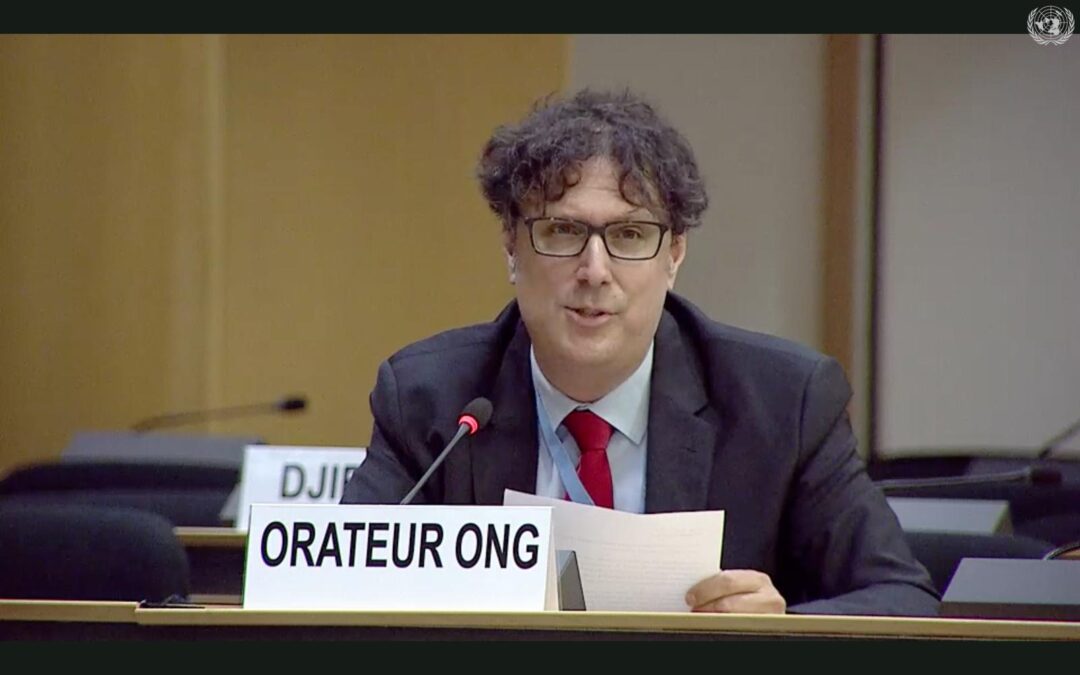
Speaking at the UN Human Rights Council the ICJ today emphasized the need for a human-rights-based approach to addressing corruption in justice systems, and urged more attention be given to the abuse of non-independent prosecution services by Executive governments.
The statement, delivered in an interactive dialogue with the Special Rapporteur on the independence of judges and lawyers, read as follows:
“Mr Special Rapporteur,
The International Commission of Jurists (ICJ) concurs with the affirmation in your report that justice systems must effectively counter corruption; that corruption in justice systems negatively impacts human rights; and that addressing such impacts is within the mandate of the Human Rights Council.[1]
At the same time, the UN Office on Drugs and Crime (UNODC) already actively provides resources and specialized technical expertise to States and prosecutors in implementing the Convention against Corruption. Keeping the Human Rights Council’s focus on the specific value added by a human-rights-based approach to such overlapping issues makes the best use of the Council and OHCHR’s limited resources and special competence and expertise.
For example, this report could have presented a detailed analysis of, and recommendations on, the right to remedy and reparation of victims of human rights violations caused by corruption of prosecutors, judges and lawyers. However, while the report briefly mentions victims (para 30), human rights defenders (para 31), and human rights training (para 58), and that human rights issues can impede international cooperation (para 49), but otherwise it mostly addresses technical advice for effective counter-corruption measures. The ICJ invites you to elaborate on the specific new elements a human-rights-based approach adds to the expert advice already provided by UNODC in this regard.
We also urge you to devote a future report to the manipulation of non-independent prosecution services by Executive governments to repress dissenting voices and human rights defenders, neutralize political opposition, shrink civil society space, and entrench impunity for human rights violations, which as our submission documented is no less urgent a global human rights issue than corruption, and is not a special focus of UN bodies other than the Council and OHCHR.
Thank you.”
[1] Indeed, twenty years ago the ICJ adopted a Policy Framework for Preventing and Eliminating Corruption and Ensuring the Impartiality of the Judicial System and its work against corruption in cooperation with judiciaries and prosecution services continues at the global and national levels.
Jul 7, 2020 | Advocacy, Non-legal submissions
The ICJ, along with other NGOs, made a joint submission in response to the call for written contributions in advance of the General Assembly’s review of the UN human rights treaty body system and of the effectiveness of the measures taken to strengthen the system in Resolution 68/268 (2014).
The submission reiterates the ICJ’s strong commitment to the treaty body system, and reiterates that it is essential that UN Member States adequately support this key component of the UN’s human rights architecture.
Download the submission here: Universal-NGO response to TBSP cofacs questions-Advocacy-non legal submissions-2020-ENG
Jul 5, 2020 | News
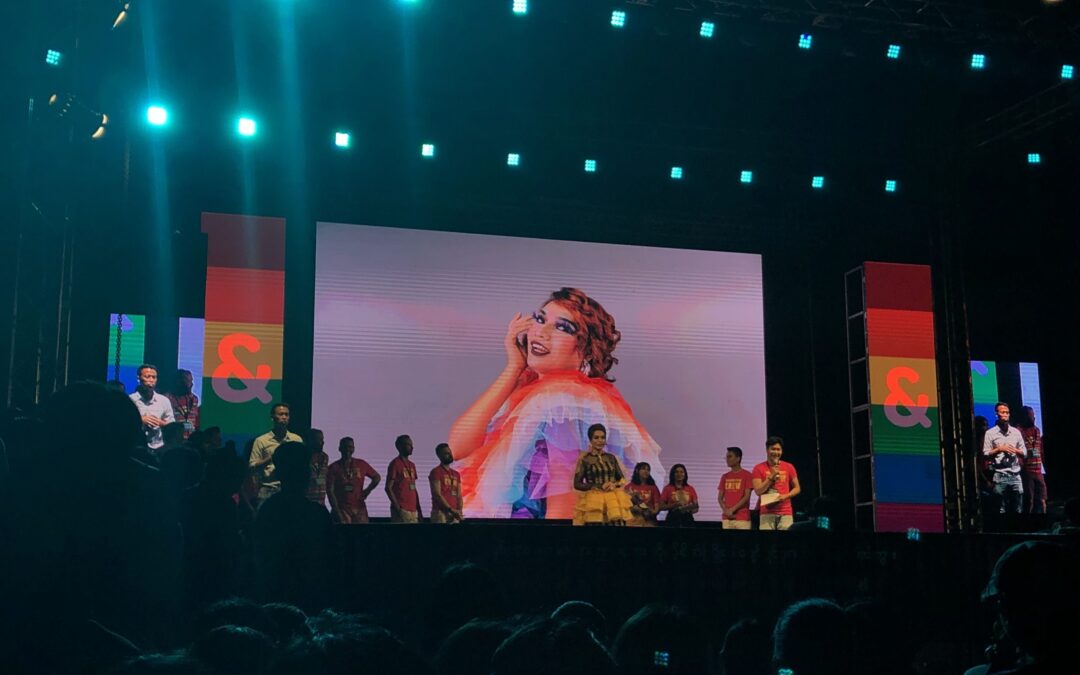
The ICJ hosted live interviews with human rights defenders from Asia, Africa and Latin America to mark Pride Month, which is celebrated during the month of June in various parts of the world. The interviews took place from 22 June to 3 July 2020.
In total, 13 human rights defenders from 11 countries spanning three continents, who are working to uphold the human rights of of lesbians, gay, bisexual, transgender (LGBT) individuals, were interviewed.
The interviews discussed existing legal systems that discriminate on the basis of sexual orientation, gender identity and expression (SOGIE) and the impacts of COVID-19 on existing activism, .
The interviews aimed to provide quick snapshots of different country and regional contexts and a platform for LGBT activist voices on the varied and devastating impacts of COVID-19 on LGBT people.
Debunking cultural myths
In many countries around the world where people are criminalized or stigmatized as a result of harmful steretypes and prejudice on the grounds of their real or imputed SOGIE, public discourse tend to cast LGBT relationships and identities as threats to culture, religion or beliefs and the future of the nation. These interviews endeavoured to interrogate and debunk cultural and regional myths surrounding SOGIE identities as ‘Western’ constructs.
In a response to homosexuality being said to be ‘unAfrican’, Kutlwano Pearl Magashula, executive officer for program functions at the Other Foundation from Botswana, said:
“Utterances that suggest that homosexuality is unAfrican enforce stigma and violence and serve to carve deep roots in the consciousness of people around the world that breed discrimination and treating people differently.”
Devastating impacts of COVID-19 on LGBT people
Important impacts of COVID-19 on LGBT people were highlighted by different speakers, ranging from a loss of livelihood, vulnerability to violence at home and in public spaces, as well as challenges in accessing healthcare.
“There is violence against transgender women sex workers. The police arrest them, yell at them and shoot at them with rubber bullets. This is a recent episode here in Colombia and it is terrible. If they don’t work, they don’t have money to buy food and pay the rent. It is a difficult scenario,” Dejusticia researcher Santiago Carvajal Casas from Columbia said.
Pre-existing inequalities and landmark wins
Personal experiences of ‘life after’ important wins from around the world were shared. Some important gains from the decriminalization of consensual same-sex sexual relationships in Botswana and India, as well as the recent legalization of same-sex marriage in Taiwan must be celebrated. However, many of these wins may remain illusory for people who have been discriminated against on the basis of class, caste and other status inequality, or are without social support, especially in the face of COVID-19.
“What we really need is social protection, we need a safety-net for all those who are close to the poverty line and who are likely to go below the poverty line because of disasters like the COVID-19 epidemic or catastrophic out of pocket healthcare expenditures. We definitely need accessible healthcare for everyone and livelihood.” – Dr. L Ramakrishnan, public health professional and Vice-President of SAATHII, India
Watch the Facebook lives below:
Kutlwano Pearl Magashula, Executive Officer for Program Functions at the Other Foundation, on the board of LEGABIBO as the vice-chairperson and co-founder of the autonomous feminist collective Black Queer DocX (Botswana)
Busisiwe Deyi, Commissioner of CGE/ Lecturer of Jurisprudence (South Africa)
Letlhogonolo Mokgoroane, lawyer activist and podcaster (South Africa)
Lini Zurlia, advocacy officer at ASEAN SOGIE Caucus (ASEAN/Indonesia)
Yee Shan, member of Diversity Malaysia (Malaysia)
Sirasak Chaited, human rights campaigner, LGBT+ and sex worker rights activist (Thailand)
Santiago Carvajal Casas, Dejusticia researcher (Colombia)
Sih-Cheng (Sean) Du, Director of Policy Advocacy at Taiwan Tongzhi (LGBTQ+) Hotline Association (Taiwan)
Neeli Rana, transgender activist (Pakistan)
Riska Carolina, The Indonesian Plan Parenthood Association (IPPA) member (Indonesia)
Hla Myat Tun, Deputy Director from Colors Rainbow and Co-Director at &PROUD (Myanmar)
Dr. L Ramakrishnan, Vice President Saathii, activist, public health professional (India)
Nigel Mpemba Patel, Associate editor at the South African Journal on Human Rights and research consultant at ILGA World (Malawi)
***
Cover photo by Violaine Biex-Colors Rainbow, Myanmar.