
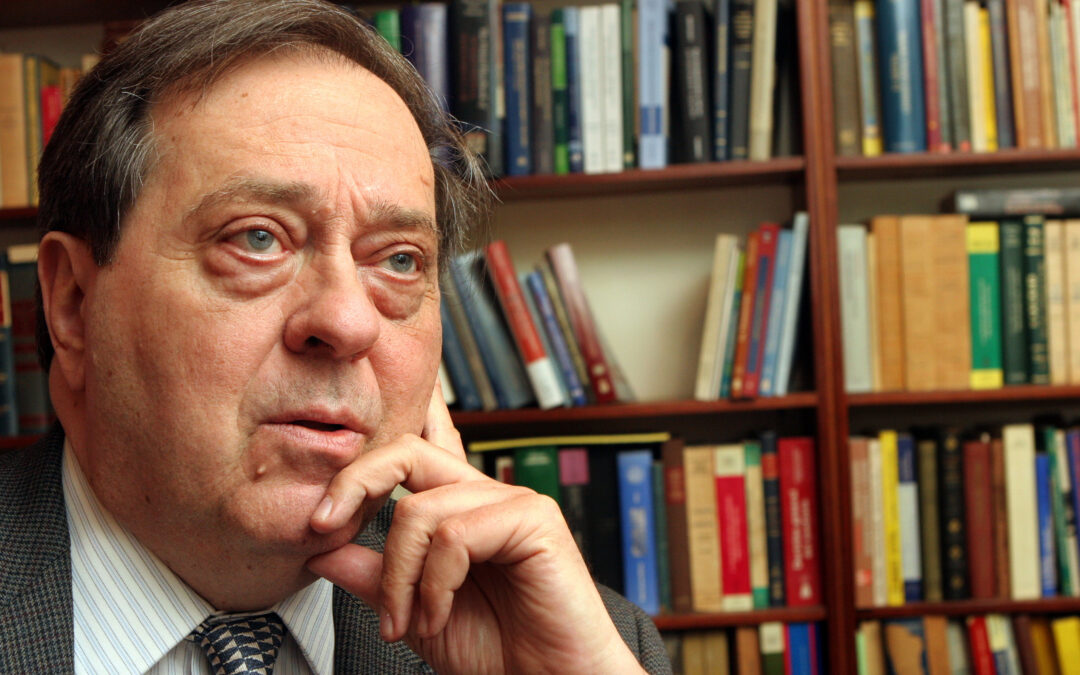
ICJ elects new members from Costa Rica, Indonesia, Japan and Venezuela
Today, the ICJ announced that four new members have been elected to its Commission: Dr. Elisabeth Odio Benito (Costa Rica), Dr. Adnan Buyung Nasution (Indonesia), Dr. Yow Yokota (Japan), and Dr. Pedro Nikken (Venezuela).

ICJ campaign for the establishment of the International Criminal Court
The time is right for an International Criminal Court, and the momentum is strong, says the ICJ.
The General Assembly of the United Nations will convene an Ad Hoc Committee at the U N Headquarters in New York from 3 to 13 April 1995, and, if necessary, from 14 to 25 August 1995, to discuss the establishment of such a court.
In June 1994, the International Law Commission (ILC) finalised its consideration of the issue and proposed a Revised Draft Statute to the General Assembly. During the last General Assembly meeting, States were requested to comment on the Statute by 15 March 1995.
The ICJ has some concerns on what is overall an excellent and realizable framework for an International Criminal Court.
ICJ Campaign International Criminal Court-non-legal submission-1995-eng (full text in English, PDF)
ICJ Campaign International Criminal Court-non-legal submission-1995-fra (full text in French, PDF)

Jurists denounce states’ obstructions in elaborating a UN Charter on human rights defenders
The ICJ voiced its concern today over the fact that a small clique of States continues to systematically insist on trying to set limitations on the work of human rights defenders.
These defenders are vital to any society. It is they who promote and protect human rights and fundamental freedoms on the ground. Limiting their effectiveness is to limit human rights.
The 10th Session of the UN Working Group on Human Rights Defenders ended last Friday 27 January. But while confirming the need for greater protection for defenders, it has been a profound disappointment. A declaration reinforcing rights for persons and groups promoting the observance of human rights in all countries of the world has been the goal of ten years of annual meetings of the Working Group. And while there has been the persistent call from the international community for a rapid achievement of a “Defenders’ Charter,” this year, only three articles of the Charter were agreed to during the two-week session in Geneva.
Cuba, for instance, never lost one opportunity to suggest that the defenders should act “subject to national law” throughout every operative article ot the proposed Charter. Furthermore, one or two States suggested that defenders should be permitted to defend only “their” own rights. This position was maintained despite reminders from the ICJ and others that many victims are unable to advocate their own rights, such as children, the internally displaced, and the disappeared.
But the ICJ considers it encouraging that notwithstanding the negative attitude displayed by a minority of participants, a clear majority of States and NGOs recognized that the real objectives of the Working Group were sufficiently important to warrant continuation of this body’s efforts in the future. The ICJ hopes that the 1996 Session will be able to adopt a clear and unambiguous Declaration to ensure the protection of human rights workers throughout the world.

World Summit for Social Development
The betterment of the human condition is closely related to the protection of human dignity. A life full of human dignity requires certain minimum standards in the field of civil and political liberties as well as economic and social requirements.
Recent News
 Africa Region: Human Rights Defenders and Lawyers Propose Means to Strengthen Access to Redress for Victims of Human Rights Atrocities02 Oct 2026
 Europe: Experts stress the role of intermediaries in access to justice for children with disabilities02 Oct 2026
 HRC63: ICJ and HRW Call for Protection of Black African Migrants, Refugees and Asylum Seekers in Tunisia and Libya30 Sep 2026
 Pakistan: End the cycle of detention and judicial harassment of lawyers Imaan Mazari-Hazir and Hadi Ali Chattha29 Sep 2026