Apr 3, 2018 | Events, News
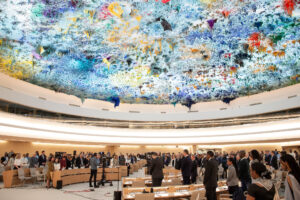
The ICJ will present a panel discussion on the continued role of the rule of law in the 70th anniversary year of the Universal Declaration of Human Rights on Monday 16 April, 18.30-20.00, Room C1, Maison de la Paix, Geneva.
In a global context where pushback against rights protection is becoming increasingly more pronounced this panel discussion, organized in co-ordination with the Graduate Institute and supported by the Permanent Mission of Germany, will address critical areas of concern for the rule of law in upholding the universal rights set out in the UDHR 70 years ago.
The event, composed of diplomats, academics and legal experts from around the world, will look at issues around the realisation of rights set out in the UDHR, particularly in relation to gender and women’s rights, and will consider how these have been implemented domestically as well as how breaches of the UDHR have been treated as international crime.
Panellists will also comment on the role of the rule of law as set out in the Sustainable Development Goals in ensuring rights protection as an essential element of sustainable development.
The event will also assess how problems in human rights frameworks can be addressed in a way that strengthens the rule of law and human rights and will consider the increasing role of developing countries in taking ownership of the international rights framework initiated by the UDHR.
Introduction:
- Saman Zia-Zarifi, Secretary General of the ICJ
Panellists:
- Carlos Ayala, ICJ Vice-President and former Chair of the Inter-American Commission on Human Rights
- Andrew Clapham, Professor of Public International Law, The Graduate Institute, Geneva; Member of the UN Commission on Human Rights in South Sudan
- Luis Gallegos, Permanent Representative of Ecuador to the United Nations in Geneva
- Sanji Monageng, ICJ Commissioner and Judge at the International Criminal Court, The Hague
- Patricia Schulz, Member of the UN Committee on the Elimination of Discrimination against Women
Moderator:
- Robert Goldman, Acting ICJ President and Professor of Law, Washington College of Law, American University, Member of Eminent Jurists Panel on Terrorism, Counter-terroism and Human Rights
Sign up to the event via the link on the Graduate Institute’s website.
Universal – Rule of Law UDHR 70 – News – Events – 2018 – ENG (Event flyer in PDF)
Mar 14, 2018 | News
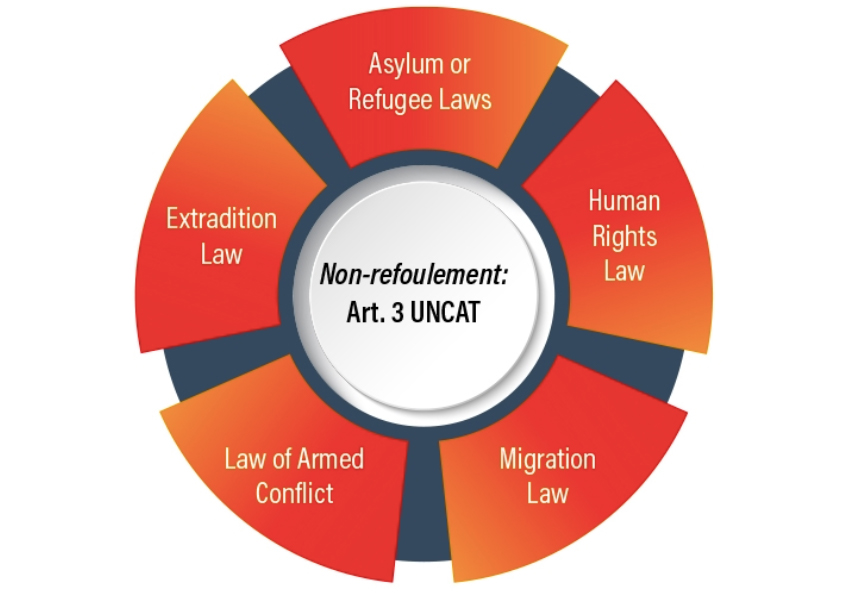
The new CTI tool on non-refoulement covers:
- constitutional and legislative provisions;
- national procedures;
- procedural rights to be guaranteed to those facing deportation or expulsion;
- training; and
- visa and stay arrangements for when return is prohibited.
There is also a section on non- refoulement in the extradition context.
The purpose of this and other CTI Implementation Tools is to inspire other States to take action through exchanges of good practices.
The tool also provides timely and practical information and advice for States in light of the recently released UN Committee against Torture’s General comment on the implementation of Article 3 of the Convention in the context of Article 22.
Some of the laws mentioned in this tool detail the powers that can be exercised by State authorities to remove a person and the constraints on those powers, as well as the relevant administrative and judicial procedures to be followed. National legislation has also detailed the rights of persons within those procedures (photo).
The tool was developed for the CTI by the ICJ with the support of the University of Bristol’s Human Rights Implementation Centre.
CTI’s series of UNCAT Implementation Tools are available here.
Mar 14, 2018 | Events, Multimedia items, News, Video clips
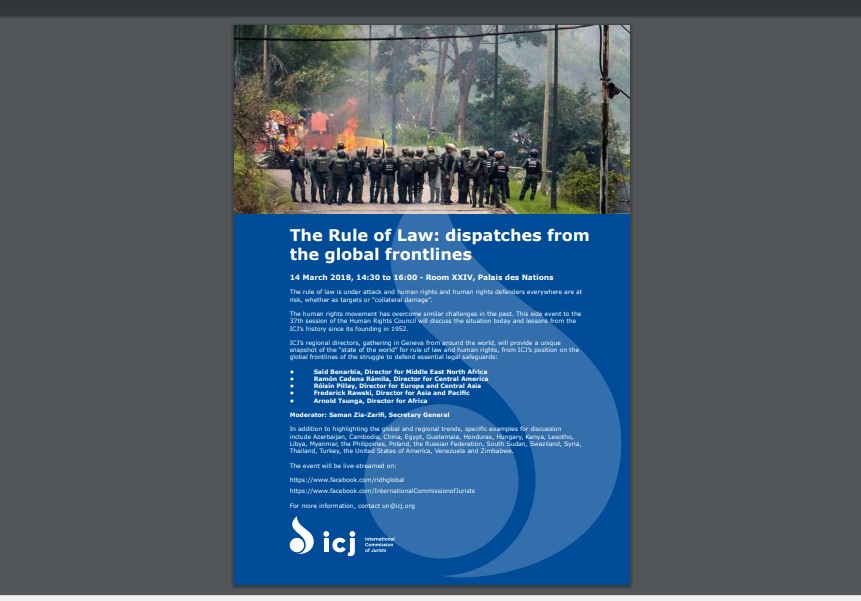
Today, the ICJ highlighted threats to and defenders of the rule of law around the world, at a side event to the UN Human Rights Council, at the Palais des Nations in Geneva.
The rule of law is under attack and human rights and human rights defenders everywhere are at risk, whether as targets or “collateral damage”.
The human rights movement has overcome similar challenges in the past. This side event to the 37th session of the Human Rights Council discussed the situation today and lessons from the ICJ’s history since its founding in 1952.
ICJ’s regional directors, gathering in Geneva from around the world, provided a unique snapshot of the “state of the world” for rule of law and human rights, from ICJ’s position on the global frontlines of the struggle to defend essential legal safeguards:
• Saïd Benarbia, Director for Middle East North Africa
• Ramón Cadena Rámila, Director for Central America
• Róisín Pillay, Director for Europe and Central Asia
• Frederick Rawski, Director for Asia and Pacific
• Arnold Tsunga, Director for Africa
Moderator: Saman Zia-Zarifi, Secretary General
In addition to highlighting the global and regional trends, specific examples for discussion included Azerbaijan, Cambodia, China, Egypt, Guatemala, Honduras, Hungary, Kenya, Lesotho, Libya, Myanmar, the Philippines, Poland, the Russian Federation, South Sudan, Swaziland, Syria, Thailand, Turkey, the United States of America, Venezuela and Zimbabwe.
For more information, contact un@icj.org
Watch the video:
https://www.facebook.com/ridhglobal/videos/10157996747579616/
Universal – Rule of law frontlines – News – Event – 2018 – ENG (Event flyer in PDF)
Mar 9, 2018 | Advocacy, Non-legal submissions
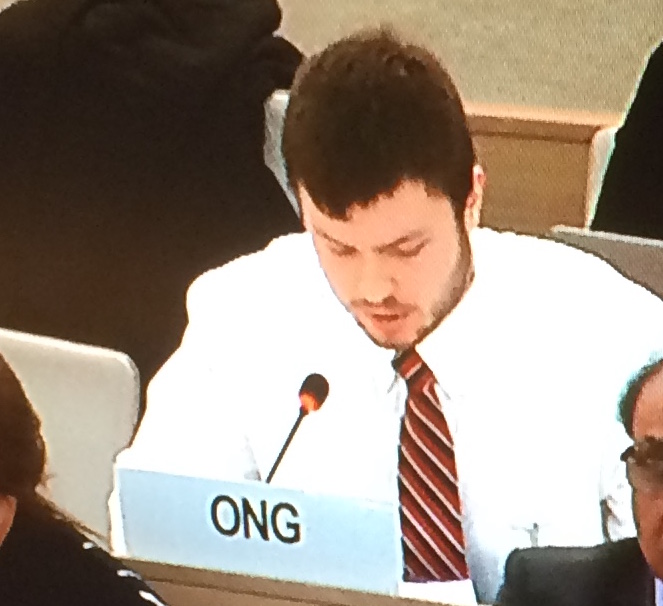
The ICJ today delivered an oral statement to the UN Human Rights Council, highlighting the need for substantive discussions towards a treaty on business and human rights to be transparent, broad-based with clear timelines.
The statement, which was made during the General Debate on item 3 with the Human Rights Council, read as follows:
Mr President,
Regarding the “Report on the third session of the open-ended intergovernmental working group on transnational corporations and other business enterprises with respect to human rights” (A/HRC/37/67), the ICJ notes with satisfaction the holding of the third session and congratulates the participants, especially the wide participation of civil society groups. The ICJ calls on States from all regions to engage meaningfully in the important work of the OEWG.
The discussions during the third session confirm the need for an international treaty in the area of business and human rights to fill the existing normative and legal protection gaps. Recent years have seen little improvement in this area despite the growing State and business discourse about policies and commitments. Harassment and attacks on human rights defenders that work in the area of corporate accountability have increased and the difficulties for victims of abuse to have access to an effective judicial remedy persist, especially at the transnational level.
The ICJ calls for a transparent and broad-based consultation process with clear timelines to move in the direction of a draft treaty on the basis of the document “Elements for a treaty” presented by the Chairperson –Rapporteur. The ICJ calls on all States and stakeholders to engage responsibly in this process to enable the fourth session of the Working Group to focus on substantive negotiations overcoming divisions on procedure and politics.
Thank you.
Mar 8, 2018 | Multimedia items, News, Video clips
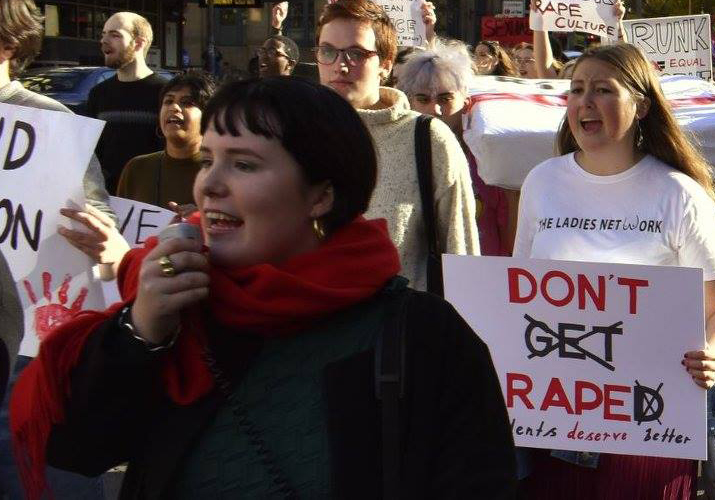
Today on International Women’s Day the world looks to celebrate the achievements of women and advances made towards the realization of women’s human rights but the day is also an opportunity to address the issues that continue to disadvantage women.
In the 70th anniversary year of the Universal Declaration of Human Rights many women around the world have seen States failing to live up to their obligations to ensure that they are able to exercise their human rights.
Where women’s human rights are violated many women face discrimination, denial of equal protection of the law and other impediments in accessing the justice that they deserve.
“The ICJ has a strong commitment to addressing the obstacles women face in accessing justice,” said ICJ Acting Vice-President, Justice Radmila Dragicevic-Dicic.
“The judiciary has an important role in protecting the rights of women, but in many States there is a lack of proper awareness and understanding of issues such as gender based-violence. Many judges would benefit from judicial education on specific gender-based issues to ensure that women victims are made visible and their rights protected by domestic laws and relevant international standards,” she added.
For several years the ICJ has worked on women’s access to justice issues in different countries in all regions with a variety of stakeholders, including human rights defenders, lawyers, judges, governmental authorities and international rights experts and mechanisms.
For example, in Tunisia, the ICJ issued a memorandum calling on authorities to remove the obstacles women face in accessing justice.
The ICJ has held regional dialogues in Africa and Asia with judges and lawyers.
In Asia, one outcome of this was The Bangkok General Guidance for Judges in Applying a Gender Perspective, designed to assist judges in employing a gender perspective in deciding cases before them, which has since been adopted for use by judiciaries in Indonesia and the Philippines.
In Africa, the need for gendered perspectives in judicial decision-making was also raised in a regional report evaluating sexual and gender based violence (SGBV) and fair trial rights.
The ICJ has undertaken substantial work on women’s access to justice in the context of SGBV, including a report calling for an eradication of harmful gender stereotypes and assumptions and a Practitioners’ Guide on Women’s Access to Justice for Gender-Based Violence.
Both have been used as training tools in Asia, Africa and MENA, most recently at a workshop on SGBV in Swaziland.
Last year the ICJ released a memorandum on effective investigation and prosecution of SGBV in Morocco.
The ICJ has also undertaken trial observations during hearings in the landmark Sepur Zarco case, the first case that resulted in a conviction for sexual crimes that had occurred during Guatemala’s internal conflict in the early 1980s.
The ICJ regularly engages with the UN Human Rights Council and the UN Committee on the Elimination of all Forms of Discrimination against Women to highlight issues around women’s access to justice and call on the international community to be vigilant in upholding women’s rights protections.
“The ICJ is lucky to count among its number some very impressive women human rights defenders, who bring a great deal of expertise to the work of the organization,” said Dragicevic-Dicic.
“The five most recent additions to the ICJ have further strengthened the organization’s ability to speak authoritatively on women’s rights, and I look forward to working with my new colleagues to enhance women’s access to justice,” she added.
The new additions to the ICJ include Dame Silvia Cartwright, Former Governor of New Zealand; Professor Sarah Cleveland, Constitutional and Human Rights Professor at Columbia Law School in the USA; Justice Martine Comte who has over 30 years judicial experience in France; Mikiko Otani, member of the UN Committee on the Rights of the Child from Japan; and Justice Lillian Tibatemwa-Ekirikubinza from the Supreme Court of Uganda.
In an interview with the ICJ, Commissioner Justice Elizabeth Evatt, a distinguished Australian lawyer, jurist and trailblazer for women in the legal profession in her country, spoke about the importance of women being able to access justice.
One of the architects of Australia’s Family Law Act of 1975, Justic Evatt told the ICJ how the Act made divorce more accessible and abolished the Common Law relics that gave men greater rights over women, however new problems have emerged since then.
Justice Evatt explained that “(the Act) was an extremely important reform for women. It made it far easier for men and women to access divorce and have their matters dealt with because the court had conciliation and counselling services and also legal aid was more readily available. But I am afraid that since those days, thing have changed. The Family Court is now beset with delays and obstacles and it is impossible for people to get legal aid. People have to take their case on their own or face huge legal costs, so having begun well, it hasn’t continued well. More resources are needed.”
Justice Evatt also considers that there is a need for the government and the judiciary to take more action to address domestic violence.
However, she noted, “there has been a change over the years with a growing awareness of both the police and the local courts, which are the main ones dealing with violence. They have become far more aware of the need to take action to protect women and prevent violence but the cure for domestic violence does not lie just with the courts but also with the whole of society.”
Watch the interview: