Jul 16, 2018 | Multimedia items, News, Video clips
Changes within the Commission enhance the organization’s capacity to respond to increased threats to rights protection via erosion of the rule of law, particularly in relation to the independence of the judiciary.
The ICJ is pleased to announce new leadership at the ICJ as Professor Robert K. Goldman (US) has been elected President of the organization and Justice Radmila Dragicevic-Dicic (Serbia) has been elected Vice-President, a role she will undertake jointly with Professor Carlos Ayala (Venezuela) who was also appointed Vice-President earlier in the year.
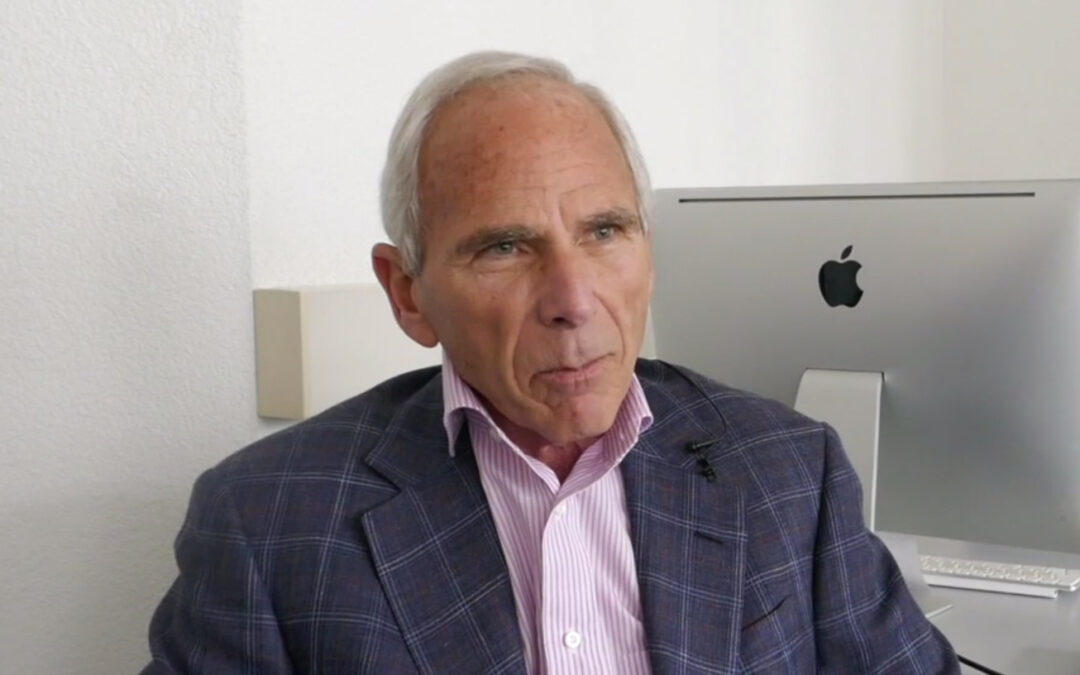
Professor Robert K. Goldman served as Acting President of the ICJ following the sad passing of former President Professor Sir Nigel Rodley in 2017.
The President and Vice-Presidents are supported by the Executive Committee, which has also been bolstered by new members Justice Sir Nicolas Bratza (UK), former President of the European Court of Human Rights; Dame Silvia Cartwright (New Zealand), former Governor-General of New Zealand; and Shawan Jabarin (Palestine), prominent human rights activist and Director General of Al-Haq, an independent Palestinian non-governmental human rights organization.
“I am honoured to have been elected President of the ICJ and to be able to work with such proficient and inspiring jurists amongst ICJ leadership and in the wider Commission itself, without whom the ICJ could not provide the expertise and leadership it does on such a wide range of human rights issues,” said Professor Robert K. Goldman, ICJ President.
“Those that have taken on a new role in ICJ leadership will help guide the organization in augmenting efforts to defend the rule of law amidst the current political backdrop of increasing antipathy and hostility towards rights protections,” he added.
In addition to these changes in the senior leadership of the ICJ, the organization is also pleased to welcome five new members:
Justice Chinara Aidarbekova (Kyrgyzstan), judge of the Constitutional Chamber of the Supreme Court of Kyrgyzstan; Gamal Eid (Egypt), prominent lawyer and human rights defender; Jamesina Essie L. King (Sierra Leone), Commissioner of the African Commission on Human and Peoples’ Rights; Michael Sfard (Israel), prominent human rights lawyer who has represented many Israeli and Palestinian individuals and organizations; and Ambiga Sreenevasan, former President of the Malaysian Bar Council.
“The ICJ is alarmed by the increasing volume of worldwide attacks on the institutions that uphold human rights both at an international level, where UN mechanisms are constantly condemned rather than supported and enhanced to maximize their efficacy; and also on the local level, for example when we see the independence of the judiciary, an essential element of maintaining rights protections, coming under attack in places like Guatemala, Poland and South Korea,” said Saman Zia-Zarifi, ICJ Secretary-General.
“The ICJ relies on its global advocates of human rights to advance and defend the rights of others through the culmination of their vast and varied expertise and I am pleased to welcome our newest Commissioners to help in this regard, ” said Zia-Zarifi.
A further nine Commissioners were elected to serve additional terms on the Commission:
Professor Roberto Garreton (Chile), Professor Robert K. Goldman, Hina Jilani (Pakistan), Professor Jose Antonio Martin Pallin (Spain), Justice Sanji Monageng (Botswana), Tamara Morschakova (Russia), Dr Jarna Petman (Finland), Belisario dos Santos Jr (Brazil) and Justice Philippe Texier (France).
Hina jilani (Pakistan) and Belisario dos Santos Jr (Brazil) were both also re-elected to the Exectuive Committee and Professor Marco Sassoli (Italy/Switzerland) and Justice Stefan Trechsel (Switzerland) were re-elected as Alternates to the Executive Committee.
On video: Bob Goldman talks about the ICJ and the Rule of Law
Jul 11, 2018 | Advocacy, Non-legal submissions
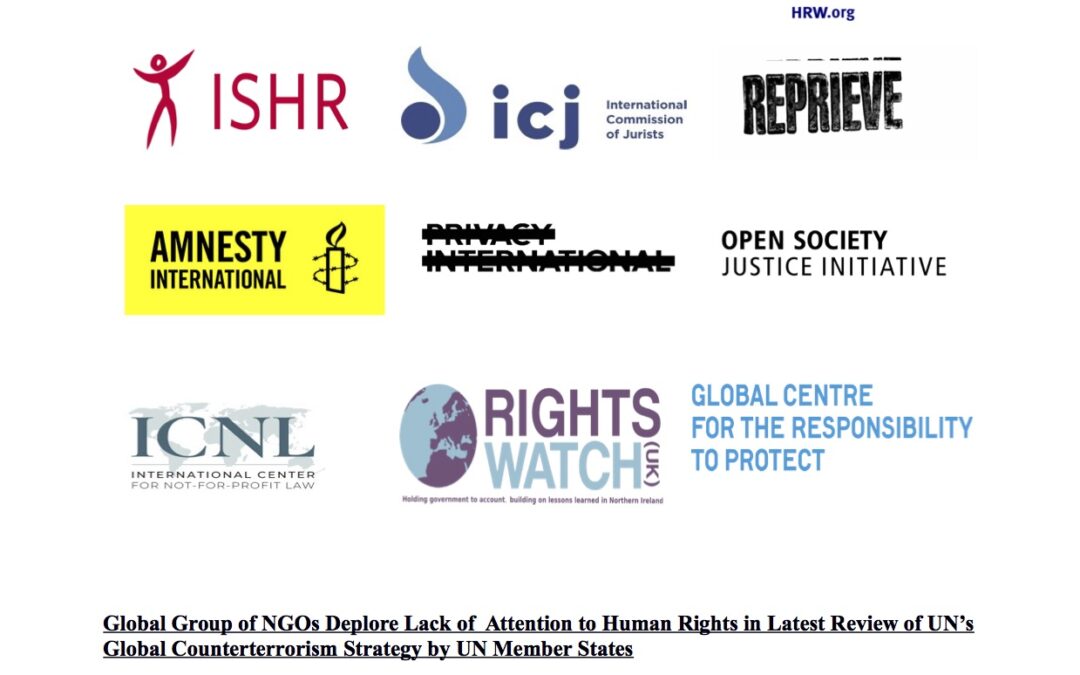
The ICJ today joined other civil society organizations in calling for respect for human rights, and protection of and participation by civil society, to have a greater role in the UN Global Counter-terrorism Strategy.
The joint statement by the organizations followed adoption by the UN General Assembly on June 26th, 2018 of Resolution 72/284, reviewing the United Nations Global Counter-Terrorism Strategy. The UN’s Global Counterterrorism Strategy, first adopted in 2006, sets out a plan of action for the UN and member states at the global, regional, and national level to counter-terrorism.
The organizations emphasise the value of a global counter-terrorism strategy where human rights are an essential component. It notes that the General Assembly resolution importantly reaffirms states’ obligations to comply with international law, including international human rights law, while countering terrorism and that human rights are the “fundamental basis of the fight against terrorism.”
The joint statement expresses concern at States’ failure to adequately address human rights abuses in relation to counter-terrorism measures. It also sets out concerns about member states’ failure to provide an enabling environment for civil society entities, including those relating to women, to be meaningfully engaged in the Strategy review.
The full statement and list of organizations joining it can be downloaded in PDF format here: UN-Advocacy-JointStatement-CounterTerrorismStrategy-2018
Jul 10, 2018 | Advocacy, Non-legal submissions
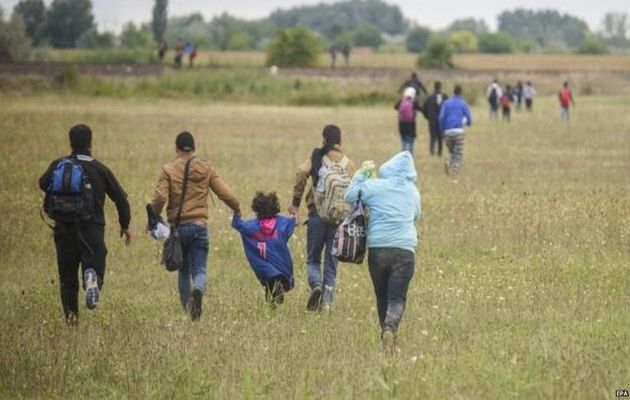
The ICJ has joined almost 180 other organizations in calling for the final draft of the UN Global Compact on Migration (GCM) to reflect strong legal protections for human rights.
Recognizing the potential of the GCM to protect migrants in irregular and/or vulnerable situations, civil society organizations are calling on all States to ensure that the final document truly lives up to the spirit of the New York Declaration for Refugees and Migrants.
The statement was presented to Member States and the GCM Co-Facilitators (the governments of Switzerland and Mexico) in an informal dialogue on Tuesday, 10 July.
The statement calls on States to address the following issues:
- Regular vs. irregular: The GCM must not include a distinction between migrants with regular status and those whose status is irregular which falls below human rights law, international labor standards and other international obligations.
- Non-Refoulement: The GCM must explicitly mention the principle of non-refoulement, which prohibits returning a person to a place where her/his life would be in danger. Including it is fundamental to ensure that migrants are provided with full live-saving protection.
- Vulnerable situations: The GCM must address the situation of vulnerable migrants, and it must not weaken protection for victims of natural disasters and climate change, who are not adequately addressed in the Global Compact for Refugees.
- Right to privacy: The final document must protect migrants’ right to privacy of personal information. Otherwise, the GCM risks preventing them from accessing certain social services and discouraging them from participating in data collection efforts, which are vital for migration management.
- Criminalization of migrants and those who assist them: The GCM must avoid all provisions and language that criminalizes migrants crossing an international border in search of safety or of people and organizations that support to them.
- Detention of migrant children: The GCM must include provisions towards ending the practice of detaining migrant children by explicitly mentioning the availability and accessibility of non-custodial and community-based alternatives.
- Implementation, review, and follow-up mechanisms: The Compact needs robust implementation, review, and follow-up mechanisms to ensure accountability and transparency in achieving its goals. Civil society organizations ask for a fully mandated partnership role in implementation and monitoring the GCM.
To be effective, the statement concludes, migration management must be credible not only to States, but also to migrants.
The statement is available in PDF format here: UN-Advocacy-JointStatement-Migrants-2018
Jul 6, 2018 | Advocacy, News, Non-legal submissions
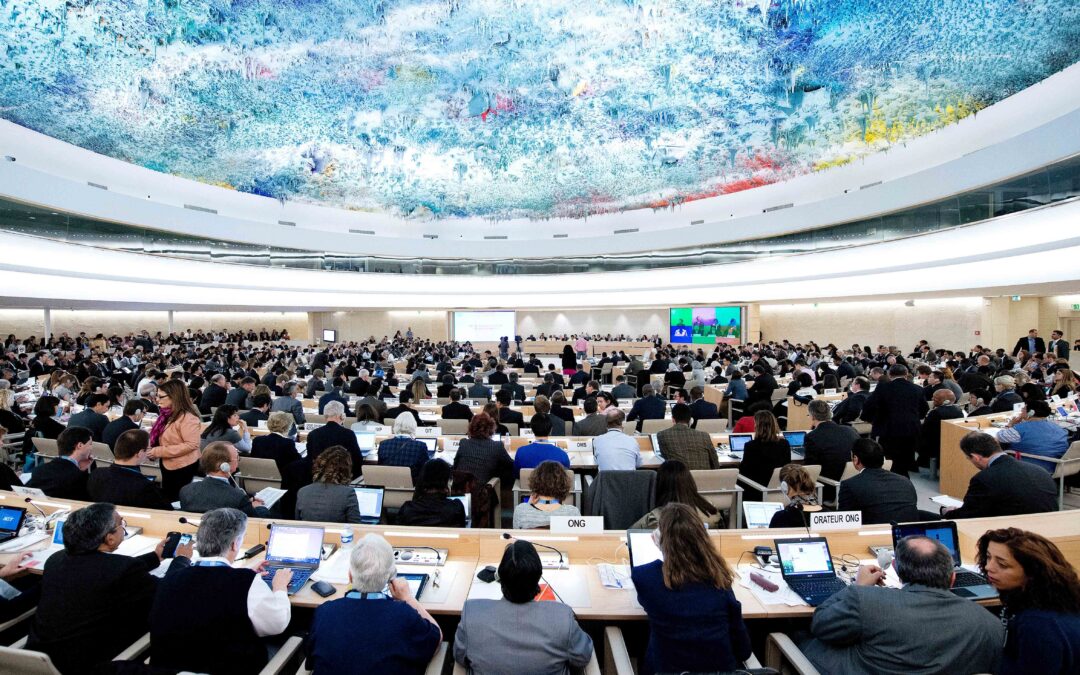
The ICJ today joined other NGOs in highlighting key outcomes of the 38th ordinary session of the UN Human Rights Council.
The statement, delivered by International Service for Human Rights (ISHR) at the end of the session, read as follows (text in italics was not read aloud due to the limited time available):
“Our organisations welcome the adoption of the resolutions on civil society space, peaceful protest, on violence against women and girls and on discrimination against women and girls and the Council’s rejection of attempts to impede progress on protecting civic space, peaceful protest and the rights to sexual and reproductive health.
On civil society space, the resolution recognizes the essential contribution that civil society makes to international and regional organisations and provides guidance to States and organisations on improving their engagement with civil society. On peaceful protest, it sets out in greater detail how international law and standards protect rights related to protests.
On violence against women and on discrimination against women, we consider that ensuring sexual and reproductive health and rights are vital in efforts to combat violence and discrimination against women, online and offline, as well as to ensure targeted and specific remedies to victims. We appreciate that the work of women human rights defenders towards this is recognised.
We consider the adoption of the resolution on the contribution of the Council to the prevention of human rights violations as an important opportunity to advance substantive consideration on strengthening the Council’s ability to deliver on its prevention mandate.
Following challenging negotiations, we welcome the adoption by consensus of the resolution on human rights and the Internet, reaffirming that the same rights that people have offline must also be protected online, and calling on States to tackle digital divides between and within countries, emphasising the importance of tools for anonymity and encryption for the enjoyment of human rights online, in particular for journalists, and condemning once more all measures that prevent or disrupt access to information online.
We welcome continued Council attention to Eritrea‘s abysmal human rights record. This year’s resolution, while streamlined, extends expert monitoring of, and reporting on, the country and outlines a way forward for both engagement and human rights reform. We urge Eritrea to engage in long-overdue meaningful cooperation.
We welcome the renewal of the mandate of the Special Rapporteur on Belarus under item 4 with an increased vote – as it is still the only independent international mechanism to effectively monitor human rights violations in Belarus – while remaining concerned over a narrative to shift the mandate to item 10 in the absence of any systemic change in Belarus.
We welcome the consensus resolution on the DRC, putting in place continued monitoring and follow up on the expert’s recommendations on the Kasais. However, given violations and abuses throughout several regions in the country, occurring against the backdrop of an ongoing political crisis, delayed elections, and the brutal quashing of dissent, we urge the Council to promptly move towards putting in place a country-wide mechanism that can respond to events on the ground as they emerge.
We welcome the strong resolution on Syria, which condemns violations and abuses by all parties, and appropriately addresses concerns raised by the COI about the use of chemical weapons, sexual and gender-based violence, and the need to address situations of detainees and disappearances. The Council cannot stay silent in the face of continued atrocities as the conflict continues unabated into its seventh year.
We welcome the joint statements delivered this session on Cambodia, the Philippines, and Venezuela. We urge Council members and observers to work towards increased collective action to urgently address the dire human rights situations in these countries.
On the Philippines, we emphasise that the Council should establish an independent international investigation into extrajudicial killings in the ‘war on drugs’ and mandate the OHCHR to report on the human rights situation and on moves toward authoritarianism.
The joint statement on Cambodia represents a glimmer of hope after the Council’s failure to take meaningful action against clear sabotage of democratic space ahead of elections. Close scrutiny of the human rights situation before, during and after the elections is paramount and the Council must take immediate action on current and future human rights violations in this regard.
We welcome the joint statement delivered by Luxembourg calling on the HRC President to provide oral updates on cases of alleged intimidation or reprisal, including actions taken, at the start of the Item 5 general debate of each Council session and also provide States concerned with the opportunity to respond.
Finally, the new Council member to replace the United States of America should demonstrate a principled commitment to human rights, to multilateralism and to addressing country situations of concern by applying objective criteria.
Signatories:
- Asian Forum for Human Rights and Development (FORUM-ASIA)
- The Association for Progressive Communications
- The Center for Reproductive Rights (CRR)
- CIVICUS: World Alliance for Citizen Participation
- DefendDefenders (the East and Horn of Africa Human Rights Defenders Project)
- Human Rights House Foundation (HRHF)
- International Commission of Jurists (ICJ)
- The International Lesbian, Gay, Bisexual, Trans and Intersex Association (ILGA)
- International Service for Human Rights (ISHR)
Jul 5, 2018 | Advocacy, Non-legal submissions
The ICJ today joined other NGOs in urging open discussion and debate about countries at the UN Human Rights Council in Geneva, including in discussions of cooperation, despite attempts by some States to interrupt and suppress debate.
The statement was delivered in a General Debate on items 2 and 10 of the Council, by Asian Forum for Human Rights and Development (FORUM-ASIA) on behalf of the group of NGOs. It read as follows:
“Thank you, Mr. President. While we appreciate the importance of technical cooperation, we wish to stress that a debate on technical cooperation will be incomplete if it does not address non-cooperation and country situations that have worsened despite technical cooperation. We are alarmed by efforts to restrict discussion on such situations by some states under Agenda Item 10, including for instance by (the Bolivarian Republic of) Venezuela earlier today.
While we recognise that all delegations including NGOs are required to speak on the topic under discussion, we are deeply concerned when NGOs making relevant statements are interrupted and not given a chance to explain the relevance of their statement, and in some cases are even prevented from finishing the statement. This has happened even when an NGO is speaking specifically on concerns addressed by UN reports listed for discussion in the relevant debate. Statements on Cambodia during the March session of the Council are recent examples.
The concept of international cooperation should never be invoked to shut down any criticism of human rights situations in individual countries. Cooperation cannot succeed without accountability. To be effective, debates on technical assistance and capacity building must be open to frank discussion of the true gravity, character and extent of on-going violations in the country in question, as well as the impact or lack of impact of any assistance already undertaken.
Thank You”
Asian Forum for Human Rights and Development (FORUM-ASIA)
Cairo Institute for Human Rights Studies
Conectas Direitos Humanos
Freedom House
Human Rights House Foundation
Human Rights Watch
International Commission of Jurists
International Humanist and Ethical Union (IHEU)
International Service for Human Rights (ISHR)