ICJ adopts Declaration on Access to Justice and Right to a Remedy
ICJ adopts Declaration on Access to Justice and Right to a Remedy

The ICJ 17th World Congress closed today with the adoption of a landmark Declaration on Access to Justice and Right to a Remedy in international human rights systems. 

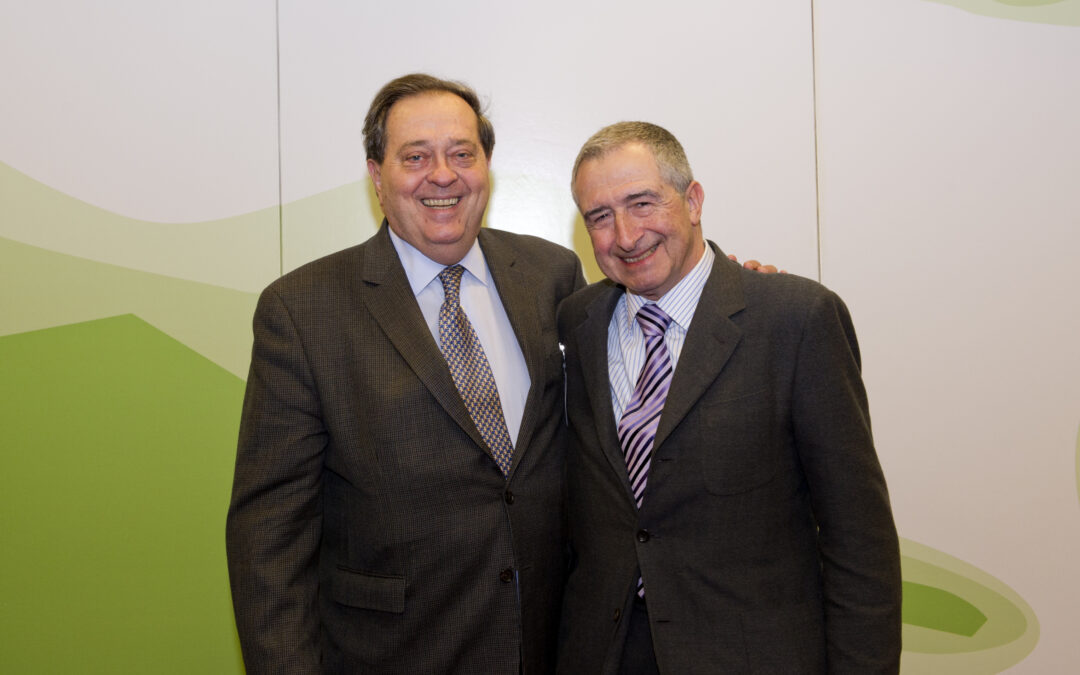
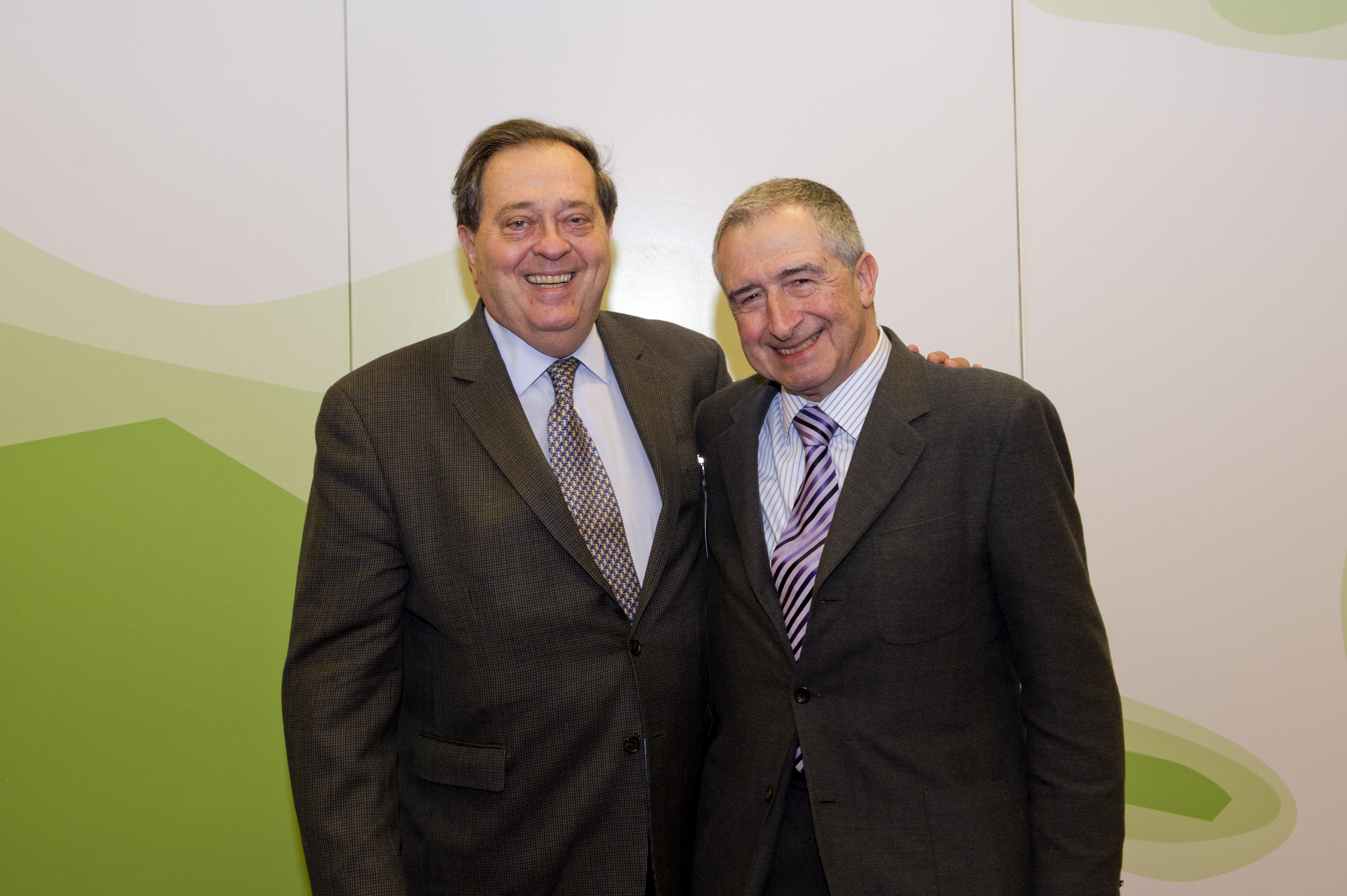
In his final speech at the closing of the Congress, Sir Nigel Rodley, the new ICJ President (photo above, on the right, with Pedro Nikken, outgoing ICJ President) said:

“The ICJ has always been the world’s leading organization of lawyers working for the Rule of Law and human rights. At the ripe young age of 60, it is at the height of its prestige and authority.”

“Led by one of the world’s most experienced international human rights lawyers, Wilder Tayler, of Uruguay, the ICJ is now on a firm footing with a strong secretariat in Geneva – the city of human rights – and an increasing number of offices in key countries and regions of the world.”

“So, the ICJ is well-placed to make an even more significant contribution meeting such challenges as the serious problem of assaults on the independence of judges, lawyers, and prosecutors.”

“There is no justice if people don’t have access to it. The ICJ Congress, with its vast range of eminent expertise, from the ICJ Commissioners, national sections representatives, and guests, adopted a landmark Declaration on Access to Justice and Right to a Remedy in international human rights systems.”

“The focus was how to make international regional human rights systems more able to respond to the needs of those who cannot secure justice at home. There was special urgency bearing in mind the attempts of governments to weaken the systems’ ability to call these same governments to account.”

Sir Nigel Rodley, ICJ President, talks about the Declaration:


To download the text of the full declaration click on the links below:

ICJ 17th World Congress-Declaration and opening speeches-2012 (full text in pdf)

ICJ 17th World Congress-Declaration-2012 (full text in pdf)

ICJ 17th World Congress-Declaration-2012-FR (full text in pdf)

Photo by David Rouge


Governments condemn extrajudicial executions in seminal UN vote

Governments condemn extrajudicial executions in seminal UN vote

The ICJ and other human rights groups celebrate historic first condemnation of killings based on gender identity. 

An international coalition of organizations dedicated to human rights celebrated yesterday’s historic vote in the Third Committee of the United Nations General Assembly to pass resolution A/C.3/67/L.36 condemning extrajudicial, summary or arbitrary executions.

The vote reversed the events of 2010 when the same body voted to strip the resolution of reference to “sexual orientation.”

The UNGA also expanded upon its commitment to the universality of human rights by including “gender identity” for the first time in the resolution’s history.

The resolution, which is introduced biennially in the Third Committee, urges States to protect the right to life of all people, including by calling upon states to investigate killings based on discriminatory grounds.

It was introduced by the Government of Sweden and co-sponsored by 34 states from around the world.

For the past 12 years, this resolution has urged States “to investigate promptly and thoroughly all killings, including… all killings committed for any discriminatory reason, including sexual orientation.”

Apart from Human Rights Council resolution 17/19, it is the only UN resolution to make specific reference to sexual orientation.

This year, the term “gender identity” was added to the list of categories vulnerable to extrajudicial killings.

At Tuesday’s session, the United Arab Emirates, speaking on behalf of the Organization of Islamic Cooperation, presented an amendment that would have stripped the resolution of reference to “sexual orientation and gender identity” and substituted “or for any other reason.”

The UAE proposal was rejected in a vote with 44 votes in favor, 86 against, and 31 abstentions and 32 absent.

Another failed effort, led by the Holy See, would have stripped all specific references to groups at high risk for execution; however it was never formally introduced.

The Third Committee also retained language expressing “deep concern” over the continuing instances of arbitrary killing resulting from the use of capital punishment in a manner that violates international law, which some States led by Singapore attempted to have deleted. The Singapore proposal was rejected in a vote with 50 votes in favor, 78 against, and 37 abstentions and 30 absent.

The full resolution passed with 108 votes in favor, 1 against, 65 abstentions, and 19 absent.

Many governments, including Brazil, the United States and South Africa, among others, spoke out to condemn the proposed amendment to remove reference to sexual orientation and gender identity.

The Government of Japan ended the silence that has often characterized the Asian Group’s participation on LGBT rights at the UNGA by stating: “we cannot tolerate any killings of persons because of their sexual orientation or gender identity. Our delegation voted against the proposed amendment to this paragraph because we think it is meaningful to mention such killings from the perspective of protecting the rights of LGBT people.”

Some governments condemned the reference to sexual orientation and gender identity, including Sudan on behalf of the Arab Group, Iran, and the United Arab Emirates on behalf of the Organisation of Islamic Cooperation.

Trinidad and Tobago stated that specific reference to “gender identity” presented a “particular challenge” for the country.

Speaking frequently, the Government of Egypt stated that it was “gravely alarmed at the attempt to legitimate undetermined concepts like gender identity” by equating them with other forms of discrimination such as that based on race, color, sex, religion, and language.  In reference to sexual orientation and gender identity, Egypt stated: “we are alarmed at the attempts to make new rights or new standards.”

The vote affirms the resolution’s dramatic conclusion in 2010. At that time, the Third Committee removed the reference to “sexual orientation” by a vote of 79 in favor, 70 opposed, with 17 abstaining and 26 not voting and was silent on “gender identity.”

However, in a remarkable turn of events, the resolution was later introduced before the full General Assembly, which voted to reinstate the language by passing it 93 to 55, with 27 abstentions and 17 absent or not voting.

The states’ decision on Tuesday to support the inclusion of “sexual orientation” and introduce “gender identity” into the resolution is one more in a series of positive developments the UN and in regional human rights systems where there is increasingly recognition of the need for protection from discrimination regardless of sexual orientation and gender identity.

The successful expansion of the resolution to include “gender identity” on Transgender Day of Remembrance, a day dedicated to those murdered as a result of their gender identity or expression, was particularly significant.

Contact:

Allison Jernow, t +41 22 979 38 23, e-mail: allison.jernow@icj.org

NOTE:

The vote

  • For a full vote on the Singapore Amendment, click here.  For a photograph of the vote, click here.
  • For a full vote on the United Arab Emirates Amendment to remove sexual orientation and gender identity, click here.  For a photograph of the vote, click here.
  • For a full vote on the passage of the Extrajudicial, Summary and Arbitrary Executions Resolutions, click here.  For a photograph of the vote, click here.
ICJ calls on OSCE participating states to enhance practical measures for human rights compliance when countering terrorism

ICJ calls on OSCE participating states to enhance practical measures for human rights compliance when countering terrorism

At a two-day conference of the Organization for Security and Co-operation in Europe (OSCE), the ICJ called on the OSCE to take practical steps aimed at enhancing human rights compliance while countering terrorism.

The OSCE conference addressed the subject of Strengthening Regional Co-operation, Criminal Justice Institutions and Rule of Law Capacities to Prevent and Combat Terrorism and Radicalization that Leads to Terrorism and was held in Vienna, Austria, on 12 and 23 November 2012.

Addressing the aim of the conference to identify best practices, the ICJ’s Representative to the United Nations, Alex Conte, spoke on trends in national legislative responses to the countering of terrorism, specifically concerning compliance with the rule of law and human rights and the combating of conditions conducive to the spread of terrorism and to radicalization. He recommended that the OSCE:

  • Continue with its encouragement of participating states to ratify and implement the universal terrorism-related conventions, including the four most recent conventions, as well as any international human rights treaties to which they are not yet parties.
  • In doing so, pick up on the best practices identified by the former UN Special Rapporteur on counter-terrorism with a view to ensuring that domestic implementing legislation is in compliance with, and is applied in a manner consistent with, human rights and the rule of law, in order to avoid laws and practices that might create conditions conducive to the spread of terrorism and to radicalization.
  • Organise structured workshops for judges and the legal profession, including with reference to the best practices mentioned.
  • Establish mechanisms through which participating states can be assisted in undertaking a review of new and existing implementing legislation

OSCEConference-CounterTerrorismAndROL-Agenda (download conference agenda in PDF)

Translate »