Jul 30, 2018 | News
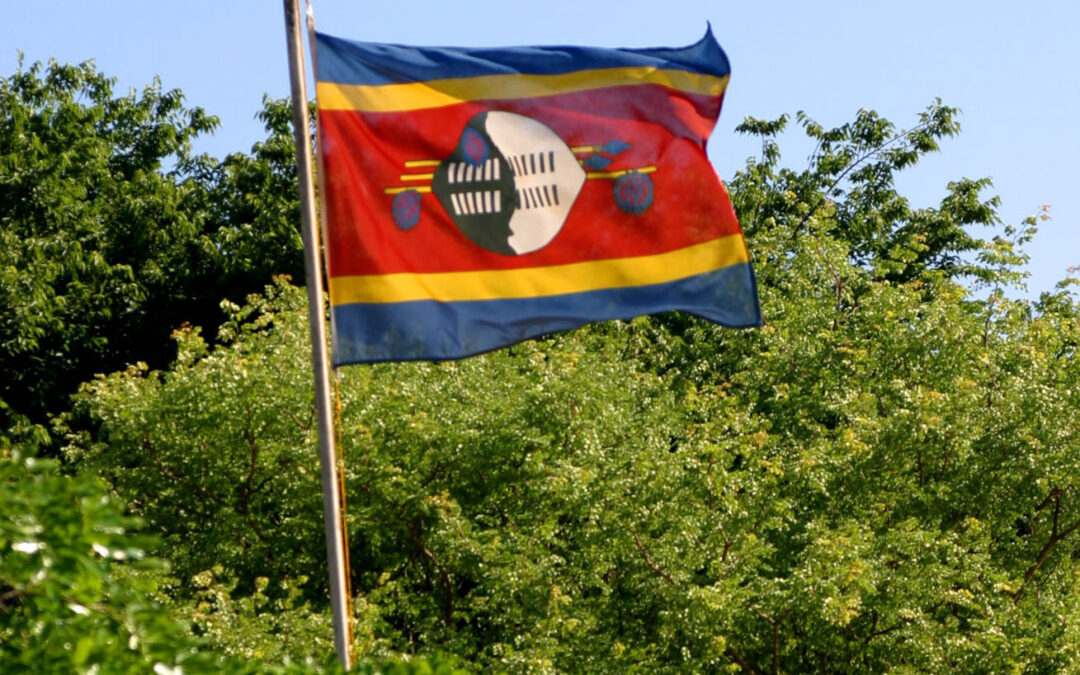
On 25 July 2018, the ICJ facilitated an integrated meeting of governmental stakeholders in the justice chain involved in different aspects of combatting sexual and gender-based violence (SGBV) in the Kingdom of Eswatini (Swaziland), the first meeting of its kind.
The meeting was convened by ICJ Commissioner and Principal Judge of the High Court of Eswatini, Justice Q. M. Mabuza. It followed a meeting held in February 2018 on combating SGBV in Eswatini and an ICJ report on key challenges to achieving justice for gross human rights violations in Eswatini, the latter of which recommended that justice sector stakeholders involved in the investigation, prosecution and sanctioning of, and provision of redress to victims for, acts of SGBV should convene six-monthly meetings so as to develop a common and integrated approach to the effective combating of SGBV.
The integrated meeting involved senior officials from the Office of the Deputy Prime Minister, the Office of the Attorney General, the Office of the Director of Public Prosecutions, the police, correctional services, and the judiciary.
The meeting discussed the fight against SGBV in the context of the Guidelines on Combating Sexual Violence and its Consequences in Africa, and other international standards. It considered the national legal and policy framework on SGBV; practices and challenges in the investigation and prosecution of SGBV; the sanctioning of SGBV offences; and the rehabilitation of sexual and domestic violence offenders by correctional services. Perspectives of the Office of the Deputy Prime Minister, the police and the judiciary were emphasized during discussions.
Stakeholders discussed issues with a view to identifying gaps and challenges in national law, policy and practice when measured against regional and global standards and best practices, as well as with a view to considering potential solutions to those gaps and challenges. The meeting agreed on next steps, including on concrete action that aligns with and/or augments the National Strategy to End Violence. Stakeholders agreed that they should all be involved in the early stages of cases involving SGBV.
Stakeholders also agreed that the recently enacted Sexual Offences and Domestic Violence Act will only be effectively implemented if justice sector stakeholders are well coordinated. Stakeholders agreed that integrated meetings should be held regularly, at intervals of no less than six months including, if possible, before the end of 2018.
Jul 27, 2018 | News
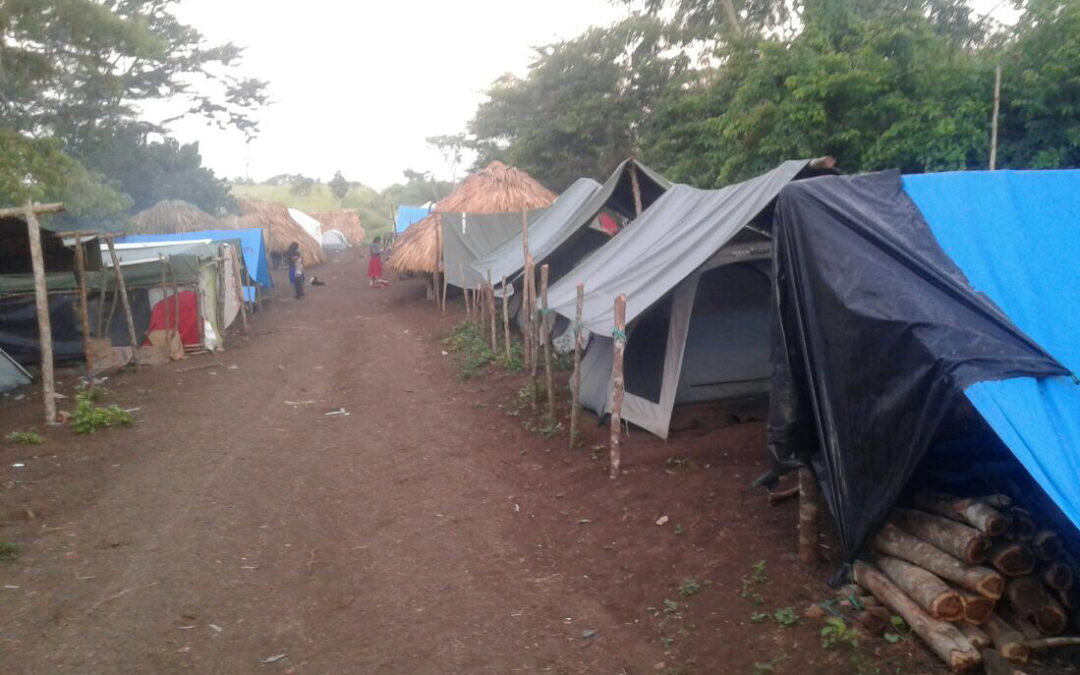
On 25 July, the ICJ visited the displaced persons of the Laguna Larga community, who were forcibly evicted from their homes over a year ago.
These displaced persons are now living in makeshift tents in infra-human conditions in the El Desengaño community, municipality of Candelaria, State of Campeche on the frontier between Guatemala and Mexico.
Their health and well-being are at serious risk.
On 8 September 2017, the Inter-American Commission on Human Rights (IACHR) granted precautionary measures in favour of the evicted and displaced community of Laguna Larga (Resolution 36/2017 Precautionary Measures No 412-17), calling on the Guatemalan authorities to adopt the “necessary measures to protect the rights to life and to personal integrity of the beneficiaries, through measures designed to improve, among other aspects, their sanitary and health conditions, in particular of children, women and the elderly”.
To date, the Guatemalan authorities have taken no action to implement the precautionary measures.
The ICJ was able to observe that the only measure adopted by the Guatemalan State has been to provide the displaced community with two teachers to give classes to the children.
However, the ICJ could also observe that the educational installations are precarious, too hot and very dark, which makes it difficult to give classes.
No sanitary nor health services have been provided by the Guatemalan authorities. On 24 July, a child died only 30 hours after her birth, seemingly a consequence of lack of medical attention.
Neither have other precautionary measures concerning food, access to water and housing been implemented.
The ICJ is deeply concerned that the Guatemalan State has not fulfilled the requirements of the IACHR and that after a year, the rights to life and personal integrity of the displaced community of Laguna Larga is at risk of irreparable harm.
In the face of the inaction of the Guatemalan authorities, members of the Laguna Larga community with the support of Mexican and Guatemalan organizations have managed to implement various projects to provide drinking water, electricity, food and health services.
However, despite these important efforts, this humanitarian support remains insufficient given the serious crisis.
While the efforts of the Laguna Larga community and Mexican and Guatemala non-governmental organizations have been an example of civil society organization, it in no way exonerates, substitutes or reduces the responsibility of the Guatemalan State to guarantee the rights to life and personal integrity of the displaced population and to implement the precautionary measures ordered by the IACHR.
Ramon Cadena, Director of ICJ’s Central American Office, said:
“Given this situation, the ICJ urges the Guatemalan authorities immediately to fulfil the Inter-American Commission on Human Rights’ precautionary measures 412-17 and to resume the dialogue that was started before the eviction. According to international standards, the State should provide reparations for all the harm and prejudice caused.”
Jul 24, 2018 | News
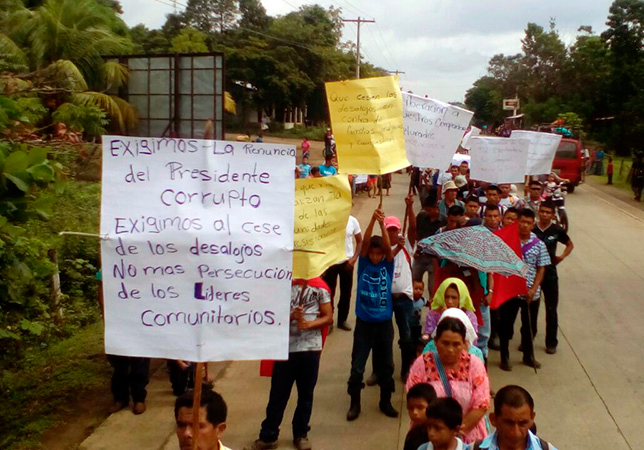
For many years, human rights defenders in Izabal have been the victims of persecution because of their opposition to the Phoenix nickel mining project.
This project has been operated by the Guatemalan Nickel Company (CGN), formally owned by Hudbay and now owned by the Solway Group.
“The ICJ expresses its deep concern about the persecution of human rights defenders opposing to nickel mining operations that are causing serious environmental damage and irreparable harm to the Lake of Izabal.
The local communities’ peaceful resistance contrasts with the violent repression that they face,” Ramon Cadena, Director of the Central American Office of the ICJ, said today.
Ramon Cadena added: “the Guatemalan government must urgently put an end to the criminalization and persecution of community leaders, journalists and all human rights defenders in the Department of Izabal.
Internal disciplinary measures should be taken against judges who through their acts contribute to the persecution of persons exercising their legitimate rights and freedoms.
The State should provide reparations for the harm and prejudice caused to human rights defenders by the public authorities. Furthermore, the International Commission against Corruption and Impunity in Guatemala (CICIG) should fully investigate these acts.“
Eduardo Bin Poou, Vice-President of the Izabal Fishers’ Association was recently detained and falsely accused without any evidence that he had committed any crime.
Last year, on 27 May 2017, Carlos Maas Coc, a leader of the Fishers’ Association was assassinated, and another fisherman, Alfredo Maquín Cocul, was wounded and these crimes remain in impunity today.
From 18-20 July, 2018, the ICJ carried out a visit to the Department of Izabal. On 19 July, the ICJ observed the hearing when the case against Jerson Xitumul, a community journalist, was dismissed for lack of evidence of any wrongdoing, at the Court for Criminal, Narcotics and Environmental Offences in Puerto Barrios.
The ICJ then held a meeting with the Izabal Fishers’ Association and on 20 July, the ICJ interviewed the Vice President of the same Association, Eduardo Bin Poou, arbitrarily detained in the Puerto Barrios prison.
The ICJ is deeply concerned by the role that judges in the Department of Izabal have played in the criminalization of human rights defenders.
Judge Edgar Aníbal Arteaga López has often abused his office by imposing exemplary punishments against human rights defenders.
This judge has handed down arbitrary sentences against journalists, fishermen, community leaders, land rights’ defenders and all those opposed to the nickel operations or who defend community rights in the Department.
For example, because of the arbitrary actions of Judge Arteaga, the community leader, Abelardo Chub Caal, remains in detention although there is no evidence that he has committed any crime.
There are other cases including that of Maria Magdalena Cuc Choc, from the Chabilchoch community, who was detained on 17 January 2018 in Puerto Barrios.
The single Judge for Criminal Proceedings, Narcotics and Environmental Offences in Puerto Barrios, Ana Leticia Peña Ayala, despite the evidence, absolved the retired Colonel Mynor Ronaldo Padilla González (former chief of security for the CGN nickel company) of all charges and ordered his immediate liberty.
During the court case, the Judge Peña Ayala prohibited the public and journalists from entering the court room for so-called “security reasons”, so that most of the proceedings were carried out behind closed doors. With this ruling, the assassination of Adolfo Ich remains in impunity and those responsible have not been punished.
In this same case, Germán Chub was left quadriplegic and the circumstances of the attack against him have never been resolved.
In the hearing on 19 July in the case of Jerson Xitumul, without any justification, Judge Arteaga also prohibited the presence of journalists and international and national observers in the court room.
Both judges flagrantly violated the principle of public hearings established in the Guatemalan Penal Code. A formal complaint was submitted to the Auxiliary of the Human Rights Attorney of the Department of Izabal concerning the actions of Judge Arteaga on 19 July.
The ICJ has stated on a number of occasions that the Guatemalan authorities have persecuted human rights defenders by charging them with crimes of land appropriation or aggravated land appropriation.
In this way, the Guatemalan authorities seek to criminalize the legitimate right to resist, enshrined in article 45 of the Guatemalan Constitution, accusing environmental human rights defenders and others of crimes such as incitement to crime, illegal detention, threats, damages, illicit meetings and marches and other acts. In practice, the State is penalizing the legitimate exercise of the rights of expression and association.
Jul 19, 2018 | News
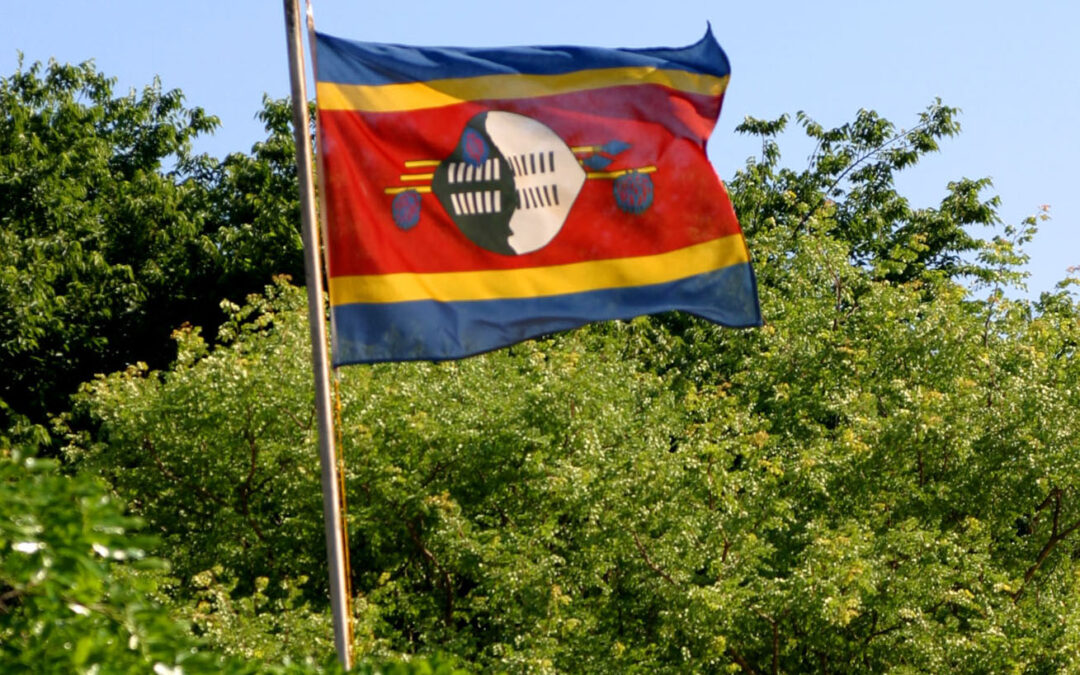
His Majesty King Mswati III of the Kingdom of Eswatini (formerly known as the Kingdom of Swaziland) yesterday gave his royal assent to the Sexual Offences and Domestic Violence Act, a milestone in the fight against sexual and gender-based violence (SGBV) in the country.
In its May 2018 report on key challenges to achieving justice for human rights violations in Swaziland, the ICJ identified the widespread occurrence of SGBV, with discriminatory practices based on customary laws and traditional beliefs undermining equality between men and women and the access by victims of such violence to effective remedies and reparation, as well as the holding to account of perpetrators of such violence.
Eswatini’sNational Strategy to End Violence in Swaziland 2017-2022, produced by the Office of the Deputy Prime Minister in collaboration with the UN Population Fund, itself pointed to an alarming rate of increasing violence in all its forms, noting that its most common form was gender-based violence, disproportionately affecting women and girls.
The new law follows a protracted legislative process, first initiated in 2009; then resumed in 2015. It has also been accompanied by increasing attention and concern by international human rights mechanisms, including the UN Human Rights Committee and the Committee on Elimination of Discrimination against Women.
Building on ICJ initiatives to bring together international, regional and local SGBV experts in 2015, and on sustainable development goals on access to justice and gender equality in 2017, the ICJ with local partners convened a workshop on combatting SGBV in Swaziland in February 2018. In consultations during and around this most recent workshop, interlocutors signaled fears that the Senate of Swaziland was equivocating on passage of the 2015 Bill. Responding to local partners’ requests, the ICJ made a submission to the Senate in March 2018, bringing to its attention to the global and regional obligations of the Kingdom to enact the legislation, as well as the Government’s own commitments to do so. The Senate soon after voted to adopt the legislation.
The new law for the first time criminalizes marital rape and other domestic violence offences; makes provision for Specialised Domestic Violence Courts; creates mechanisms and avenues for reporting of offences; and requires medical examination and treatment of victims. These are issues that had not been previously provided for.
Enactment of the law is significant, incorporating into domestic law a very large part of Eswatini’s international human rights obligations, including those arising from the Africa region, to criminalize and sanction the perpetrators of SGBV. It also discharges commitments made by His Majesty’s Government during the 2016 Universal Periodic Review.
Just as important will be the effective implementation of the new law to combat SGBV by bringing perpetrators to account and providing victims with access to justice.
With a view to enhancing the prospects of an effective and comprehensive approach to that end, the ICJ’s Commissioner, and Principal Judge of the High Court, Justice Qinsile Mabuza, will next week be coordinating a meeting of governmental justice sector stakeholders involved in combatting SGBV in the country. This first coordinated meeting of governmental actors will focus on issues of investigation, prosecution and sanctioning of sexual and gender-based violence crimes, including the role of social and medical services.
The ICJ is also commissioning a report on the access of victims of SGBV to effective remedies and reparation. Focused on case studies, the report will include attention to lack of justice through acquittals that have been prompted by inadequate laws or procedures and/or through lack of prompt or sufficient forensic or medical evidence. This report will feed into discussions at a second meeting of governmental justice sector stakeholders, intended for 2019.
Jul 15, 2018 | News
On 14 July 2018, the ICJ co-organized a discussion on extrajudicial killings in Thailand, focusing on the cases of Chaiyaphum Pasae and Abe Saemu.
The discussion was held at the Student Christian Centre in Bangkok.
Chaiyaphum Pasae, a Lahu youth activist, was killed by a military officer in the Chiang Dao district of Thailand’s northern Chiang Mai province in March 2017. The killing took place during an attempt to arrest him as an alleged drug suspect. Officials claimed Chaiyaphum Pasae had resisted arrest and was subsequently shot in “an act of self-defence”.
Abe Saemu, from the Lisu hill tribe, was killed by a military officer in February 2017 in the Chiang Dao district of Chiang Mai province in an attempt to arrest him on allegations of drug coffences. Officials claimed Abe Saemu had resisted arrest and was killed in “self-defence”.
During the discussion, ICJ’s National Legal Adviser Sanhawan Srisod addressed the audience to set out the international law and standards that apply to investigating potentially unlawful deaths, including the rights of victims and family members, referring to the standards set out in the revised Minnesota Protocol on the Investigation of Potentially Unlawful Death (2016), which was launched in Thailand on 25 May 2017.
Participants in the event included members of the families of Chaiyaphum Pasae and Abe Saemu, the lawyers in both of their cases, interested members of the public, media representatives, students and academics.
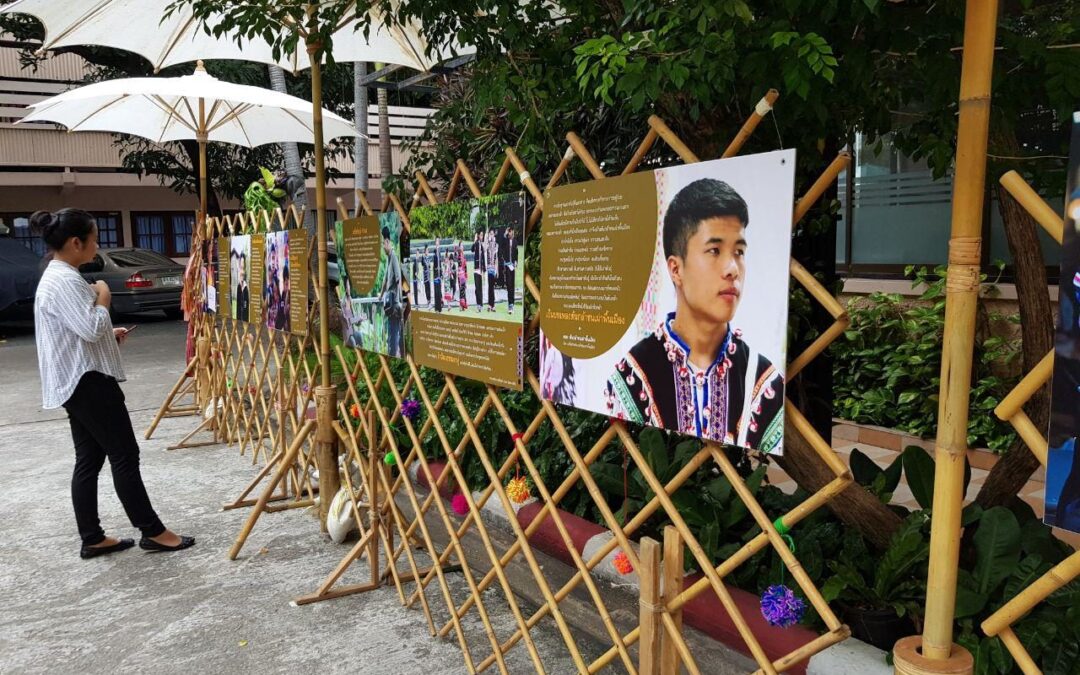
The discussion opened with an art exhibition and Lahu dance show by the Save Lahu group. Human Rights Commissioner Angkhana Neelapaijit then made a presentation on challenges in seeking accountability for extrajudicial killings in Thailand.
A panel discussion on the latest updates in the cases of Chaiyaphum Pasae and Abe Saemu followed, moderated by Pranom Somwong from Protection International.
The panel included relatives of Chaiyaphum Pasae and Abe Saemu; Ratsada Manuratsada, a lawyer representing the families in both cases and Krissada Ngamsiljamras, a representative from the National Human Rights Commission of Thailand.
A second panel considered challenges on the administration of criminal justice in the context of unlawful deaths.
Moderated by Pratubjit Neelapaijit of UN Office of the High Commissioner for Human Rights, the panel included Malee Sittikreangkrai (Chiang Mai University); Sumitchai Hattasan (Human Rights Lawyers’ Association); Namtae Meeboonsalang (Provincial Chief Public Prosecutor, Office of the Attorney-General); Kritin Meewutsom (Forensic doctor, Ranong Hospital); and Sanhawan Srisod (ICJ).
The event was conducted in collaboration with Cross Cultural Foundation (CrCF); Protection International (PI); UN OHCHR; Human Rights Lawyers’ Association (HRLA); Thai Volunteer Services (TVS); Dinsorsee Creative Group; Center for Ethnic Studies and Development, Chiang Mai University (CESD); Legal Research and Development Center, Chiang Mai University (LRDC) and Network of Indigenous Peoples in Thailand (NIPT).
Contact
Kingsley Abbott, Senior Legal Adviser, ICJ Asia Pacific Regional Office, kingsley.abbott(a)icj.org