Dec 22, 2015 | News
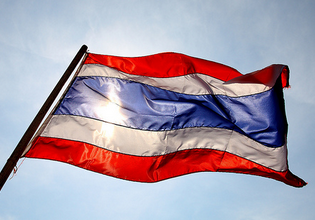
The upcoming Supreme Court verdict in the case of Somchai Neelapaijit is an important test of Thailand’s treatment of cases of enforced disappearance, the ICJ said today.
The Supreme Court is expected to rule on whether the Court of Appeal was correct in overturning the conviction of one police officer for coercion and upholding the acquittals of four other police officers, and whether Somchai Neelapaijit’s family should be permitted to participate in the proceedings as plaintiffs.
The case concerns the 2005 trial of five police officers for coercion and gang-robbery after Somchai Neelapaijit, a leading Thai lawyer and human rights defender, was last seen on 12 March 2004 being pushed into a car by several men in Bangkok.
In March 2014, the ICJ published a report in Thai and English, which summarises the history of the case and provides a background to the upcoming decision, which will be delivered in Bangkok on 29 December 2015.
“This decision is an important milestone in the long and torturous history of this case,” said Sam Zarifi, the ICJ’s Regional Director for Asia and the Pacific.
“But whatever the result, Thailand must not waver from its repeated commitments to promptly and effectively investigate this enforced disappearance, to seek to identify those responsible and bring them to justice, and to provide the family with full remedies and reparation,” he added.
The police never charged the five police officers with more serious crimes – despite the statements of numerous officials, including past Prime Minister Thaksin Shinawatra, expressing certainty about his death – as Somchai Neelapaijit’s body or remains were never found.
The Department of Special Investigations (DSI), often described as the FBI of Thailand, is still conducting an investigation into his fate or whereabouts.
Angkhana Neelapaijit, Somchai Neelapaijit’s wife and now Commissioner of the Thai Human Rights Commission, told the ICJ: “Ensuring that all victims of enforced disappearance have their rights fully recognised by the Thai courts is equally important to me as seeking justice in my own case. My long battle through Thailand’s justice system has shown me Thailand’s laws are currently inadequate to deal with cases of enforced disappearance and that significant reforms are needed before the rights of victims are fully recognized.”
Contacts
Sam Zarifi, Regional Director, Asia-Paicific Programme, sam.zarifi(a)icj.org, +66 (0) 80 781 900
Kingsley Abbott, International Legal Adviser for Southeast Asia, Asia-Pacific Programme, kingsley.abbott(a)icj.org, +66 (0) 94 470 1345
Additional information:
On 11 December 2015, the ICJ published an English version of its Practitioners Guide “Enforced Disappearance and Extrajudicial Execution: Investigation and Sanction”, originally published in Spanish in March 2015.
Thailand-Somchai Verdict-News-Press releases-2015-ENG (full text, in PDF)

Dec 2, 2015 | News
The ICJ today denounced the execution of four individuals convicted for their involvement in terrorism in secret trials by military courts.
Four civilians, namely Maulvi Abdus Salam, Hazrat Ali, Mujeebur Rehman and Sabeel alias Yahya, were hanged in Kohat early morning today after being sentenced to death by military courts earlier this year.
In a press statement issued on 13 August, the media wing of the armed forces announced they were convicted for their involvement in “terrorist activities”, including harboring, funding and transporting “suicide bombers” who attacked the Army Public School in December last year.
According to the statement, they are all “active members” of the “Toheedwal Jihad Group”.
The ICJ considers that the executions are unlawful, in breach of Pakistani law and its international legal obligations.
“The failure of the government and military authorities to make public information about the time and place of their trials, the charges and evidence against them, as well as the judgments of military courts have confirmed fears of human rights groups and the legal community that military trials in Pakistan are secret, opaque and constitute a violation of the right to a fair trial,” said Sam Zarifi, ICJ’s Asia Director.
The ICJ emphasizes that under international standards, civilians may not be tried before military tribunal.
As highlighted by the ICJ in a briefing paper released in April, proceedings before Pakistani military courts fall well short of national and international standards requiring fair trials before independent and impartial courts: judges are part of the executive branch of the State and continue to be subjected to military command; the right to appeal to civilian courts is not available; the right to a public hearing is not guaranteed; and a duly reasoned, written judgment, including the essential findings, evidence and legal reasoning, is denied. In addition, the procedures of military courts, the selection of cases to be referred to them, the location and timing of trial, and detailed about the alleged offences are kept secret.
“The ICJ supports the pursuit of justice for all victims of terrorism in Pakistan, including the horrific attack on the Army Public School last year”, added Zarifi. “However, justice will not be done by subverting the foundational pillars of justice: the right to a fair trial and independence of the judiciary.”
The UN Human Rights Committee, the supervisory authority for the ICCPR, has emphasized that in trials leading to the imposition of the death penalty, “scrupulous respect of the guarantees of fair trial is particularly important” and “imposition of a sentence of death upon conclusion of a trial, in which the provisions of article 14 of the Covenant have not been respected, constitutes a violation of the right to life.”
Pakistan has hanged more than 300 people since it lifted a six-year moratorium on the death penalty in December 2014. Initially lifted only for terrorism-related offences, the Government resumed executions in all cases in March 2015. Less than ten per cent of the total executions relate to terrorism-related offences.
“These executions only fulfill a desire for retribution and add to the disturbing trend of hanging people in the name of fighting terrorism in Pakistan and the region,” said Zarifi. “The death penalty has not been shown to have any deterrent effect on crime or terrorism anywhere in the world.”
The ICJ opposes capital punishment in all cases without exception. The death penalty constitutes a violation of the right to life and the right not to be subjected to cruel, inhuman or degrading punishment.
In December 2014, the UN General Assembly adopted a resolution, for the fifth time since 2007, emphasizing that the use of the death penalty undermines human dignity and calling on those countries that maintain the death penalty to establish a moratorium on its use with a view towards its abolition.
Some 117 UN Member States, a wide majority, voted in favor of a worldwide moratorium on executions as a step towards abolition of the death penalty.
In line with the present international trend, the ICJ reiterates its call on Pakistan to impose an official moratorium on executions, with a view to abolishing the death penalty.
Contact
Sam Zarifi, ICJ Asia Pacific Regional Director (Bangkok), t: +66 807819002; email: sam.zarifi(a)icj.org
Reema Omer, ICJ International Legal Adviser for Pakistan (London), t: +447889565691; email: reema.omer(a)icj.org
Additional Information
On 6 January 2015, less than a month after a terrorist attack on an army public school in Peshawar that killed nearly 150 people, most of them children, Parliament voted to amend the Constitution of Pakistan, 1973, and the Army Act, 1952, to allow military courts to try civilians for offences related to terrorism.
Since January 2015, 56 cases have been referred to military courts, out of which 31 have been decided. Military courts have found the accused persons guilty in all cases. 27 convicts have been given the death penalty and four have been sentenced to life imprisonment.
Around 20 cases are still pending before the various military courts.
Nov 28, 2015 | News
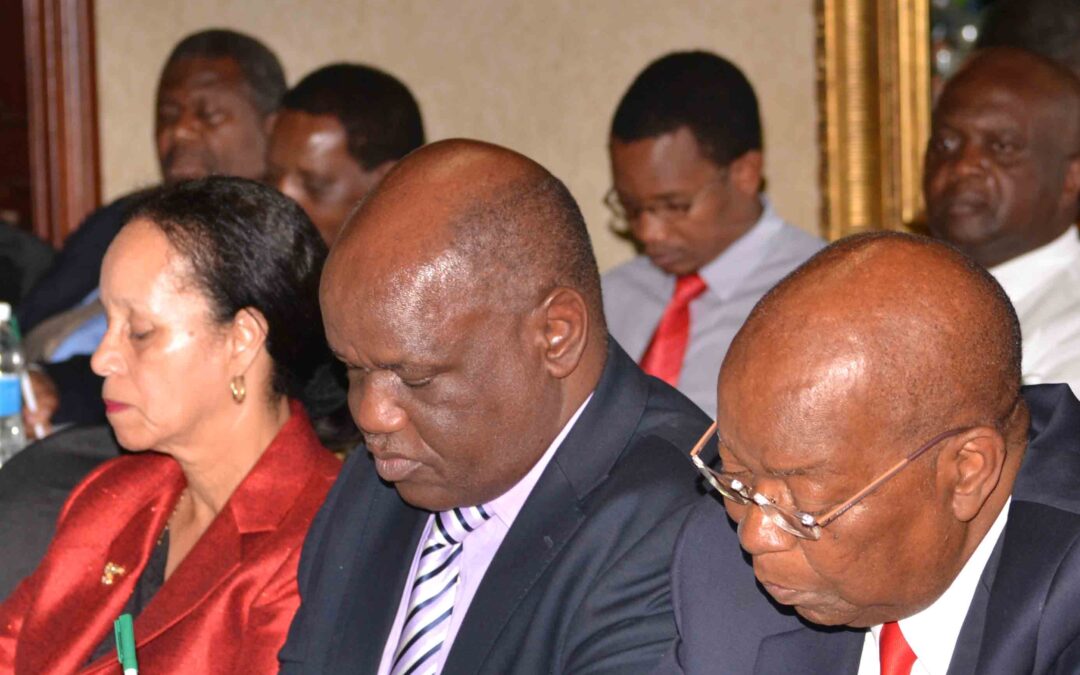
The ICJ co-hosted the Joint Zimbabwe Judicial-Legal Practitioners Colloquium in Zimbabwe. The meeting was held in conjunction with the Law Society of Zimbabwe (LSZ) and the Judicial Services Commission (JSC) of Zimbabwe.
The meeting took place on 27 – 28 November 2015 under the theme “Access to Justice: Barriers and Solutions (A Bar-Bench Dialogue)”.
This year it congregated 30 legal practitioners and 60 Judges who sought to have an honest discussion on the challenges that affect access to justice in Zimbabwe in an attempt to seek practical solutions to these challenges for greater access.
The Chief Justice Godfrey Chidyausiku, and the President of the Law Society Mrs Vimbai Nyemba, in their opening remarks both highlighted the importance of this dialogue platform to justice delivery in Zimbabwe.
They both noted how the colloquium has over the years contributed towards the construction of bridges between the bar and the bench and the doing away of hostilities for the betterment of Justice delivery.
Nov 25, 2015 | News
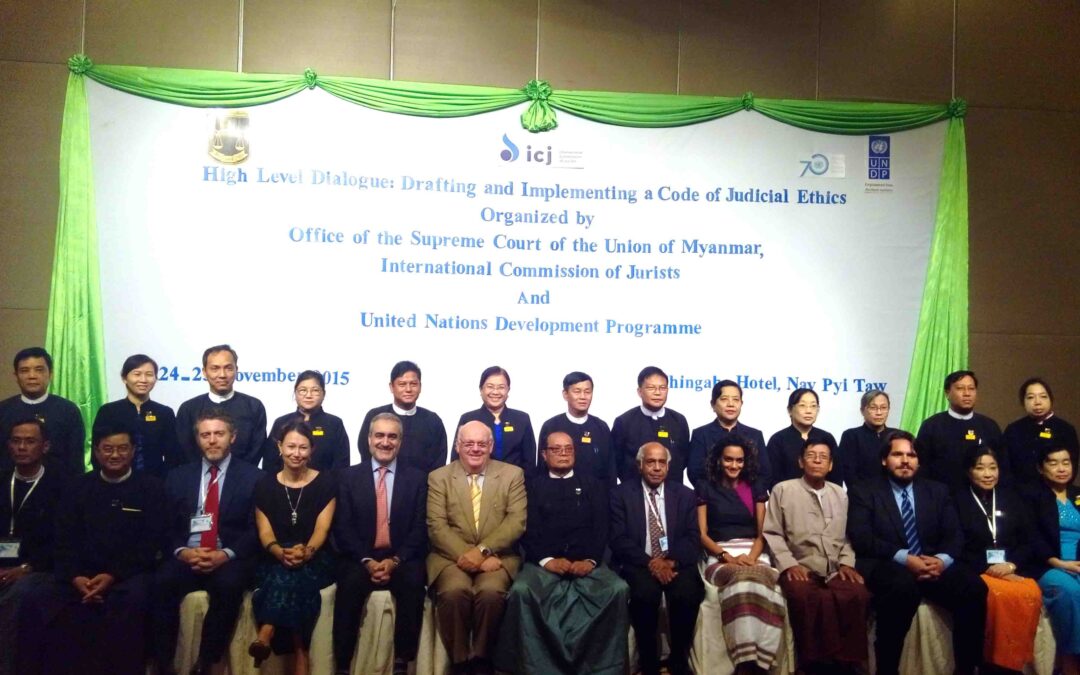
The ICJ, the UNDP and the Office of the Supreme Court of the Union (OSCU) held a High Level Dialogue on “Drafting and Implementing a Code of Judicial Ethics” in Nay Pyi Taw on 24-25 November 2015.
This followed on a commitment by the OSCU to create a new code and to work together with the ICJ and UNDP to ensure it is informed by and implemented in accordance with international best practice.
The Judicial Ethics Review Committee, Regional High Court Judges and other senior court administrators participated in the Dialogue.
The participants and their international counterparts from the ICJ and UNDP discussed the content of the Draft Code of Ethics, international standards on Judicial Codes of Ethics and accountability mechanisms.
In opening the Dialogue, the Honourable Supreme Court Justice of the Union, U Mya Thien explained that the new code reflecting international standards would enhance public trust and promote accountability in the Judiciary.
In his opening remarks, Sam Zarifi, the ICJ’s Regional Director for Asia and the pacific noted the historic occasion in which the world was watching transition in Myanmar.
During the Dialogue, former ICJ Commissioner and UN Special Rapporteur on the Independence of Judges and Lawyers, Dato Param Cumaraswamy, and Justice Murray Kellum of Australia shared their wealth of experience developing codes of ethics and accountability mechanims at the national and international levels.
Both explained that public perception of the Judiciary is key in a transition to the rule of law and human rights.
All participants agreed the Myanmar’s judiciary is not yet independent and that its current judicial code of ethics requires updating.
It was acknowledged that new code of ethics would develop the independence of the judiciary in Myanmar.
Sam Zarifi explained that, “in order for the Supreme Court to assert judicial independence it must demonstrate that it can hold itself accountable to a code of ethics.”
Both the UNDP and the ICJ congratulated the OSCU for following its Strategic Plan for 2015-2018 and engaging in a dialogue designed to further this process.
Both expressed willingness to continue working with Myanmar’s judiciary on the issues of judicial independence, the rule of law and human rights.

Nov 17, 2015 | News
La CIJ demanda a las autoridades guatemaltecas terminar con la impunidad que rodea el caso Siekavizza.
La CIJ ante la impunidad prevaleciente en el caso Siekavizza expresa:
El llamado “caso Siekavizza” constituye un caso paradigmático de femicidio supuestamente cometido por el esposo de la víctima Cristina Siekavizza, el 16 de julio de 2011. El cuerpo de la víctima no ha aparecido hasta ahora.
- Por las circunstancias que rodean este caso la CIJ ha solicitado reiteradamente que éste sea conocido por la Comisión Internacional contra la Impunidad en Guatemala (CICIG); no solo porque el principal sospechoso es hijo de una ex Presidenta de la Corte Suprema de Justicia, sino porque existen elementos suficientes para considerar que puede haber existido una conjura criminal para mantener el caso en la impunidad.
- Desde que se dieron los hechos tan deplorables, el Sistema de Justicia de Guatemala mostró ineficiencia y falta de voluntad política para esclarecer los hechos y llevar ante la justicia al o a los supuestos responsables. Las autoridades estatales no adoptaron las medidas necesarias para llevar a cabo una investigación eficiente y rápida.
- Lo anterior permitió que se afectara la escena del crimen y que el presunto responsable se refugiara en otro país y escapara a la justicia.
- Los cuatro años de impunidad que lleva el caso, han provocado un profundo pesar a los familiares de Cristina Siekavizza a quienes en su momento, el Estado deberá resarcir los daños causados.
- Este es tan solo uno de los miles de casos criminales que se mantienen en la impunidad frente a la pasividad de las autoridades correspondientes. En general la justicia en Guatemala sigue seriamente afectada por altos índices de impunidad.
Wilder Tayler, Secretario General de la Comisión Internacional de Juristas con sede en Ginebra, Suiza expresó: “Seguiremos observando el desarrollo de este caso; hacemos un enérgico llamado a todos los operadores de justicia involucrados, para que pongan el más riguroso empeño para permitir esclarecer un crimen tan grave. La impunidad que rodea el caso debe superarse cuanto antes.”