Aug 7, 2015 | News
The SC’s decision to uphold the possibility of trial before military courts of individuals accused of committing terrorism related offences and belonging to “any terrorist group or organization using the name of religion or a sect” is a blow to human rights and the rule of law, said the ICJ.
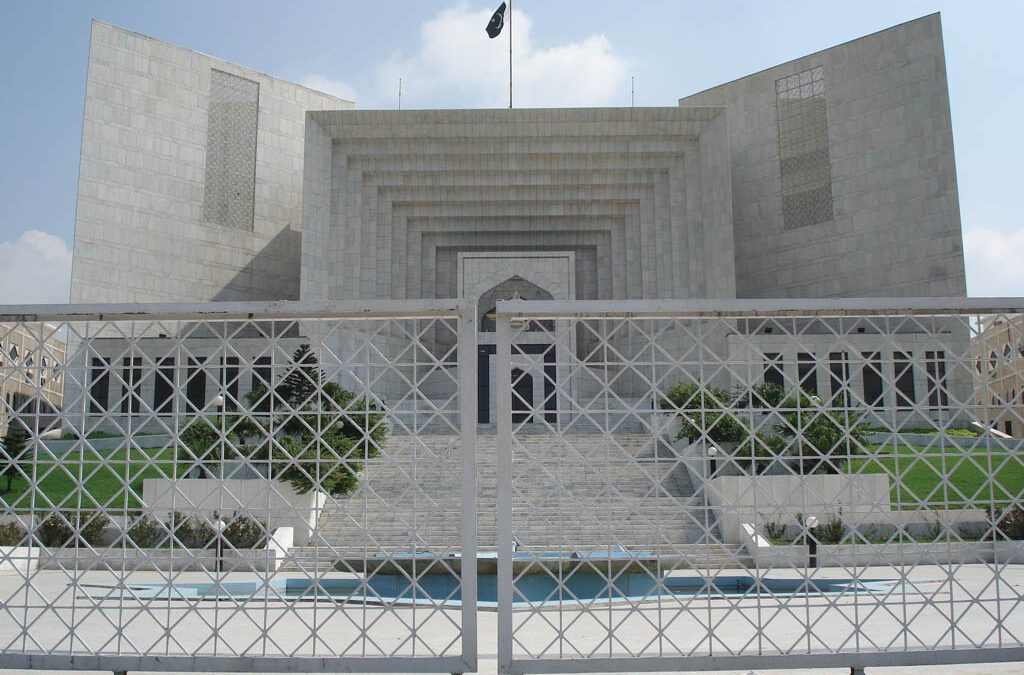
In a split decision on the validity of the 21st amendment to the country’s Constitution, delivered on Wednesday, nine judges of the Supreme Court held that the trial of suspected terrorists, including civilians, by military courts was within the constitutional framework of the country and met principles of criminal justice.
The judges also ruled that individuals who claim to, or are known to belong to “any terrorist group or organization using the name of religion or a sect” constituted a valid classification allowing for differential treatment under the constitution.
Six dissenting judges expressed the view that the 21st constitutional amendment was incompatible with the right to a fair trial and independence of the judiciary. Two judges did not give an opinion on the merits, but suggested that the Supreme Court did not have the jurisdiction to review constitutional amendments.
The 902-page judgment also responds to challenges to the 18th amendment to the Constitution, including the procedure for judicial appointments.
“This judgment squarely puts Pakistan at odds with its international obligations and weakens the Supreme Court’s hard won reputation as the last resort for protecting the rights of Pakistani people,” said Sam Zarifi, ICJ’s Asia Director. “The Court has missed an important opportunity to reverse the militarization of justice in progress under the guise of combatting terrorism and to reinforce independence of the judiciary in the country.”
The trial of civilians in military courts for terrorism-related offences is incompatible with international standards, which require that those accused of any criminal offence are guaranteed a fair trial by an independent, impartial and competent tribunal.
ICJ’s briefing paper, published in April, provides a detailed assessment of the incompatibility of military trials in Pakistan with its international law obligations.
The Supreme Court, however, did not engage with international standards of fair trial and independence of the judiciary.
At least eight judges of the Supreme Court were of the opinion that it is for the Federal Government alone to ensure that their conduct “does not offend against the Public International Law or any International Commitment made by the State”.
“It is very disappointing that the Supreme Court has abdicated its primary role in acting with the other branches of the State to implement its obligations under international law,” added Zarifi. “International law is clear -all organs of the State, including the judiciary, must respect international human rights commitments, which include the right to a fair trial. Indeed, it is a core judicial responsibility to state what the law provides, whether the source of the law is international or domestic.”
The majority judgment also goes against previous Supreme Court rulings on military courts. In the past, the Court had reasoned that military courts do not meet the requirements of independence and impartiality; the establishment of military courts for trial of civilians amounts to creating a “parallel judicial system”; and that impeding the right to a fair trial cannot be justified on the basis of the public emergency or the “doctrine of necessity.
Military courts in Pakistan also have the power to award death sentences. On 2 April 2015, military courts convicted seven people of undisclosed offences in secret trials.
Of them, six were sentenced to death and one was sentenced to life in prison. The Supreme Court’s judgment has cleared the way for their execution.
Contact
Sam Zarifi, ICJ Asia Pacific Regional Director (Bangkok), t: +66 807819002; email: sam.zarifi(a)icj.org
Reema Omer, ICJ International Legal Advisor for South Asia (Lahore), t: +923214968434; email: reema.omer(a)icj.org
Read also:
ICJ denounces law permitting military trials of civilians
Trials of civilians before military tribunals a subversion of justice
HRCP, ICJ demand clarification on juveniles’ trial by military courts
Additional information
In a significant development, by a 13-4 majority the Supreme Court held it has jurisdiction to review constitutional amendments passed by Parliament on the touchstone of the “salient features” and the preamble of the Constitution. What those salient features are, however, was left unaddressed.
On 6 January 2015, less than a month after a terrorist attack on an army public school in Peshawar that killed nearly 150 people, most of them children, the Pakistani Parliament unanimously voted to amend the Constitution of Pakistan, 1973, and the Army Act, 1952, to allow military courts to try civilians for offences related to terrorism.
Military courts in Pakistan are not independent or impartial. Trials before military courts in Pakistan fall far short of national and international fair trial standards.
Pakistan has resumed executions since December 2014, in response to a spate of terrorist attacks in the country. At least 196 people on death row have already been executed. According to available data, only a small fraction – less than 10 pecent – of those executed were convicted of terrorist offences.
ICJ opposes capital punishment in all cases without exception. The death penalty constitutes a violation of the right to life and the right not to be subjected to cruel, inhuman or degrading punishment.
Jul 22, 2015 | News
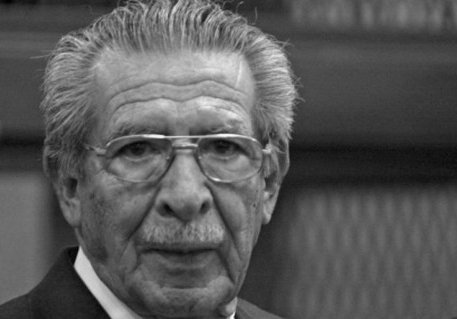
El genocidio perpetrado contra población Ixil de Guatemala será debatido en el segundo juicio seguido en contra del ex Presidente de facto Efraín Ríos Montt y el ex Director de inteligencia José Mauricio Rodríguez Sánchez.
El juicio está por reiniciarse el 23 de julio. Lamentablemente, este segundo juicio ya se ha visto afectado por diferentes hechos, que a continuación describimos.
La recusación de la jueza Presidenta del Tribunal B de Mayor Riesgo, debido a la redacción de su tesis doctoral sobre el delito de Genocidio, no debió de haber sido aceptada por no existir una causa razonable, ya que dicho trabajo de tesis se relaciona con su formación académica especializada en justicia de transición.
Posteriormente, la jueza fue sustituida por un juez que ha evidenciado relaciones de amistad a través de las redes sociales con uno de los abogados defensores del acusado Ríos Montt (photo).
Nuevamente la defensa busca que por lo menos un juez “amigo” integre el tribunal. A ello se suma el hecho de que recientemente el Instituto Nacional de Ciencias Forenses (INACIF) emitió un informe que hace referencia al supuesto problema de salud física y mental del acusado Ríos Montt.
La CIJ de la manera más enérgica expresa que estos actos son parte de una estrategia que tiene como propósito eludir la acción de la justicia.
La CIJ considera que ello constituye una violación al derecho de las víctimas al acceso a la justicia y contra el derecho a un juicio justo, libre de intromisiones de todo actor externo.
La CIJ se permite recordar al Poder Judicial que el combate a la impunidad de acuerdo con los estándares internacionales la justicia debe obedecer a tres imperativos: juzgar y sancionar a los responsables de graves crímenes, como el genocidio; satisfacer el derecho de las víctimas a conocer lo sucedido y obtener reparación integral; y fortalecer la independencia de las autoridades judiciales.
El supuesto problema de salud física y mental del acusado Ríos Montt podría ser solo una simulación, para evitar que sea nuevamente llevado a juicio.
Al respecto, la CIJ denuncia las acciones violatorias del debido proceso realizadas una vez más, por la jueza Carol Patricia Flores, quien ordenó se le practicasen exámenes médicos a Ríos Montt, para averiguar acerca de su estado de salud físico y mental.
Esta orden de la jueza Flores es ilegal, debido a que el proceso ya se encontraba a cargo del tribunal de Sentencia Penal B de Mayor Riesgo y ella carecía de competencia para ordenar tal medida.
La CIJ insta a los jueces a ejercer su poder de contralores del proceso penal, rechazando todos los actos de litigio de mala fe que sean promovidos por la defensa de los procesados.
Se requiere que los jueces a cargo del juicio se encuentren libres de toda presión externa que pueda intimidarlos en su función.
Para garantizar su independencia deben contar con el apoyo de la Corte Suprema de Justicia, quien debe velar por su seguridad y por el desarrollo del proceso en un marco de respeto.
Ramón Cadena, Director de la CIJ para Centro América, expresó: “Otra vez estamos ante una serie de medidas dilatorias, que demuestran que existen jueces que se prestan a promover la impunidad de graves violaciones a los derechos humanos.”

Jul 22, 2015 | News
Cambodian authorities must immediately quash the convictions for insurrection handed down to eleven opposition party activists on 21 July, the ICJ said today.
The Phnom Penh Municipal Court sentenced the National Rescue Party (CNRP) activists to between seven and 20 years in prison following an unfair trial.
“These men were grossly over-charged with insurrection in the first place,” said Kingsley Abbott, ICJ International Legal Adviser.
“The fact they have now been handed down disproportionately severe sentences following an unfair trial only serves to underscore that a serious miscarriage of justice has taken place in violation of Cambodia’s international obligations,” he added.
The charges arose out of their participation in a demonstration on 15 July 2014 against the closure of Phnom Penh’s designated protest site, Freedom Park, that became violent after “public-order” para-police attempted to break up the protest and were attacked by some people in the crowd.
According to information provided to the ICJ, all but one of the accused’s nine lawyers either boycotted or were unable to attend Tuesday’s suddenly-scheduled hearing in protest against a decision by the Court on Monday to fast track the trial.
When the Court unexpectedly called for closing arguments, the accused requested their lawyers to be present, which was denied.
According to observers, no credible evidence was produced during the trial connecting the eleven to the violence and the verdicts were read out after only 15 minutes of deliberation.
“In the event that fresh charges are brought, they must be consummate with the seriousness of the alleged offending, based on reliable evidence, and be adjudicated upon at a trial that scrupulously respects international fair trial standards in accordance with Cambodia’s international obligations,” Abbott said.
Background
Three men – Meach Sovannara, Oeur Narith, and Khin Chamreun – were convicted of participating in and leading an insurrectionary movement and were sentenced to 20 years imprisonment.
Eight men – Sum Puthy, Neang Sokhun, San Kimheng, Tep Narin, San Seihak, An Batham, Ouk Pich Samnang, and Ke Khim – were convicted of participating in an insurrectionary movement and were sentenced to seven years imprisonment.
Tuesday’s verdicts are inconsistent with international law and standards including article 14 of the International Covenant on Civil and Political Rights (ICCPR), to which Cambodia is a State Party, which states that everyone has the right to a “fair and public hearing by a competent, independent and impartial tribunal established by law.”
Contact:
Kingsley Abbott, International Legal Adviser, Asia & Pacific Programme, t: + 662 6198477, + 662 6198478 Ext. 203 ; e: kingsley.abbott(a)icj.org
Jul 19, 2015 | News
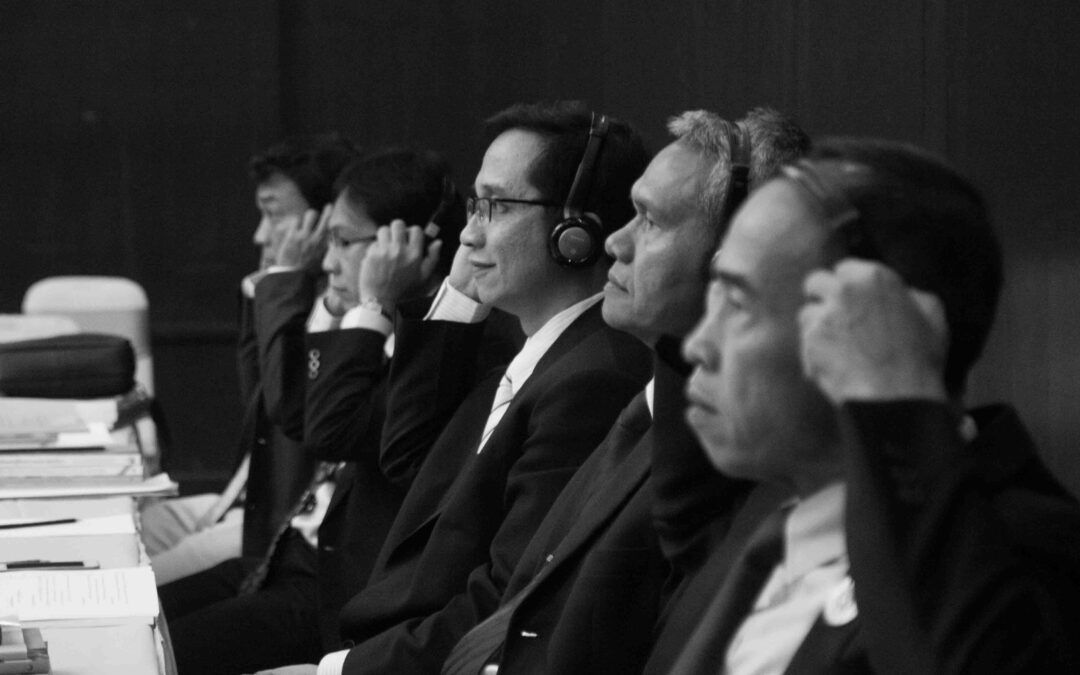
On 18-19 July 2015, the ICJ held a workshop on “The Protection of Victims in Criminal Cases” for 35 judges in Thailand’s deep South. This is the fifth workshop the ICJ has held with the judges of Region 9 since 2011.
The objective of the workshop, held in Hat Yai, was to discuss how to improve procedural measures to protect victims in Thailand with reference to international law and standards.
Speakers at the workshop included Justice John Lawrence O’Meally, an ICJ Commissioner from Australia, Judge Dol Bunnag, Chief Judge of the Juvenile and Family Court of Sakonnakorn Province, Chief Judges from Region 9, and Marie Guiraud, International Civil Party Lead Co-Lawyer at the Khmer Rouge Tribunal in Cambodia.
Background:
Previous ICJ workshops with the Judges of Region 9 have covered the following topics:
- Rule of Law and Strengthening the Administration of Justice in the Context of the Application of Emergency Laws in the Southern Border Provinces (2011)
- Rule of Law and Strengthening the Administration of Justice in the Context of Bail in the Southern Border Provinces (2012)
- Rule of Law and Strengthening the Administration of Justice in the Context of Habeas Corpus in the Southern Border Provinces (2012)
- The Principle of Inadmissibility of Evidence Obtained by Unlawful Means and Hearsay Evidence: International Standards Compared to Thai Law (2014)
Jul 16, 2015 | Events, News
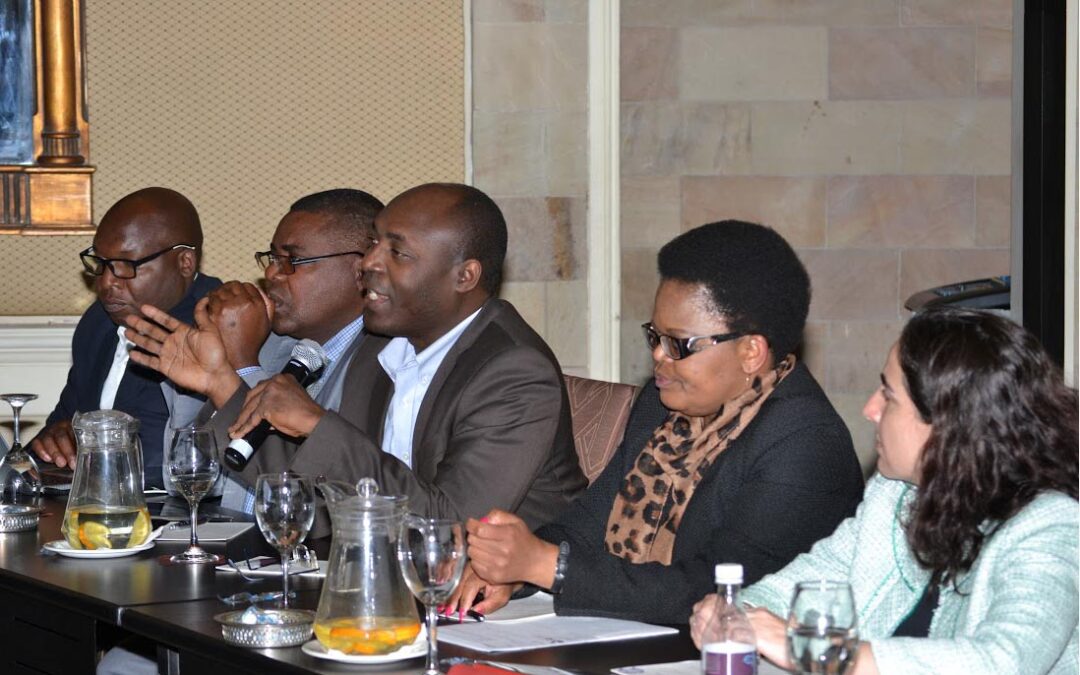
With the support of Open Society Foundations, and in collaboration with the Africa Judges & Jurists Forum, the ICJ today commenced its two-day conference on Rising Judicial Persecution of Human Rights Defenders in Africa, held in Pretoria, South Africa.
Building on a workshop convened by the ICJ in August 2013 for Southern Africa Development Community (SADC) lawyers defending human rights defenders, the conference seeks to raise awareness about rising judicial and security sector persecution of human rights defenders and the impact of this on the enjoyment of human rights and fundamental freedoms.
The conference also provides a platform for judicial officers to give their perspectives on the persecution of defenders and, in dialogue with lawyers, to map out strategies to reduce such persecution and increase legal protection.
The conference also looks into the work of regional and international mechanisms for the protection of human rights defenders.
At the conclusion of the conference, consideration will be given to the identification of best practices and recommendations on ensuring protection of human rights defenders subjected to judicial persecution.
Africa-Workshop Programme Rising Judicial Persecution of HRDs-News-Events-2015-ENG (download conference programme, in PDF)