Jul 1, 2015 | Advocacy, Open letters
The statement has been endorsed by more than 100 civil society groups, including the ICJ, with representation in more than 25 African states, following Omar al-Bashir’s travel to South Africa from June 13-15.
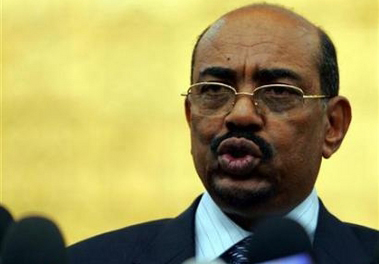
The declaration raises grave concern over South Africa’s flouting its domestic and international legal obligations in failing to arrest al-Bashir (photo), and applauds the efforts of Southern Africa Litigation Centre, which filed an application before South Africa’s courts to compel al-Bashir’s arrest.
The declaration is a strong testament to support for victims of grave crimes to have access to justice, for the ICC’s efforts to advance justice for crimes committed in Darfur, and for activism to ensure al-Bashir’s surrender to the ICC.
SouthAfrica-Civil Society Declaration on Bashir-Advocacy-Open letters-2015-ENG (full text in PDF)

Jun 21, 2015 | News
Today, one year on from the arrest and detention of human rights lawyer Yara Sallam and 22 peaceful demonstrators, the ICJ calls for their immediate and unconditional release.
On 21 June 2014, Yara Sallam, together with 22 others, was arrested and detained in the context of a peaceful demonstration in Heliopolis, Cairo.
“The Egyptian authorities must end their campaign to silence human rights defenders and all those suspected of opposing the military and the government through politically motivated prosecutions and trials,” said Said Benarbia, Director of the ICJ Middle East and North Africa Programme.
To this end, they must immediately and unconditionally release Yara Sallam and the 22 other detainees,” he added.
The demonstrators were calling for the revocation of Law No. 107 of 2013, on public meetings, processions and protests, and the release of all those detained under it.
They were forcibly dispersed by security forces and men in civilian clothes.
The ICJ has previously noted that this law is contrary to Egypt’s obligations under international law.
It imposes overly restrictive limitations on the exercise of the right to freedom of assembly and it grants sweeping powers to security forces to disperse non-violent protests, including authorizing the use of lethal force when it is not strictly necessary to protect lives, the Geneva-based organization says.
On 26 October 2014, the 23 accused were convicted by the Heliopolis Misdemeanour court and sentenced to three years in prison and three years of police monitoring on charges of, among other things, “participating in a procession of more than five people that put public safety in danger with the aim of committing the crimes of assault on people and property and influencing public authorities in their duties by using force and violence.”
Two months later, the Court of Appeal upheld the convictions, while reducing the sentence to two years imprisonment and two years of police monitoring. A challenge before the Court of Cassation is pending.
The trial of the 23 defendants violated their rights to a fair and public hearing under international law, including the International Covenant on Civil and Political Rights, a key human rights treaty ratified by Egypt in 1982.
Their lawyers were prevented from cross-examining witnesses. Members of the public, including family members, were prohibited from entering the courtroom, without any valid reason.
Further, based on its review of the case file and court judgments, the ICJ is also concerned that both courts convicted the accused in the absence of any substantial or credible evidence of the guilt of any of the 23 defendants, and without seeking to establish the personal criminal responsibility of each individual accused.
Contact:
Alice Goodenough, Legal Adviser of the ICJ Middle East and North Africa Programme, t: +44 7815 570 834 ; e: alice.goodenough(a)icj.org
Nader Diab, Associate Legal Adviser of the ICJ Middle East and North Africa Programme, t: +41 78 89 41 877 ; e: nader.diab(a)icj.org
Egypt-Release Yara-News-Press release-2015-Arabic (full text in PDF, Arabic)

Jun 11, 2015 | News
Durante los días 8 y 11 de Junio una misión de la CIJ ha visitado Uruguay para discutir con autoridades, víctimas y la sociedad civil el estado de la lucha contra la impunidad para las violaciones de los derechos humanos cometidas durante el periodo dictatorial.
Jun 10, 2015 | News
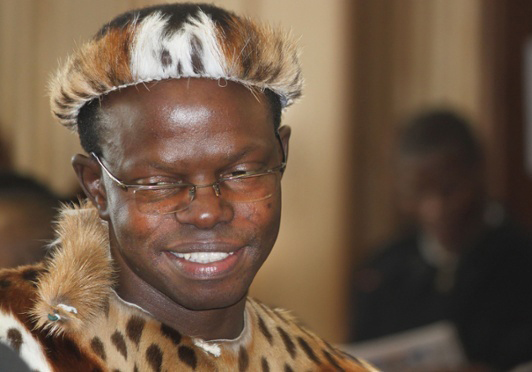
The ICJ today welcomed the opinion by The United Nations Working Group on Arbitrary Detention (UNWGAD) condemning as arbitrary the detention of prominent human rights lawyer Thulani Maseko and calling on the Government of Swaziland to ensure his immediate release.

May 29, 2015 | Advocacy, News, Non-legal submissions, Position papers
The ICJ called today on the EU institutions to bridge the final implementation gaps to ensure an effective access to justice to victims of violent hate crimes.
The contribution of the ICJ was submitted as input for the European Commission’s first annual fundamental rights colloquium to be held next October and focused on “Tolerance and respect: preventing and combating antisemitic and anti-Muslim hatred in Europe”.
In its submission, the ICJ finds that the greatest weakness in addressing violent hate crime currently lies primarily in the failure of effective national implementation, which has meant that, despite development of the law, and despite authoritative recommendations from international and EU human rights bodies, the frequency of commission of violent hate crimes appears to have increased, and impunity for such crimes has persisted.
The ICJ considers that there are two main reasons for this lack of implementation: 1) lack of political or institutional will in Member States; 2) lack of implementation tools tailored to the laws, legal institutions and culture of the single national legal system.
The ICJ concluds, in its contribution, that it is the time for the European Union institutions to take up the opportunity to unite the efforts of all those concerned in the administration of justice – judges, court administrators, lawyers, civil society, judicial organizations, bar associations and government officers – throughout the EU to work together on the detailed technical assistance needed for an effective implementation of the right to an effective remedy for victims of crimes motivated by discrimination.
EU-Colloquium2015-ICJContribution-ViolentHateCrimes-Advocacy-non legal submission-2015-eng (download the submission)