Jul 18, 2019 | News
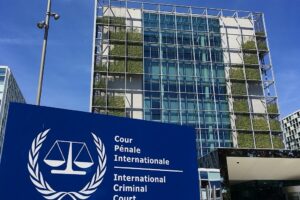
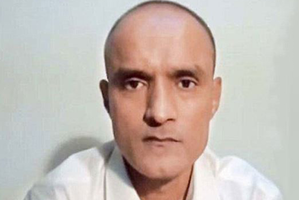
The International Commission of Jurists (ICJ) today welcomed the decision of the International Court of Justice (ICJ-CIJ for its acronym) upholding the right of consular access and notification for Indian national Kulbhushan Jadhav.
The Court determined that Pakistan had unlawfully denied Jadhav consular access before and after his summary trial by a military court.
It emphasized that any “potential prejudice and the implications for the evidence and the right of defence of the accused should receive close scrutiny during the review and reconsideration.”
The Court categorically held that Article 36 of the Vienna Convention on Consular Relations (VCCR) “does not exclude from its scope certain categories of persons, such as those suspected of espionage,” as argued by Pakistan.
“The decision by the International Court today is a resounding affirmation that there can be no curtailment of the right to consular access by foreign nationals by States that are Party to the VCCR,” said Ian Seiderman, Legal and Policy Director of the ICJ.
“Consular access is essential to ensure a fair trial for foreign nationals and this human right must not in any way be made contingent upon the offence foreign nationals are charged with.”
The International Court called on Pakistan to give effect to the Court’s ruling by providing effective review and reconsideration of both his conviction and sentence, including by taking account of the principles of the right to a fair trial.
The ICJ has pointed out that Pakistan’s military justice system and procedures are incompatible with the right to a fair trial. Under international standards, military tribunals are never permissible in prosecutions against civilians for offences carrying the death penalty.
Since 3 March 2016, Kulbhushan Jadhav has been in custody of the Pakistani authorities. The circumstances of his arrest remain in dispute between the Parties.
India was informed of the arrest on 25 March 2016. On 10 April 2017, Pakistan’s military announced Kulbhushan Jadhav had been convicted and sentenced to death by a military court for “espionage and sabotage activities against Pakistan.”
India had brought the case against Pakistan before the International Court of Justice, alleging “egregious violations” of the VCCR by Pakistan because of the denial of consular access to Jadhav.
In response, Pakistan had primarily argued that Jadhav is a an Indian spy involved in acts of terrorism in Pakistan, and the VCCR is not applicable to spies or “terrorists” due to the inherent nature of the offences of espionage and terrorism.
“States around the world continue to use counter terrorism and national security as a justification to curtail human rights – the International Court of Justice’s affirmation that the protections under the VCCR are not conditional is hugely significant in this context,” said Ian Seiderman.
The International Court also held that it considered a continued stay of Jadhav’s execution as constituting “an indispensable condition for the effective review and reconsideration of the conviction and sentence.”
In May 2017, the Court had asked Pakistan to take all measures at its disposal to ensure that Jadhav is not executed pending the final decision in the proceedings.
The ICJ considers the death penalty a violation of the right to life and cruel, inhuman or degrading punishment and notes that a large majority of States, in repeated UN resolutions, have called on retentionist states to declare a moratorium on the practice with a view to abolition.
Background
In addition to the arguments regarding espionage and terrorism, Pakistan also relied on a bilateral agreement on consular access, signed by India and Pakistan in 2008, arguing that the agreement overrides the obligations under the VCCR. The International Court of Justice, however, rejected this argument, on the ground that, among other things, obligations under the VCCR may be enhanced or clarified by bilateral treaties, but cannot be diluted or undermined.
India had requested a number of other measures of relief from the Court, including the annulment of Kulbhushan Jadhav’s death sentence; a declaration that Kulbhushan Jadhav’s military trial was in violation of the VCCR and international human rights law, including the International Covenant on Civil and Political Rights (ICCPR); a directive restraining Pakistan from giving effect to the death sentence; and a directive to release Kulbhushan Jadhav and ensure his safe passage to India.
However, in accordance with its jurisdictional competencies and prior precedents, the Court denied these remedies to India. As “appropriate reparation” in this case, the Court directed Pakistan to effectively review and reconsider Jadhav’s conviction and sentence “to ensure that full weight is given to the effect of the violation of the rights set forth in Article 36 of the Vienna Convention.”
Contact
Ian Seiderman: ICJ Legal and Policy Director, e: ian.seiderman(a)icj.org
Frederick Rawski: ICJ’s Asia Pacific Region, e: frederick.rawski(a)icj.org
Jun 28, 2019 | News
The ICJ categorically condemns Sri Lankan President Maithripala Sirisena’s endorsement of death warrants of four people convicted of drug-related offences.
Today, the ICJ urged the President to stop the imminent execution of these four convicts and to respect the de facto moratorium Sri Lanka has observed on capital punishment that over the past 43 years.
The ICJ has called on Sri Lanka to move toward full abolition of the abhorrent practice.
“President Sirisena’s resolve to resume executions would be a violation of Sri Lanka’s obligations under international human rights law and a disastrous for human rights in the country. It is also inconsistent with the global trend towards the abolition of the death penalty,” said Frederick Rawski, ICJ’s Asia-Pacific Director.
Speaking to the media on Wednesday June 26, President Sirisena announced that four execution warrants of those convicted of drug offences had been signed and that the dates for the execution had also been determined.
Those dates were left unspecified. With 1299 people on death row, the lives of at least 46 more prisoners, whose execution warrants have been prepared, are now under imminent threat.
Sri Lanka is a party to the International Covenant on Civil and Political Rights, under which it is not permitted to impose the death penalty for drug offences, the resumption of the death penalty after an extended is also incompatible with the ICCPR.
The ICJ opposes the death penalty in all circumstances without exception. The death penalty constitutes a violation of the right to life and the right not to be subjected to cruel, inhuman or degrading punishment.
The UN General Assembly has adopted repeated resolutions, most recently in December 2018, by overwhelming majority in calling for all retentionist States to observe an immediate moratorium with a view to abolition.
Sri Lanka voted in favour of a moratorium on the use of the death penalty in the 2018 UN GA Resolution.
The ICJ urgently calls on the Government of Sri Lanka to immediately halt all plans for execution and to do away with the capital punishment once and for all in keeping with its own commitment before the UN General Assembly for a global moratorium on the use of death penalty.
Instead of resuming executions, the Sri Lankan authorities should focus on effective, evidence-based approaches to crime prevention in manners that conform to international human rights law and standards.
Background
The UN Human Rights Committee, the supervisory body for the ICCPR, has made it clear that the imposition of the death penalty for crimes that are not of extreme gravity involving intentional killing, such as “drug offences” is incompatible with the Covenant as such offences do not meet the threshold of “most serious crimes”.
It has affirmed that that States parties that are not yet totally abolitionist should be on an irrevocable path towards complete eradication of the death penalty, de facto and de jure, in the foreseeable future.
The death penalty cannot be reconciled with full respect for the right to life, and abolition of the death penalty is both desirable and necessary for the enhancement of human dignity and progressive development of human rights.
It is contrary to the object and purpose of article 6 for States parties to take steps to increase de facto the rate and extent in which they resort to the death penalty, or to reduce the number of pardons and commutations they grant.
Contact
Frederick Rawski, ICJ Asia Pacific Region Director, e: frederick.rawski(a)icj.org, t: +66 644781121

Jun 25, 2019 | News, Publications, Reports
Colombia’s transitional justice tribunal, the Special Jurisdiction for Peace (JEP in its Spanish acronym) has made progress in fighting impunity, but can do more to address the needs and demands of victims of the country’s long civil war, the ICJ said in a report released in Bogota today.
The report Jurisdicción Especial para la Paz: análisis a un año de su entrada en funcionamiento (available only in Spanish) will be presented by a high-level mission composed of the President of the ICJ, Prof Robert Goldman (former President of Inter-American Commission on Human Rights), the Vice President of the ICJ, Carlos Ayala (former President of the Inter-American Commission on Human Rights), and ICJ Commissioner Philippe Texier, former judge of the Court of Cassation of France.
The commissioners will meet with different Colombian authorities including the President of Colombia, Iván Duque Márquez, and the President of the JEP, Patricia Linares Prieto.
They will also meet with victims and other members of civil society.
The JEP is charged with prosecuting and punishing gross violations of human rights and serious violations of international humanitarian law committed during the country’s civil war.
The JEP was established by the Peace Agreement entered into between the Colombian government and the former armed group FARC-EP, on November 24 of 2016.
“The JEP has made progress in guaranteeing victims’ rights and fighting impunity for gross violations of human rights and serious violations of international humanitarian law,” said Prof Robert Goldman, ICJ’s President.
“But the JEP must do more to strengthen the effective participation of victims in its procedures, as well as to guarantee victims’ rights to justice and full reparation in compliance with international standards,” he added.
Accordingly, the report identifies ways by which the JEP can achieve these goals.
The ICJ also expresses concern about security threats faced by human rights defenders and victims and witnesses appearing before the JEP. The ICJ urges the JEP and other Colombian public authorities to adopt effective measures to guarantee their safety.
The ICJ also considers it is necessary to ensure respect for the judicial independence of the JEP against external pressures to ensure the proper performance of its functions.
The report describes the findings of a mission carried out by ICJ Commissioners Carlos Ayala, Wilder Tayler and Philippe Texier in January 2019. The report includes an analysis of the main actions and decisions taken by the JEP as well as relevant decisions of other public authorities. It reflects developments up to June 7, 2019.

Jun 25, 2019 | News
Myanmar’s 1982 Citizenship Law, which has fueled widespread discrimination against various ethnic minority groups, is irreconcilable with core rule of law principles and the State’s obligations under international human rights law, the ICJ said today in a briefing paper.
The briefing paper Citizenship Law and Human Rights in Myanmar: Why Law Reform is Urgent and Possible (available in English and Burmese) analyses the legal framework for citizenship in Myanmar, and assesses certain provisions of the 2008 Constitution relevant to citizenship as well as the 1982 Citizenship Law.
This law embedded the current narrow definition of citizenship, which generally links citizenship acquisition to membership of a prescribed “national race.”
The resulting system enables and legitimizes discrimination against various groups, particularly against persons of South Asian or Chinese descent, members of whole ethnic groups, such as the Rohingya, and also the children of single mothers.
“Enacted by unelected military governments, Myanmar’s citizenship laws fuel widespread discrimination throughout the country,” said Sean Bain, Legal Adviser for the ICJ.
“The government must act immediately to dismantle this discriminatory system and to protect in law the human rights of all persons,” he added.
The intentionally discriminatory character of this law, and its equally discriminatory implementation, largely explain why many long-term residents of Myanmar lack a legal identity (more than 25 percent of persons enumerated in the 2014 Census).
The ICJ recommends three immediately achievable, concrete areas of law reform to the Government: 1) legislative reform, including most urgently of the 1982 Citizenship Law and the Child Rights Bill now being considered by the parliament; 2) Constitutional reform, to protect the right of citizens to full political participation; and 3) to institute interim measures to address discrimination on the basis of race or ethnicity.
A review of the 1982 Law was recommended in 2017 by the Government’s advisory commission chaired by the late United Nations Secretary-General Mr Kofi Annan, but the Government has not yet demonstrated any tangible progress on this.
“The government has the means at hand to get rid of this discriminatory system, which has undermined the rule of law and blocked the development of a pluralistic democracy. The government can and must implement the recommendations of its own advisory commission. The pervasiveness of discrimination cannot continue to go unaddressed, and there are no reasonable legal grounds for further delay in initiating pathways to reform,” Bain said.
UN Member States, as well as International Finance Institutions and UN agencies, must also ensure that assistance to the Government of Myanmar enables necessary reforms, and does not, in any way, entrench the existing discriminatory system.
Coinciding with the launch of this report, yesterday the ICJ hosted an event in Yangon where a panel of Myanmar legal scholars and researchers discussed the impact of current legal arrangements for citizenship on human rights, and why law reform is both urgent and possible. Representatives including from diplomatic missions, UN agencies, the Myanmar National Human Rights Commission, a multilateral donor and Non-Government Organizations attended the event.
Background
“Citizenship” is a legal concept describing an individual’s relationship to the State. In contrast, “statelessness” is when somebody does not have citizenship of any State. Terms such as “nationality,” “race” or “ethnicity” are generally culturally embedded concepts, understood differently by different people and in different contexts.
In many countries, particularly those with diverse populations, the right to citizenship is defined broadly to include persons with different ethnicities and even nationalities. In post-independence Myanmar, the concept of being a “national” or “indigenous” had a generally broad definition, allowing persons of different backgrounds to become citizens, including but not limited to the descendants of persons who had immigrated to Myanmar.
The 1982 Citizenship Law embedded in legislation the concept of “national races,” and introduced a hierarchy of citizenship categories that effectively institutes first-class and second-class citizens. Under this system, many life-long residents of Myanmar have effectively been rendered stateless, including members of entire ethnic groups, and children of mixed ancestry.
This discriminatory system has fostered an environment where crimes against humanity have taken place with absolute impunity.
Although section 347 of Myanmar’s 2008 Constitution guarantees “any person to enjoy equal rights” and protections before the law, other constitutional provisions restrict “fundamental rights” to citizens, including the rights to health and to education. Even for citizens, political rights are limited if a parent, child or spouse is not a citizen of Myanmar – the most infamous example of this is Daw Aung San Suu Kyi, who is constitutionally barred from the Presidency because her sons are foreign citizens.
The formation in February of this year of a Constitutional Amendment Committee also presents opportunities to expand the narrow definition of “fundamental rights,” to ensure their compliance with the constitutional guarantee of equality and protection before the law for “any person” (section 347), and with the State’s international human rights law obligations.
The Child Rights Bill, currently under consideration by the parliament, also offers opportunities to ensure that Myanmar’s laws comply with its treaty obligations, for example, under the UN Convention on the Rights of the Child, including with respect to the right of a child to acquire a nationality (citizenship), and the State’s related obligation to prevent statelessness.
See also
ICJ convenes workshop on reforming 1982 Citizenship law
ICJ materials on human rights law in Myanmar
Download
Myanmar-Citizenship law reform-Advocacy-Analysis Brief-2019-ENG (full report in English)
Myanmar-Citizenship law reform-Advocacy-Analysis Brief-2019-BUR (full report in Burmese)
Myanmar-Citizenship law reform-News-web story-2019-BUR (full story in Burmese)
Contact
Sean Bain, ICJ Legal Adviser, sean.bain(a)icj.org
Jun 24, 2019 | News
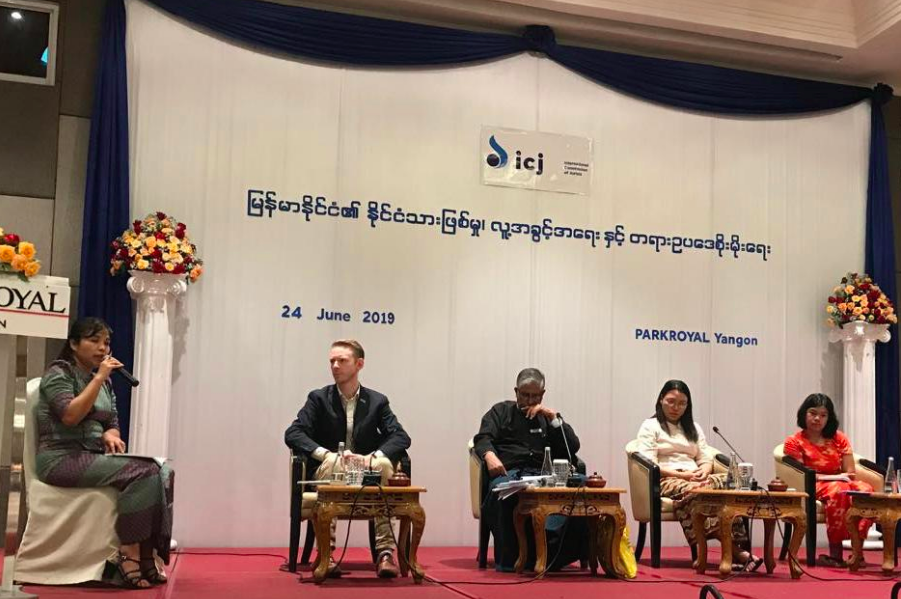
The ICJ convened a half-day panel discussion today in Yangon, Myanmar, to discuss national laws governing citizenship, and outline how, throughout the country, they have a discriminatory impact on people’s enjoyment of their human rights.
The event also provided the opportunity to introduce the ICJ’s new legal briefing Citizenship and Human Rights in Myanmar: Why Law Reform is Urgent and Possible
ICJ legal researcher Ja Seng Ing and legal adviser Sean Bain kicked off the event by noting that Myanmar’s legal framework for citizenship – enacted by unelected military governments – fuels widespread discrimination against members of ethnic minority groups throughout the country.
Bain highlighted the incompatibility of the domestic legal framework governing citizenship in Myanmar with core rule of law principles and with the State’s obligations under international human rights law, including the Convention on the Rights of the Child.
He presented the ICJ’s practical recommendations for law reform, outlined in the ICJ’s new legal briefing, including with respect to the 1982 Citizenship Law and the 2008 Constitution, and to the Child Rights Bill currently under consideration by Myanmar’s national parliament.
Senior Advocate U Ohn Maung, a lawyer with decades of experience supporting access for members of minority groups to the official documentation often necessary to obtain even basic services, emphasized that citizenship in Myanmar should be a more inclusive concept, reflective of its pluralistic, multi-ethnic demography.
Daw Zarchi Oo and Daw Su Chit shared the findings of independent civil society research.
They highlighted various groups including: migrants and migrant workers; individuals belonging to sexual and/or gender minorities; single mothers; the children of fathers who are foreign nationals or who are estranged from their fathers; and people living with disabilities, who are all adversely impacted by current legal arrangements for citizenship and by their discriminatory implementation.
Daw Zarchi Oo also spoke about her own past experience of being stateless, and Daw Su Chit elaborated on her work with civil society and others to develop a gendered analysis of the impact of discriminatory citizenship laws in Myanmar.
Around 60 participants, including from domestic civil society, the legal community, international non-government organizations, the Myanmar National Human Rights Commission, the diplomatic community and others joined this event, and participated in the discussions.
The 1982 Citizenship Law embedded the current narrow definition of citizenship, which generally links its acquisition to membership of a prescribed “national race.”
Many of the 2008 Constitution’s provisions on “fundamental rights” are restricted to citizens only, with a result being that the State generally does not recognize the human rights of persons who do not qualify as citizens under domestic law, or are otherwise excluded due to the laws’ discriminatory implementation.
The intentionally discriminatory character of the 1982 Law, and its discriminatory implementation, largely explains why many long-term residents of Myanmar lack a legal identity (more than 25 percent of persons enumerated in the 2014 Census).
The situation of Rohingya people, who the State generally does not recognize as citizens, is the most egregious example of the human rights violations associated with this system.
This event is part of the ICJ’s broader support to promote and protect human rights in Myanmar through research, analysis, advocacy and creating spaces for discussion.
See also:
ICJ convenes workshop on reforming 1982 Citizenship law