Oct 21, 2018 | News
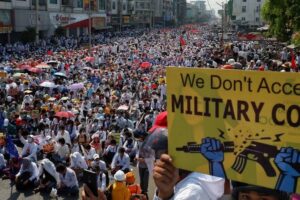
On 21 October, the ICJ, together with Cross Cultural Foundation (CrCF), organized a lawyers’ meeting in Bangkok on the admissibility of evidence in the context of application of special security laws in Thailand.
Attendees included 30 human rights lawyers, paralegal officers, documentation officers, human rights defenders and journalists from Bangkok and other regions in Thailand.
The objectives of the meeting were:
- To discuss about the challenges that lawyers currently face regarding the admissibility of evidence in criminal proceedings, both in law and in practice, in the context of existing special security laws. These laws include the Martial Law, Emergency Decree, and the Internal Security Act that are applied in the southern border provinces, and certain repressive National Council for Peace and Order (NCPO) Orders that are applied nationwide;
- To discuss how to address the adverse effects on human rights and the administration of justice as a consequence of the implementation of these laws and how lawyers, members of civil society, and other stakeholders, at national and international levels, may work together to address such challenges; and
- To gather recommendations from participants and discuss future advocacy strategies to tackle identified challenges.
The ICJ’s Legal Memorandum on Hearsay Evidence and International Fair Trial Standards was used as one of the main reference materials during the meeting.
A main recommendation of the Workshop, echoed the ICJ’s assessment in the Legal Memorandum, namely that Thailand should review existing standards in all special security laws and relevant articles in the Criminal Procedure Code regarding the admissibility of evidence that are not compatible with international fair trial standards to ensure safeguards required to protect individuals from unfair trials.
Read also
Thailand : legal memorandum – hearsay evidence and international fair trial standards
Oct 19, 2018 | Advocacy, Non-legal submissions
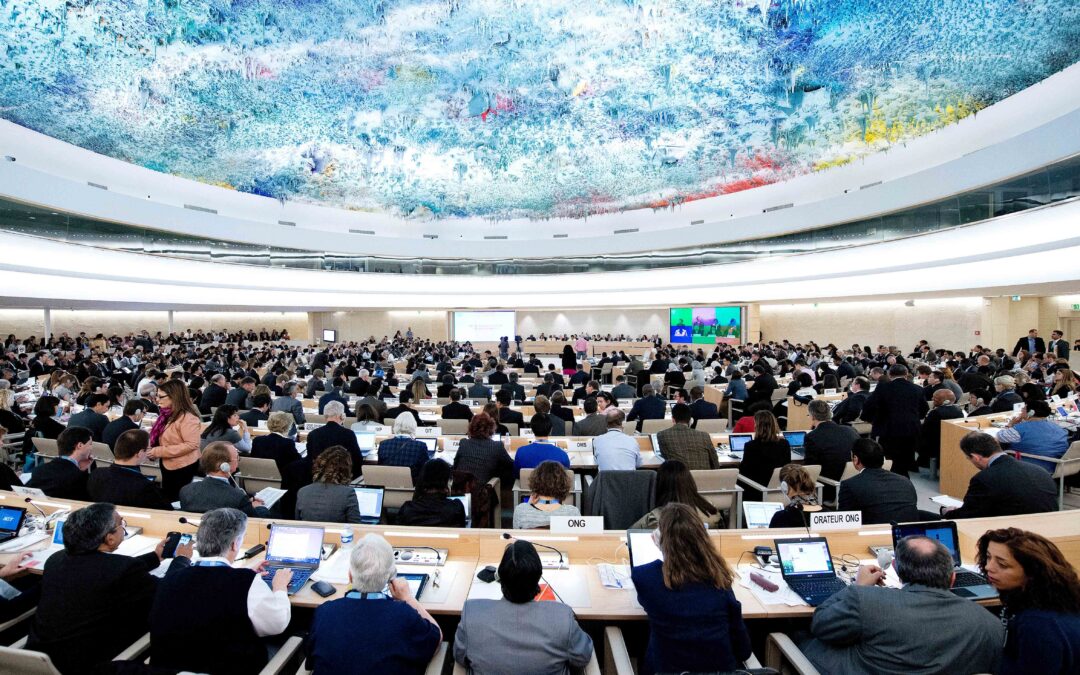
The International Commission of Jurists participated in the fourth session of the open-ended intergovernmental working group on transnational corporations and other business enterprises with respect to human rights that took place at the Palais de Nations from 15-18 October 2018. Below are the interventions the ICJ made at this session.
UN-ICJ statement IGWG4 general debate-Advocacy-ENG-2018
UN-ICJ statement IGWG4 prevention-Advocacy-ENG-2018
UN-ICJ statement IGWG4 legal liability-Advocacy-ENG-2018
Oct 5, 2018 | News
2018 marks the 60th anniversary of the ICJ’s move to Geneva thanks to the great Swiss jurist Jean-Flavien Lalive, who was ICJ’s Secretary General in 1958.
This makes the ICJ one of the earliest international organizations to establish its headquarters in Geneva.
At the 1959 ICJ Congress in New Delhi, Dr. Lalive helped breathe new life into the rule of law and human rights.
The Delhi Declaration is, to date, a fundamental instrument interpreting the rule of law as a living concept, and underscoring the primary role of lawyers in its safeguard and in the advancement of human rights.
The ICJ plays a unique and preeminent role as a non-governmental organization seeking to defend human rights and the rule of law worldwide.
The ICJ will mark this event with two major initiatives:
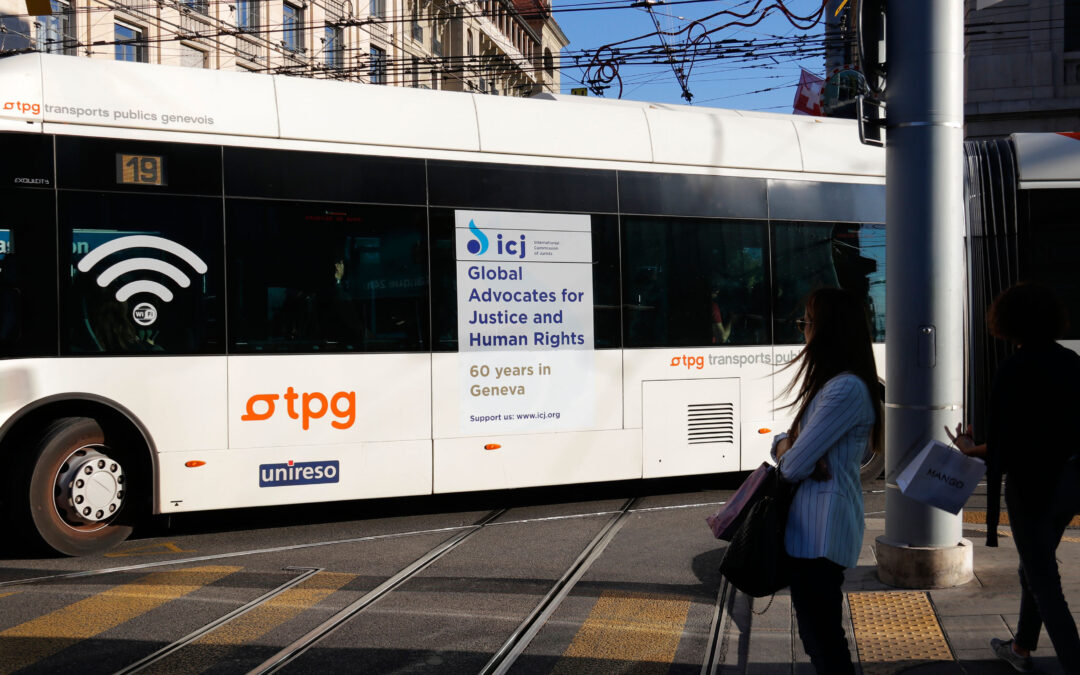
- A visibility campaign from 26th September to 9th October: the TV screens on the Geneva public transport network and five vehicles will carry the slogan “Global Advocates for Justice and Human Rights – 60 years in Geneva”
- The launch of the “60th Anniversary Appeal” to all lawyers in the Republic and canton of Geneva to support the ICJ and, in turn, their less privileged colleagues, victims of persecution on five continents.
“Geneva can be proud of its image as the world human rights capital. It is a beacon for justice advocates around the world. We must continue to make it shine,” said Sam Zarifi, Secretary General of the ICJ.
“Through its 60-year history, the ICJ has contributed significantly to Geneva’s human rights record: the campaigns that led to the creation of the post of UN High Commissioner for Human Rights in 1993 and the UN Human Rights Council in 2006, as well as the adoption of the United Nations Convention against Torture in 1984 are some emblematic examples,” said Olivier Coutau, Head of La Genève Internationale.
“In the face of repeated attacks on human rights, the world needs, more than ever the ICJ’s competent, rigorous and effective defense of the rule of law,” Sam Zarifi added.
The Republic and canton of Geneva support the ICJ 60th Anniversary Appeal.
Additional information
The international reputation of the ICJ rests on these pillars:
- 60 Commissioners – eminent judges and lawyers – from all regions of the world and all legal systems – with unparalleled knowledge of the law and human rights;
- Cooperating with governments committed to improving their human rights performance;
- Effective balance of diplomacy, constructive criticism, capacity building, and if necessary, ‘naming and shaming’;
- Unmatched direct access to national judiciaries, implementing international standards and improved legislation impacting millions;
- Guiding, training and protecting judges and lawyers worldwide to uphold and implement international standards;
- Working for access to justice for victims, survivors and human rights defenders, in particular from marginalized communities;
- Following a strict result based management in project delivery.
In recognition of this effective approach, the ICJ has been awarded, during its long history, some of the most prestigious international awards: the Council of Europe Human Rights Prize, the United Nations Award for Human Rights, Erasmus Prize, Carnegie Foundation Wateler Peace Prize.
In 2018, the ICJ provided local trainings on five continents to assist 4,300 judges, lawyers and prosecutors strengthen their ability to protect and promote fundamental rights.
The ICJ has consultative status with the United Nations Economic and Social Council, UNESCO, the Council of Europe and the African Union.
Contact :
Michaël W. Sombart, Director Philanthropy & Strategic Partnerships, t: +41 22 979 38 31 ; m: +41 77 965 98 45 ; e: michael.sombart(a)icj.org
Oct 5, 2018 | News
The proposal to implement caning on those found guilty of corruption would directly violate the absolute prohibition of torture and other cruel, inhuman or degrading punishment under international law, said the ICJ today.
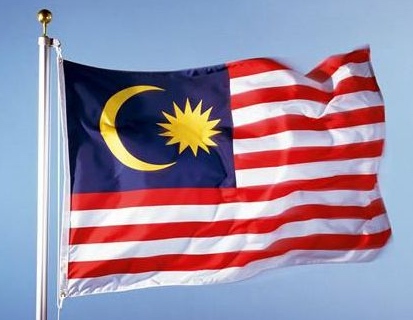
The Malaysian Anti-Corruption Commission (MACC) called on the Government of Malaysia last week to consider caning as a punishment for those convicted of corruption to underline the efforts of eliminating corruption in the country.
Malaysia currently implements caning in a wide range of offences, including the Immigration Act 1959/63, the Penal Code (rape, criminal breach of trust), and the Dangerous Drugs Act 1952.
At present, under the Malaysian Anti-Corruption Commission (MACC) Act 2009, the punishment for those found guilty of bribery is payment of a fine and imprisonment for up to twenty (20) years.
“Malaysia must immediately and completely abolish caning as a form of punishment. The proposals to implement caning for those found guilty of corruption, bribery, or any other offence is a significant setback for the country.
If this proposal is implemented, it will violate Malaysia’s obligations to prevent, prohibit and prosecute all forms of torture and other cruel, inhuman or degrading treatment or punishment, as.” said Emerlynne Gil, ICJ’s Senior International Legal Adviser.
After Malaysia’s historic election results on 9 May 2018 and the corruption charges levied against its former Prime Minister, Najib Razak, it would be superficial for Malaysia to view the implementation of severe punishments for the crime of corruption as the panacea to the deeply-rooted culture of corruption among those that have held public office and state authorities.
The ICJ also emphasizes that all forms of torture and other cruel, inhuman or degrading treatment are absolutely prohibited by customary international law, as well as international treaties binding on Malaysia, including the Convention on the Rights of the Child (CRC), the Convention on the Elimination of All Forms of Discrimination Against Women and the Convention on the Rights of Persons with Disabilities (CRPD).
The UN Special Rapporteur on Torture has stated that “any form of corporal punishment is contrary to the prohibition of torture and other cruel, inhuman or degrading treatment or punishment.” It cannot be considered a “lawful sanction” under international law.
The ICJ urges the Government of Malaysia to abandon any proposal to implement caning as a form of punishment for any crime. The ICJ also calls on the Government of Malaysia to immediately abolish the practice of caning as it constitutes a form of cruel, inhuman or degrading punishment prohibited under international human rights law and standards.
Contact:
Emerlynne Gil, Senior International Legal Advisor, International Commission of Jurists,
mobile: +66 840923575, email: emerlynne.gil@icj.org
Background:
At a press conference on 1 October 2018, Malaysia’s Anti-Corruption Commission’s Chief Commissioner Datuk Seri Mohamad Shukri Abdul had proposed that the Malaysian government consider implementing caning for bribery offenders.
Section 288 of the Criminal Procedure Code states the mode of executing the sentence of ‘whipping’, in Section 288(3) it defines the ‘Rattan used for whipping shall not be more than half of an inch in diameter’ (the word caning is not mentioned), while Section 289 of the Criminal Procedure Code states that the sentence of whipping is forbidden in the case of ‘females’, males sentenced to death and males whom the Court considers to be more than fifty years of age, except males sentenced to whipping under Section 376, 377, 377CA or 377E of the Penal Code.
Oct 3, 2018 | News
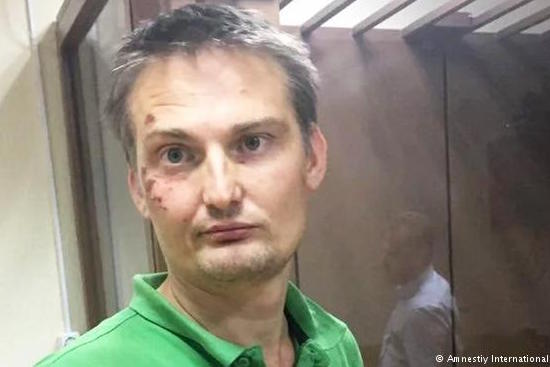
Today, the ICJ expressed concern at ongoing criminal proceedings against Mikhail Benyash, a lawyer practicing in Russia, who is charged with use of force against the police and impeding justice.
The lawyer has been detained until 23 November. The ICJ called on the responsible authorities to drop any criminal charge relating to his conduct of professional duties in the courtroom, and to ensure that the lawyer’s rights are protected and that allegations of his ill-treatment are fully investigated.
Benyash alleges that following his apprehension by the police on 9 September, the police beat him up in the car. According to the police report he inflicted the injuries on himself, contrary to demands of the police that he stop doing so.
He was charged with disobedience to the police, which according to the police report was due to “the fact that the police asked Benyash not to injure himself, but he continued self-beating”. Benyash was convicted and sentenced to 14 days of imprisonment and 40 hours of correctional works.
On 23 September, the day of his release, Benyash was arrested again. He was charged with two further offences: violence against a representative of authority (Criminal Code Article 318(1)) based on an allegation, seemingly not raised at the time of his earlier charge and conviction in relation to the same incident, that in the course of his arrest on 9 September he allegedly bit a police officer and hit another.
On 23 September he was also charged with obstruction of justice (Criminal Code Article 294(1)), reportedly on the basis of an allegation that in a court hearing on 6 May 2018, Benyash had “repeatedly interrupted, gave instructions and objections to the decisions of the judge” and after he had been removed from the courtroom “continued unlawful behaviour”.
According to the lawyer, he was taken out of the courtroom by force due to his motions to allow certain members of the public to be present at the open hearing.
The ICJ is concerned that the criminal obstruction charge against Mikhail Benyash appears to relate at least in part to statements he made in court in the course of carrying out his professional duties of representation of his clients.
The fact that this charge was only laid following his recent arrest, some five months after the alleged incident occurred, also raises questions as to the motivation for bringing the charge forward now.
“Benyash is currently charged on account of his alleged attack on a police officer and obstruction of justice. While the first charge requires an impartial and independent inquiry, the second charge should be of concern to the entire lawyers’ community”, said Karinna Moskalenko, ICJ honorary member. “We fear that this may lead to lawyers in Russia being charged with obstruction of justice simply for actively expressing their position and objections in accordance with the procedure prescribed by law”, she added.
Furthermore, the ICJ emphasises that under international human rights law, states have obligations to investigate allegations of treatment that may amount to torture or inhuman or degrading in violation of Article 3 of the European Convention on Human Rights, as well as other international law norms binding on the Russian Federation.
The investigative authorities have duty to investigate allegations of ill-treatment of the lawyer by police following his arrest on 9 September promptly, effectively and impartially and any persons responsible should be brought to justice.
Read the ICJ’s full statement here: Russia-Statement on Benyash-News-Web Story-2018-ENG