Dec 2, 2016 | Agendas, Events, News
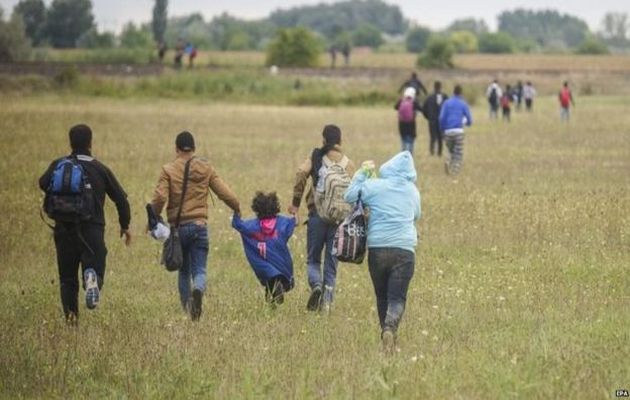
Today, the ICJ and Scuola Superiore Sant’Anna are holding a training for lawyers on the rights of migrant children and on accessing international human rights mechanisms in Pisa (Italy).
The training aims to support the strategic use of national and international mechanisms to foster migrant children’s access to justice. The training will take place over the course of two days from 2-3 December 2016.
The training will focus on accessing the international mechanisms in order to protect and promote the rights of migrant children, the child’s right to family life and the best interests of the child principle. A moot court exercise will be held on the second day of the training.
Trainers include experts from the ICJ and Scuola Superiore Sant’Anna, the Italian Court of Cassation and the University of Milan.
The training is based on draft training materials prepared by the ICJ (to be published in the second half of 2017) and the ICJ Practitioners Guide no. 6: Migration and International Human Rights Law.
It is organized as part of the FAIR project co-funded by the Rights, Equality and Citizenship Programme of the European Union and OSIFE.
Download the agenda in Italian here:
italy-rights-migrant-children-training-agenda-2016-ita
Nov 11, 2016 | Agendas, Events
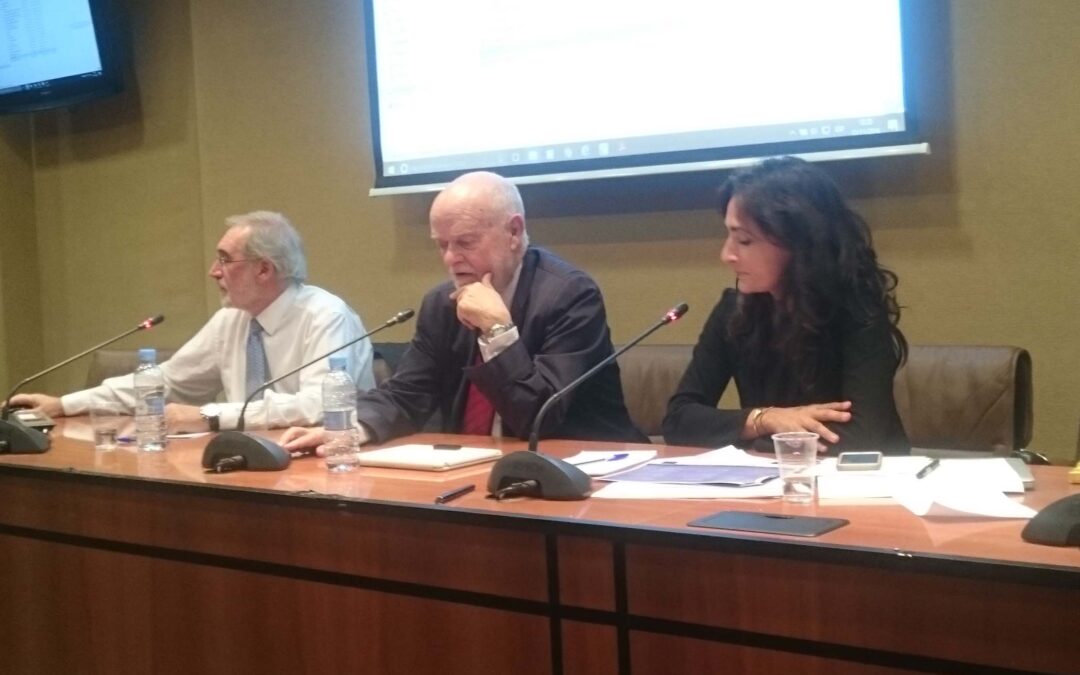
The ICJ and Foundation Raices are holding a training on the rights of migrant children and on accessing international human rights mechanisms from 11 to 12 November in Madrid (Spain).
The training aims to support the strategic use of national and international mechanisms to foster children’s access to justice.
The training will focus on accessing the international mechanisms in order to protect and promote the rights of migrant children, the child’s right to be heard and related procedural rights, the best interests of the child, age assessment and the presumption of minority.
Trainers will include representatives of the ICJ and Foundation Raices, as well as experts from the Committee on the Rights of the Child, the Spanish Constitutional Court and the office of the Spanish Ombudsman.
The training is based on draft training materials prepared by the ICJ (to be published in the second half of 2017) and the ICJ Practitioners Guide no. 6: Migration and International Human Rights Law.
The training is organized as part of the FAIR project co-funded by the Justice and Equality Programme of the EU and OSIFE.
Download the agenda of the training here:
spain-fair-training-events-agenda-2016-eng (in PDF)
Nov 8, 2016 | News
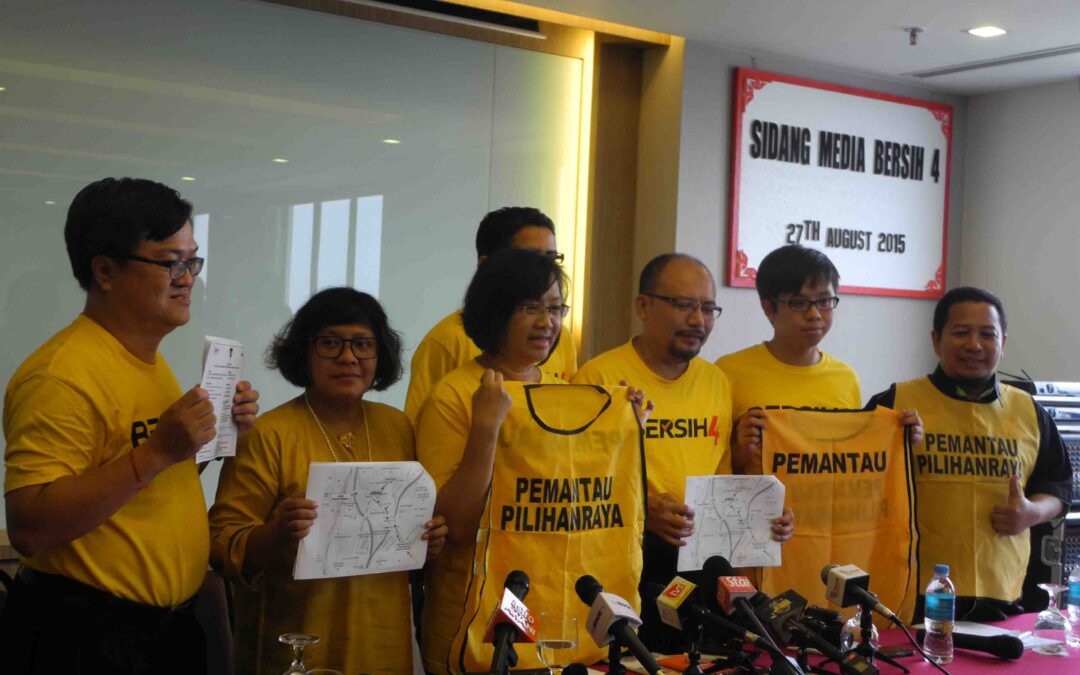
The Malaysian government must act to stop and redress the ongoing harassment, and death threats against the organizers of the Bersih 5.0 protest rally, scheduled for 19 November 2016, said the ICJ today.
The ICJ is calling on the authorities to conduct a thorough, impartial investigation into unlawful acts of intimidation against the organizers with a view to identifying and bringing to account those responsible.
The Bersih (or Gabungan Pilihanraya Bersih dan Adil) is a coalition formed in 2006 by Malaysian non-governmental organizations to call for free, clean and fair elections.
“The Malaysian government has the obligation to respect the right to freedom of expression and freedom of assembly,” said Sam Zarifi, ICJ’s Asia Director. “These rights are not only guaranteed under the Malaysian Constitution, but also under international human rights law.”
The ICJ recently received reports that Bersih leaders Maria Chin Abdullah, Mandeep Singh, and former Chairperson Ambiga Sreenevasan received death threats from unknown individuals.
Family members of Maria Chin Abdullah also received similar threats.
On 29 October 2016, police arrested Maria Chin Abdullah for distributing flyers promoting the forthcoming public assembly.
She was investigated on suspicion of having violated Section 11 of the Printing Presses and Publications Act 1984, which requires every publication printed or published within Malaysia to bear the name and address of the printer and publisher. Maria Chin Abdullah was subsequently released.
On 1 October 2016, men wearing the customary red shirts of ‘anti-Bersih’ groups and riding motorbikes tailed the convoy in Perak, kicked the cars and punched the vehicles’ side mirrors, while on 8 October 2016, unknown persons smashed the windows and slashed the tires of cars participating in a Bersih convoy in Sabah state.
Last week, police authorities launched investigations under Section 124C of the Penal Code against Bersih and other Malaysian NGOs that are alleged to have received foreign funding. Section 124C penalizes persons who are found to “attempt to commit activity detrimental to parliamentary democracy.”
“Section 124C is impermissibly vague and ambiguous, and allows authorities to engage in arbitrary prosecution, conviction, and punishment of people who are exercising their right to freedom of speech and assembly,” Zarifi said. “These claims against Bersih seem to be the latest effort by the Malaysian government, which is facing allegations of massive corruption, to repress political opposition.”
Contact
Emerlynne Gil, ICJ’s Senior International Legal Adviser, t: +66 840923575 ; e: emerlynne.gil(a)icj.org
Background
Over the years, Bersih has been organizing peaceful assemblies attended by thousands of Malaysians in Kuala Lumpur and other parts of the country.
Last year, monitors from the ICJ observed Bersih 4.0 and reported that it had been a peaceful assembly, in exercise of the right to freedom of assembly and that the organizers took careful measures to keep it orderly and free from violence. The ICJ will again be sending observers to this year’s Bersih rally in Kuala Lumpur.
Under Article 10(1)(b) of the Malaysian Constitution, “all citizens have the right to assemble peaceably and without arms.” Furthermore, the right to peaceful assembly is also guaranteed under several international human rights instruments, including the Universal Declaration of Human Rights.
In his 2012 report, the UN Special Rapporteur on the rights to freedom of peaceful assembly and of association emphasized that States “have a positive obligation to actively protect peaceful assemblies”. This State obligation includes “protection of participants of peaceful assemblies from individuals or groups of individuals, including agents provocateurs and counter-demonstrators who aim at disrupting or dispersing such assemblies.”
With regard to the use of Section 124C of the Penal Code to commence investigations against Bersih and other non-governmental organizations, the ICJ has emphasized that the ambiguity and vagueness of this provision makes it inconsistent with the principle of legality, a basic tenet of law. The principle of legality in the criminal law context requires that any offense must be established in law and defined precisely and unambiguously so as to enable individuals to know what acts will make them criminally liable.

Nov 4, 2016 | News
The Myanmar government’s recently announced plan to enlist civilians as a ‘regional police force’ in Myanmar’s troubled northern Rakhine State is likely to aggravate an already dire human rights situation, warned the ICJ today.
“In a country where the regular police and military are notorious for grave human rights violations, it’s difficult to extend the benefit of the doubt to poorly trained civilians,” said Sam Zarifi, ICJ’s Asia Director.
“Establishing an armed, untrained, unaccountable force drawn from only one community in the midst of serious ethnic tensions and violence is a recipe for disaster,” he added.
Over the last month the region has experienced increased tension and violence including attacks on border police and allegations of human rights violations by security forces, including attacks on Rohingya villages and sexual assaults.
Humanitarian assistance and independent monitors, including the media, remain severely restricted in the area.
The Rakhine State police are recruiting civilians for the force along ethnic and religious lines, officially excluding Rakhine state’s Muslims, most of whom belong to the area’s persecuted Rohingya community.
Recruits will reportedly be armed and paid by the border police after undergoing abbreviated training.
The ICJ considers that a civilian regional police force necessarily lacks the adequate training and oversight to perform policing functions in accordance with human rights and professional standards on policing.
Moreover, there does not appear to be an appropriate accountability mechanism in place to deal with instances of misconduct and human rights abuses, the ICJ says.
Such a ‘regional police force’ will be dangerously under qualified and prone to committing human rights violations, especially as they will answer to the military rather than civilian government, the Geneva-based organization adds.
According to the ICJ, if a new security authority is contemplated, it must be a professional police force, whose members are recruited and trained in accordance with principles of non-discrimination and respect for human rights.
Police must also be accountable to the law and subject to administrative and judicial oversight.
The ICJ calls on the governments to establish and enforce effective reporting and review procedures for all incidents involving the use of force.
The government and police must ensure the following accountability measures are in place:
- Police are not deployed without comprehensive training on duties including restrictions on use of force and human rights obligations;
- An effective process to review the use of force, conducted by independent administrative or prosecutorial authorities is available;
- Access to an independent judicial process for persons affected by the use of force (including dependents) or their legal representatives, which is capable of providing for effective remedy and reparation for any abuses;
- Superior officers must be held responsible if they know, or should have known, that law enforcement officials under their command are using force without taking all measures in their power to prevent, suppress or report such use.
Accountability and oversight is essential to protect human rights and prevent escalation of conflict: a new force should not be raised without these guarantees, the ICJ says.
Contact
Sam Zarifi, ICJ’s Regional Director for Asia & Pacific, t: +66807819002
Background
Under international law, any body authorized by the State to perform security functions and use force, including lethal force, must respect human rights in performing their functions.
The United Nations Basic Principles on the Use of Force and Firearms set standards on the qualifications and the training of Law Enforcement Officials.
These Principles also provide standards on the use of force consistent with protecting the right to life.
Under the Principles, all law enforcement officials must receive continuous and thorough professional training, subject to periodic review. They must be screened and selected to ensure they have appropriate moral, psychological and physical qualities for the effective exercise of their functions.
Training must include appropriate guidance on the use of force with special requirements to carry firearms.
It must focus on issues of police ethics and human rights, especially in the investigative process, to alternatives to the use of force and firearms, including the peaceful settlement of conflicts, with a view to limiting the use of force and firearms.
Oct 22, 2016 | Advocacy
South Africa’s announced withdrawal from the International Criminal Court (ICC) is a slap in the face for victims of the most serious crimes and should be reconsidered, African groups and international organizations with a presence in Africa said today.
The groups urged other African countries to affirm their commitment to the ICC, the only court of last resort to which victims seeking justice for mass atrocities can turn.
“South Africa’s intended withdrawal from the ICC represents a devastating blow for victims of international crimes across Africa,” said Mossaad Mohamed Ali of the African Center for Justice and Peace Studies. “As South Africa is one of the founding members of the court, its announcement sends the wrong message to victims that Africa’s leaders do not support their quest for justice.”
South Africa publicly announced on October 21, 2016, that it has notified the United Nations secretary-general of its intent to withdraw from the ICC.
However, there are significant questions as to whether South Africa abided by its domestic law in withdrawing without approval of its own parliament, the groups said.
“Modern day South Africa is testament to the importance of struggle for international justice, given the history of people of South Africa supported by the international community in defeating the scourge of apartheid and systematic racism. It is inconceivable that this country is now at the forefront of efforts aimed at undermining the international framework to tackle impunity,” said Arnold Tsunga, Director of ICJ’s Africa Regional Programme.
“We call on the government of South Africa to reconsider taking this enormous backwards step in the struggle for justice and to restore its place as a leader in promoting accountability for the most serious crimes and human rights abuses,” he added.
“South Africa’s purported withdrawal – without parliamentary approval or public debate – is a direct affront to decades of progress in the global fight against impunity,” said Stella Ndirangu, from the Kenyan section of the International Commission of Jurists.
“We call on the South African government to reconsider its rash action and for other states in Africa and around the world to affirm their support for the ICC.”
“We do not believe that this attempt to withdraw from the ICC is constitutional and it is a digression from the gains made by South Africa in promoting human rights on the continent,” said Jemima Njeri of the Institute for Security Studies’ International Crime in Africa Program.
“The South African government is sending a signal that it is oblivious to victims of gross crimes globally.”
South Africa’s announcement that it will withdraw from the ICC comes after the country’s court of appeal concluded the government violated its international and domestic legal obligations in not arresting ICC fugitive Sudanese President Omar al-Bashir in June 2015, when he visited South Africa.
A government appeal was pending, but on October 21, 2016, the government indicated that it has withdrawn the appeal.
“The decision by Pretoria to withdraw from the Rome Statute is a response to a domestic political situation,” said George Kegoro of the Kenya Human Rights Commission.
“Impervious to the country’s political history and the significance of the ICC to African victims and general citizenry, the South African leadership is marching the country to a legal wilderness, where South Africa will be accountable for nothing.”
South Africa is the first country to notify the UN secretary-general of withdrawal from the ICC.
Contact:
Arnold Tsunga, Director of ICJ’s Africa Regional Programme, t: +27-716-405-926 ; e: arnold.tsunga@icj.org
south-africa-withdrawal-of-icc-advocacy-2016-eng (full text in PDF)