Apr 2, 2013 | Advocacy, News, Non-legal submissions
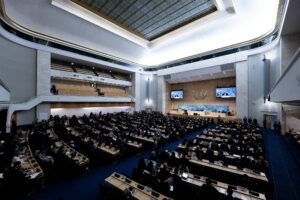
The ICJ, Amnesty International and the AIRE Centre submitted written comments on the draft EU accession agreement to the European Convention on Human Rights.
The ICJ, Amnesty International and the AIRE Centre have submitted written observations, on the occasion of the last meeting of the 47+1 Group in charge of the negotiations on the accession of the European Union to the European Convention on Human Rights. The observations focussed on issues of jurisdiction, responsibility, and on the mechanism of co-respondence in cases involving the EU.
EUAccessionECHR-Paper-Joint-2013 (download the paper)
Photo credit: © Yanni Koutsomitis (the author of the picture has no involvement in nor does support this submission)
Mar 22, 2013 | Feature articles, News
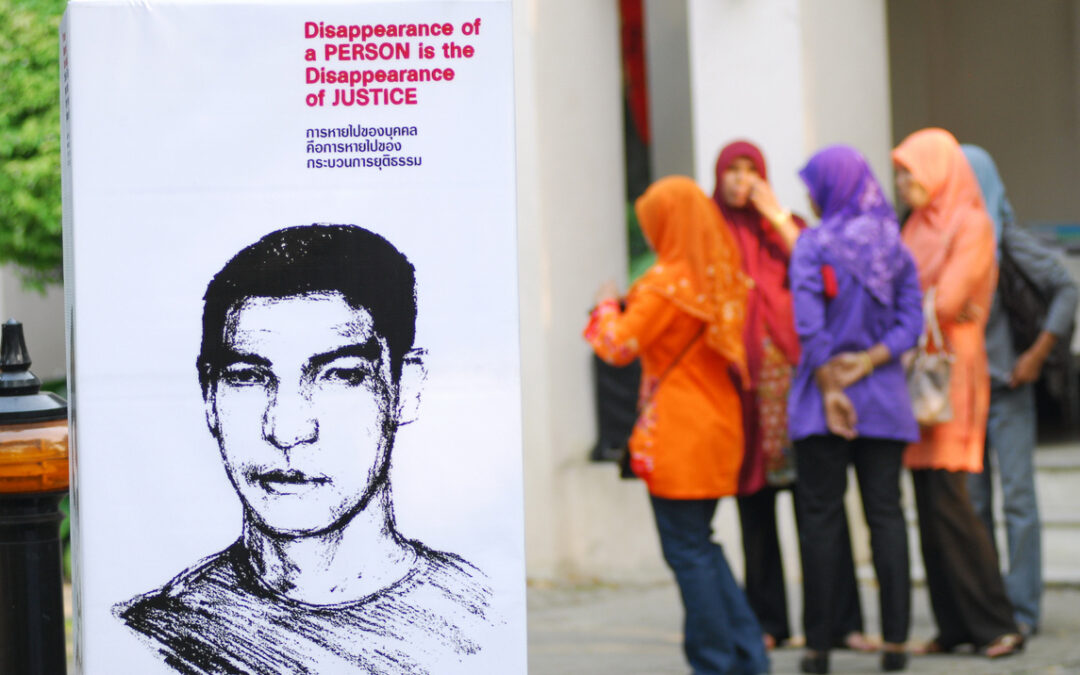
The inclusion of an amnesty provision, which could cover the worst possible crimes, in Nepal’s new Truth, Reconciliation and Disappearance Ordinance, will make it impossible for thousands of victims of gross human rights violations to obtain justice, ICJ and other right groups said today.
The Asian Centre for Human Rights, Human Rights Watch, the International Commission of Jurists and TRIAL pointed to fundamental flaws in Nepal’s new law, passed by President Ram Baran Yadav on March 14, 2013.
“The new ordinance leaves open the door to amnesties for persons implicated in gross human rights violations and crimes under international law,” said Ben Schonveld, ICJ’s South Asia director in Kathmandu. “Amnesties for serious rights violations are prohibited under international law and betray the victims, who would be denied justice in the name of political expediency.”
At least 13,000 people were killed and over 1,300 subjected to enforced disappearance in Nepal’s decade-long conflict between government forces and Communist Party of Nepal (Maoist) combatants.
The fighting ended with the signing of the 2006 Comprehensive Peace Agreement, consolidating a series of commitments to human rights.
However, the government has yet to take steps to ensure that those responsible for crimes under international law during the fighting are identified and prosecuted.
International and local human rights groups have consistently decried the government’s efforts to side-step promises of justice and accountability, represented most recently by this new ordinance.
The revised ordinance calls for the formation of a high-level commission to investigate serious human rights violations committed during Nepal’s armed conflict from 1996 to 2006.
It grants the commission discretion to recommend amnesty for a perpetrator if the grounds for that determination are deemed reasonable.
The government then decides whether to grant an amnesty. There is no definition of what is reasonable.
Confusion over scope of amnesty provision
The ordinance states that “serious crimes,” including rape, cannot be recommended for an amnesty, but it does not define what other “serious crimes” are not subject to an amnesty.
Gross violations of human rights, such as extrajudicial killing, torture and enforced disappearance, are not mentioned.
Torture and enforced disappearance are not specific crimes under Nepali domestic criminal law.
The organizations expressed concern that the commission’s powers to recommend prosecution may mean little without crimes being adequately defined in law.
The final decision on whether to prosecute can only be made by the attorney general, a political appointee of the government, instead of an independent entity.
Human Rights Watch, ICJ and TRIAL have previously documented the systematic failures of the Nepali criminal law system to address serious human rights violations.
“Nepal has had years to investigate some 1,300 suspected enforced disappearances during the conflict and thousands of other human rights violations, but it has failed to deliver any credible or effective investigations,” said TRIAL Director Philip Grant in Geneva. “The provisions on prosecution contained in this ordinance don’t appear to be strong enough to overcome Nepal’s entrenched practices of safeguarding impunity by withdrawing cases or failing to pursue credible allegations. It does not leave victims with much faith that the commission will fulfill its mandate to end impunity.”
Call for review and consultation
The organizations called upon the government to establish a mechanism to review and amend the legislation in consultation with victims of human rights abuses and representatives of civil society.
“This ordinance was signed by the prime minister and president in record time without any consultation with conflict victims and civil society,” Schonveld added. “If the government had carried out proper consultations, the result would have been different, and we wouldn’t have an ordinance that entrenches impunity.”
The rights organizations also expressed concern about the ordinance’s heavy emphasis on reconciliation at the possible expense of justice for victims.
The ordinance cedes authority to the commission to implement “inter-personal reconciliation” between victim and perpetrator, even if neither the victim nor the perpetrator requests it, which could result in pressure being placed on a victim to give up any claims against a perpetrator.
Although the ordinance mentions the need for victim and witness protection, there are no specific safeguards to ensure the safety and security of victims who become involved in reconciliation processes.
Violation of international obligation for political expediency
Under international law, Nepal is obliged to take effective measures to protect human rights, including the right to life and freedom from torture and other ill-treatment.
Where a violation occurs, Nepali authorities must investigate, institute criminal proceedings, and ensure victims are afforded access to effective remedy and reparations.
“The passage of this ordinance is just the latest example of the Nepali government’s cynical willingness to trade meaningful justice and accountability for political expediency,” said Brad Adams, Asia director at Human Rights Watch. “The government is kidding itself if it thinks it can ignore the voices of Nepal’s thousands of victims of human rights abuses. Nepal needs meaningful government initiatives to address its human rights problems, not the veneer of justice that this flawed ordinance represents.”
Contact:
In Kathmandu, for ICJ, Ben Schonveld: ben.schonveld(at)icj.org
In Bangkok, for ICJ, Sheila Varadan: +66-857-200-723; sheila.varadan(at)icj.org
Mar 22, 2013 | News
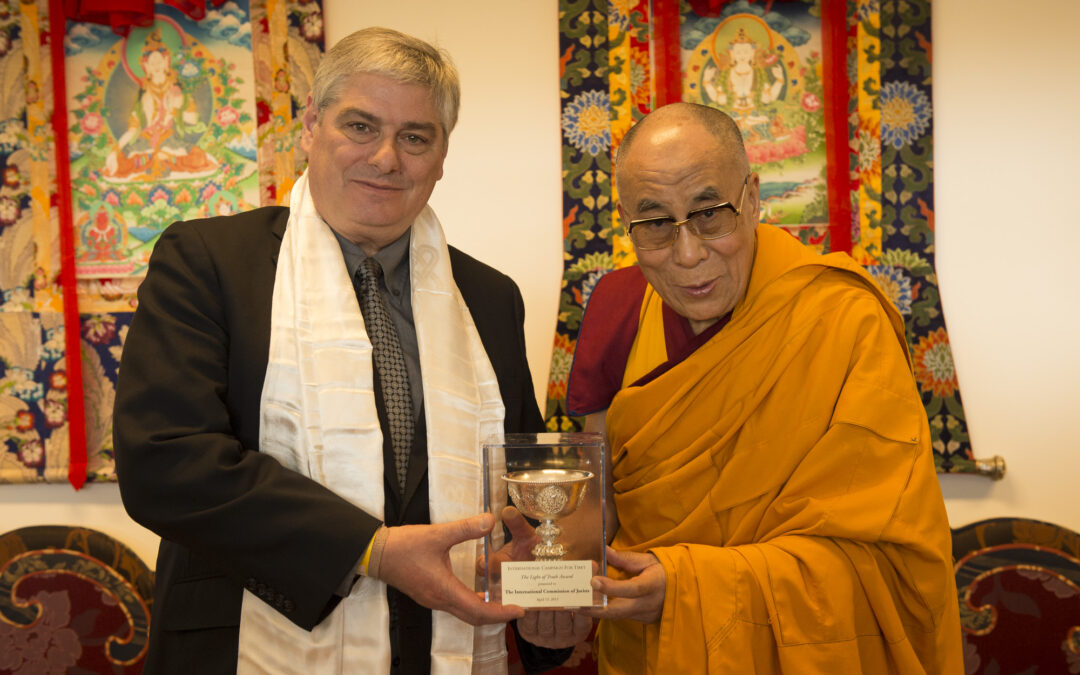
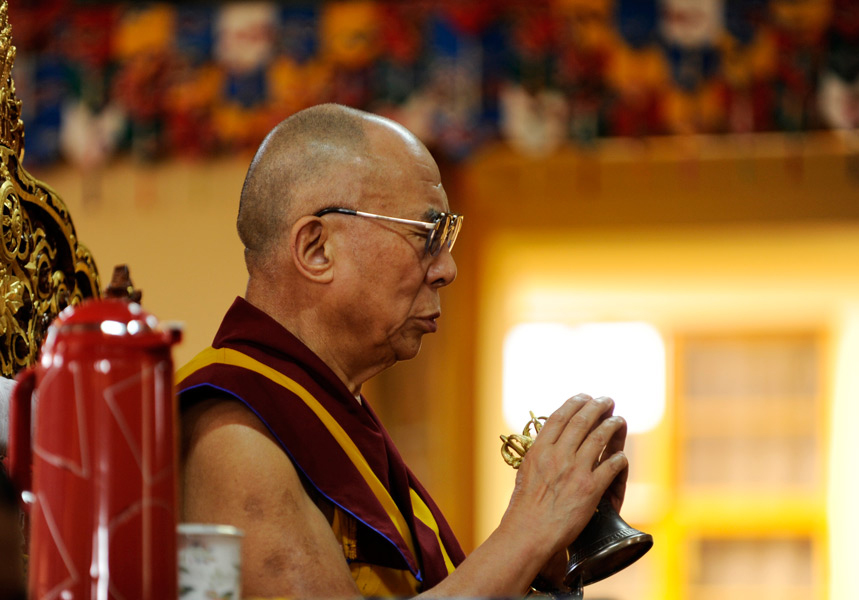 The Dalai Lama and the International Campaign for Tibet (ICT) will honour the ICJ with the Light of Truth Award in recognition of the organization’s consistent support of the Tibetan cause over six decades.
The Award will be presented to ICJ Secretary-General Wilder Tayler at a ceremony in Fribourg, Switzerland, on 13 April 2013.
The ICT presents the Light of Truth Award to individuals and institutions who have made significant contributions to the public understanding of Tibet and the struggle for human rights and democratic freedoms for the Tibetan people.
The award itself is an antique Tibetan butter lamp, symbolizing the light that each recipient has shed on the Tibet issue.
In addition to the ICJ, there will be four other Light of Truth Awardees in 2013, including ICJ Honorary Member Theo van Boven. Professor van Boven is a Dutch jurist and professor emeritus in international law, a former UN Rapporteur on Torture and served as ICJ Vice-President in the 1990s. He will be awarded for putting the spotlight on Tibet within and beyond the United Nations system.
Other honorees include Professor Dr. Christian Schwarz-Schilling, former German Minister and Parliamentarian, who has been working in a low-key manner for many years on the issue of the Tibetan-Chinese relationship; Ms. Sigrid Joss-Arnd, the longest-standing member of the Swiss Red Cross officials who was involved in helping Tibetans in the diaspora from the early 1960s; and Mr. Robert Ford, CBE, for his tireless advocacy on Tibet for more than half a century. Mr Ford is the only Westerner who was given official ranking in the Tibetan government before 1950 and he was imprisoned by the Chinese authorities for nearly five years.
The Light of Truth Award is the most prestigious award in the Tibet movement and has been presented by His Holiness the Dalai Lama, on behalf of the ICT, for many years.
Previous recipients include Archbishop Desmond Tutu, the late Václav Havel, Chinese scholar and writer Wang Lixiong, and film director Martin Scorsese.
At the ceremony, French politician and doctor Bernard Kouchner, former Minister in the French government and co-founder of the international humanitarian organization Médecins Sans Frontières/Doctors Without Borders (MSF) will introduce the Dalai Lama.
Photo/Phuntsog/Namgyal Archive

Mar 22, 2013 | News
The ICJ, the World Organisation Against Torture (OMCT) and Geneva for Human Rights are encouraged by steps taken by Taiwan to review compliance with human rights and urge further steps towards the realization of rights on the ground.
Due to the fact that the territory of Taiwan is not recognized by the international community as a sovereign State, Taiwan is not a member of the United Nations.
As such, the UN HUman Rights Committee and Committee on Economic, Social and Cultural Rights have been unable to review Taiwan’s implementation of the International Covenant on Civil and Political Rights and the International Covenant on Economic, Social and Cultural Rights, in respect of which Taiwan has enacted incorporating legislation.
Notwithstanding this position, the Government of Taiwan has facilitated a parallel review by independent experts of implementation of these instruments.
This review was conducted on 25-27 February 2013, leading to the adoption by the independent experts of concluding observations and recommendations.
The ICJ, OMCT and Geneva for Human Rights are encouraged by the steps taken.
They urge the Government of Taiwan to undertake prompt and effective steps towards implementation of the recommendations of the independent experts by means that involve a constructive dialogue with civil society, including as this pertains to the abolition of the death penalty.
They also call on the Government to take similar steps for incorporation of human rights standards set out in other universal treaties, including the Convention against Torture.
Taiwan-ICCPR-ICESCR-Conclusions-IndependentExperts-2013 (download concluding observations of the independent experts)
Mar 4, 2013 | News
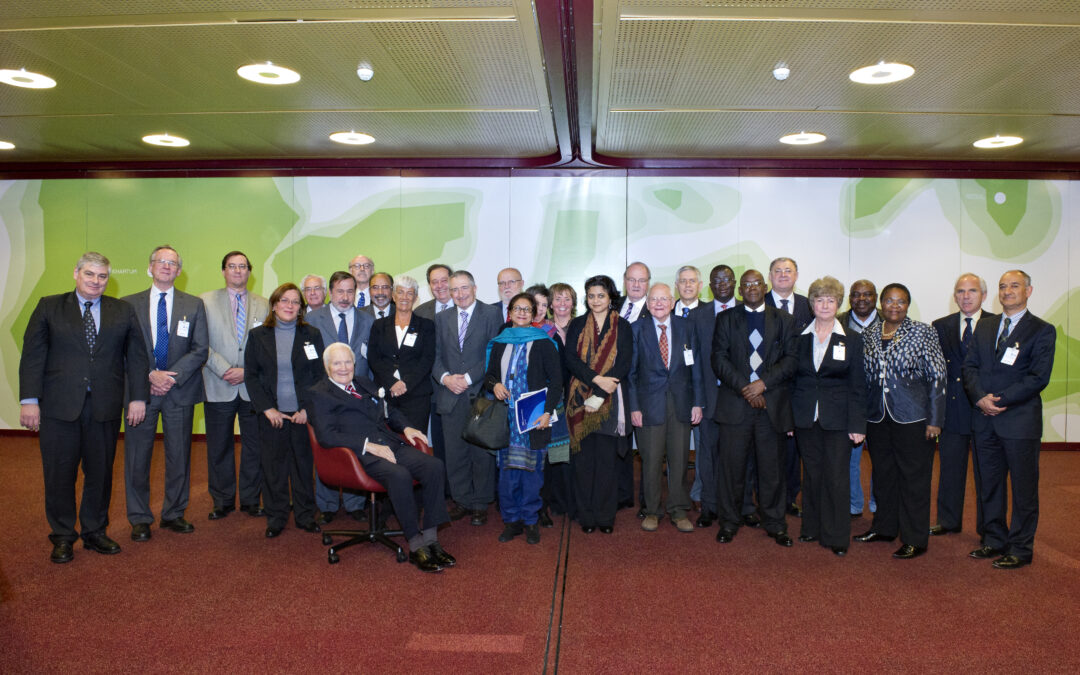
The ICJ is pleased to announce the election of ten eminent jurists to the ICJ Commission.
Throughout its sixty-year history, the ICJ’s credibility has stemmed from its unique group of eminent jurists and legal experts: the ICJ Commission. ICJ Commissioners provide expert support and strategic direction to the ICJ Secretariat’s regional and thematic programmes.
The following Commissioners have been elected for five-year terms:
Commissioners Elected for First Terms
Prof. Andrew Clapham (UK)
Justice Radmila Dicic (Serbia)
Mr. Shawan Jabarin (Palestine)
Justice Qinisile Mabuza (Swaziland)
Justice Tamara Morschakova (Russian Federation) – from 1st May 2013
Justice Egbert Myjer (Netherlands)
Prof. Victor Rodriguez Rescia (Costa Rica)
Prof. Marco Sassoli (Italy/Switzerland)
Justice Stefan Trechsel (Switzerland)
Prof. Rodrigo Uprimny Yepes (Colombia)
Commissioners Elected for Second Terms
Mr. Roberto Garreton (Chile)
Prof. Robert Goldman (USA)
Commissioners Elected for Third Terms
Justice Ian Binnie (Canada)
Justice Elizabeth Evatt (Australia)
Ms. Karinna Moskalenko (Russian Federation)
Prof. Sir Nigel Rodley (UK)
Mr. Raji Sourani (Palestine)
For further details, including biographies for each of the ICJ’s Commissioners and Honorary Members, please click here .

![Smoke rises after an Israeli air strike on the village of Taybeh in southern Lebanon [Source: Al Jazeera]](https://www.icj.org/wp-content/uploads/2026/03/Screenshot-2026-03-20-at-15.56.24-300x200.png)