Nov 15, 2018 | News
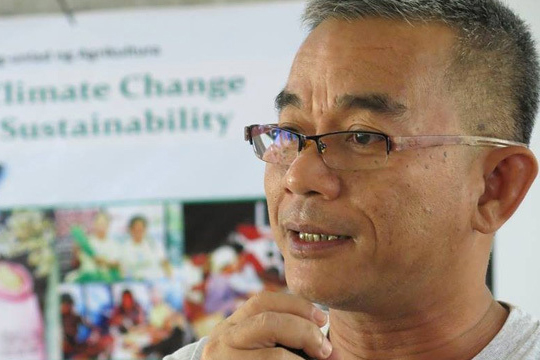
The ICJ and the Alternative Law Groups (ALG) today called on the Government of the Philippines to take immediate and effective action to addressing the apparently unlawful killing of Benjamin ‘Ben’ Ramos, a prominent lawyer and a founder of the National Union of People’s Lawyers (NUPL).
Benjamin Ramos was shot by two unidentified men in the public plaza of Barangay 5, Kabankalan City on 6 November 2018.
The ICJ and ALG call on the Government of the Philippines to conduct a thorough, prompt, impartial, and independent investigation into the killing of Benjamin Ramos.
Benjamin Ramos, in his work with the NUPL, had previously provided legal assistance to the families of the victims of the ‘Sagay 9 massacre’, which involved the killing of nine sugarcane farmers from the National Federation of Sugar Workers by unidentified armed men on 20 October 2018 in Negros Occidental, a province in the central part of the Philippines.
Given the sensitive nature of the work of Benjamin Ramos, which involved confronting powerful interests, it is important that any investigation consider the suspected links between that work and his killing.
“It is essential for the proper and effective functioning of the administration of justice that lawyers are kept safe as they fulfill their duties to protect the rights of their clients and promote the cause of justice,” said Emerlynne Gil, ICJ’s Senior International Legal Adviser.
As affirmed by the UN Basic Principles on the Role of Lawyers, governments must ensure that lawyers are able to perform all their professional functions without “intimidation, hindrance, harassment or improper interference.” In addition,“[w]here the security of lawyers is threatened as a result of discharging their functions, they shall be adequately safeguarded by the authorities”.
The organizations note that there have been at least thirty-four (34) lawyers killed since 2016, under the administration of President Rodrigo Duterte.
“The rising number of killings of lawyers is very concerning and alarming; it is an attack not only on individual lawyers but on the justice system as whole. The Philippine government must take immediate and proactive measures to ensure the safety of lawyers as they conduct their professional duties,” said Maria Generosa Mislang, National Coordinator of ALG.
Contact:
Emerlynne Gil, ICJ Senior International Legal Adviser, t: +662 619 8477 (ext. 206) ; e: emerlynne.gil(a)icj.org
Nov 9, 2018 | News
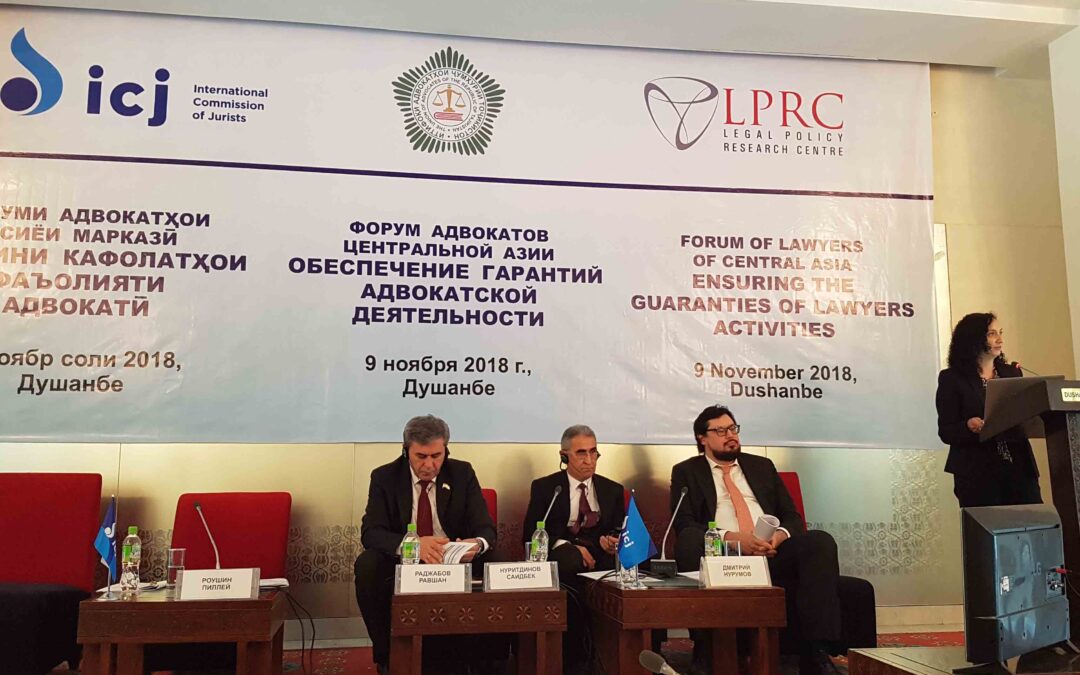
Today the ICJ, in co-operation with the Legal Policy Research Centre and the Union of Lawyers of Tajikistan, is holding a regional conference on the independence and role of lawyers, in Dushanbe.
Lawyers from Tajikistan as well as other countries of Central Asia, the Commonwealth of Independent States and Europe will discuss the legal safeguards that should apply to lawyers to ensure that they can defend the human rights of their clients and the role of bar associations in protecting the security and independence of lawyers.
They will consider the role of committees to protect the rights of lawyers, which have been established within the bar associations of several countries in the region, and how these specialized bodies can work most effectively.
A set of recommendations on the protection of lawyers in the region will be produced following the conference.
Contact:
Temur Shakirov, Senior Legal Advisor, Europe and Central Asia Programme, temur.shakirov(a)icj.org
Tajikistan-Lawyers Conference-News-Agenda-2018-ENG (Agenda, in PDF)
Oct 31, 2018 | News
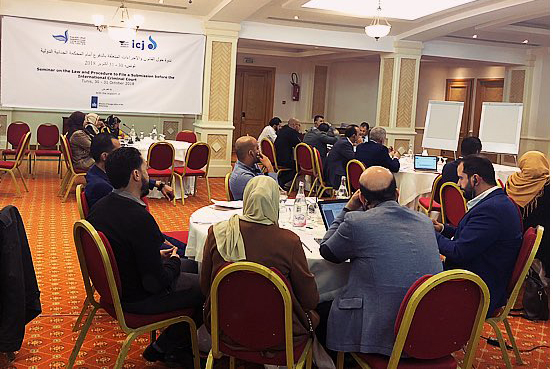
On 28‒31 October 2018, the ICJ hosted two seminars for 30 judges and prosecutors and 26 lawyers from Libya.
The events were co-organized with the Libyan Network for Legal Aid and commenced with opening remarks by ICJ Commissioner, Justice Kalthoum Kennou of Tunisia.
The first seminar on 28‒29 October on “Fair Trial Guarantees in Libya in light of International Standards” aimed to deepen the understanding of Libyan judges and prosecutors of the application of international law and standards regarding fair trials.
The seminar covered pre-trial rights, such as the right to liberty, to effective legal counsel and to be brought promptly before a judge, and rights at trial, such as the right to defend oneself in person, to call and examine witnesses and to an appeal.
International fair trial standards were considered in light of Libyan domestic law and cases, including case 630/2012 involving 37 Ghaddafi-era officials.
The second seminar on 30‒31 October on “The Law and Procedure to File a Submission before the International Criminal Court” aimed to increase Libyan lawyers’ understanding of how to properly file a successful submission to the Office of the Prosecutor.
The Seminar covered the structure and functioning of the ICC, the jurisdictional and admissibility requirements, and the standards for collection and admissibility of evidence.
The Seminar further discussed the roles of NGOs, lawyers and victims in ICC proceedings, providing practical guidance on how and when to file a communication under Article 15 of the Rome Statute of the ICC.
Speakers included judges and prosecutors from international courts and tribunals as well as ICJ staff.
Oct 24, 2018 | News
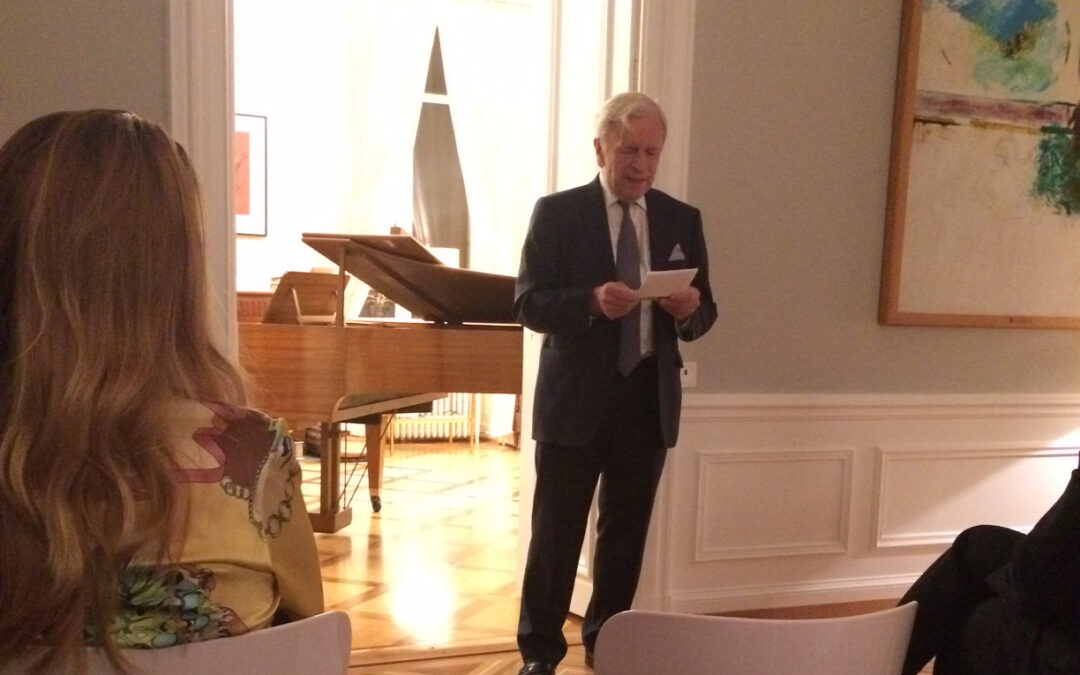
The ICJ started its 60th anniversary in Geneva with an evening gala hosted by Ambassador Julian Braithwaite, at his residence on 18 October 2018. A moving speech by Sir Nicolas Bratza (photo), ICJ Commissioner and Executive Committee member, on the importance of the defence of the rule of law opened the evening.
It was followed by a magnificent concert by Menuhin Academy virtuoso, violinist Vasyl Zatsikha. A magical evening.
The speech of Sir Nicolas Bratza
“I feel very privileged to have been asked to say a few words by way of introduction to the speech of the Secretary General of the ICJ.
May I begin by expressing on behalf of us all the warmest thanks to the British Ambassador for hosting this very special celebration of the 60th anniversary of the ICJ in its home in Geneva.
Anniversaries are always important occasions and never more so than when they mark a milestone in the life of a remarkable organization that has throughout its existence worked tirelessly to safeguard the rule of law and human rights and that has done so, in particular, by protecting and defending the independence of judges and lawyers.
My association with the ICJ has been relatively brief but for many years I have admired its work from afar, as a member of the European Commission of Human Rights for five years and as a judge of the Strasbourg Court, for fourteen.
The Court and the ICJ share the common purpose – to protect the fundamental principles of democracy, the rule of law and human rights.
Without the independent and impartiality of judges, both national and international, those principles would be meaningless and might as well have been written on water.
With the alarming growth of populism in countries across the world, the threats to the independence of the judiciary are regrettably as real today as they have been at any time.
In the international Court of which I was a member, judges are nominated by the States from which they are drawn.
But they are in no sense representatives of those States and are not infrequently faced with having to decide cases, sometimes cases of acute sensitivity, against their own countries.
The pressures on judges of the Court are often intense and there are notorious examples where the courage shown by a judge in maintaining his or her rigorous independence has come at a cost, the judge being punished by not being renominated by the State, by returning to the country at the end of their mandate without employment or means of livelihood, or by being unable to return safely to their home at all.
But if the position of the international judge is difficult enough, that of the national judge in certain States, including member States of the Council of Europe, is far worse, their independence and security, both physical and professional, being under constant threat.
In the 1990s and in the early years of this century, the signs were promising. One was able to witness a slow but steady improvement in adherence to the rule of law on the part of new democracies.
This was in no small measure due to the work of organizations such as the ICJ which, through its writings, seminars and training of judges and lawyers worldwide, did so much to strengthen and support judicial independence and to expose the most flagrant examples of abuse and undermining of that independence.
I regret to say that in more recent years the landscape has become much darker, with open and insidious attacks on members of the judiciary, the arbitrary removal of judges from their posts and measures taken to curtail the powers of judges and courts or to undermine their authority and independence.
In my official visits to member States as President of the Strasbourg Court, I met several judges who voiced their deep concern about the steps being taken both by the legislature and the executive to compromise their independence and to diminish their authority. It is not only in the new democracies that such a phenomenon has become apparent.
There has been a growing trend in many parts of Europe to undermine the standing and authority of the judiciary by outspoken attacks on judges for unpopular decisions, by members of the executive, by parliamentarians and by the media.
It is these challenges to judicial independence and to the rule of law that make the role of the ICJ and the continued support of the diplomatic community not only more relevant but more vital than they have ever been.
It is with pride and pleasure that I wish the ICJ a very happy anniversary on this its first 60 years of life in this great city.
But I combine this with a fervent hope that, with the support of us all, the ICJ is able to continue its extraordinary work for the next 60 years and far beyond. The protection of the rule of law and human rights depend on it.”
Oct 23, 2018 | Multimedia items, News, Video clips
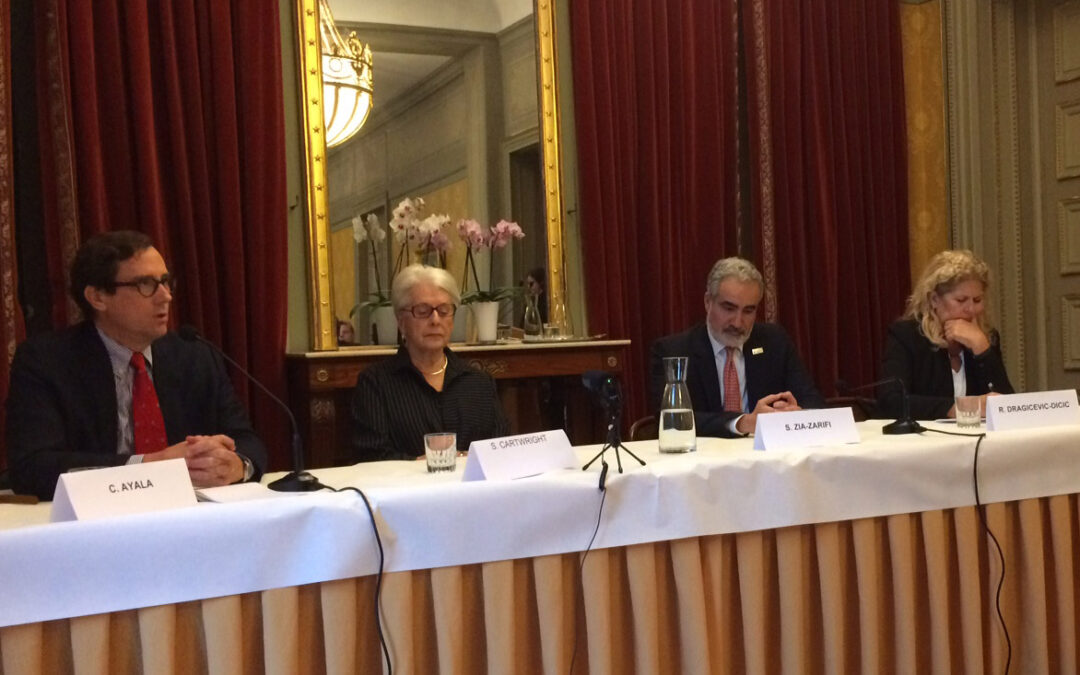
At an event at the city’s Palais Eynard, prominent ICJ Commissioners discussed the supremacy of the Rule of Law and also why it is important to be in Geneva. Watch the video.
The Executive Committee (ExCo), representing the whole Commission of Jurists, participated in the event.
Sam Zarifi, ICJ Secretary General, opened the event by reiterating the importance for the ICJ to be headquartered in Geneva, not only for the UN and international community but also for the city’s and canton’s legal and human rights community.
“It is absolutely clear that we live at a moment in the world when lawyers, judges, jurists are under attack and it is important for the legal community across the world, regardless of borders, regardless of languages, regardless of legal systems, to come together to defend the notion of the rule of law and defend the security and well-being of lawyers and jurists around the world.”
Carlos Ayala, ICJ’s Vice-President, said the ICJ was a unique organization working in the field of the Rule of Law, not as an isolated notion but within the framework of Human Rights and democracy.
He explained how the ICJ is structured and working around the world and insisted on the impact the ICJ is having through its activities.
He said that the organization’s legal outputs were used to have an impact on the overall human rights situations, cases, court decisions, and in training judges, lawyers, prosecutors and others.
Radmila Dragicevic-Dicic, also ICJ’s Vice-President, insisted on how it is important to share experiences about human rights issues and finding solutions to protect different rights.
She gave her personal example of being a judge in former Yugoslavia and Serbia to show how with tenacity and courage one can help establish an independent judiciary even in some of the hardest situations.
She testified how she was helped by the ICJ and Switzerland in her fight for justice.
“If you fight for independence of judges and lawyers in your country, you fight for judges and lawyers everywhere,” she added.
Dame Silvia Cartwright, ICJ Commissioner and ExCo member from New Zealand, was the first woman appointed to the High Court in New Zealand and she was also Governor General of New Zealand.
She said that she was privileged to come from a country that has always promoted and protected the Rule of Law but that unfortunately many recent examples showed that this endorsement could change overnight.
Very active in the fight for women’s rights she said how through her professional work she realized the terrible impact that the Khmer Rouge’s regime in Cambodia and civil war in Sri Lanka had on women.
“Generally speaking I’m quite pessimistic because I think we have reached another stage of the cycle that seems to occur every couple of generations where we are heading towards a more fascist world. So this is the time when human rights must be protected when we must fight to maintain the norms we have struggled for so long,” she said.
Watch the full event here:
https://www.facebook.com/ridhglobal/videos/335212527229422/