Sep 10, 2018 | Advocacy, News
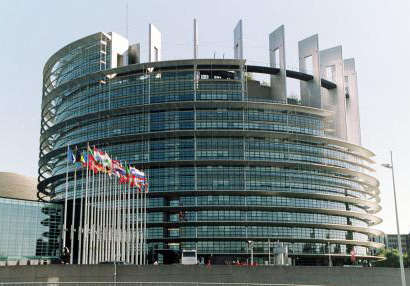
The ICJ today called on all MEPs to vote in favour of the draft resolution and report by rapporteur Judith Sargentini MEP, before the European Parliament, which would activate Article 7 of the Treaty of the European Union in respect of Hungary.
A vote for the resolution would mean that, under Article 7.1, the Council would determine whether there is a clear risk of serious breach by Hungary of the founding values of the EU.
Ultimately, if the situation persists, this would allow the Council to take more robust measures, including suspension of voting rights, to address the situation.
The vote, scheduled for 12 September, is crucial for the rule of law in Hungary and throughout the European Union.
The Parliament will vote on whether to activate the process under Article 7, by calling on the Council to identify a risk of serious breach by Hungary of the EU’s founding values, including the rule of law and respect for human rights.
The ICJ considers that the measures put in place by the Hungarian government since 2011 have led to a severe deterioration of the rule of law and human rights, by weakening Constitutional rights protection, limiting judicial independence, suppressing independent media, civil society and academic institutions, and imposing arbitrary laws that violate the human rights of marginalized sections of society.
Cumulatively, these measures pose a grave, systemic threat to the protection of the human rights of all people in Hungary.
“The European Parliament should respond to the critical situation in Hungary by using the powers available to it under Article 7 TEU to defend human rights and the rule of law. Not to do so would be to abandon Hungary to an increasingly dangerous path, and would set a damaging precedent for all of Europe,” said Róisín Pillay, Director of the ICJ Europe Programme.
Read the full statement and key concerns here: Hungary-triggering Art 7-Advocacy-2018-ENG (in PDF)
Sep 2, 2018 | News
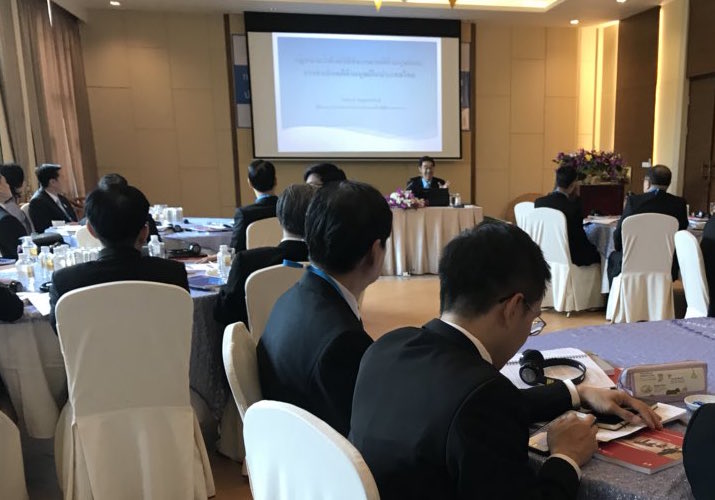
On 1 and 2 September, the ICJ held a “Workshop on the Independence of the Judiciary in the Context of the Inquisitorial Judicial System in Thailand” for members of the Thai judiciary in the north of the country.
Some 31 judges from 21 courts and the Administrative Office of the Court of Justice, Region V, attended the workshop, which was held in Chiang Mai.
The objective of the workshop was to discuss the role of judges and exercise of judicial power within the inquisitorial system, particularly in the context of adjudicating cases of human trafficking.
In an effort to combat human trafficking in Thailand, the Procedures for Human Trafficking Cases Act B.E. 2559 (2016) established inquisitorial system procedures for adjudication of cases of human trafficking.
With an increasing number of cases of human trafficking in Northern Thailand, judges in Northern Thailand are increasingly required to utilize inquisitorial processes in human trafficking cases.
Courts in Thailand generally adjudicate cases based on the adversarial judicial system.
In this context, the ICJ held the workshop in collaboration with the Administrative Office of the Court of Justice, Region V, in the North of Thailand, to share information and expand collaboration between Thai and international judges about inquisitorial processes.
Justice Aree Thecharuwichit, Chief Justice of the Office of the Chief Justice, Region V, Frederick Rawski, Regional Director of ICJ Asia and the Pacific, and Justice Radmila Dragicevic-Dicic, Vice-President of the ICJ, ICJ Commissioner, Acting President of the Belgrade Court of Appeals and Judge of the Supreme Court of Serbia delivered opening statements at the Workshop.
Justice Sittipong Tanyaponprach, Chief Judge of the Office of the Chief Justice, Region I, spoke about existing procedures in Thailand’s justice system to deal with human trafficking cases under the Procedures for Human Trafficking Cases Act 2016.
Justice Marcel Lemonde, Honorary President of Chamber in France’s Court of Appeal and an International Consultant in Judicial Matters, delivered an introduction to the inquisitorial system based on the French judicial system and spoke about existing challenges in inquisitorial processes.
Justice Radmila Dragicevic-Dicic, of the Supreme Court of Serbia and ICJ Vice-President spoke about judicial practice in cases involving human trafficking and shared her experience in adjudicating human trafficking cases in Serbia.
ICJ’s Senior Legal Adviser Kingsley Abbott moderated the workshop and provided an introduction to the ICJ’s resource materials on the independence of the judiciary and judicial accountability, including the ICJ’s Practitioners’ Guide No. 13 on Judicial Accountability.
The ICJ ended the Workshop with a statement reiterating its commitment towards working with Thailand’s judiciary to strengthen the rule of law and administration of justice in Thailand.
This Workshop is the second workshop held by the ICJ for Thailand’s judiciary in the North of Thailand.

Aug 21, 2018 | News
The ICJ and its Polish Section (ICJ Poland) today expressed their support for the actions of the Supreme Court to defend the rule of law and the independence of the judiciary in Poland, including by recourse to the European Court of Justice (CJEU).
This happened in the face of repeated attack by political figures and authorities.
Preserving and safeguarding the independence of the courts is essential for the protection of human rights in Poland, the organizations said.
The ICJ and ICJ Poland urged the Polish executive and legislative authorities to cease all interference with the conduct of the Supreme Court in the carrying out of its legitimate functions.
The law on the Supreme Court that has led to the forced “retirement” of one third of the Supreme Court, including the President of the Court, Małgorzata Gersdorf, must be repealed and the judges reinstated in office, the ICJ and ICJ Poland stressed.
On 2 August, the Supreme Court of Poland took the welcome step, in accordance with European Union law, of submitting a preliminary ruling request to the Court of Justice of the European Union (CJEU) seeking its interpretation on the compliance of the recent legislation on retirement ages of judges with EU law.
Specifically, the Supreme Court enquired as to the legislation’s compliance with the principle of irremovability of judges and the prohibition of discrimination on grounds of age under Directive 2000/78. The Supreme Court has suspended the implementation of the law during the proceedings before the CJEU.
The ICJ and ICJ Poland condemn the attacks against the Supreme Court by political authorities, including President Andrzej Duda, who claimed that the suspension of the law’s implementation has no legal basis.
On the contrary, the Supreme Court of Poland acted in compliance with its duties under article 267 of Treaty of the Functioning of the European Union to raise a question concerning the interpretation of the Treaties and, in conformity with the case-law of the CJEU, to suspend the application of such measures which may violate the law of the European Union, pending resolution of the question.
The legislation raises serious issues of EU law, both in regard to protection of the rule of law under Article 2 of the TFEU, and in regard to discrimination on grounds of age.
This attack against the actions of the Supreme Court occurs amid a systematic undermining of the independence of the judiciary in Poland by the Polish executive and legislative authorities, which the ICJ, ICJ Poland, and judges of the global ICJ network have repeatedly condemned.
The organizations emphasize that irremovability of judges is one of the main pillars of judicial independence and therefore of the rule of law. An ICJ letter of 11 July 2018, signed by 22 senior judges from all regions of the world, urged the Polish government to act immediately to reinstate the forcibly retired judges in office.
Aug 13, 2018 | News
From 9-12 August, the ICJ-supported trainings on human rights and the law for lawyers, youths and activists from Kachin and Shan states in Myanmar’s north.
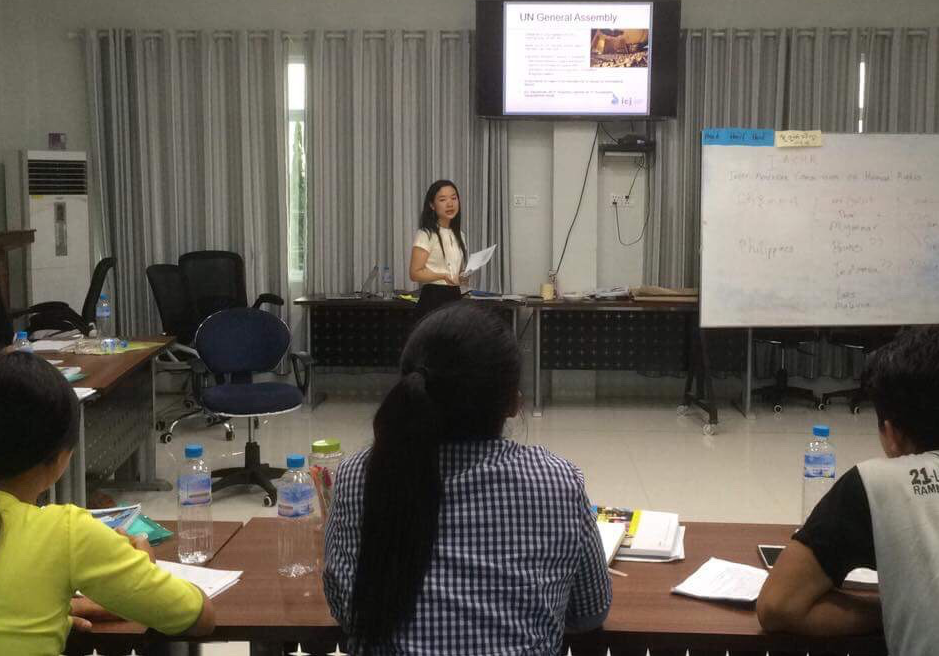
On 9 and 10 August, the ICJ joined a “training of trainers” organized by the Humanity Institute, a civil society organization based in Myitkyina.
This aims to improve the capacity of local youths and activists from Kachin and Northern Shan State on basic human rights concepts and measures to engage with Regional and UN Human Rights mechanisms.
The ICJ’s national legal researcher, Ja Seng Ing, shared information about the advantages and limitations of regional human rights mechanisms, including the Europe Commission of Human Rights and the ASEAN Commission of Human Rights. She provided an overview of the UN human rights framework and human rights mechanisms.
In addition to explaining how these work, she also focused on how human rights defenders can communicate with and participate in UN human rights mechanisms by reporting on human rights violations.
Then on 10 and 11 August, the ICJ facilitated a legal training for senior law students, and junior lawyers hosted by the Kachin Legal Clinic, an independent lawyers network.
The Kachin Legal Clinic seeks to develop a pool of young lawyers and with knowledge on the role of lawyers in the field of domestic and international human rights setting and the independence of the lawyers.
On the first day, a national legal adviser from the ICJ shared experiences of litigating for human rights in Myanmar. She also noted the critical role of independent lawyers in protecting human rights, by representing clients from all communities in different parts of Myanmar.
On the second day, Ja Seng Ing gave an overview of global and local law and standards and issues related to accountability and redress for gross human rights violations.
The ICJ’s international legal adviser, Sean Bain, gave an overview of international laws and standards related to the protection of human rights in times of conflict or crises, sourced from international human rights law as well as international humanitarian law and international criminal law.
These activities are part of the ICJ’s ongoing support to civil society actors in Myanmar, from community to national level.
Jul 31, 2018 | News
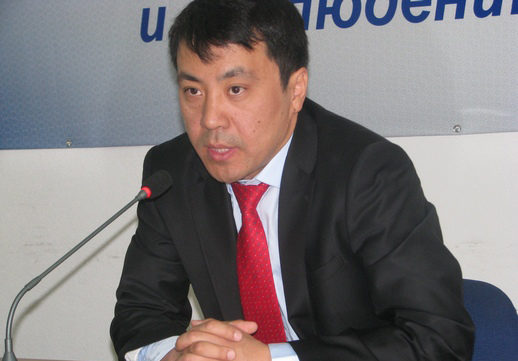
Today, the ICJ called on the government of Kazakhstan to drop all charges of “knowingly disseminating false information” against lawyer Bauyrzhan Azanov related to his representation of a child who is the alleged victim of sexual abuse by older children.
“The prosecution of Bauyrzhan Azanov in relation to statements he made as part of his representation of a child violates the lawyer’s freedom of expression, and prevent him from effectively representing his client,” said Temur Shakirov, Senior Legal Adviser for the ICJ’s Europe and Central Asia Programme.
“Instead of targeting a lawyer, the investigative authorities should use their resources to investigate the allegations of human rights violations in this case and ensure the protection of the rights of this child in accordance with Kazakhstan’s international obligations,” he added.
Bauyrzhan Azanov, a prominent lawyer in Kazakhstan, took up a high-profile case in which he represented a minor, an alleged victim of sexual and physical abuse over a prolonged period.
The case became public in March 2018 through media reports.
Once the case became public several district police officers were fired, and two heads of schools and some other state agents were suspended from office, reportedly in relation to their failure to report and investigate the case.
In his statements in the social media, Azanov alleged the investigation had been obstructed due to corrupt reasons.
In reaction to this, on 21 May 2018, the mother of the minor submitted a complaint against Azanov where she expressed concerns about “social tension”, “forming a negative image of the investigative body” and herself “as a mother”.
Following the mother’s complaint, on 24 July, the General Prosecutor’s Office initiated a criminal investigation against the lawyer for knowing dissemination of false information, which alleged that:
“The information disseminated by lawyer B. Azanov was deliberately distorted and untrue, which created a false idea among the public about the alleged corruption of justice system, investigative bodies, the mother of the child and other persons. This caused psycho-emotional and social tension among the public and created a threat of destabilization of the internal political situation, thereby creating a threat of violation of public order.”
Through the media, Azanov has denied the allegations against him and has stated that he acted in the best interests of his client and sought to ensure accountability for criminal acts.
On 1 June 2018, Nursultan Nazarbayev, President of the Republic of Kazakhstan commented on the case stating that unreasonable prolongation of the investigation is connected with the nepotism in the police and higher investigative authorities.
The Ombudsperson, members of the Kazakhstan Bar Association and human rights activists have made public statements in support of Bauyrzhan Azanov.
In these circumstances, the ICJ is concerned that criminal charges against lawyer Bauyrzhan Azanov for public comments in which he raised concerns about possible violations of human rights of his minor client, may violate the lawyer’s right to freedom of expression.
The right to freedom of expression is protected under international treaties to which Kazakhstan is a party, including by Article 19 of the International Covenant on Civil and Political Rights (ICCPR). As the UN Human Rights Committee stated in its General Comment 34 on the freedom of expression:
“When a State party invokes a legitimate ground for restriction of freedom of expression, it must demonstrate in specific and individualized fashion the precise nature of the threat, and the necessity and proportionality of the specific action taken, in particular by establishing a direct and immediate connection between the expression and the threat.”
According to the UN Basic Principles on the role of lawyers, lawyers have the right to take part in public discussion of matters concerning the law, the administration of justice and the promotion and protection of human rights without suffering professional restrictions by reason of their lawful action or their membership in a lawful organization (Principle 23).
It is of particular concern that the Prosecutor’s Office document uses vague concepts that may amount to arbitrary use of grounds for restriction of freedom of expression of the lawyer.
In particular, it is unclear how prosecutorial authorities measured “psycho-emotional and social tension of the public” or that on what basis the lawyer’s comments may have “created a threat of destabilization of the internal political situation” creating a threat to the public order.
These broadly and atypically worded justifications for prosecution are likely to lead to arbitrary interference with freedom of expression.
Prosecution of the lawyer for his attempts to raise human rights-related issues of his minor client, unsupported by any evidence or explanation what they may refer to, is also likely to have a chilling effect on those who defend human rights of victims of abuse.
The ICJ recalls that according to the UN Basic Principles on the Role of Lawyers, Governments must ensure that lawyers are able to perform all of their professional functions without intimidation, hindrance, harassment or improper interference (Principle 16).
Kazakhstan-Lawyer Azanov-News-web story-2018-ENG (full story, in PDF)
Kazakhstan-Lawyer-Azanov-News-Web-story-2018-RUS (full story in Russian, PDF)