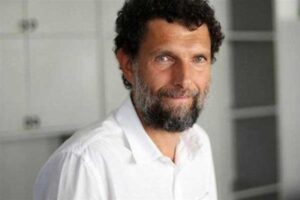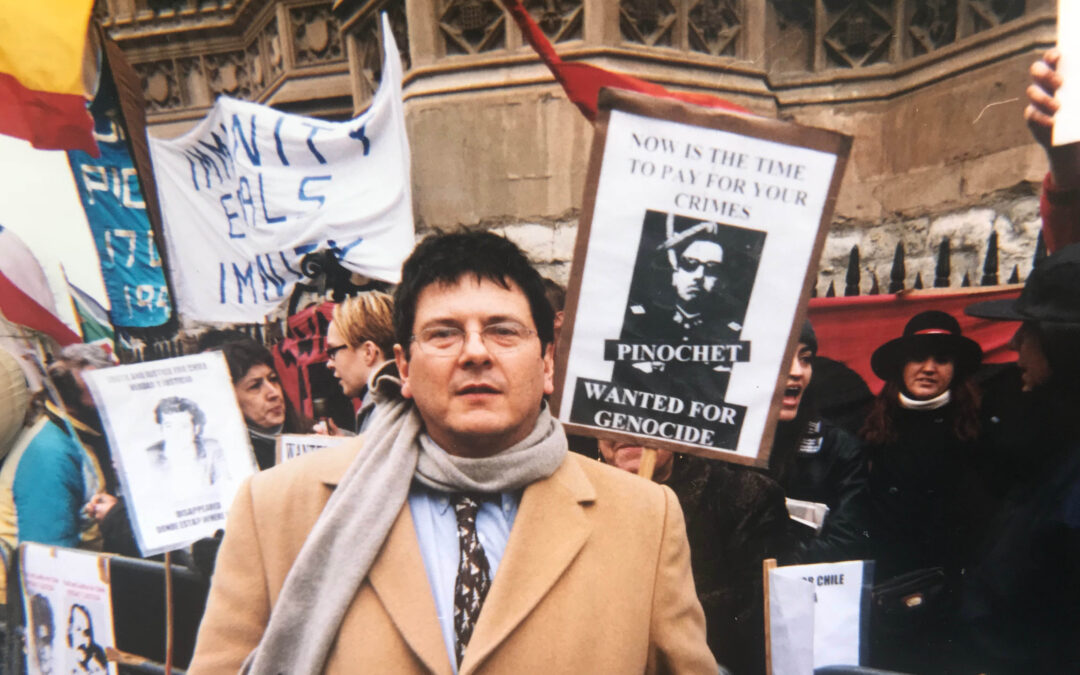
ICJ Commissioner Reed Brody: “Twenty years later, Pinochet’s arrest remains an inspiration”
On October 16, 1998, the former dictator of Chile Augusto Pinochet was arrested in London on a warrant from a Spanish judge. Reed Brody participated in the subsequent legal case.
Reed Brody went on to apply the “Pinochet precedent” in the landmark prosecution of the former dictator of Chad, Hissène Habré, who was convicted of crimes against humanity in Senegal in 2016.
He now works with victims of the former dictator of Gambia, Yahya Jammeh. The ICJ interviewed Brody about the Pinochet case and its legacy.
What was your role in the Pinochet case?
My role started when Pinochet was arrested in London. The case began long before that, of course, in the early years of Pinochet’s dictatorship when brave human rights activists documented each case of murder, and “disappearance.”
The ICJ worked with those advocates to produce a seminal 1974 report on those crimes, just six months after Pinochet’s coup. Shut out of Chile’s courts, even after the democratic transition of 1990, victims and their lawyers pursued a case against Pinochet in Spain under its “universal jurisdiction” law and when Pinochet traveled to London, Spanish Judge Baltasar Garzón requested and obtained his detention.
When Pinochet challenged his arrest in court claiming immunity as a former head of state, I went to London for Human Rights Watch, and we and Amnesty International were granted the right to intervene with teams of lawyers in the proceedings at the judicial committee of the House of Lords, then Britain’s highest court.
The Lords cited our research in rejecting Pinochet’s immunity.
You famously described the Lords’ Pinochet decision as a “wake-up call” to tyrants everywhere. Looking back, do you think it was?
Actually no, I think one would be hard pressed to discern a change in the behavior of dictators. Mugabe didn’t quake in his boots, Saddam didn’t clean up his act.
The more important and more lasting effect of the case was to give hope to other victims and activists. When the Lords ruled that Pinochet could be arrested anywhere in the world despite his status as a former head of state, the movement was in effervescence.
As a human rights lawyer, I was used to being legally and morally right, but still losing. In the Pinochet case, not only did we win, but we upheld the detention of one of the world’s most iconic dictators.
The Pinochet case inspired victims of abuse in country after country, particularly in Latin America, to challenge the transitional arrangements of the 1980s and 1990s, which allowed the perpetrators of atrocities to go unpunished and, often, to remain in power.
These temporary accommodations with the ancien régime didn’t extinguish the victims’ thirst to bring their former tormentors to justice.
How did you go from Pinochet to Habré?
With Pinochet, we saw that universal jurisdiction could be used as an instrument to bring to book people who seemed out of the reach of justice.
Together with groups like Amnesty, the FIDH, and the ICJ (which wrote an important report on the Pinochet case and its lessons), we had meetings on who could be the “next Pinochet.”
That’s when Delphine Djiraibe of the Chadian Association for Human Rights asked us to help Habre’s victims bring him to justice in his Senegalese exile.
I was excited at the prospect of persuading a country in the Global South, Senegal, to exercise universal jurisdiction, because there was a developing paradigm of European courts prosecuting defendants from formerly colonized countries.
It took us 17 years, but Habré became the first prosecution ever of a former head of state using universal jurisdiction, and indeed the first universal jurisdiction trial in Africa.
1998 was a high water mark for international justice with the adoption of the ICC Rome Statute and Pinochet’s arrest. Neither the ICC nor universal jurisdiction have quite lived up to their expectations. Why?
International justice doesn’t operate in a vacuum, it’s conditioned by the global power structure. Each case, whether at the ICC level or the transnational level, is a product of the political forces which must be mobilized, or fended off, to allow a prosecution to proceed.
Those forces, particularly since September 11, 2001, have been hostile to human rights enforcement in general and to justice in particular. Universal jurisdiction has been subject to the same double standards as the ICC.
The Belgian and Spanish universal jurisdiction laws, which were the broadest in the world, were both repealed when they were used to investigate superpower actions.
But many of the most successful cases have been those in which the victims and their activist supporters have been the driving forces, have compiled the evidence themselves, built an advocacy coalition which placed the victims and their stories at the center of the justice struggle and helped create the political will in the forum state.
I’m thinking not just of Habré, but the genocide prosecution in Guatemala of the former dictator Efraín Ríos Montt, the case in Haiti of “President for Life,” Jean-Claude “Baby Doc” Duvalier, the Liberian cases brought around the world by Civitas Maxima and its partners, the Swiss cases initiated by TRIAL International, and the Syria litigation by ECCHR and others.
These cases were brought before domestic courts either of the country in which the atrocities took place (Guatemala, Haiti) or of foreign countries based on universal jurisdiction, rather than before international courts.
Most of these cases took advantage of legal regimes which allowed victims directly to participate in the prosecutions as “parties civiles,” or “acusación particular” rather than play passive or secondary roles in cases prosecuted solely by state or international officials.
How do victim-driven prosecutions look different than institutional cases?
When it’s the victims and their allies who get the cases before a court, who gather the evidence, and who have formal standing as parties, the trials are more likely to live up to their expectations.
In the Rios Montt case, for instance, the Asociación Para la Justicia y Reconciliacion (AJR) and the Centro Para la Acción Legal en Derechos Humanos (CALDH) mobilized the victims, developed the evidence, defined the narrative and, essentially, determined the outlines of the case and chose the witnesses who would testify for the prosecution.
In the Habré case, we spent 13 years building the dossier, interviewing hundreds of victims and former officials and uncovering regime police files. The victims’ coalition always insisted that any trial include crimes committed against each of Chad’s victimized ethnic groups, and that is exactly was happened.
In contrast, a distant prosecutor, disconnected from national narratives and inherently not accountable to the victims or civil society, can be tempted to narrowly tailor prosecutions in the hopes of securing a conviction or avoiding political resistance.
This was the case with the ICC in the Democratic Republic of the Congo, for instance, where, as Pascal Kambale has persuasively argued, it betrayed the victims’ hopes.
Millions of civilians died in the DRC and Luis Moreno Ocampo only went after two local warlords. I think the current prosecutor is paying more attention to local realities.
The inspiration from victim-driven cases is also greater, and they are to some degree replicable. As Naomi Roht-Arriaza has written, these cases “stirred imaginations and opened possibilities precisely because they seemed decentralized, less controllable by state interests, more, if you will, acts of imagination.”
When I showed Chadian victims video clips of the Ríos Montt trial, they saw in those images exactly what they were trying to do.
Just as the Chadians came to us in the Habré case seeking to do what Pinochet’s victims had done, our hope in getting the Habré case to trial was that other survivors would be inspired by what Habre’s victims had done and say, “you see these people, they fought for justice and never gave up. We can do that too.”
And indeed, Liberian victims and Gambian victims have patterned their campaigns for justice on what Habre’s victims did. So, the Pinochet case continues to be an inspiration.