Jul 11, 2018 | News
Today, the ICJ expressed concern at the adoption of a new law on lawyers in Kazakhstan.
The Law ‘On the Professional Activities of Advocates and Legal Assistance’, signed into law on 10 July 2018, contradicts international law and standards on the independence of the legal profession, by enabling the executive to influence or to have control over who is allowed to practice law and substantial influence on disciplinary proceedings against lawyers.
The law will have negative repercussions for protection of human rights and the rule of law in the Republic of Kazakhstan.
“Some of the key provisions of the adopted law undermine the independence of the legal profession, a cornerstone of the rule of law,” Temur Shakirov, ICJ Europe Program Senior Legal Adviser said today.
“Not only does the law weaken the legal profession, it sends an unfortunate message to the public that, as a result, their human rights, including their right to a fair trial, may be harder to uphold within the legal system,” he added.
More specifically, the ICJ is concerned that, under the new law, the role of the independent Bar Association in the composition of the disciplinary commissions is reduced.
Besides lawyers, the Disciplinary Commission will now include ‘representatives of the public’ designated by the Ministry of Justice. While the law does not specify how these members of the Disciplinary Commission would be selected, the selection is to be made by the Ministry of Justice.
The same procedure is not excluded to select members who are retired judges, which the Law requires also be part of disciplinary commissions.
While many of the specific procedures are unclear, it is apparent that these provisions would give the Ministry extensive influence over the Disciplinary Commission, especially as the law does not explicitly require these members perform their duties independently from the instructions of the Ministry of Justice.
The influence of the executive over the disciplinary proceedings of the Bar Association is contrary to the principles of independence of lawyers.
The UN Basic Principles on the Role of Lawyers provide that disciplinary proceedings against lawyers are to be brought before an impartial disciplinary committee established by the legal profession, before an independent statutory authority, or before a court, and shall be subject to an independent judicial review.
Furthermore, the law continues to give the Ministry of Justice control over admission to the practice of law.
It stipulates that prospective lawyers who have completed their professional training are to be assessed by the Commission for admission to practice established by territorial bodies of the Ministry of Justice.
The commissions consist of seven members, of which only three are members of the Bar Association. The composition of the commissions and the principles of their work are to be approved by the orders of the Minister of Justice of the Republic of Kazakhstan.
The Law therefore preserves the previous procedure on admission to the profession criticized by the ICJ earlier, according to which the attestation of applicants for obtaining the membership to the Bar Association and issuing a license were within the exclusive competence of the Ministry of Justice of the Republic of Kazakhstan.
At the same time, many defense rights listed in the Law are curtailed or compromised by the wording that would allow for enactment of restrictions by secondary legislation, including that the adopted Law would not allow lawyers to freely and without interference collect evidence in defense of their clients or that lawyer’s inquiries can be subject to limitation where they seek to obtain “restricted information”.
The ICJ notes that according to the UN Basic Principles on the Role of Lawyers, States must ensure lawyers have access to appropriate information, files and documents in their possession or control in sufficient time to enable lawyers to provide effective legal assistance to their clients. Such access should be provided at the earliest appropriate time (Principle 21).
Read the full text in English here
Read the full text in Russian here
Jul 9, 2018 | News
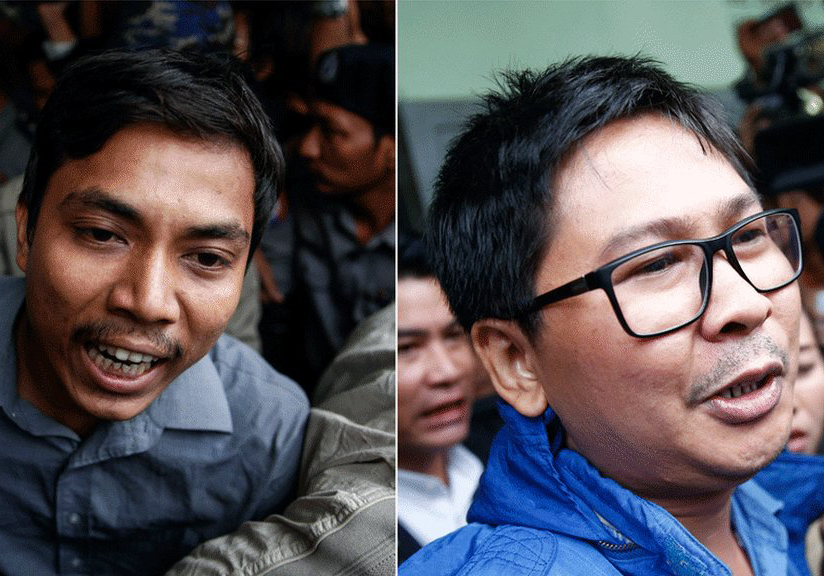
Today the ICJ called on Myanmar’s prosecutorial authorities to immediately end the prosecution of Reuters journalists Wa Lone and Kyaw Soe Oo.
The two have been subject to prosecution solely for doing their job as journalists and for exposing human rights violations in Rakhine State, including unlawful killings in Inn Dinn Village admitted to by the military.
In Yangon this morning a Northern District Court Judge accepted charges filed under the 1923 Official Secrets Act.
This decision permits ongoing prosecution of the journalists and extends their detention.
“The prosecution has failed to provide credible evidence of any wrongdoing throughout six months of hearings. It is therefore hard to imagine a valid legal rationale for allowing ongoing prosecution of the journalists,” said Mr Sean Bain, legal adviser for the ICJ in Yangon.
Section 253(1) of Myanmar’s Code of Criminal Procedure requires a judge to dismiss charges against accused persons if the evidence presented fails to warrant a conviction.
A motion for charges to be dismissed on this basis, submitted by defense lawyers, was effectively rejected by the decision today.
“Today’s decision raises real concerns about the independence and impartiality of the judiciary and prosecution when confronted with politically sensitive cases,” Bain said.
“The case significantly undermines the government’s stated commitments to reforming and building public confidence in judicial process,” he added.
ICJ legal advisers have monitored the case and were present in Court today. The journalists were first detained on 12 December 2017 and had no access to legal representation for almost two weeks.
“The case is also emblematic of the lack of adherence to fair trial rights in Myanmar,” Bain said.
“Their confinement remains unlawful given an initial period of incommunicado detention without access to lawyers, and other flagrant violations of the fair trial rights guaranteed in the Constitution, statues and international law.”
“Authorities should immediately end criminal proceedings against these men who appear to have been lawfully doing their job as investigative journalists,” he added.
The detention and prosecution of anyone, including journalists, based solely on the collection and publication of evidence relevant to serious human rights violations, is inconsistent with international law and standards on freedom of expression and on human rights defenders.
Article 14 of the 1990 UN Guidelines on the Role of Prosecutors states that prosecutors are obliged to discontinue prosecution when the investigation shows the charges to be unfounded.
Myanmar’s new Code of Ethics for Law Officers, launched in 2017, requires prosecutors to protect rights enshrined in the Constitution and to “provide a proper and fair administration of justice.”
The right to legal counsel is a bedrock rule of law principle that is set out in a range of international human rights laws and standards, including in article 11 of the Universal Declaration of Human Rights. Sections 19 and 375 of the Myanmar Constitution guarantee the right of legal defense, as does Myanmar’s Code of Criminal Procedure (section 340), Courts Manual (section 455(1)), the Police Manual (section 1198c) and the Prisons Act (section 40).
Fair trial rights, freedom of expression, and the right to liberty are also recognised by the Universal Declaration of Human Rights.
Also relevant are the UN Declaration on Human Rights Defenders, and the Global Principles on National Security and the Right to Information (The Tshwane Principles).
Contact:
Sean Bain, ICJ legal adviser, e: sean.bain(a)icj.org
Read also:
ICJ (May 2016), Handbook on Habeas Corpus in Myanmar – English and Burmese
ICJ (December 2017), Reuters Journalists in Myanmar: respect their rights, end their incommunicado detention – English and Burmese
Full text in Burmese (PDF): Myanmar-drop-charges-against-Reuters-journalists-News-Press-releases-2018-BUR

Jul 4, 2018 | News
The ICJ condemned today the forced retirement of 27 out of 72 judges of the Supreme Court of Poland in defiance of the most basic principles on the independence of the judiciary.
“The forced retirement of a third of the Supreme Court under the new law on the judiciary amounts to an arbitrary dismissal of judges” said Róisín Pillay, Director of the ICJ Europe and Central Asia Programme, “It is a flagrant breach of a basic tenet of the independence of the judiciary, the security of tenure of judges.”
The government claims the law and its implementing measure of forced retirements are aimed at improving the administration of justice. However, the ICJ considers them to be a deliberate attempt to destroy judicial independence and install executive control.
“We call on the Polish authorities to follow the EU’s recommendations, abolish this draconian legislation and immediately reinstate the Supreme Court justices. Not to do so strikes at the very core of judicial independence”, said Róisín Pillay.
“Universal principles of judicial independence guaranteeing security of tenure were developed long ago exactly to safeguard the kind of abuse of political authority driving this forced retirement measure, whereby judges would serve at the pleasure of the government of the day,” she added.
The ICJ considers that the implementation of the new law on the Supreme Court and the dismissal of the 27 Supreme Court Justices directly contravenes the security of tenure of judges and, hence, the principle of judicial independence, as expressed in the UN Basic Principles on the Independence of the Judiciary, Council of Europe standards, the European Court of Human Rights’ jurisprudence and the rule of law principle of the EU Treaties.
Poland-Attacks on judiciary-News-web stories-2018-ENG (full story – with additional background information – in PDF)
Jun 29, 2018 | Advocacy, Non-legal submissions
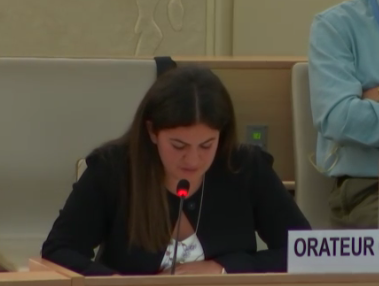
The ICJ today raised concerns for the independence of the judiciary in Serbia, in a statement to the United Nations.
The statement was delivered during the discussion of the outcome of the Universal Periodic Review (UPR) of Serbia, at the UN Human Rights Council in Geneva.
It read as follows:
“The International Commission of Jurists (ICJ) congratulates Serbia on the completion of its Third Cycle Universal Periodic Review.
The ICJ welcomes the acceptance by Serbia of all recommendations to strengthen the rule of law and judicial independence, including by limiting political influence over judicial appointments (Norway, 6.1; Sweden, 6.2; France, 6.3; Australia, 6.20; Germany, 6.22; Morocco, 6.23; Estonia, 6.24; Republic of Korea, 6.25; Singapore, 6.26; Canada, 6.27).
The ICJ regrets, however, that constitutional amendments currently under discussion in Serbia run counter to these recommendations.
The amendments would empower the National Assembly to determine appointments and dismissals of judges of the Constitutional Court, as well as for half of the members of the High Judicial Council, five members of the High Prosecutorial Council, the Supreme Public Prosecutor and public prosecutors.
The independence and autonomy of the Constitutional Court, High Judicial Council and State Prosecutorial Council, would be better secured by reducing or eliminating the role of political bodies such as the National Assembly, particularly as regards dismissals.
The ICJ stresses that the judiciary and the prosecution service must exercise their functions free from direct or indirect external influences, threats or interferences, including from the legislative and executive powers.
While welcoming reforms for life tenure of judges and deputy prosecutors, the ICJ urges Serbia to implement the accepted recommendations by precluding involvement of the National Assembly in the appointment and dismissal of judges, court presidents, public prosecutors, and deputy public prosecutors.”

Jun 28, 2018 | News
On 24-25 June, ICJ Commissioners from the Latin America region came together in Bogotá, Colombia, to consider and enhance ICJ strategies to combat past and resurging trends in extrajudicial executions and enforced disappearances in the region.
The meeting was the first of its kind to bring together ICJ Commissioners on a regional basis: Carlos Ayala (Venezuela); Miguel Carbonell (Mexico); Gustavo Gallón (Colombia); Roberto Garretón (Chile); Juan Mendez (Argentina); Victor Rodriguez Rescia (Costa Rica); Alejandro Salinas Rivera (Chile); Mónica Pinto (Argentina); Belisário dos Santos Júnior (Brazil); and Wilder Tayler (Uruguay).
The meeting was followed by a preparatory mission (involving two Commissioners and the ICJ’s legal representative in Colombia) on the transitional justice mechanisms envisaged under the Havana Agreement, with a particular emphasis on the jurisdiction and operation of the ‘Special Jurisdiction for Peace’. A full high-level mission will follow in September, at which time the ICJ intends to identify minimum benchmarks for the effective operation and sustainable impact of those mechanisms.
In all regions of the world, recourse to enforced disappearances and extrajudicial killings continues; victims and their families (the overwhelming majority of whom are women, children and indigenous peoples from rural areas dominated by poverty and social and political exclusion, as well as trade unionists and human rights defenders) struggle to obtain prompt and effective remedies and reparation; and perpetrators enjoy impunity through inadequate or improper laws, ineffective institutional frameworks, selective recourse to accountability mechanisms and/or political interference in the functioning of those mechanisms.
The meeting confirmed that these challenges are particularly evident in Latin America, where there has been a resurgence in recourse to enforced disappearances and extrajudicial killings in countries throughout the region and where violations of the past have in very many cases been inadequately addressed. By way of example:
- In Brazil, official statistics from 2016 attest to the occurrence of 62,000 violent deaths and potentially up to 22,000 enforced disappearances each year.
- 45 years after the coup d’état in Chile, about 800 people have been convicted and sentenced to imprisonment, but those figures belie the extensive occurrence and levels of responsibility for gross violations of human rights that occurred.
- In Colombia, more than 70,000 cases of enforced disappearance were documented by the Attorney General for the period 1970-2015 and there is general consensus that the number of missing persons likely exceeds 100,000. The wide and persistent extent of extrajudicial killings has been noted by UN and Inter-American experts and bodies as well as the Office of the Prosecutor of the International Criminal Court.
- In Guatemala, only 34 convictions for conduct involving conflict-era violations have been secured, despite the fact that the internal armed conflict of 1960-1996 involved massive and systematic human rights violations. Impunity has undermined redress and accountability and severely weakened the prevention of violations, with the National Civil Police having recorded more than 25,000 people ‘disappeared’ in 2003-2014, more than half of which were women.
- Peru’s internal armed conflict of 1980-2000 resulted in more than 69,000 people killed and ‘disappeared’, but less than 100 convictions have been secured under the judicial subsystem established in 2004 that specializes in accountability for gross human rights violations.
- In Venezuela, civil society reports at least 12,000 real or perceived political opponents having been arbitrarily detained between January 2014 and April 2018; and almost 6,000 alleged extrajudicial killings between 2012 and 2016.
In all the countries from which the Commissioners originate, several common factors were identified:
- The intrinsic risks to continuation of and lack of redress and accountability for gross human rights violations posed by executive action that undermines the rule of law;
- Also inherent to the rule of law, the critical need for independent and impartial judicial mechanisms and individual judges and lawyers to allow for transitional justice, in particular for victims and their families to access effective remedies and reparation and for the holding to account of perpetrators;
- A high level of correspondence between impunity for gross human rights violations and the corruption of public officials;
- The increased, and in some cases extensive, recourse to arbitrary and detention, which in many cases precede and allow for the occurrence of extrajudicial executions and enforced disappearances;
- A similar inter-relationship between enforced disappearances and the occurrence of torture and other forms of ill-treatment;
- The detrimental impact to ensuring accountability for violations of the past when omitting non-State and paramilitary actors from transitional justice processes; and
- The increase in highly conservative (political and popular) sentiments and movements within the region and the corresponding need to tailor responses depending on the democratic versus autocratic nature of government and its institutions.
Noting that the ICJ has long sought to combat extrajudicial executions and enforced disappearances, including through the development of UN and regional instruments and standards and through its action in Latin America and the globe, the ICJ’s Commissioners urged the ICJ to continue and expand its engagement. Noting also the increasing call by local civil society actors for support and intervention by the ICJ, the meeting considered the organization’s role in seeking redress and accountability for, and prevention of, gross violations of human rights.
Commissioners reinforced, and commented on the effective parameters of, the ICJ’s strategic and victim-centred approach to address and prevent gross human rights violations, including extrajudicial executions and enforced disappearances. Having regard to the ICJ’s mandate and worldwide network of judges and lawyers, Commissioners emphasized the unique role that the organization has by grounding its work on the transformative role of the law, justice institutions and justice actors.
The particular means by which this role can be achieved by the ICJ were discussed against the background of recent and planned activities in the region and beyond. Commissioners overwhelmingly supported these plans and the Secretariat is now poised to continue implementation of its strategies in its current programmes of work and in the development of future projects.