Sep 21, 2015 | News
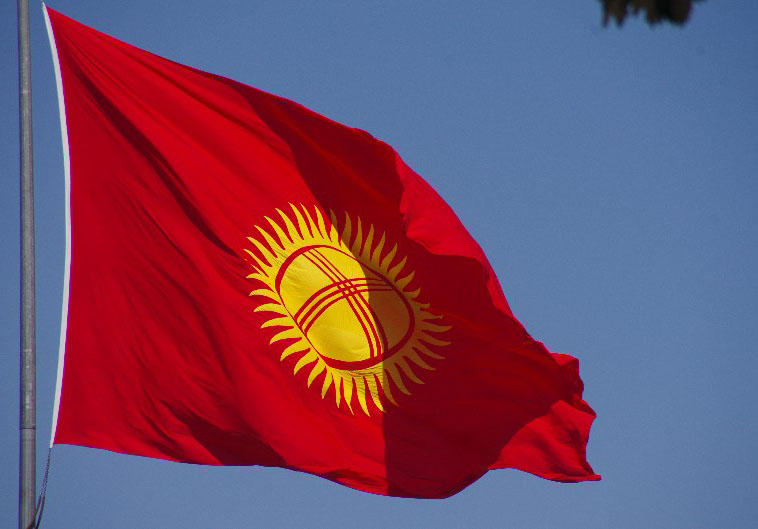
Today, the ICJ has started its mission to the Kyrgyz Republic on organisation and functioning of the legal profession.
During the mission, which will last from 21 to 25 September, the ICJ will assess the implementation of the new legislation unifying the legal profession under a single national bar association, including establishment of new structures and standards for the self-governance of the profession regarding qualification, disciplinary action and professional ethics.
A round table with independent lawyers will be held during the visit, other meetings with bodies of the Bar Association, State officials and other stakeholders that take part in the reform will be held.
The mission will include Jeroen Brouwer, former President of the Dutch Bar Association, Róisín Pillay, Director of the Europe Programme and Temur Shakirov, Legal Adviser of the Europe Programme.
The mission will be followed by a brief report with recommendations for reform.
Contact:
Róisín Pillay: roisin.pillay(a)icj.org
Temur Shakirov: temur.shakirov(a)icj.org

Sep 21, 2015 | Advocacy, Non-legal submissions
Today, the ICJ made a submission to the Human Rights Council’s Working Group on the Universal Periodic Review in advance of the Human Rights Council’s review of Swaziland in April/May 2016.
In its submission, the ICJ expressed concern about the following issues:
1) independence and impartiality of the judiciary and fair trial rights; and
2) international human rights instruments and mechanisms.
A copy of the submission can be found here:
Swaziland-ICJ-UPR-SWAZI SUBMISSION FINAL AS LODGED-Advocacy-2015-ENG (full text in PDF)
Sep 18, 2015 | Advocacy, Non-legal submissions
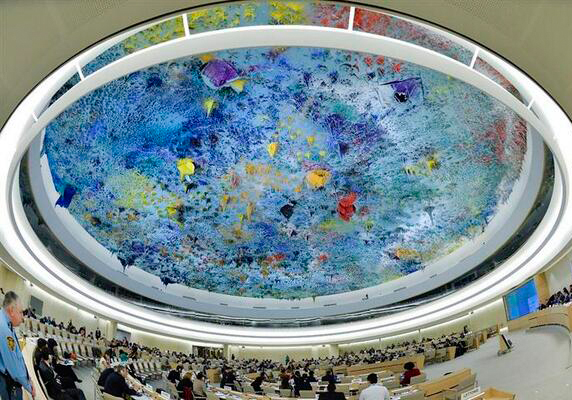
The ICJ today delivered an oral statement at the UN Human Rights Council in the General Debate on item 3, concerning judicial accountability, and on the link between ESC rights and enforced or involuntary disappearances.
In the statement, the ICJ welcomed the focus on judicial reform and accountability of judges in the report of the Special Rapporteur on the promotion of truth, justice, reparation and guarantees of non-recurrence.
The ICJ also welcomed the initiative of the Working Group on Enforced or Involuntary Disappearances to address more systematically and comprehensively the relationship between disappearances and the realization (or lack thereof) of economic, social and cultural rights.
The full statement may be downloaded in PDF format, here: UN-Advocacy-HRC30-OralStatement-GDItem3-2015-ENG

Sep 16, 2015 | News
Myanmar’s government must end the practice of appointing newly retired military officials as judicial officers to its courts and ensure that the judiciary carries out its functions as a separate branch and independent of the Executive, said the ICJ today.
At least 20 former military officers who have just recently resigned from the military were reportedly appointed as vice director generals to the country’s Supreme Court this month.
They will be performing administrative functions but according to section 310 of the Myanmar Constitution will be in line for senior judicial appointments at the state or regional level after 5 years or sooner if the President considers them to be ‘eminent jurists’.
“One of the fundamental aspects of an independent, impartial and accountable judiciary is the appointment of judges, through proper procedures, on the basis of their legal competencies,” said Sam Zarifi, ICJ’s Asia Director. “The process for appointing and promoting judges must be transparent and ensure judicial independence and impartiality.”
A group of leading members of the Myanmar bar launched a “yellow ribbon” campaign last Friday in Yangon to protest the practice of assigning military officers to serve as judicial officers.
“The process of selecting these officers and assessing their legal qualifications is totally opaque,” Zarifi added. “The lawyers wearing yellow ribbons are emphasizing the belief of people in Myanmar that strengthening the rule of law is essential to guaranteeing justice and the country’s political and economic development, so it’s important to improve the judiciary’s qualifications and increase public trust.”
The Supreme Court of Myanmar launched its Strategic Plan 2015-2016, citing “judicial independence and accountability” as one of its key strategy areas.
The UN Basic Principles on the Independence of the Judiciary provide that that “Persons selected for judicial office shall be individuals of integrity and ability with appropriate training or qualifications in law.”
“The Myanmar judiciary is trying to shake off decades of interference from the Executive branch in order to assert its proper role as defender of the rights of people in Myanmar, and it can’t do so without a clear and transparent appointment and promotion process,” Zarifi said.
An exposition and analysis of international law and standards are available in English and Myanmar language in the ICJ’s authoritative Practitioners’ Guide on the Independence and Accountability of Judges, Lawyers and Prosecutors.
Contact:
Sam Zarifi, ICJ Regional Director for Asia and the Pacific, t: +66 807819002; e: sam.zarifi(a)icj.org
Vani Sathisan, ICJ International Legal Adviser for Myanmar, t: +95 9250800301; e: vani.sathisan(a)icj.org
Sep 14, 2015 | Advocacy, Non-legal submissions
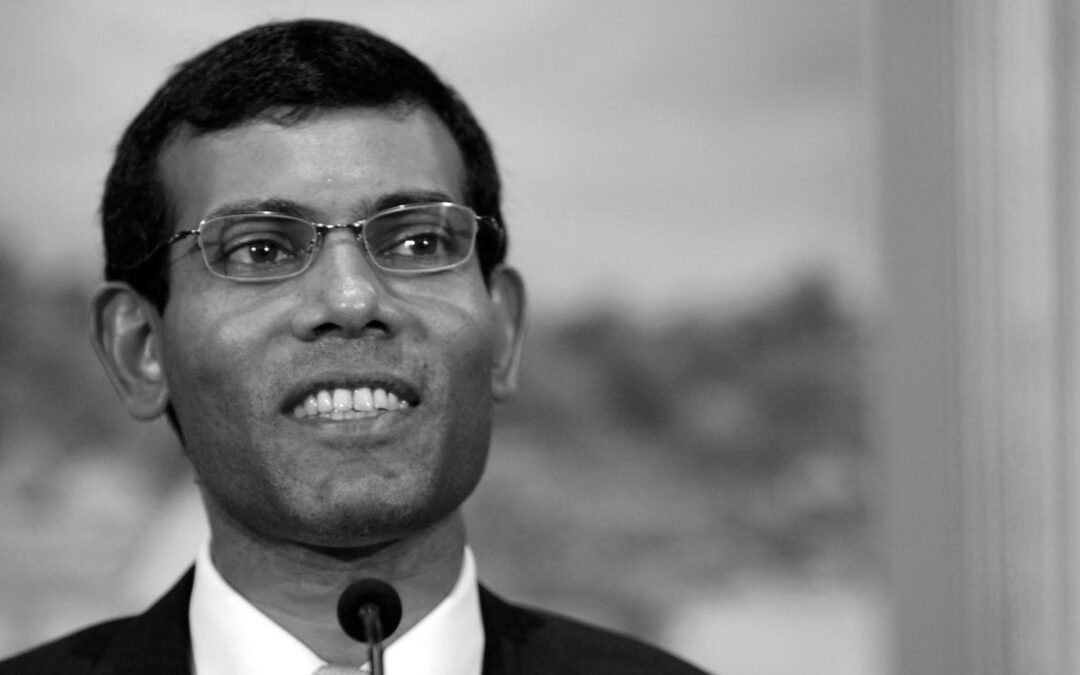
In advance of the UN Human Rights Council’s adoption of the outcome of its review of the Maldives’ human rights record as part of the Universal Periodic Review (UPR) process, the ICJ has submitted a written statement.
It highlights the Maldives’ failure to accept and implement a number of member states’ UPR recommendations.
In particular, the ICJ pointed out the urgent need for Maldives to accept and implement recommendations regarding the following issues, among others:
- Strengthening the independence and impartiality of the judiciary;
- Strengthening the independence and impartiality of the Judicial Service Commission;
- Strengthening the National Human Rights Commission, in accordance with the Paris Principles;
- Strengthening women’s representation in the judicial profession;
- Immediately releasing former president Mohamed Nasheed and other political prisoners, and ensuring the fairness of any further legal proceedings in such cases; and
- Safeguarding freedom of expression and media, association and peaceful assembly by investigating cases of human rights abuse and violations against journalists, civil society and human rights defenders, and taking effective measures to prevent further abuses
The Council will consider member states’ UPR recommendations for the Maldives during its 30th session on 24 September 2015, ahead of which the Maldives government will be expected to formally respond and indicate which of the recommendations it will commit to implement.