Sep 16, 2015 | News
Myanmar’s government must end the practice of appointing newly retired military officials as judicial officers to its courts and ensure that the judiciary carries out its functions as a separate branch and independent of the Executive, said the ICJ today.
At least 20 former military officers who have just recently resigned from the military were reportedly appointed as vice director generals to the country’s Supreme Court this month.
They will be performing administrative functions but according to section 310 of the Myanmar Constitution will be in line for senior judicial appointments at the state or regional level after 5 years or sooner if the President considers them to be ‘eminent jurists’.
“One of the fundamental aspects of an independent, impartial and accountable judiciary is the appointment of judges, through proper procedures, on the basis of their legal competencies,” said Sam Zarifi, ICJ’s Asia Director. “The process for appointing and promoting judges must be transparent and ensure judicial independence and impartiality.”
A group of leading members of the Myanmar bar launched a “yellow ribbon” campaign last Friday in Yangon to protest the practice of assigning military officers to serve as judicial officers.
“The process of selecting these officers and assessing their legal qualifications is totally opaque,” Zarifi added. “The lawyers wearing yellow ribbons are emphasizing the belief of people in Myanmar that strengthening the rule of law is essential to guaranteeing justice and the country’s political and economic development, so it’s important to improve the judiciary’s qualifications and increase public trust.”
The Supreme Court of Myanmar launched its Strategic Plan 2015-2016, citing “judicial independence and accountability” as one of its key strategy areas.
The UN Basic Principles on the Independence of the Judiciary provide that that “Persons selected for judicial office shall be individuals of integrity and ability with appropriate training or qualifications in law.”
“The Myanmar judiciary is trying to shake off decades of interference from the Executive branch in order to assert its proper role as defender of the rights of people in Myanmar, and it can’t do so without a clear and transparent appointment and promotion process,” Zarifi said.
An exposition and analysis of international law and standards are available in English and Myanmar language in the ICJ’s authoritative Practitioners’ Guide on the Independence and Accountability of Judges, Lawyers and Prosecutors.
Contact:
Sam Zarifi, ICJ Regional Director for Asia and the Pacific, t: +66 807819002; e: sam.zarifi(a)icj.org
Vani Sathisan, ICJ International Legal Adviser for Myanmar, t: +95 9250800301; e: vani.sathisan(a)icj.org
Sep 14, 2015 | Advocacy, Non-legal submissions
In advance of the UN Human Rights Council’s adoption of the outcome of its review of the Maldives’ human rights record as part of the Universal Periodic Review (UPR) process, the ICJ has submitted a written statement.
It highlights the Maldives’ failure to accept and implement a number of member states’ UPR recommendations.
In particular, the ICJ pointed out the urgent need for Maldives to accept and implement recommendations regarding the following issues, among others:
- Strengthening the independence and impartiality of the judiciary;
- Strengthening the independence and impartiality of the Judicial Service Commission;
- Strengthening the National Human Rights Commission, in accordance with the Paris Principles;
- Strengthening women’s representation in the judicial profession;
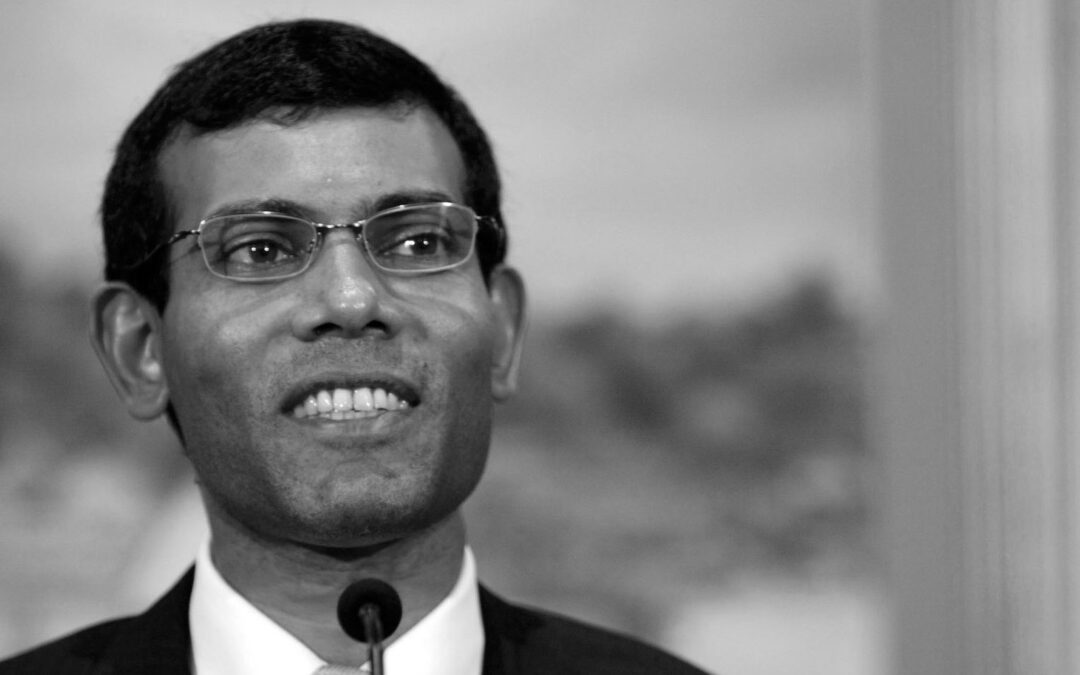
- Immediately releasing former president Mohamed Nasheed and other political prisoners, and ensuring the fairness of any further legal proceedings in such cases; and
- Safeguarding freedom of expression and media, association and peaceful assembly by investigating cases of human rights abuse and violations against journalists, civil society and human rights defenders, and taking effective measures to prevent further abuses
The Council will consider member states’ UPR recommendations for the Maldives during its 30th session on 24 September 2015, ahead of which the Maldives government will be expected to formally respond and indicate which of the recommendations it will commit to implement.

Sep 14, 2015 | Events
Judges, lawyers, prosecutors and human rights: 30 years of UN action
Side event, Tuesday 15 September 2015, 1600 – 1800
Room XXII, Palais des Nations, Geneva
Followed by a drinks reception hosted by the IBA’s Human Rights Institute
in Bar Serpent, Palais des Nations
The International Bar Association’s Human Rights Institute (IBAHRI) and the International Commission of Jurists (ICJ) are organising a side event at the Palais des Nations to mark the 30th Anniversary of the Basic Principles on the Independence of the Judiciary and the 25th Anniversary of the Basic Principles on the Role of Lawyers and Guidelines on the Role of Prosecutors. This side-event, taking place during the 30th session of the Human Rights Council, will look back on the progress that has been made in the protection of judges, lawyers and prosecutors over the past 30 years and the continuing challenges for implementation of the UN standards.
Side Event, 1600-1800
Opening remarks:
- Her Excellency Zsuzsanna Horváth Ambassador of Hungary
Speakers:
- Monica Pinto Special Rapporteur on the independence of judges and lawyers
- Anne Ramberg Secretary General, Swedish Bar Association
- Irene Petras Executive Director, Zimbabwe Lawyers for Human Rights
- Nazir Afzal Former Chief Crown Prosecutor, North West England
Drinks Reception, 1800
The IBA’s Human Rights Institute will host a drinks reception in Bar Serpent, Palais des Nations, with a number of high-level speakers to follow the side event to the 30th session of the Human Rights Council.
Speakers:
- Her Excellency Patricia O’Brien Ambassador of Ireland
- His Excellency Mothusi Bruce Rabasha Palai Ambassador of Botswana
- Monica Pinto Special Rapporteur on the independence of judges and lawyers
Side event co-sponsors include, in addition to the IBAHRI and ICJ:
Australian Permanent Mission to the UN, Permanent Mission of Hungary to the UN, Permanent Mission of Ireland to the UN, Permanent Mission of Mexico to the UN, Permanent Mission of Thailand to the UN, Permanent Mission of the Republic of Botswana to the UN, Council of Europe
Association pour la Prévention de la Torture, Avocats Sans Frontières, Colombian Commission of Jurists, Commonwealth Lawyers’ Association, Commonwealth Magistrates’ and Judges’ Association, International Legal Assistance Consortium, Judges for Judges, Lawyers for Lawyers
Attendance at this side event is open to individuals who have access to the UN grounds at Palais des Nations in Geneva.

Sep 1, 2015 | News
Nepal’s Constituent Assembly must ensure that the new Constitution Bill contains strong and effective protections for all human rights in accordance with Nepal’s international legal obligations, said the ICJ today.
The Constituent Assembly endorsed a Constitutional Bill last week.
As per the CA Rules of Procedure, CA members have until 5 September to submit proposals for amendments.
“This draft includes some improvements from earlier versions, but it needs serious revisions to meet international standards regarding human rights protections,” said Nikhil Narayan, ICJ Senior Legal Adviser for South Asia.
“As an immediate matter, the Constituent Assembly must extend the 5 September deadline, and provide adequate time for public consultation and discussion of this essential legal text,” he added.
The ICJ released a detailed briefing paper in July 2015 analyzing provisions of the Draft Constitution on citizenship, fundamental rights and judicial independence, in light of Nepal’s international human rights obligations.
The ICJ also highlighted the non-inclusive and non-representative nature of the constitution-making process.
Many of those concerns still remain and must be addressed urgently, including:
- Non-citizens are excluded from key rights and protections. For example, Articles 18 (right to equality), 25 (right to property), 27 (right to information), 31 (right to education), 33 (right to employment), 35 (right to health), 36 (right to food), 37 (right to housing), and 43 (right to social security) are all restricted to citizens. These protections must be extended to all persons under Nepal’s jurisdiction, not only citizens, in accordance with Nepal’s international obligations;
- The right to gender equality under women’s rights (particularly in article 38) is not adequately protected. For example, the Constitution should include explicit guarantees for equal pay for work of equal value, and prohibit multiple, intersecting grounds of discrimination on basis of gender and sexual orientation, caste, religion, etc;
- Key economic, social and cultural rights – including in articles 33 and 34 (employment and labour), 35 (health), 37 (housing), and 43 (social security) – are not adequately protected;
- Restrictions and limitations on the rights to freedom of expression, association, assembly, movement, information and press freedom, are broad and vague and do not conform with international human rights standards (including articles 17 and 19 and 27);
- Provisions on remedy for human rights violations (articles 46 and 47) are inadequate;
- Provisions regarding the impeachment of judges (articles 101, 130 and 131) and composition of the Judicial Council (as in article 153, responsible for the appointment, disciplining and dismissal of judges) fail to safeguard judicial independence;
- Provisions on emergencies and consequent restriction of rights are overbroad (as in article 268(10)).
The ICJ noted some improvements in the current draft, such as:
- Making any person whose father or mother is a Nepali citizen eligible for citizenship through descent. Previous drafts required both parents to be Nepali citizens;
- Guaranteeing a broader range of women’s rights, including the right to reproductive health;
- Revising the understanding of victim’s rights to ensure that victims of crime are entitled to “justice including compensation and restitution”;
- Adding more rights to the list of those designated as non-derogable rights during emergencies – including the right to social justice (as contained in article 42 of the Constitution Bill, which amongst other things, guarantees the rights of marginalized groups to participate “in the state structure and public service on the basis of principle of proportional inclusion”), and the rights of dalits (as contained in article 40 of the Constitution Bill, which contains guarantees of equality and non-discrimination).
“While these amendments are welcome, more revisions are necessary,” said Narayan. “The CA must ensure that the constitution-making process is participatory and inclusive. It should provide enough time and opportunities to make necessary amendments and produce a Constitution that fully ensures human rights protections and judicial independence.”
Nepal’s major political parties have stated publicly that they hope to have the Constitution finalized and enacted in mid-September.
However, many political parities and communities have been protesting against the Constitution since the introduction of the new Bill.
On 9 August, three protestors were killed when police fired at protestors violating curfew in Birendranagar, Surkhet.
One protestor was killed and five others were injured when police opened fire during a strike on 18 August.
On 24 August, eight police officers were killed during protests in Kailali district, and over 40 members of the security forces were badly injured.
“The deadly violence that has accompanied escalating protests across Nepal against this Draft is a warning about the high stakes for the drafters of the Constitution,” said Narayan. “The new Constitution should be the platform for bringing the country together after years of conflict, not serve as a new cause for discontent and insecurity.”
The ICJ called on the government of Nepal to conduct prompt, impartial and thorough investigations into all protest-related deaths and injuries.
Where unlawful conduct is established, including by members of the security forces, those responsible must be brought to justice.
Contact:
Nikhil Narayan, Nepal Head of Office and ICJ Senior Legal Adviser, t: +977 9813187821, e: nikhil.narayan(a)icj.org
Aug 28, 2015 | News
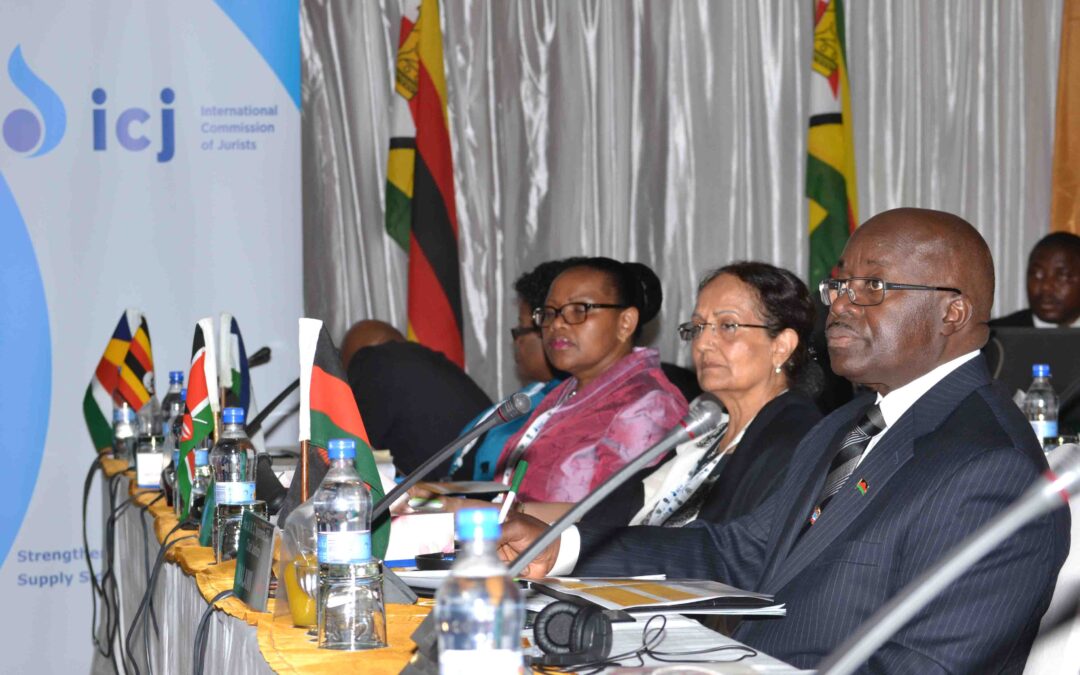
The Africa Regional Programme of the ICJ co-hosted the Southern African Chief Justices’ Forum Annual Conference in Zimbabwe, held on 27-28 August 2015 under the theme “Guaranteeing the Right to a Fair Trial in Africa; Show casing Best Practice”.
The meeting was organized in conjunction with the Southern Africa Chief Justices’ Forum (SACJF) and the Judicial Services Commission (JSC) of Zimbabwe.
This year it congregated 13 Chief Justices and 120 senior judges from East and Southern Africa.
The overall objective of the conference was to provide space for judiciaries in East and Southern Africa region to share achievements, best practices and innovations in justice delivery.
To this end, the conference sought to create a platform for judiciaries that had excelled in a variety of areas to showcase their achievements.
The programme was divided into three sub-themes, all of which had a direct relationship with the underlying theme of Fair Trial Rights in the Region.
The three sub thematic areas discussed were Appointment procedures, Judicial Training and Judicial Reform Each of the sessions was chaired by one of the Chief Justices, whose role it was to moderate the discussions and the speakers.
The panels had a presentation by a chief justice and experiences from another jurisdiction presented by a senior judge.
The presentations were then considered by discussants who were eminent academics.
Download the final declaration here:
Zimbabwe-SACJF ANNUAL CONFERENCE Declaration-Advocacy-2015-ENG (full text in PDF)