Dec 21, 2017 | News
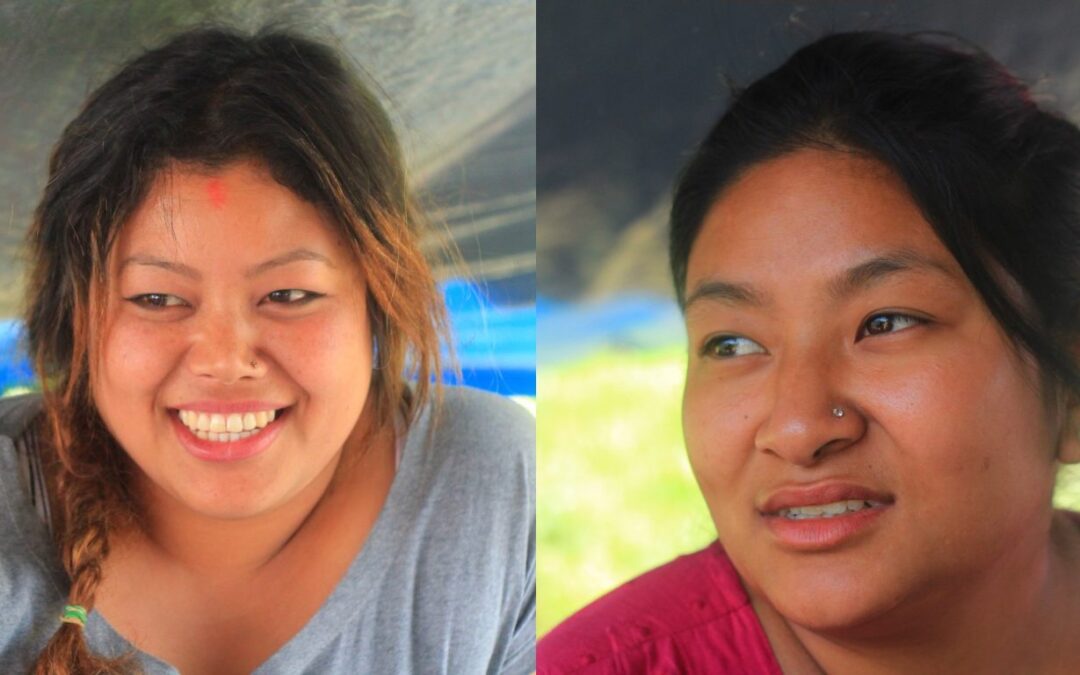
On the 10th anniversary of the Supreme Court’s decision in Sunil Babu Pant on the protection of the rights of lesbian, gay, bisexual, transgender and intersex people (LGBTI), the ICJ calls on the Government of Nepal to fully implement the Court’s ruling.
In 2007, the Supreme Court of Nepal delivered a judgment in Sunil Babu Pant v. the Government of Nepal and others, directing the Government of Nepal to take necessary measures to ensure that people of diverse gender identities and sexual orientations could fully enjoy their rights without discrimination. Such measures were to include the adoption of new laws or amending existing laws.
However, ten years after the judgment, LGBTI persons are denied equal protection of the law, and their rights are still not fully protected.
“The Supreme Court’s 2007 judgment gave hope to LGBTI people in Nepal and inspired judiciaries in the region and the world,” said Frederick Rawski, ICJ’s Asia Director. “Despite some positive measures, the Government has much more work to do to implement the judgment and ensure that the rights of the LGBTI community in Nepal are fully respected.”
The Supreme Court based its findings on international human rights law and standards, particularly in respect of the right to non-discrimination and equality and the right to privacy. The Court relied in particular on Nepal’s legal obligations under the International Covenant on Civil and Political Rights (ICCPR).
The Court strongly rejected arguments that a person’s LGBTI status was the result of “emotional and psychological disorders”, and found that the petitioners faced violence, stigmatization, and discrimination because of their sexual orientation or gender identity. The Court further ordered that a new Constitution under consideration by the Constituent Assembly should guarantee the right to non-discrimination on the grounds of gender identity and sexual orientation.
Since then, some steps have been taken. The 2015 Constitution that was ultimately adopted contains provisions guaranteeing the right to equality for all citizens and establishing special provisions for the protection, empowerment and advancement of gender and “sexual minorities”. Pursuant to a subsequent Supreme Court ruling, transgender men and women can now change their gender markers to “O” on official documents. However, to use “M” or “F”, they still face prohibitive and unclear restrictions. A recently tabled bill would also criminalize unnecessary medical interventions and provide some, though incomplete, protections to intersex children.
Despite these developments, discrimination against LGBTI people remains rampant in the labour market, in schools and in hospitals. LGBTI people are mistreated and sometimes disowned by their families and singled out for physical attack – often beaten, sexually assaulted and subjected to severe physical abuse. Recent revisions to the Civil Code (2017), effective from mid-August 2018, do not recognize equality before the law related to family life.
“These violations continue in the absence of a state strategy or political will to tackle them,” added Rawski. “The Government of Nepal should prioritize enacting reforms to ensure the protection of the rights of LGBTI persons.”
The ICJ calls on the Government of Nepal to fully implement all aspects of the 2007 ruling and subsequent Supreme Court rulings affecting LGBTI communities. This should include, at the minimum:
- Repealing all discriminatory laws, including provisions of the recently introduced Penal and Civil Codes, against sexual orientation and gender identity in line with the principle of equality, equal protection and non-discrimination;
- Enacting legislation that allows same-sex couples full equality before and protection of the law;
- Enacting legislation that removes any prohibitive or unclear restrictions to changing of gender markers on all official documents;
- Enacting legislation that establishes prior, free, full, informed, genuine and consistent consent, and prevents unnecessary medical interventions on intersex persons; and
- Ensuring that the legal protections are given practical effect, including through implementation measures and administrative instructions binding officials at all levels of government.
Contact:
Frederick Rawski, ICJ Asia Pacific Regional Director, t: +66 64 478 1121, e: frederick.rawski@icj.org

Oct 24, 2017 | News
Today the ICJ expressed its grave concern at the arrest and arbitrary detention of 13 Tanzanian human rights defenders and lawyers on charges that are incompatible with international legal obligations binding on Tanzania. The ICJ has called for their immediate release.
On 17 October 2017 13 human rights defenders, some of whom are lawyers, were arrested and detained in Tanzania after participating in a legal consultation aimed at considering legal challenges to the Tanzanian government’s ban on drop-in centres serving people at risk of HIV and a ban on the importation of water-based lubricants that are an essential HIV prevention tool.
Those 13 human rights defenders are all affiliated with the Initiative for Strategic Litigation in Southern Africa (ISLA) and Tanzanian organisation Community Health Services and Advocacy (CHESA).
Though they have not been charged, they appear to be under investigation for promoting homosexuality and in terms of section 154 of the Penal Code, which prohibits having ‘carnal knowledge of any person against the order of nature’.
To date 12 of the 13 remain in custody. After initially being granted bail by the Tanzanian police services, their bail was revoked without specified reason on 20 October 2017 and the 13 continue to face the real threat of criminal prosecution.
Instead of releasing the detained on bail, on 24 October the Tanzanian police services approached a Tanzanian court seeking an order granting them permission to perform ‘medical tests’ in the form of ‘forced anal tests’.
The police sought to perform these tests on the nine men who remain in detention. These invasive and demeaning tests appear to have been aimed at obtaining evidence for their criminal prosecution for performing sexual acts with other men.
If carried out non-consensually such exams violate the prohibition against torture and cruel, inhuman or degrading treatment.
The 13 charged under archaic colonial-era criminal laws that prohibit ‘carnal knowledge against the order of nature’, and which criminalize consensual sexual conduct between consenting males a sentence of ‘imprisonment for life and … for a term of not less than thirty years’, in contravention of international standards.
The laws, which are inherently abusive under any circumstance, do not even appear to be in any way applicable the 13 persons who were meeting for purposes of HIV prevention and promoting the right to health and the right to life.
The ICJ is concerned that arrests have been undertaken in contravention of rights protected under the Tanzanian Constitution and international law, including the International Covenant on Civil and Political Rights and the African Charter on Human and Peoples Rights, treaties to which Tanzania is party.
The protected rights include freedom of expression, the right to liberty, including freedom from arbitrary deprivation of liberty and the right to equal protection of the law; and the right to non-discrimination.
If they are carried out, any ‘forced anal tests’ would violate the right to be free from torture and cruel, inhuman or degrading treatment or punishment.
In addition, the ICJ has previously denounced such tests as evidentially and medically worthless.
Tanzanian authorities also appear to be attempting to use this prosecution to clamp down on the activities of civil society organizations.
The registration of CHESA has been suspended in what appears to be an attempt to halt its operations.
This amounts to a violation of the right to freedom of association, which is protected by the Tanzanian Constitution, the African Charter and the International Covenant on Civil and Political Rights.
The ICJ urges the authorities to drop the charges against these 13 human rights defenders. Pending revocation or dismissal of the charges, the 12 remaining detainees should in any event be immediately released.
The ICJ condemns the attempts of the Tanzanian police services to perform forced anal tests on male detainees, which constitute ill-treatment under international law, and urges the authorities to immediately desist from this course of action.
Contact:
Arnold Tsunga, ICJ Director of the Africa Regional Programme, t: +27716405926, e: arnold.tsunga(a)icj.org
Tanzania-Statement illegal detention-News-Web Stories-2017-ENG (full statement with additional information, in PDF)

Oct 10, 2017 | Multimedia items, News, Video clips
Selected by a jury of 10 global human rights organizations, including the ICJ, Mohamed Zaree is a devoted human rights activist and legal scholar whose work focuses on human rights advocacy around freedom of expression and association.
Mohamed Zaree is also known for his role as the Egypt Country Director of the Cairo Institute for Human Rights Studies (CIHRS), which works throughout the Arabic speaking world.
He assumed this role after government pressure on CIHRS prompted them to relocate their headquarters to Tunis in 2014.
The Egyptian government has been escalating its pressure on the human rights movement.
Human rights NGOs and defenders are confronted with a growing wave of threats, harassment, and intimidation, legal and otherwise.
Despite this, Mohamed Zaree is leading CIHRS’ research, human rights education, and national advocacy initiatives in Egypt and is shaping the media debate on human rights issues.
During this critical period for civil society, he is also leading the Forum of Independent Egyptian Human Rights NGOs, a network aiming to unify human rights groups in advocacy.
Zaree’s initiatives have helped NGOs to develop common approaches to human rights issues in Egypt.
Within the context of the renewed crackdown on Egyptian human rights organizations, he has become a leading figure in Egypt’s human rights movement.
He is currently facing investigation under the “Foreign Funding Case” and is at high risk of prosecution and life imprisonment. The “Foreign Funding Case” highly restricts NGO activities.
Despite this, Mohammed Zaree continues to engage the authorities in dialogue wherever possible, arguing that respect for human rights will increase stability in Egypt.
He has been under a travel ban since May 2016 but remains present and active in Egypt and represents CIHRS inside the country.
“Mohamed Zaree is a leading voice for justice in Egypt. Honoring him with the Martin Ennals Award is a recognition of the courageous and tireless work done by Egyptian human rights defenders, individuals and NGOs, in their fight against all forms of intimidation, harassment and repression waged by the Egyptian military and government against them,” said Said Benarbia, Director of the ICJ Middle East and North Africa Programme.
FreeThe5KH (Cambodia) and Karla Avelar, the two other finalists, received Martin Ennals Prizes.
FreeThe5KH are five Human Rights Defenders who were recently released after 427 days of pre-trial detention.
They are awaiting trial and are banned from travel.
There were widespread international calls for their unconditional release, and a stop to judicial harassment of human rights defenders in Cambodia.
This comes in the context of an increasingly severe crackdown on civil society and the political opposition in Cambodia.
Karla Avelar, a transgender woman in El Salvador, founded the country’s first organization of transgender women – COMCAVIS TRANS.
She grew up on the streets, suffering discrimination, violence, sexual exploitation, rape, and attempted murder.
She works to change national legislation and the authorities’ practices, by publicizing violations suffered by LGBTI people.
Her advocacy helped prompt the authorities to segregate LGBTI prisoners for their own safety, and provide HIV treatment.
Background
The “Nobel Prize of Human Rights”, the Martin Ennals Award for Human Rights Defenders (MEA) is a unique collaboration among ten of the world’s leading human rights organizations to give protection to human rights defenders worldwide.
Strongly supported by the City of Geneva, the award is given to Human Rights Defenders who have shown deep commitment and face great personal risk.
Its aim is to provide protection through international recognition.
The Jury is composed of the following NGOs: ICJ, Amnesty International, Human Rights Watch, Human Rights First, Int’l Federation for Human Rights, World Organisation Against Torture, Front Line Defenders, EWDE Germany, International Service for Human Rights, and HURIDOCS.
Contact:
Michael Khambatta, Director, Martin Ennals Foundation, t: +41 79 474 8208, e: khambatta(a)martinennalsaward.org
Olivier van Bogaert, Director, ICJ Media and Communications, and ICJ Representative on the MEA Jury, t: +41 22 979 38 08, e: olivier.vanbogaert(a)icj.org
The Award will be presented by the United Nations Deputy High Commissioner for Human Rights at 18.15 on 10 October at the University of Geneva. The ceremony can be watched live on Martin Ennals Award Facebook page
Watch the movie on Mohammed Zaree
Sep 21, 2017 | Advocacy, Non-legal submissions
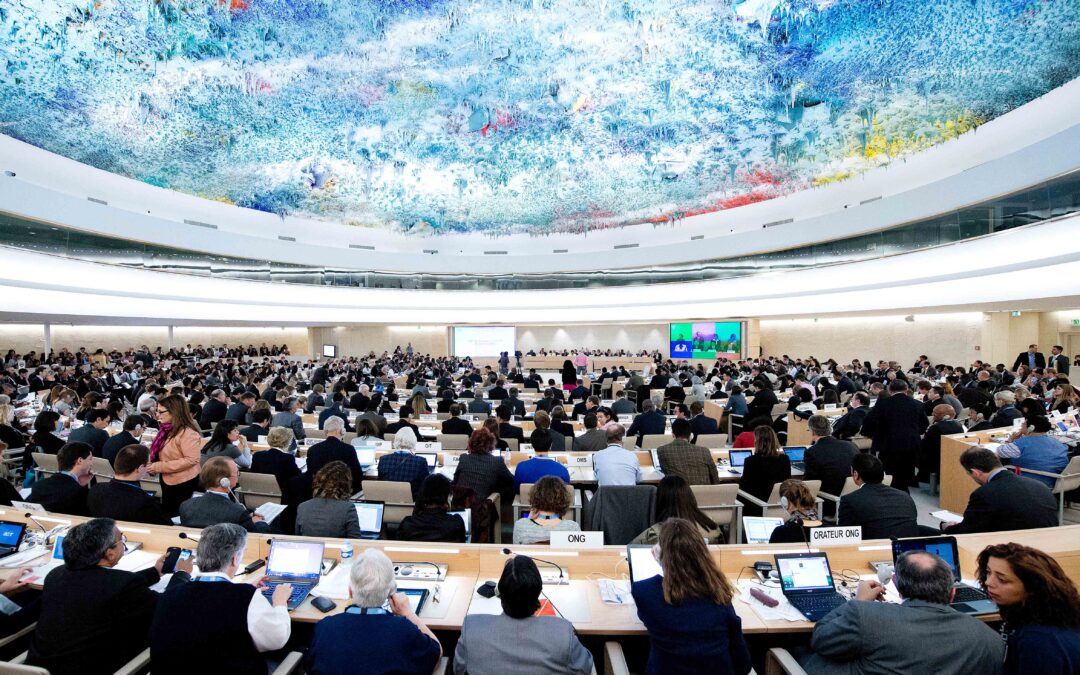
Speaking at the UN today, the ICJ called on India to reconsider its refusal to accept recommendations for decriminalisation of consensusal same-sex relations, abolition of the death penalty, and ensuring accountability for human rights violations.
The oral statement was made during the consideration by the UN Human Rights Council of the outcome of India’s Universal Periodic Review (UPR) process. It read as follows:
“The International Commission of Jurists (ICJ) regrets that India has not supported recommendations related to decriminalizing consensual same-sex relations, abolishing the death penalty, and combatting impunity for serious human rights violations.
The ICJ has documented how by allowing the criminalization of consensual same-sex relations, section 377 of the Indian Penal Code has facilitated numerous human rights violations, including violations of the principle of non-discrimination and the rights to equality before the law and equal protection of the law, liberty and security of person, freedom of expression, health, and privacy. Section 377 has also perpetuated homophobic and transphobic attitudes in India, leading to discrimination and violence against LGBT individuals.
The Government has also failed to take steps to combat impunity for serious human rights violations such as extrajudicial killings, enforced disappearances, and torture and other ill treatment, which are facilitated by laws such as the Armed Forces Special Powers Act (AFSPA) and other national security and public safety legislation. Despite repeated commitments to do so, India has also not enacted legislation to recognize torture as a distinct, autonomous offence in its penal code.
The ICJ therefore urges the Government to reconsider, accept and implement UPR recommendations to:
- Decriminalize consensual same-sex sexual relations (161.71, 161.76, 161.77, 161.78, 161.79);
- Enact legislation consistent with the Supreme Court’s recognition of the rights of transgender persons and international human rights standards (161.80);
- Repeal AFSPA and other state and central level laws that similarly violate international human rights law (161.97, 161.248, 161.249);
- Become a party to the CAT; OPCAT; the Second OP to the ICCPR; the ICPPED and other international instruments (161.13, 161.15, 161.29, 161.30, 161.31); and
- Establish a moratorium on the use of the death penalty, with a view towards its abolition (161.104 – 161.115).”
Aug 24, 2017 | News
Today, the Indian Supreme Court delivered a landmark judgment declaring the right to privacy an intrinsic part of the right to life and liberty under Article 21 of India’s Constitution.
The ICJ welcomed a momentous and courageous judgment, where the Supreme Court took an expansive view of the right to privacy, and held that, at its core, privacy includes “the preservation of personal intimacies, the sanctity of family life, marriage, procreation, the home and sexual orientation…”
As such, this judgment is an important step towards scrapping laws criminalizing same-sex activity in the country, the ICJ said.
“The judgment is a testament to the inspiring work of human rights activists and lawyers in India, who have shown the potential of the law to affirm human rights and equality,” said Frederick Rawski, ICJ’s Asia Director.
“The ruling could have far-reaching implications for a number of cases -including with respect to the criminalization of consensual same-sex relations – where laws, policy and practices have been challenged on the basis that they violate the right to privacy,” he added.
The judgment clarified that the right to privacy is not spatially bound and exists beyond four walls as it “attaches to the person” and is not “lost or surrendered merely because the individual is in a public place.”
Significantly, in explaining the ambit of the right to privacy, the Supreme Court held that sexual orientation is “an essential component of identity” and “equal protection demands protection of the identity of every individual without discrimination.”
The Court also highlighted that laws criminalizing same-sex activity have a “chilling effect on the exercise of the right”, posing “a grave danger to the unhindered fulfillment of one’s sexual orientation, as an element of privacy and dignity.”
Section 377 of the Indian Penal Code criminalizes voluntary “carnal intercourse against the order of nature with any man, woman or animal” and prescribes a range of penalties including life imprisonment.
In Naz Foundation v. Govt. of NCT of Delhi, the Delhi High Court in 2009 read down the application of section 377, holding, among other things, that insofar as it criminalizes consensual sexual acts, it violates Articles 21 (right to life and liberty), 14 (equal protection of the law) and 15 of the Constitution (freedom from discrimination) of the Indian Constitution.
However, in Suresh Kumar Koushal in December 2013, the Supreme Court reversed the 2009 Delhi High Court ruling, effectively recriminalizing homosexuality.
The petitioners challenged the ruling in Koushal, and in February 2016, the Indian Supreme Court referred a “curative petition” to a five-judge bench of the Supreme Court for consideration.
In today’s judgment, the Supreme Court questioned the rationale in Koushal, and expressed disagreement with the manner in which Koushal dealt with the “privacy–dignity based claims of LGBT persons.”
It also found the reasoning in Koushal flawed and unsustainable for being discriminatory towards LGBT persons by calling them “a miniscule fraction of the country’s population” and making that the basis for denying their right to privacy.
However, the Court held that since a challenge to section 377 is pending before a larger bench, its constitutional validity would be decided in the appropriate proceedings.
“The Supreme Court’s judgment is indeed historic, but the real test of its impact will be whether the right to privacy it affirms is given effect in its true spirit in individual cases, so as to ensure that laws, policies and practices meet India’s obligations under the Constitution as well as international standards,” added Rawski.
Contact:
Frederick Rawski (Bangkok), ICJ Asia Pacific Regional Director, e: frederick.rawski(a)icj.org
Ajita Banerjie, ICJ Consultant in Delhi, t: +918447784157; e: ajita.banerjie(a)icj.org
India-Privacy & section 377-News-web stories-2017-ENG (full story in PDF)