Jul 24, 2017 | Advocacy, Legal submissions
The AIRE Centre, ICJ, ILGA-EUROPE and ECRE have submitted a third party intervention in case O.S. v. Switzerland (no. 43987/16).
This intervention addresses the following points:
i) enforced concealment of one’s same-sex sexual orientation constitutes persecution under refugee law and is incompatible with the Convention, in particular, Article 3
ii) the criminalisation of consensual same-sex sexual conduct gives rise to a real risk of Article 3 prohibited treatment, thus triggering non-refoulement obligations under the Convention
iii) the risk of persecution based on sexual orientation in Gambia.
Universal-SexualOrientationRefugee-Advocacy-LegalSubmissions-2017-ENG (full legal submission)
Apr 26, 2017 | News
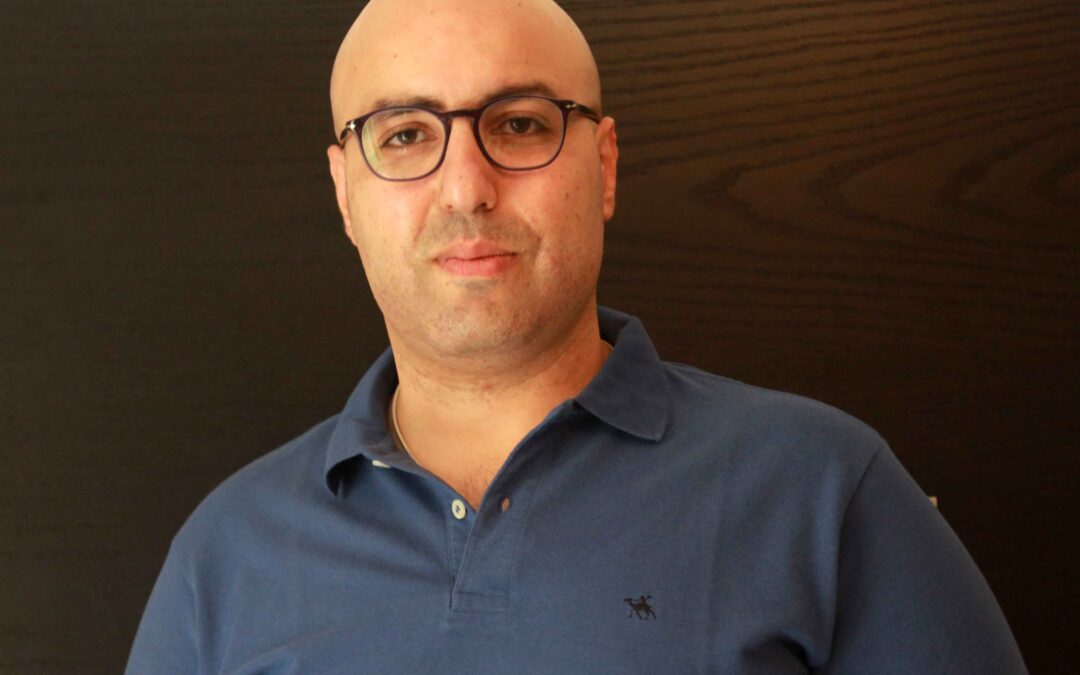
Mohamed Zaree (Egypt, photo), FreeThe5KH (Cambodia) and Karla Avelar (El Salvador) will compete for this prestigious award given to human rights defenders who have shown deep commitment and face great personal risk. The ICJ is member of the MEA Jury.
Selected by the International Human Rights Community (members of the jury are the ICJ, Amnesty International, Human Rights Watch, Human Rights First, International Federation for Human Rights, World Organisation Against Torture, Front Line Defenders, EWDE Germany, International Service for Human Rights and HURIDOCS), the final nominees for the Martin Ennals Award for Human Rights Defenders (MEA) are known:
- Mohamed Zaree is the Egypt Country Director for the Cairo Institute for Human Rights Studies (CIHRS), responsible for CIHRS’s legal research, media outreach and national advocacy. CIHRS’s work was influential in the Arab world particularly Egypt, which resulted in death threats to its director. This forced the CIHRS executive director and regional staff to move abroad to continue their work. Mohamed chose to stay and is now banned from travel. He is a legal scholar coordinating research to challenge laws designed to limit NGOs activities working on human rights, such as freedom of expression and assembly. He is widely seen a unifying figure bringing together the human rights community in Egypt to advocate with a common approach.
- FreeThe5KH are five Human Rights Defenders who have been in pre-trial detention for almost one year. This is linked to their work with the Cambodian Human Rights and Development Association (ADHOC). International bodies like the UN Working Group on Arbitrary Detention and UN Special Rapporteurs have repeatedly called for their immediate and unconditional release, and a stop to judicial harassment of human rights defenders in Cambodia based on their legitimate human rights work. This comes in the context of an increasingly severe crackdown on civil society and the political opposition in Cambodia.
- Karla Avelar, a transgender woman in El Salvador, grew up on the streets of San Salvador, suffering discrimination, violence, exploitation, and rape. She was imprisoned when she defended herself, and then regularly abused by fellow prisoners with the knowledge and even participation of the prison authorities. With three others, she founded COMCAVIS TRANS, which was created to represent, defend, and promote the human rights of LGBTI persons, with a focus on those living with HIV, as she does. She works to change legislation and the authorities’ practices, by holding them publicly to account.
Mohammed Zaree said: “Our hopes were high following the Egyptian revolution in 2011; we don’t know how the situation has instead deteriorated to such an extent. Today, we are battling human rights violations that are worse than before 2011, and challenging the normalization and acceptance of these atrocities.”
“Killing almost 1000 citizens in few hours, arresting almost 40,000 others, innocents dying in Egyptian prisons; is not the norm and we will not allow it to become so. We human rights defenders are fighting these abuses at risk of indefinite imprisonment,” he added.
The main award of the human rights movement, and as such labelled as the Nobel Price for human rights, the Martin Ennals Award aims to protect human rights defenders through increased visibility.
The Award will be presented on 10 October 2017 at a ceremony hosted by the City of Geneva.
Contact
Olivier van Bogaert, Director Media & Communications, ICJ representative in the MEA Jury, t: +41 22 979 38 08 ; e: olivier.vanbogaert(a)icj.org
Michael Khambatta, Director, Martin Ennals Foundation, t: +41 79 474 8208 ; e: khambatta(a)martinennalsaward.org
Background information
Egypt-MEA Finalists 2017 MZaree Bio-2017-ENG (Mohammed Zaree bio, in PDF)
Cambodia-MEA 2017 Finalists FreeThe5KH Bio-2017-ENG (FreeThe5KH backgrounder, in PDF)
Salvador-MEA 2017 Finalists KAvelar Bio-2017-ENG (Karla Avelar bio, in PDF)

Feb 24, 2017 | News, Publications, Reports, Thematic reports
The Indian authorities must end discrimination against people based on sexual orientation and gender identity in the formal justice system, the ICJ said in a report released today.
The 60-paged report “Unnatural Offences”: Obstacles to Justice in India Based on Sexual Orientation and Gender Identity documents the challenges queer persons in India face while trying to access justice, starting from the impact of laws that criminalize people for their real or imputed sexual orientation and gender identity; to police harassment, violence and abuse; and to discrimination and other hurdles within the justice system.
Based on 150 interviews across nine cities in India, including with people who identified as lesbian, gay, bisexual, and transgender, the report uses the term “queer” to refer to any individual who identifies with a non-normative sexuality or gender identity.
It includes individuals who identify as lesbian, gay, bisexual, transgender, intersex and gender-queer, and also encompasses persons who may not fit into any of these identity categories.
“Criminalization, police violence, and the prejudiced attitudes of officials in the courts’ system have a profoundly detrimental impact on the ability and willingness of queer persons to resort to legal avenues to obtain justice,” said Sam Zarifi, ICJ’s Asia Director.
“The systemic discrimination and violence faced by queer persons in India, and the challenges they face accessing justice, are clearly contrary to India’s international human rights law obligations and the Indian Constitution,” he added.
The report also draws on responses from various government departments to ICJ’s requests under the Right to Information Act, both on the enforcement of the law against queer individuals and on gauging how legal entitlements have operated.
It describes how:
- Laws like Section 377 of the IPC and some other broad and vaguely formulated laws, such as those that criminalize sex work and begging, are used by the police to persecute people based on their real or imputed sexual orientation and gender identity, and inhibit queer persons from accessing justice.
- Even where the law purportedly provides legal entitlements and protections, queer persons continue to face a range of difficulties in accessing them.
- Police violence, abuse and harassment are one of the biggest barriers to queer persons’ access to the justice system in India.
- The challenges that lawyers who argue cases involving the human rights of queer persons combine with the biases of officials in the formal justice system compounding the difficulties queer persons face in obtaining justice.
“The inspiring work of activists and human rights lawyers in India has led to positive judicial decisions showing the potential of the law to affirm human rights and ensure justice for all persons, irrespective of their sexual orientation or gender identity,” Zarifi said.
“Indian authorities should build on this momentum and take immediate steps to end the discrimination and violence queer persons face,” he added.
The ICJ report makes a number of recommendations to Indian authorities, which include:
- Ensure that police officers promptly register and investigate any complaint regarding violence or any other criminal act filed by a queer person and/or on their behalf;
- Provide legal and sensitization training relating to sexual orientation and gender identity to lawyers and judges under the State and District Legal Services Authority along with outreach programmes to facilitate queer individuals’ access to the justice system;
- Repeal section 377 of the Indian Penal Code and vaguely worded criminal laws that invite discriminatory application, or substantially revise them to ensure there is no scope for abuse in their enforcement;
- Withdraw the Transgender Persons (Protection of Rights) Bill 2016 as currently drafted, engage in meaningful and substantial public consultation with members of the transgender community; and ensure that any process introduced for the legal recognition of gender identity is consistent with international human rights law and the NALSA.
Contact
Sam Zarifi (Bangkok), ICJ Asia Pacific Regional Director, t: +66 807819002; e: sam.zarifi(a)icj.org
Ajita Banerjie, ICJ Consultant in Delhi, t: +91 9920995526 ; e: ajita.banerjie@icj.org
Additional information
The Indian authorities have an obligation to respect, protect and fulfill the rights to equality before the law, equal protection of the law and freedom from discrimination; the rights to privacy, liberty and security of the person, including the right not to be subjected to arbitrary arrest and detention; the right to life, to freedom from torture and other ill-treatment; and the right to access justice and to an effective remedy, for all persons, including queer people, without discrimination as to their real or imputed sexual orientation and gender identity.
As the Supreme Court of India has reaffirmed, the Indian Constitution also guarantees several of these rights.
For example, in the seminal case of NALSA v UOI, the Court affirmed transgender persons’ right to their self-identified gender identity, based on the rights to equality, non-discrimination, freedom of expression and dignity.
India-SOGI report-Publications-Reports-Thematic report-2017-ENG (full report in PDF)
Nov 11, 2016 | News
The ICJ today condemned efforts by a group of States led by the African Group of the UN Members States to halt the work of the UN Independent Expert charged with protecting people from discrimination and violence based on sexual orientation and gender identity (SOGI).
The organization said that the move constituted an unwarranted interference with the independence and capacity of the Human Rights Council to discharge its mandate for the promotion and protection of all human rights and fundamental freedoms for all, without discrimination.
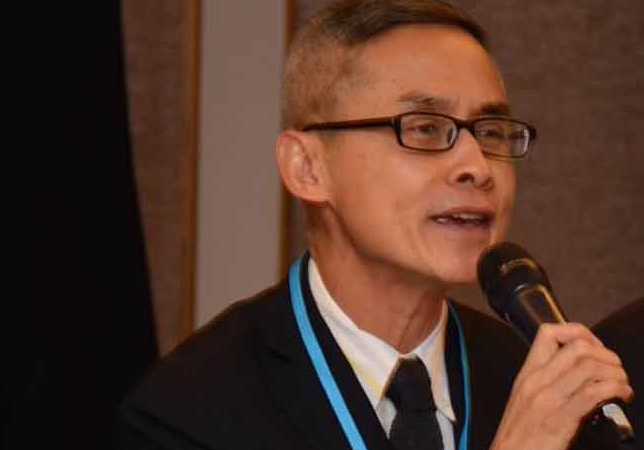
On 3 November 2016 Botswana on behalf of the African Group introduced a draft resolution before the Third Committee of the UN General Assembly in New York questioning the authority for the mandate of the Independent Expert Vitit Muntarbhorn (photo) and deferring action indefinitely on confirming the mandate’s establishment.
The ICJ is calling on the African Group to withdraw its draft resolution.
If a vote on the resolution does go ahead, the ICJ said that States must resoundingly reject it and send a signal to the world that the rights of all persons must be protected on an equal basis and that the UN Human Rights Council is capable of acting to secure such protection.
The ICJ considers that adoption of the resolution would represent a dramatic setback to the Human Rights Council’s efforts to tackle violence and discrimination based on SOGI.
Each year, the Third Committee of the UN General Assembly considers the Human Rights Council’s annual report.
This year, that report contains Human Rights Council resolution 32/2 on Protection against violence and discrimination based on sexual orientation and gender identity.
The Human Rights Council’s adoption of resolution 32/2 on 30 June 2016 made history by establishing the first-ever mandate of an Independent Expert of the Human Rights Council on protection against violence and discrimination based on SOGI.
In September this year the Human Rights Council appointed Prof. Vitit Muntarbhorn of Thailand to discharge this mandate.
Since then, Prof. Muntarbhorn has duly taken up his position and has begun fulfilling this work.
The draft resolution that the African Group has tabled at the Third Committee questions the basis in international law for the establishment of the Independent Expert’s mandate on SOGI and seeks to defer action on Human Rights Council resolution 32/2 indefinitely.
Since the Human Rights Council was set up in 2006, none of its resolutions mandating the establishment of a Special Procedure has ever been challenged by the General Assembly.
The ICJ considers that the adoption of the African Group’s resolution would set an extremely detrimental and regressive precedent by blocking the Human Rights Council from carrying out its own mandate.
It would undermine the UN’s preeminent human rights body’s overall authority by sapping its independence and ability to fulfil its mandate for the promotion and human rights for all without discrimination as it sees fit.
Contact
Livio Zilli, ICJ Senior Legal Adviser and UN Representative, t: +41 22 979 38 23 ; e: livio.zilli(a)icj.org
Read also
What is the Future of the SOGI Mandate and What Does it Mean for the UN Human Rights Council?
Sep 16, 2016 | Advocacy, Non-legal submissions
On 16 September 2016, the ICJ made a submission to the Universal Periodic Review of India.
The submission brings to the attention of the members of the Human Rights Council’s Working Group on the UPR issues concerning:
- discrimination and violence based on sexual orientation and gender identity;
- death penalty;
- impunity and accountability;
- freedom of speech, expression and association;
- ratification and implementation of international human rights instruments.
india-icj-upr-submission-advocay-non-legal-submission-2016-eng (full text in PDF)