Aug 10, 2016 | News
A law in Belize that disproportionately affects gay men was today ruled unconstitutional by the country’s Supreme Court after a three-year wait for the judgment.
Section 53 of Belize’s Criminal Code, an old British colonial law, banned ‘carnal intercourse against the order of nature’ and thereby made consensual gay sex between adult men in private illegal in Belize. Today the legal provision has been ruled ‘unlawful’ to the extent that it can be applied to same-sex activity.
In handing down the judgment, Chief Justice Kenneth Benjamin agreed that Section 53 amounts to a violation of the constitutional rights to dignity, privacy, equality and non-discrimination on grounds of sex. He found that there was no justification in the form of ‘public morality’ and therefore the law must be modified. He awarded costs to the Claimaint, Caleb Orozco.
The case is the culmination of years of work by a Caribbean-led coalition of lesbian, gay, bisexual and trans (LGBT) activists, academics and legal experts. The individual claimant is Caleb Orozco, a Belizean gay man and prominent LGBT human rights advocate.
Today Orozco said: “This is the first day of my life in which it is legal for me to be me. This is a history-making judgment for Belize, the country which I am proud to call home. Our judicial system has been proven to be robust and unprejudiced. This judgment should give other oppressed minorities the confidence to speak up and stand up for themselves in situations of human rights abuse in the way I have. Our courts really are there to protect us all. In striking down Section 53, Belize has also rejected a poisonous remnant of colonial rule. We have reaffirmed ourselves as a society built on dignity and respect for all our people. This is a proud day.”
Simone Hill, President of the United Belize Advocacy Movement (UNIBAM) said before the judgment: “This is about our human rights. As citizens of this country our rights should be respected without fear or favour. Win or lose, we will continue the fight to ensure the victory of the protection of our rights.”
The case was heard in May 2013 and presided over by Chief Justice Kenneth Benjamin. Today’s ruling – some three years and three months later – upholds Belize’s LGBT (lesbian, gay, bisexual and trans) community’s human rights to privacy, equality, dignity and non-discrimination, all of which are protected under the country’s constitution.
A group of churches, namely the Roman Catholic Church of Belize, the Belize Church of England Corporate Body, and the Belize Evangelical Association of Churches were admitted as ‘Interested Parties’ in the case opposing Mr Orozco’s claim and seeking to maintain the criminalisation of gay men in Belize.
Meanwhile, the International Commission of Jurists, the Commonwealth Lawyers Association and the Human Dignity Trust were joint ‘Interested Parties’ in support of Mr Orozco.
Téa Braun, Legal Director of the Human Dignity Trust, said:
“This is a great victory for human rights and the rule of law.
Intimacy in private between two adults of their own free will should not be a matter for the law. The only outcome of such laws is to blight the lives of members of the LGBT community by fostering a climate of oppression and state-sponsored discrimination. The bravery and resilience of colleagues across the Caribbean who have worked tirelessly on this case is an inspiration. Caleb Orozco is a hero and a trailblazer. The Human Dignity Trust is immensely proud to have worked alongside him and his legal team.”
Alex Ward, President of the Commonwealth Lawyers Association, which passed a resolution on the ‘Decriminalisation of Sexual Orientation’ in 2009, said: “This is a sound and just ruling which we whole heartedly welcome. It is the CLA’s mandate to uphold the rule of law across the Commonwealth and today marks a considerable success in maintaining the integrity of the Belizean Constitution and protecting its citizens’ fundamental rights.”
Livio Zilli, Senior Legal Adviser at the International Commission of Jurists (ICJ), said: “The ICJ hails the courage, commitment and tenacity of the entire LGBT movement in Belize, and Caleb Orozco’s in particular, and salutes this decision as a critical contribution to upholding people’s human rights whatever their sexual orientation or gender identity.”
While convictions under Section 53 in Belize were rare, the law carried a sentence of up ten years’ imprisonment effectively for consensual homosexual sex.
There are still 76 legal jurisdictions across the world that make same-sex intimacy between consenting adults a crime. Of these, 38 countries are, like Belize, members of the Commonwealth.
The Interested Parties that joined in support of the case were represented by Godfrey Smith SC and Debevoise & Plimpton led by Lord Goldsmith QC. Tim Otty QC, founder of the Human Dignity Trust, Tristan Jones, Jessica Gladstone, Nicola Leslie, Conway Blake, were key members of the victorious legal team.
Jun 30, 2016 | News
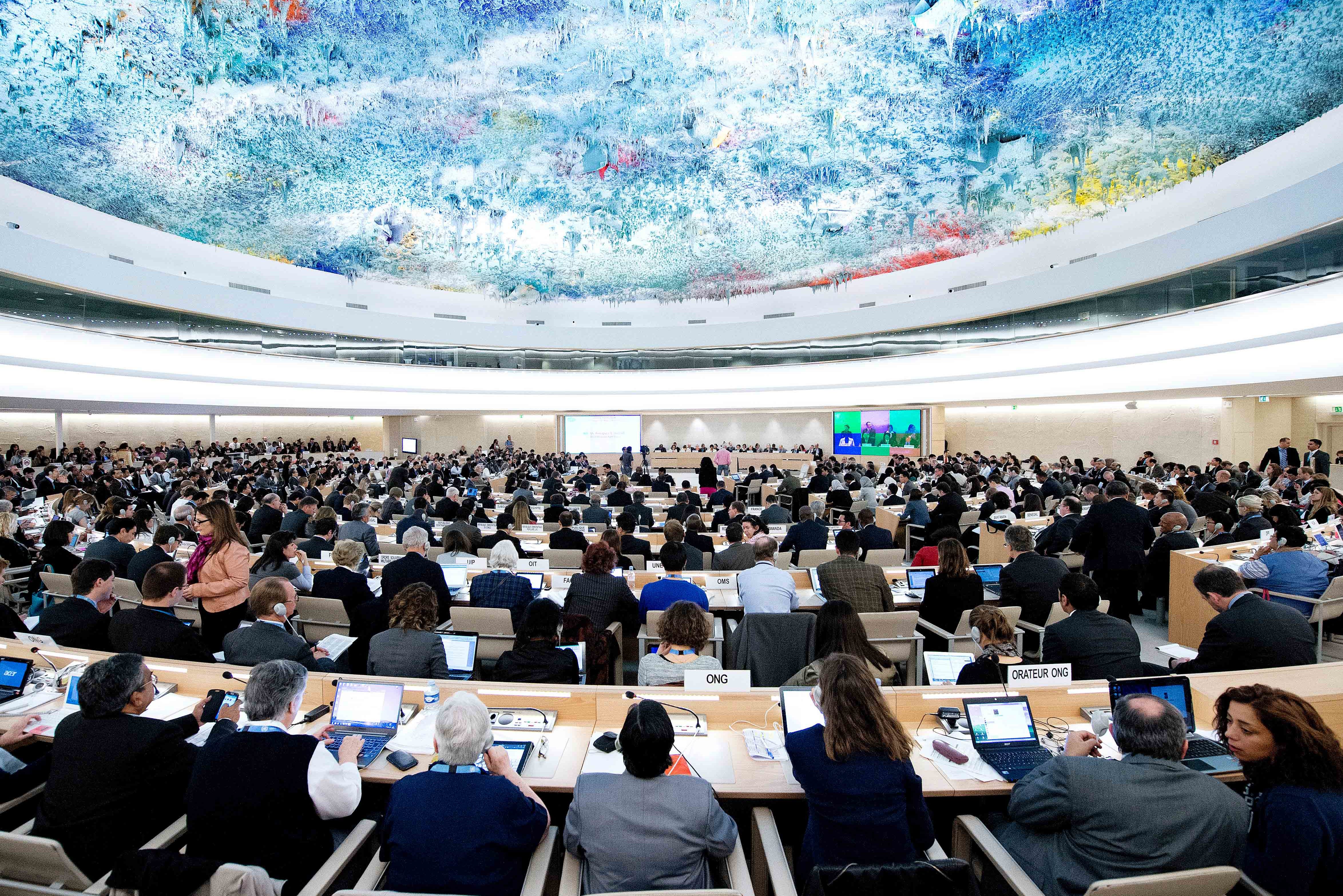
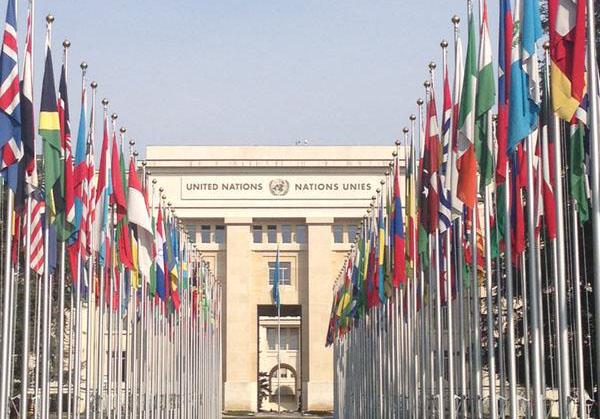
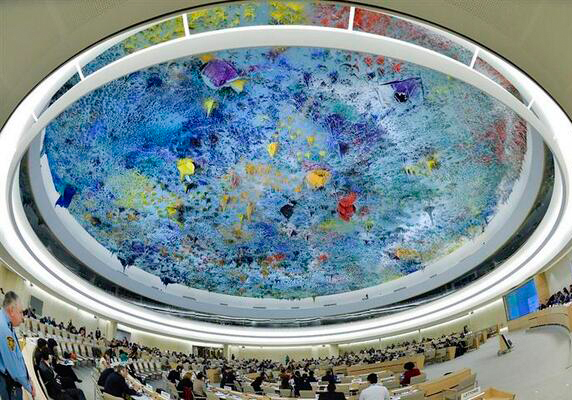
The United Nations Human Rights Council, in a defining vote, adopted a resolution on 30 June 2016, on “Protection against violence and discrimination based on sexual orientation, and gender identity,” to mandate the appointment of an independent expert on the subject.
It is a historic victory for the human rights of anyone at risk of discrimination and violence because of their sexual orientation or gender identity, a coalition of human rights groups said today. This resolution builds upon two previous resolutions, adopted by the Council in 2011 and 2014.
The Core Group of seven Latin American countries – Argentina, Brazil, Chile, Colombia, Costa Rica, Mexico, Uruguay – and 41 additional countries jointly presented the text.
The resolution was adopted by a vote of 23 in favor, 18 against and six abstentions.
“This is truly momentous,” said Micah Grzywnowicz, of the Swedish Federation for LGBTQ Rights (RFSL). “This is our opportunity to bring international attention to specific violations and challenges faced by transgender and gender non-conforming persons in all regions. It’s time for the international community to take responsibility to ensure that persons at risk of violence and discrimination because of gender identity are not left behind.”
“It’s a historic resolution,” said Josefina Valencia, of the International LGBTI Association for Latin America and the Caribbean, ILGA LAC. “Latin America has played a very important role to build a common course for the advancement of our human rights. We are proud of the international solidarity and the commitment shown by States for equality.”
The positive vote responds to a joint campaign of a record 628 nongovernmental organizations from 151 countries calling on the Human Rights Council to adopt the resolution and create the independent expert.
“It is important to note that around 70 percent of the organizations are from the global south,” said Yahia Zaidi of MantiQitna Network. “This is a powerful cross-regional message of strength to the UN to protect the rights of LGBTI persons. The independent expert will be a focal point for all violations based on SOGI and hence help grassroots organizations to better utilize the otherwise complex labyrinth of the UN system.”
The expert will be tasked with assessing implementation of existing international human rights law, identifying best practices and gaps, raising awareness of violence and discrimination based on sexual orientation and gender identity, engaging in dialogue and consultation with states and other stakeholders, and facilitating provision of advisory services, technical assistance, capacity-building, and cooperation to help address violence and discrimination on these grounds.
“To have an independent expert can be a ‘game-changer’ in counteracting violence which fuels the HIV epidemic in key populations and more specifically in LGBT communities,” said Alain Kra of Espace Confiance.
“It will ease the work of all human rights defenders and it is essential for our governments and people to have the knowledge on how to protect LGBT communities from any violence and discrimination they face,” added Joleen Mataele of the Tonga Leiti’s Association.
Although a number of hostile amendments seeking to introduce notions of cultural relativism were adopted into the text by vote, the core of the resolution affirming the universal nature of international human rights law stood firm.
The International Commission of Jurists believes that the UN Human Rights Council made history by creating a mandate empowering a UN Independent Expert specifically to address human rights violations perpetrated against people in all regions of the world because of discrimination against their real or imputed sexual orientation or gender identity.
Results of the vote
Voting in favor of the resolution
Albania, Belgium, Bolivia, Cuba, Ecuador, El Salvador, France, Georgia, Germany, Latvia, Macedonia, Mexico, Mongolia, Netherlands, Panama, Paraguay, Portugal, Republic of Korea, Slovenia, Switzerland, United Kingdom, Venezuela, Vietnam
Voting against the resolution
Algeria, Bangladesh, Burundi, China, Congo, Cote d’Ivoire, Ethiopia, Indonesia, Kenya, Kyrgyzstan, Maldives, Morocco, Nigeria, Qatar, Russia, Saudi Arabia, Togo, United Arab Emirates
Abstaining on the resolution
Botswana, Ghana, India, Namibia, Philippines, South Africa
Organizations supporting this statement:
- Access Chapter
- AIDES France
- Amnesty International
- ARC International
- Clóset de Sor Juana AC
- Egale Canada Human Rights Trust
- Espacio de Mujeres Lesbianas Salvadoreñas por la Diversidad (ESMULES)
- Federatie van Nederlandse Verenigingen tot Integratie van Homoseksualiteit – COC Nederland (Netherlands)
- Foundation for SOGI Rights and Justice (FORSOGI), Thailand
- FRI, the Norwegian Organisation for Sexual and Gender Diversity
- GALANG Philippines
- GATE – Global Action for Trans* Equality
- Human Rights Law Centre
- Human Rights Watch
- Iranti-org (South Africa)
- International Commission of Jurists
- ILGA LAC, Asociación Internacional de Lesbianas, Gays, Bisexuales, Trans e Intersexuales para América Latina y el Caribe
- International Lesbian, Gay, Bisexual, Trans and Intersex Association (ILGA)
- Lesbians, Gays and Bisexuals of Botswana (LEGABIBO)
- LGBT Denmark – the National Organization for Gay Men, Lesbians, Bisexuals and Transgendered People
- MantiQitna Network
- OutRight Action International
- Pacific Sexual Diversity Network
- Pan Africa ILGA
- Proyecto Arcoiris, colectivo anticapitalista e independiente
- Samoa Faafafine Association
- Swedish Federation for LGBTQ Rights (RFSL)
- TLF Share Collective – Philippines
- Tonga Leitis Association
May 15, 2016 | News
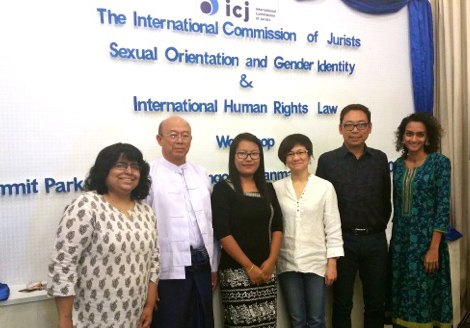
The ICJ hosted a workshop on “Sexual Orientation and Gender Identity and International Human Rights Law” in Yangon on 14 and 15 May 2016.
The workshop was the first of its kind in Myanmar to bring together such a varied group of people to discuss the topic of Sexual Orientation and Gender Identity (SOGI) and international human rights law.
The event drew together a diverse group, including more than 50 lawyers from different parts of Myanmar, along with lesbian, gay, transgender, bisexual, inter-sex and queer (LGBTI) activists, members of the Myanmar National Human Rights Commission, and regional academics and lawyers and international experts.
Myanmar-SOGI workshop-News-Web Story-2016-ENG (full story in PDF)