Sep 6, 2018 | News
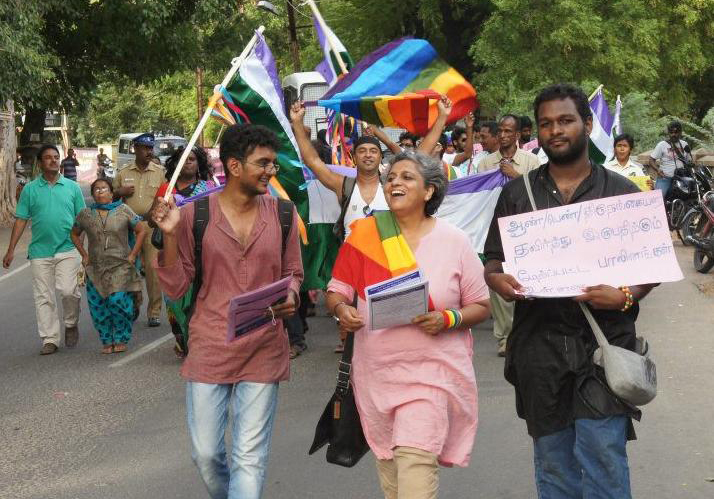
The ICJ welcomed the Supreme Court’s judgment in Navtej Singh Johar et al v. Union of India and others, which effectively ends the threat to a large segment of the Indian population that they will be held criminally liable for exercising their human rights.
The Court has issued a long-overdue ruling that the criminalization of consensual same-sex relationships under Section 377 violates the Indian Constitution, and is in breach of India’s obligations under international law. This long-awaited judgment testifies to the work of activists and lawyers in India, who have shown the potential of the law to affirm human rights and equality.
“This judgment will not only have an impact in India. Its influence should extend across the world. The ICJ hopes that it will provide an impetus for other countries, especially those of the Commonwealth of Nations, to revoke similar provisions that criminalize consensual sexual relations,” ICJ Asia Pacific Director Frederick Rawski stated.
The Court underscored that provisions of Section 377 contravened international law and standards on equality, privacy, non-discrimination and dignity guaranteed in international human rights treaties to which India is a party. These include the International Covenant Civil and Political Rights and International Covenant on Economic Social and Cultural Rights.
The Court also noted that the Yogyakarta Principles, which address sexual orientation and gender identity in international law, reinforce these protections. This is a vital jurisprudential recognition that LGBTI persons are entitled to full equality, and protection of their rights under India’s Constitutional and international human rights law.
In the judgement, which reverses the December 2013 Koushal decision, the Court held that discrimination based on sexual orientation is a violation of fundamental rights to autonomy, privacy, equality, dignity, and non-discrimination. It underscored that decriminalization of homosexuality is only the first step and that LGBTI persons are entitled to equal citizenship in all its manifestations. The Court also recommended that wide publicity be given to judgment to ensure de-stigmatization of identity through sensitization training on barriers to access to justice faced by LGBTI persons.
“Even a landmark decision by the Indian Supreme Court cannot alone end the discrimination against people based on their sexual orientation or gender identity. It is time for the Indian Parliament to conduct wide-ranging review of existing legal framework, repeal discriminatory laws, and address other gaps in the law that prevent LGBT persons from fully exercising their rights,” Rawski added.
Background
For background, see the ICJ’s July 2018 Briefing Paper on Navtej Singh Johar et al. v. Union of India and Others, and its February 2017 report, “Unnatural Offences”: Obstacles to Justice in India Based on Sexual Orientation and Gender Identity.
Contact
Maitreyi Gupta (Delhi), ICJ International Legal Advisor for India
e: maitreyi.gupta(a)icj.org, t: +91 7756028369
Jul 10, 2018 | News
The SC is set to reconsider the criminalization of consensual same-sex relationships between adults, in response to a writ petition with significant ramifications for addressing the full range of human rights violations based on sexual orientation or gender identity in India said the ICJ.
The Indian Supreme Court commenced hearing the case, Navtej Singh Johar v. Union of India, which is joined with five connected cases, today, concerning the constitutional validity of the criminalization of consensual same-sex relations between adults under Section 377 of the Indian Penal Code in response to writ petitions filed by several LGBTI individuals.
Section 377 criminalizes “carnal intercourse against the order of nature”. Section 377 is a relic of the British colonial penal code and is replicated in several former British colonies even though it was it was finally repealed in Northern Ireland in 1982, following repeals in Scotland in 1980 and England and Wales in 1967.
“Hopefully, the Indian Supreme Court will follow and build upon the strong precedent set by the Delhi High Court in the Naz Foundation v. Govt. of NCT of Delhi that declared Section 377 and the criminalization of consensual same-sex relationships to be in violation of the Indian Constitution as well as international law in 2009,” said Sam Zarifi, ICJ’s Secretary General.
“There are real grounds for optimism as the Indian Supreme court as recently as August 2017 handed a landmark judgment in Justice K.S. Puttaswamy and Another v. Union of India and Others that declared the right to determine one’s sexual orientation and gender identity as core to the right of privacy,” he added
The ICJ has documented how section 377 has created a climate in which arbitrary arrest, extortion, harassment and blackmail of LGBTI persons in India thrives.
“The Indian judiciary’s decision to read down section 377 in Naz Foundation v. Govt. of NCT of Delhi, which was then overruled by the Supreme Court, has been used by several other jurisdictions, such as Trinidad and Tobago as support for putting an end to criminalization of same-sex relationships. So the outcome of this petition before the Indian Supreme Court is of significance not just to people in India, but to the fight against discrimination around the world,” Zarifi said.
“But even a good decision by the Indian Supreme Court will not end the discrimination against people on the basis of their sexual orientation or gender identity in India. It’s time for the Indian Parliament to repeal section 377 in its entirety and engage in a wide-ranging review to consider which gaps, if any, need to be filled, for example with respect to acts constituting rape or other sexual offences,” he added.
Contact:
Maitreyi Gupta (Delhi), International Legal Adviser for India, t: +91 7756028369 ; e: maitreyi.gupta(a)icj.org
India-Supreme Court and Section377-News-press release-2018-ENG (full story with additional information, in PDF)
May 17, 2018 | Feature articles, News
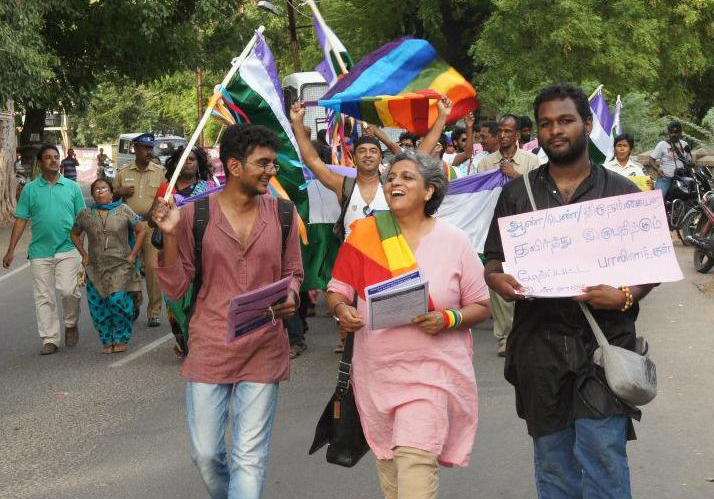
South Asian States must repeal laws that discriminate against LGBTI persons, and must respect, protect and fulfill the full range of their human rights, the ICJ said today on International Day Against Homophobia and Transphobia (IDAHO-T).
These rights include the right to equality before the law and equal protection of the law for all without discrimination, to which LGBTI persons are entitled due to their inherent dignity as human beings.
Across South Asia, discriminatory laws have enabled socially constructed gender and sexual norms to foster and perpetuate intimidation, harassment, threats of violence and violence against lesbian, gay, bisexual, transgender and intersex (LGBTI) persons, due to animosity, hostility and hatred motivated in whole or in part by their actual or perceived sexual orientation, gender identity, gender expression and/or intersex status.
Under international law, including the International Bill of Rights, that is the Universal Declaration of Human Rights and the two Covenants – the International Covenant on Civil and Political Rights and the International Covenant on Economic, Social and Cultural Rights – discrimination on the grounds of sexual orientation and/or gender identity is prohibited.
In this context, the Office of the UN High Commissioner of the Human Rights has underscored five core international human rights law obligations for States: (1) protecting individuals from homophobic and trans-phobic violence; (2) preventing torture and cruel, inhuman, and degrading treatment of LGBTI persons; (3) decriminalizing homosexuality; (4) prohibiting discrimination based on sexual orientation and gender identity; and (5) respecting the freedom of expression, association and peaceful assembly of LGBTI persons.
Under international human rights law, the principle of non-discrimination includes the right to determine one’s sexuality, sexual orientation, and gender identity and gender expression.
Contrary to their international human rights law obligations in this respect, States’ policing of gender and sexuality has created a pattern of stigma, harassment and violence.
For example, consensual same-sex sexual relations remain criminalized in seven out of eight countries in South Asia – Afghanistan, Bangladesh, Bhutan, India, Maldives, Pakistan, and Sri Lanka – based on colonial era laws, such as S. 377 of the Penal Codes of Pakistan, India, Maldives and Bangladesh, and similar legal provisions in Sri Lanka and Bhutan, that criminalize “carnal intercourse against the order of nature”.
While the enforcement of these laws rarely lead to actual criminal convictions and sentences of imprisonment, their mere continued existence creates an ominous and ongoing threat against and criminalizes entire sectors of the populations in these countries.
This, in turn, gives rise to a climate that encourages and is ripe for extortion, harassment and blackmail of LGBTI persons, by the police, as well as non-State actors, including the general public and even their own families.
While there have been some progressive developments, discrimination, violence and other human rights abuses against LGBTI people – both at the hands of State and non-State actors – remain rampant in South Asia.
Hence, on IDAHO-T, the ICJ renews its call on all South Asian Governments to repeal discriminatory laws against LGBTI persons, including laws that criminalize consensual same-sex sexual relations.
In addition, the organization urges all South Asian Governments to enable transgender persons’ right to self-identification of their gender, and to enact legislation that establishes prior, free, full, informed, genuine and consistent consent for any medically unnecessary interventions on intersex persons.
Contact
Maitreyi Gupta, ICJ International Legal Adviser in India, t: +91 7756028369; e: maitreyi.gupta@icj.org
Full text in ENG (PDF): India-IDAHO-T call-News-Feature article-2018-ENG
May 3, 2018 | Feature articles, News
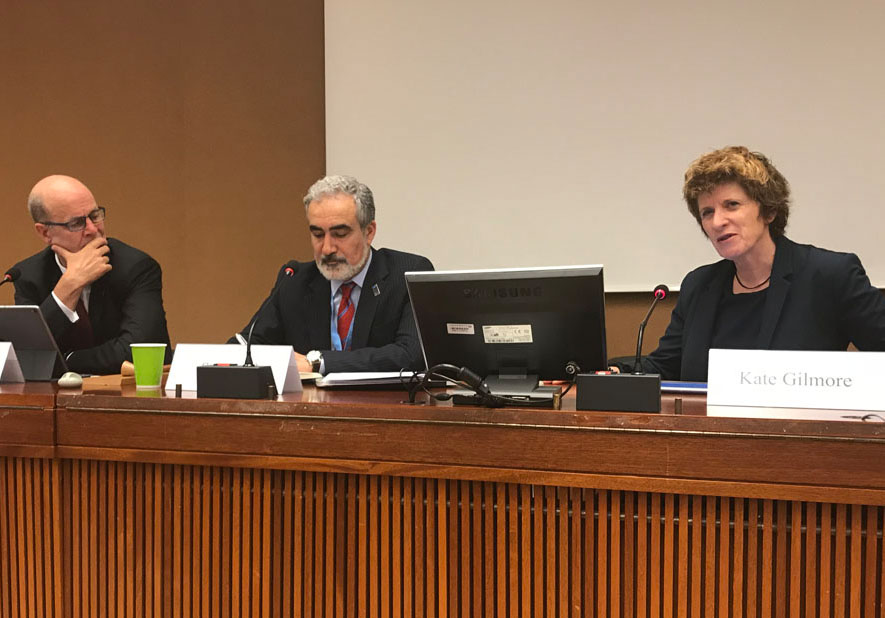
On 3 and 4 May 2018, the ICJ supported by UNAIDS and OHCHR convened an expert meeting on global principles addressing criminalization’s detrimental impact in the areas of sexuality, reproduction, drug use and HIV.
The expert meeting of leading jurists from around the globe aimed at laying the foundations for a set of principles to address the misuse and abuse of the criminal law and its detrimental impact on health, equality and human rights.
The expert group focused on the criminalization of conduct relating to four principal areas: sexuality, reproduction, personal drug use, and the overly broad criminalization of HIV exposure, transmission and non-disclosure.
In these areas, international human rights authorities, as well as domestic courts, have regularly found criminal law provisions to be contrary to international law and standards, and to have a deleterious effect on public health.
“We need to understand why the blunt instrument of the criminal law is used against and affects real people, and why the criminal law ought not to apply in our four areas of concern. Where the criminal law is misused, that is a betrayal of the rule of law. The rule of law must be our guiding compass,” said Justice Cameron, Constitutional Court of South Africa.
“The principles we hope to develop must facilitate the availability of tools which can impact key populations where they are in conflict with the law. They are often at risk of blackmail, stigma and discrimination. It falls on courts to make the difficult decisions. Judges can then consider legality, legitimate purpose and questions of necessity and proportionality in light of a broader understanding of the human rights principles at stake and the relevant scientific evidence,” said Judge Mbaru, Industrial Court of Kenya.
“The law is required to guarantee rights but at same time it can impose arbitrary restrictions. Often those restrictions in the form of the criminal law purport to be necessary in order to ‘protect’ people. That purported purpose ought to be closely scrutinised,” said Justice Ortiz, Constitutional Court of Columbia.
Sam Zarifi, Secretary General of the ICJ, stated: “The misuse of the criminal law affects the most marginalized groups of people and, in particular, the dispossessed and disenfranchised.”
“The centrality of the rule of law at a time when it is under threat globally, and our crucial obligation to stand against laws that are arbitrary, unequal and discriminatory,” he added.
Tim Martineau, Acting Deputy Executive Director of UNAIDS said: “The application of human rights principles to criminal law is key in order to address the detrimental impact of such laws in the areas of sexuality, reproduction, drug use and HIV.”
“While there was significant progress in HIV prevention, treatment and care, there was a big discrepancy in HIV prevention in relation to key populations who are more vulnerable to HIV infection in many respects because of a lack of legal protection, and the unjust criminalization of their behaviour,” he added.
Kate Gilmore, Deputy High Commissioner for Human Rights, stated that the criminal law can readily become a tool of repression or oppression. She said: “Wrongful deployment of criminal law betrays universal human rights standards. By eroding rather than protecting physical and mental integrity specifically in the contexts of sexuality, reproduction and gender identity, misuse of criminal law seeks a wrongful “regulation” of the body of women in particular, with devastating consequences for women’s and girls’ autonomy, health and well being.”
She emphasized that “the criminal law plays an essential role in the recognition, protection and enforcement of rights including by tackling impunity for violations for those rights.”
ICJ, UNAIDS and OHCHR consider that the envisaged principles will help legislators, judges and advocates in the development and review of criminal laws that have adverse consequences on health, equality and human rights particularly where they relate to key populations.
Mar 14, 2018 | Events, Multimedia items, News, Video clips
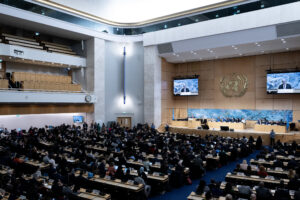
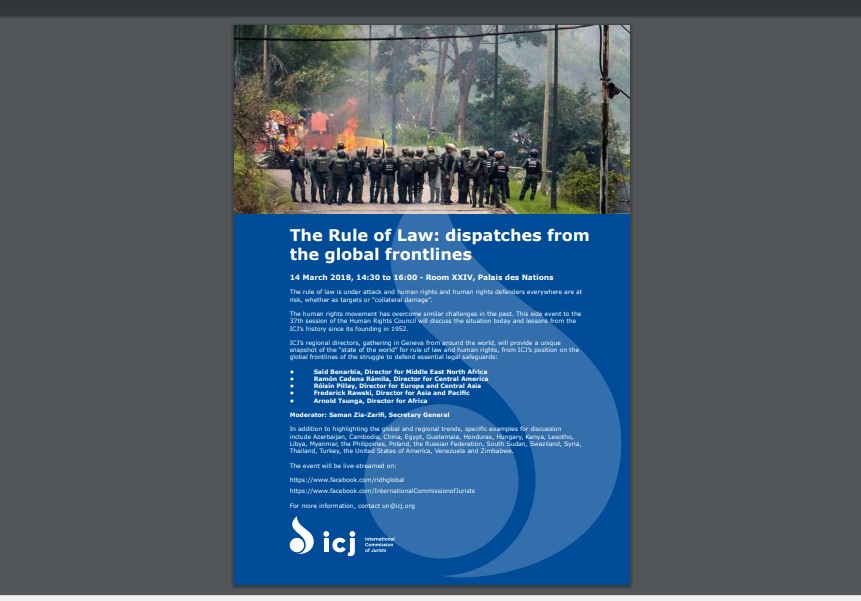
Today, the ICJ highlighted threats to and defenders of the rule of law around the world, at a side event to the UN Human Rights Council, at the Palais des Nations in Geneva.
The rule of law is under attack and human rights and human rights defenders everywhere are at risk, whether as targets or “collateral damage”.
The human rights movement has overcome similar challenges in the past. This side event to the 37th session of the Human Rights Council discussed the situation today and lessons from the ICJ’s history since its founding in 1952.
ICJ’s regional directors, gathering in Geneva from around the world, provided a unique snapshot of the “state of the world” for rule of law and human rights, from ICJ’s position on the global frontlines of the struggle to defend essential legal safeguards:
• Saïd Benarbia, Director for Middle East North Africa
• Ramón Cadena Rámila, Director for Central America
• Róisín Pillay, Director for Europe and Central Asia
• Frederick Rawski, Director for Asia and Pacific
• Arnold Tsunga, Director for Africa
Moderator: Saman Zia-Zarifi, Secretary General
In addition to highlighting the global and regional trends, specific examples for discussion included Azerbaijan, Cambodia, China, Egypt, Guatemala, Honduras, Hungary, Kenya, Lesotho, Libya, Myanmar, the Philippines, Poland, the Russian Federation, South Sudan, Swaziland, Syria, Thailand, Turkey, the United States of America, Venezuela and Zimbabwe.
For more information, contact un@icj.org
Watch the video:
https://www.facebook.com/ridhglobal/videos/10157996747579616/
Universal – Rule of law frontlines – News – Event – 2018 – ENG (Event flyer in PDF)