Jun 20, 2013 | News
Today the ICJ launches two new innovative legal tools: the Sexual Orientation & Gender Identity UN Database and the Sexual Orientation & Gender Identity Legislative Database.
The UN Database gathers all the SOGI-related doctrine and jurisprudence of the UN human rights system in one searchable database.
It is the electronic version of the UN Compilations, which the ICJ has issued regularly since 2005.
The documents are organized by source (such as treaty body, special rapporteur or working group) and it is possible to search the database by source or by country, region or key word.
The Legislative Database is the result of a year-long pilot project in collaboration with the International Human Rights Program at the University of Toronto Faculty of Law.
Student researchers gathered and analyzed laws from twenty-four countries in all regions of the world. Each country is introduced with a legislative overview.
The laws themselves are LGBT-friendly or neutral with regard to sexual orientation and gender identity. It is searchable by country and topic.
The purpose was to provide the actual texts of laws as comparative examples for use in legislative reform efforts.
The ICJ is very pleased to announce the launch of these new resources to help activists and lawyers around the world advocate for LGBT human rights.
Both databases were created by HURIDOCS.
The hard copy version of the 2013 edition of the UN Compilation can be downloaded below:
SOGI UN Compilation electronic version – publications-2013 (full text in pdf)

May 13, 2013 | News
On 13 May, the Hong Kong Court of Final Appeal granted W, a transgender woman, the right to marry her male partner. The ICJ, which made submissions in the case, applauds this decision.
W is a resident of Hong Kong who has undergone gender reassignment surgery, paid for by the Hong Kong Government, and who holds a national identity card and passport recording her sex as female.
In 2008 she applied to the Registrar of Marriages seeking confirmation that she could marry her male partner.
The Registrar denied her request on the grounds that “the biological sexual construction of an individual is fixed at birth and cannot be changed.”
Because “only an individual’s sex at birth counts,” the Registrar would not celebrate the marriage.
The trial court and court of appeal upheld the Registrar’s interpretation of the Marriage Ordinance and Matrimonial Causes Ordinance and ruled that it did not conflict with Hong Kong’s Basic Law or its obligations under the International Covenant on Civil and Political Rights.
These courts relied on the 1970 British case of Corbett v. Corbett, which held that sex was fixed immutably at birth.
W won her case at the Court of Final Appeal, which ruled in a 5-4 decision that the Marriage Ordinance and Matrimonial Causes Ordinance ignored the “psychological and social elements of a person’s sexual identity” and thus were inconsistent with the constitutional right to marry.
Furthermore, the ordinances were unconstitutional because they denied W the right to marry at all and thus impaired the very essence of the right.
While the Court granted the parties leave to make further submissions as to the exact nature of the declaratory relief, it held that “a transsexual in W’s situation” should in principle be granted a declaration that she is in law a woman within the meaning of the marriage ordinances and “therefore eligible to marry a man.”
Importantly, the Court also stated: “We would not seek to lay down a rule that only those who have had full gender reassignment surgery involving both excising and reconstructive genital surgery, qualify. We leave open the question whether transsexual persons who have undergone less extensive treatment might also qualify.”
“This is a historic decision,” said Alli Jernow, Senior Legal Advisor at the International Commission of Jurists. “Not only has W won her own case at the Court of Final Appeal, her courage and commitment have changed the lives of transgender people in Hong Kong.”
The parties have an additional 21 days to file written submissions. The Court’s proposed order gives the Hong Kong legislature time to respond but indicates that even in the absence of intervening legislation, the marriage ordinances would be given a remedial interpretation to include W.
Photo by K.Y. Cheng: Michael Vidler, solicitor of the appellant, holds the judgment in his hand outside Court of Final Appeal.
Feb 19, 2013 | News
The European Court of Human Rights today ruled that an Austrian ban on same-sex second-parent adoption is discriminatory.
The European Court of Human Rights delivered its judgment in the case of X and Others v. Austria and ruled that Austria’s Civil Code discriminates against a partner in a same-sex relationship by making it legally impossible to adopt the biological child of the other partner while permitting second parent adoptions for unmarried heterosexual couples.
The organisations that provided written submissions in this case (FIDH, ICJ, ILGA-Europe, BAAF, NELFA, and ECSOL) welcome this judgment and consider it a landmark judgment applying the European Court of Human Rights’ case law on equal treatment of unmarried couples to same-sex couples applying for second-parent adoption.
Children in same-sex families are highly vulnerable due to a lack of legal recognition and their inability to establish legal links to both of their parents.
Currently, second-parent adoption is possible in 11 European countries: Belgium, Denmark, Finland, Germany, Iceland, the Netherlands, Norway, Slovenia, Spain, Sweden and Great Britain. New legislation that would allow it is planned in France, Luxembourg and Switzerland. Moreover, as a result of the Court’s judgment, it would follow that the legislation of Austria, Andorra, parts of Bosnia and Herzegovina, Liechtenstein, Portugal and Romania should be amended to allow same-sex couples to apply for second-parent adoption, because these countries already permit unmarried heterosexual couples to do so.
Martin K.I. Christensen, Co-Chair of ILGA-Europe’s Executive Board:
“This is a very significant and important victory for rainbow families in Europe. We hope that this judgment will pave the way towards the removal of the remaining legal barriers for these families in Europe. The lack of recognition and the inability for partners in same-sex families to establish legal links to their children is not only discriminatory and creates a number of legal uncertainties, but also has a profound and detrimental impact on the everyday lives of these families and the wellbeing of the children in those families. The principle of the best interests of the child needs to be upheld without exception.”
Alli Jernow, Senior Legal Adviser, International Commission of Jurists, stated:
“With today’s decision, the Court clearly asserts that families are families, regardless of the sex of the parents, and that barriers to legal recognition and protection based on sexual orientation serve the interests of neither parents nor children.”
Souhayr Belhassen, President of FIDH, said:
“The Court recognised the right of a partner in same-sex couple to adopt another partner’s biological child when such adoptions are available for heterosexual couples. This is an important step forward towards the application of the principle of non-discrimination based on the sexual orientation and strengthening legal security and certainty for children. This ruling should guide not only domestic courts, but also the legislator in European states that have not yet amended their legislation in that direction”.
Juha Jämsä, the Vice-President of NELFA, said:
“This is an important day for European LGBT families. We feel very hopeful that this case will lead to our children’s rights gaining better recognition throughout Europe. No group of children should be discriminated against because of their parents’ sexual orientation, gender identity or gender expression”
Jan 15, 2013 | News
In particular, the Court recognizes that preventing sexual orientation discrimination is an important and legitimate purpose that justifies restrictions on freedom of religion.
In its judgment in Eweida and Others v. United Kingdom, issued on 15 January, the European Court of Human Rights affirmed that the right to act in accordance with one’s religion may be limited in order to protect others from discrimination based on sexual orientation. The ICJ, the European Region of the International Lesbian, Gay, Bisexual, Trans and Intersex Association (ILGA-Europe) and the International Federation for Human Rights (FIDH) welcome this decision.
Two of the four applications that were considered jointly in Eweida and Others concerned employees who refused to provide services to same-sex couples because of their personal religious beliefs.
The other two applications concerned employer-imposed restrictions on wearing visible crosses at work.
Lillian Ladele was employed by the London Borough of Islington as a marriage registrar.
She had refused to perform same-sex civil partnership ceremonies as part of her job because she believed that civil partnerships were equivalent to marriage and that same-sex unions were contrary to God’s will.
Following her refusal, she was disciplined and ultimately dismissed.
The Court held that Ladele’s employer’s decision not to make an exception for her religious beliefs was both legitimate and proportionate, in light of the Court’s own case-law concerning the right to be free from discrimination on the basis of sexual orientation and the need for same-sex couples to have legal recognition and protection of their relationships.
There was thus no violation of her right to be free from discrimination on the basis of religion.
Gary McFarlane was employed by Relate Federation, a private organisation providing sex therapy and relationship counselling.
He objected to treating same-sex couples and was dismissed.
The Court found that the right balance had been struck between McFarlane’s right to manifest his religious belief and “the employer’s interest in securing the rights of others.”
There was no violation of his right to freedom of religion, either separately or in conjunction with the right to be free from discrimination.
“Article 9 of the European Convention protects the right to manifest one’s religion in public, but this right is not unlimited,” stated Alli Jernow, Senior Legal Advisor of the International Commission of Jurists. “With today’s judgment, the Court upholds the importance of protecting others from discrimination.”
“This is a very timely decision, and particularly important in view of the fact that similar refusals to perform marriages and partnerships of same-sex or refusal to provide services to same-sex couples is a frequent occurrence in other European jurisdictions. This decision should help to guide national governments on the balance between freedom of religion and the right to non-discrimination on the ground of sexual orientation,” stated Evelyne Paradis, ILGA-Europe’s Executive Director.
“The Court’s reaffirmation that same–sex couples are in a similar situation to different-sex couples as regards their need to recognition and protection is an important step forward; that fundamental human right principle should guide all European states in the future,” concluded Souhayr Belhassen, FIDH President.
The ICJ, ILGA-Europe and FIDH had submitted a joint third-party intervention
See also:
European Court of Human Rights’ press release
European Court of Human Rights’ judgment in the case of Eweida and Others v. United Kingdom (Applications nos. 48420/10, 59842/10, 51671/10 and 36516/10) 15 January 2013
Dec 6, 2012 | News
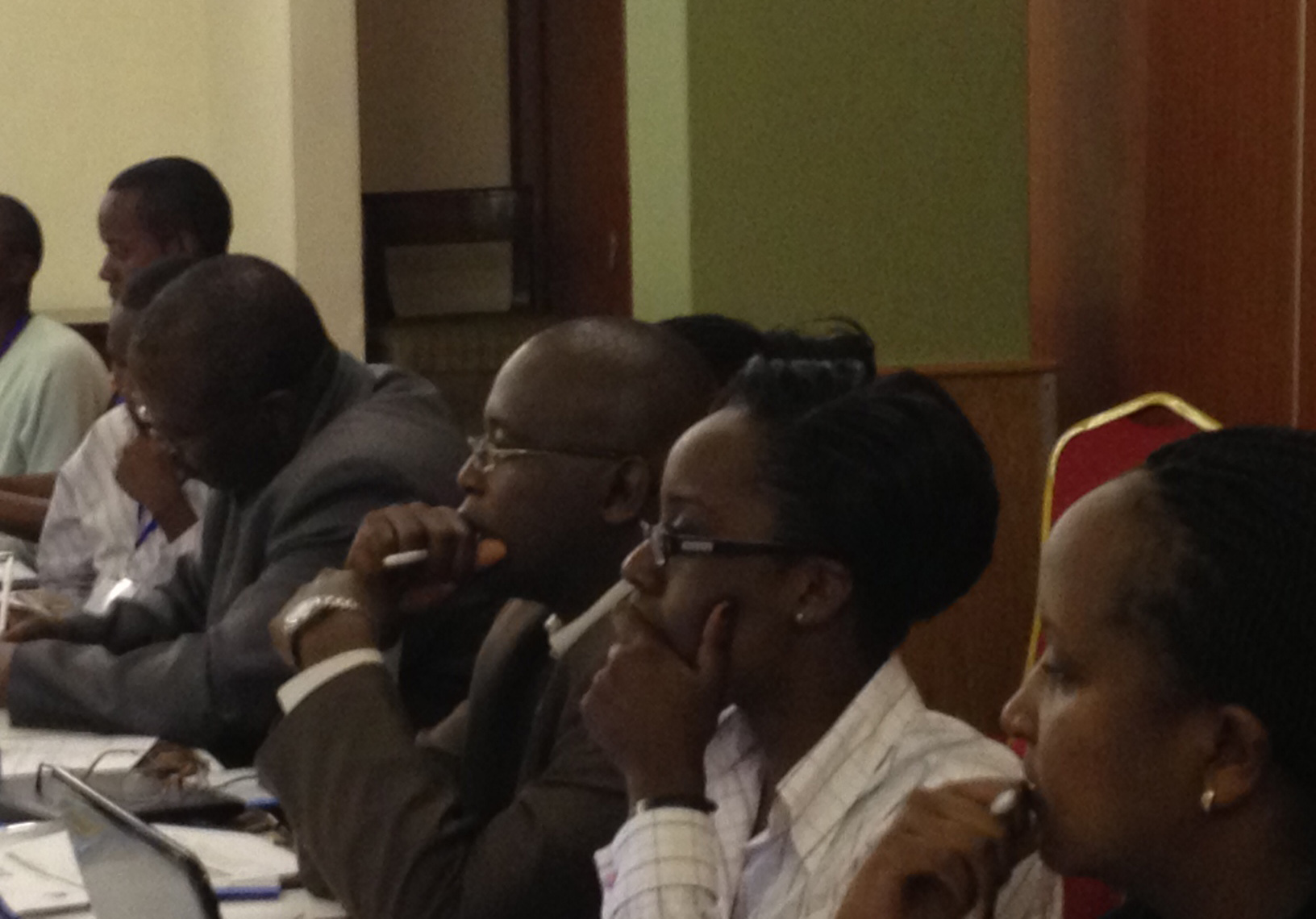 On 6 December 2012, the ICJ and ICJ-Kenya convened a roundtable entitled “LGBT Human Rights” in Nairobi.
The event brought together members of the Kenyan bar with LGBT human rights activists for a full discussion of criminal and constitutional law and international human rights standards, as well as possibilities for reform through either judicial or parliamentary processes.
The event was opened by Lawrence Mute, a former national human rights commissioner, signatory of the Yogyakarta Principles, and winner of ICJ-Kenya’s Jurist of the Year award.